Material
Other, Global universal model
Condition
Other, Global universal model
Task
Other, Global universal model
Mathematical Model
Other, Global universal model
Signal
Other, Global universal model
Customized
Non-Customized
Structure
Other, Global universal model
Operating temperature
0°C - 60°C
Humidity
5% - 95% (non - condensing)
Anti-vibration performance
10-55Hz, amplitude 0.38mm
Dimensions
160mm×100mm×150mm
Storage temperature
-40℃-85℃
I. Product Overview
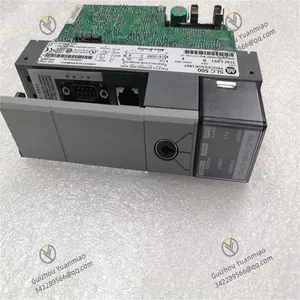
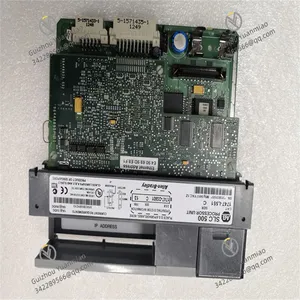
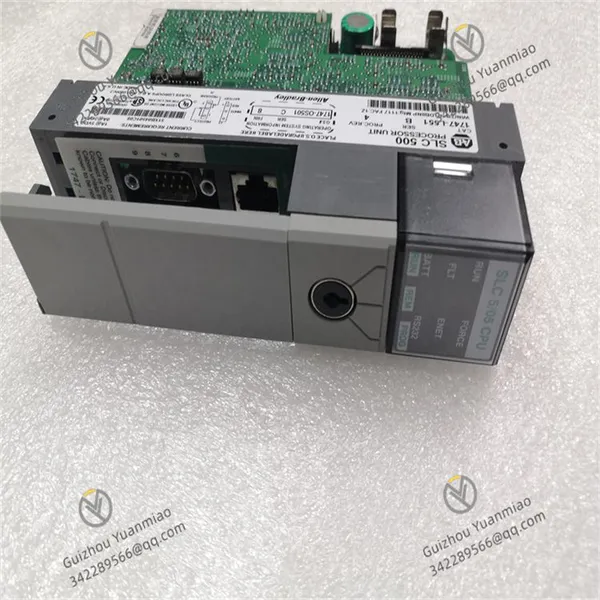
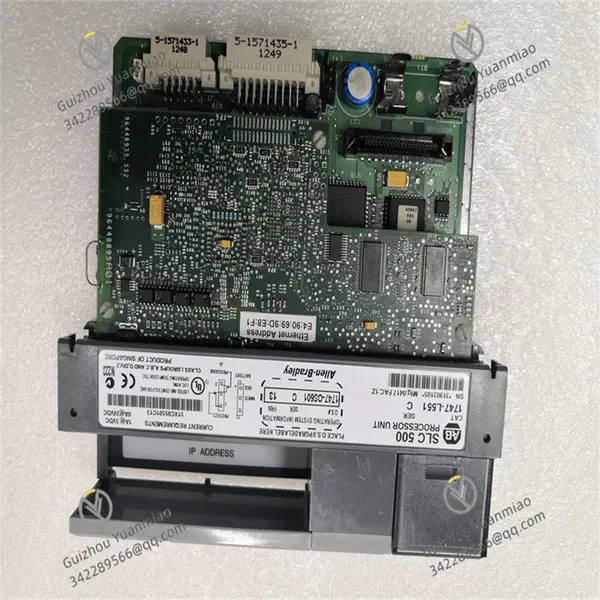
Allen-Bradley 1747-L551 is a high-end processor module in the SLC 500 series PLC, and one of the models with strong performance in this series. As the core component of the control system, it undertakes important tasks such as complex logical operations, large amounts of data processing, high-precision control instruction execution, and multi-equipment collaborative management. It can access abundant input signals, perform operations according to complex control programs, and then implement precise control on various actuators through output modules. It is widely used in medium to large industrial automation scenarios with high requirements for processing capacity and control precision, such as precision machinery processing production lines, large-scale chemical complete sets of equipment control, comprehensive logistics automation systems, etc., providing core control support for the efficient and precise operation of industrial production.

II. Technical Parameters
Processor performance:
Instruction execution speed: The execution time of basic logic instructions is about 0.8μs, processing various control tasks at high speed.
Program memory: 64KB, which can store large and complex user programs and system programs.
Data memory: 20KB, used to store a large number of variables, intermediate data, status information, etc.
Supported I/O points: The maximum can be expanded to 1024 digital I/O points (specifically depending on the configuration of expansion modules), supporting more analog I/O and special function modules.
Communication parameters:
Serial communication port: 1 RS-232 port, with a baud rate range of 1200-115200bit/s, used for programming, monitoring, and HMI communication.
Expanded communication: Connected with SLC 500 series communication modules through the backplane bus, supporting networks such as DeviceNet, DH-485, DH+ (corresponding modules are required).
Power parameters:
Power input: Obtain 5V DC power through the SLC 500 backplane, with a typical current consumption of about 400mA (specifically subject to the product manual).
Physical parameters:
Dimensions: Length about 160mm, width about 100mm, height about 150mm (compatible with other modules of the SLC 500 series), suitable for standard rack installation.
Weight: About 0.8kg, easy to install and maintain.
Environmental parameters:
Operating temperature: 0℃-60℃.
Storage temperature: -40℃-85℃.
Relative humidity: 5%-95% (non-condensing).
Anti-vibration performance: 10-55Hz, amplitude 0.38mm.
Anti-impact performance: Peak acceleration 15g (duration 11ms).

III. Functional Features
Excellent processing performance: Equipped with a high-performance microprocessor, the instruction execution speed is faster. The execution time of basic logic instructions can reach the microsecond level (such as less than 1μs), which can efficiently handle tasks such as complex control logic, high-speed counting, and PID regulation. For industrial scenarios with a large number of I/O points and complex control algorithms, such as the control of precision machining equipment with multi-axis linkage, it can ensure the rapid response of control instructions, reduce system delay, and improve control precision.
Large-capacity memory configuration: It has a larger capacity of program memory and data memory (for example, the program memory can reach 64KB, and the data memory can reach 20KB, subject to specific product parameters), which can meet the program storage and data caching needs of large-scale control projects. It can store complex control strategies, a large number of process parameters, historical data, etc., support multi-task program operation and real-time data interaction, and provide guarantee for the stable operation of complex control systems.
Rich communication capabilities: In addition to having an RS-232 serial communication port to support direct communication with upper computers and HMI, it can also support more industrial network protocols through extended communication modules, such as DeviceNet, EtherNet/IP, DH+, etc. It can achieve seamless communication with more types of on-site equipment, other PLCs or control systems, facilitating the construction of large-scale, distributed industrial automation networks and realizing efficient data sharing and collaborative control.
Strong programming and expansion capabilities: Compatible with RSLogix 500 programming software, supporting programming languages such as ladder diagrams and statement lists, and providing a richer set of instructions, including advanced motion control instructions, complex data processing instructions, process control instructions, etc., to meet the programming needs of complex control scenarios. At the same time, as a member of the SLC 500 series, it can be flexibly combined with all input and output modules and special function modules of the series, easily expanding the I/O points and functions of the system to adapt to industrial control projects of different scales and needs.
Comprehensive fault diagnosis and redundancy functions: It has more complete self-diagnosis and fault handling capabilities, which can real-time monitor the operating status of the processor, memory, communication links, expansion modules, etc. Once an abnormality is found, it can timely feedback detailed fault information through indicator lights and communication interfaces, facilitating quick troubleshooting. In some applications, it can support certain redundancy configurations, improving the reliability of the system and reducing production interruptions caused by single-point faults.
Industrial-grade reliability: Adopting more stringent industrial-grade design standards, it has stronger anti-electromagnetic interference ability, a wider operating temperature range (usually 0℃-60℃), and excellent anti-vibration and anti-impact performance. It can operate stably for a long time in harsh industrial environments such as high temperature, dusty, humid, and strong electromagnetic interference, ensuring the continuity of production.