Material
Other, Global universal model
Condition
Other, Global universal model
Task
Other, Global universal model
Mathematical Model
Other, Global universal model
Signal
Other, Global universal model
Customized
Non-Customized
Structure
Other, Global universal model
Supply voltage
24VDC
Operating temperature
-40°C to +85°C

I. Overview
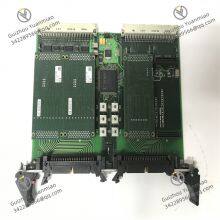
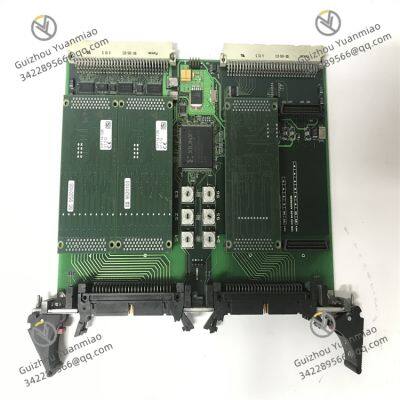
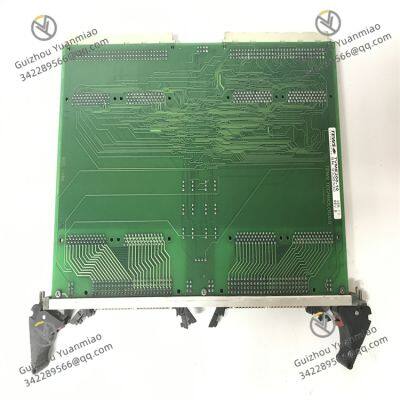
TEWS TVME200-10 is a 6U VME bus carrier, belonging to the VMEbus carrier board series products of TEWS Technologies. This product is specially designed for building modular, flexible and cost-effective I/O solutions, and can be widely applied in various fields such as process control, medical systems, telecommunications, traffic control, industrial automation, data acquisition, military, aerospace, etc. It is a key component for realizing communication and data exchange between different devices and the VME bus.

II. Technical Parameters
Bus Interface: Designed in accordance with the VMEbus specification ANSI/VITA 1 - 1994, it serves as a VMEbus slave interface with multiple data access modes. Short I/O is A16, D08/D16, with a size of 1KB; standard memory A24, D08/D16, with a programmable size, each IP module can reach 32KB to 2MB; extended memory A32, D08/D16, each IP module is fixed at 8MB, ensuring high compatibility with a variety of IndustriPack modules in the VMEbus system.
Slot Configuration: It has 4 single-size or 2 double-size Industrial Pack (IP) module slots. Each slot corresponds to a 50-pin 0.1-inch flat ribbon cable connector, which is used to realize front-end I/O access, facilitating the connection of various I/O devices and greatly improving the flexibility of system construction.
Interrupt Routing: The interrupt routing from the IP slot to VME IRQ has two setting methods, which can be programmed through software or selected from predefined setting groups with the help of a rotary switch, making it convenient for users to flexibly adjust the interrupt management strategy according to actual application scenarios.
Power Supply Related: Equipped with +12V and –12V power indicators for intuitively displaying the power status. All IP power lines are equipped with self-healing fuses, which can automatically recover in case of abnormal current, and at the same time perform radio frequency filtering to effectively resist electromagnetic interference, ensuring the stability of power supply and adapting to complex electromagnetic environments.
Operating Environment: It has an extremely wide operating temperature range of -40°C to +85°C, and can operate stably in extreme environments such as high and low temperatures. In terms of relative humidity, it can work normally within the humidity range of common industrial environments. Its anti-vibration and anti-shock performance meet relevant industrial standards, and it can withstand common vibrations and shocks in industrial sites, ensuring reliable operation in harsh industrial environments.
Dimensions: Adopting a 6U VMEbus board design, the size specifications comply with the VMEbus standard, making it easy to install in a standard VMEbus chassis, work in coordination with other VMEbus modules, save system space and improve system integration.
III. Functional Features
Modularization and Flexible Configuration: It supports the installation of up to 4 single-size or 2 double-size IP modules. Users can flexibly select and combine modules with different functions according to actual application needs, such as digital input/output modules, analog input/output modules, etc., so as to build a customized I/O system that meets specific needs, effectively reducing the system construction cost and improving resource utilization.
Wide Compatibility: Designed in accordance with the ANSI/VITA 4 - 1995 Industrial Pack logical interface specification, it ensures high compatibility with various IndustriPack modules in the VMEbus system. The IndustriPack I/O and ID spaces are cleverly mapped to the VME A16/D16 space, and the IP memory space is mapped to the VME A24 or A32 space, while supporting D08 and D16 access methods. This flexible mapping mechanism enables different types of modules to work together in the same system, greatly enhancing the compatibility and expandability of the system.
Convenient Address Configuration: Equipped with a set of 16-bit rotary switches, the configuration of VME short I/O and memory addresses can be easily completed through simple operations, without complex software setting procedures, reducing the difficulty of system configuration and the probability of errors, improving system deployment efficiency, and is especially suitable for operators with relatively low technical requirements to initialize and maintain the system.
Stable and Reliable Design: The whole is made of durable materials, which can adapt to harsh industrial environments. In terms of electrical design, through fuse protection and radio frequency filtering of power lines, as well as good heat dissipation design, the module is ensured to remain stable and reliable during long-term operation, reducing the risk of system shutdown caused by electrical faults and overheating. The Mean Time Between Failures (MTBF) is long, which can effectively reduce maintenance costs.
Rich I/O Access: The four 50-pin flat ribbon cable connectors on the front panel provide convenient access interfaces for all IP I/O lines, facilitating users to connect external devices and realize data input and output. At the same time, it provides IP access status indicators, +5V and +/-12V power indicators, allowing users to know the working status of the module in real-time, which is convenient for timely detection and solution of problems.

IV. Common Faults and Solutions
Module Cannot Recognize IP Module
Possible Causes: The IP module is not installed correctly, such as poor contact in the slot; incorrect configuration of the rotary switch, resulting in address mismatch; the IP module itself is faulty.
Solutions: Turn off the system power, re-plug the IP module to ensure that it is in close contact with the slot of TVME200-10 without looseness. Carefully check the settings of the 16-bit rotary switch, reconfigure the VME short I/O and memory addresses according to the specifications of the actually used IP module and system requirements to ensure correct address matching. Install the suspected faulty IP module on other normal TVME200-10 or test platforms to determine whether it is a hardware fault of the IP module itself. If it is confirmed that the IP module is faulty, replace it with a new one.
Abnormal Communication
Possible Causes: The flat ribbon cable is damaged or the connection is not firm; the communication protocol configuration is incorrect, which does not match the connected device; there is interference in the VMEbus.
Solutions: Check the flat ribbon cable connecting the IP module and external devices for physical damage such as breakage or fracture. If so, replace the cable; re-plug the cable to ensure that both ends are firmly connected. Carefully check the relevant parameters of the communication protocol, such as baud rate, data bits, stop bits, parity bits, etc., to ensure that they are consistent with the communication protocol of the connected device. For devices that support multiple communication protocols, ensure that the correct protocol mode is selected. Check whether there are strong interference sources around the VMEbus, such as high-power motors, frequency converters, etc. If there are, take anti-interference measures such as shielding and grounding, for example, adding a shielding layer to the VMEbus, installing the TVME200-10 away from the interference source, or using filtering equipment to filter the bus signal.
Power Failure
Possible Causes: The self-healing fuse is blown; the power input line is loose or damaged; the internal power circuit of the module is faulty.
Solutions: Check the status of the self-healing fuse. If it is blown, check for overcurrent phenomenon. After eliminating the overcurrent fault, replace it with a self-healing fuse of the same specification. Check the power input line to ensure that the connection is firm without looseness or open circuit. If the line is damaged, replace it in time. If the above checks are normal, there may be a fault in the internal power circuit of the module. In this case, it is necessary to contact professional maintenance personnel to detect and repair the internal power circuit of the module with professional tools, or directly replace the TVME200-10 module.
Abnormal Operating Temperature
Possible Causes: Poor heat dissipation, such as failure of the cooling fan, blockage of the vent; the operating environment temperature is too high, exceeding the tolerance range of the module.
Solutions: Check whether the cooling fan is running normally. If the fan is faulty, replace it in time; clean the dust and debris around the TVME200-10 and the vents to ensure good ventilation and timely heat dissipation. If the operating environment temperature is too high, consider installing cooling devices for the equipment, such as air conditioners, industrial fans, etc., to improve the operating environment temperature and make it within the operating temperature range of -40°C to +85°C specified for TVME200-10.