Home > Electrical & Electronics > Electrical Control System > Allen-Bradley 1756-IF8 Analog Input Module

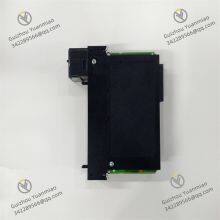
Allen-Bradley 1756-IF8 Analog Input Module
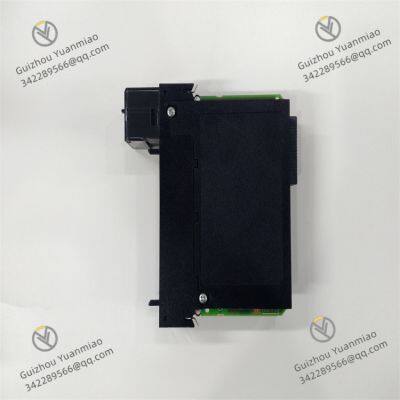
Allen-Bradley 1756-IF8 Analog Input Module photo-1
Allen-Bradley 1756-IF8 Analog Input Module photo-2
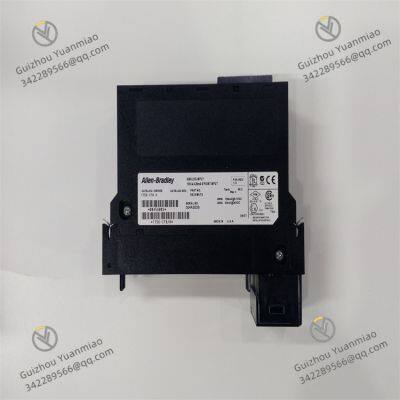
Allen-Bradley 1756-IF8 Analog Input Module photo-3
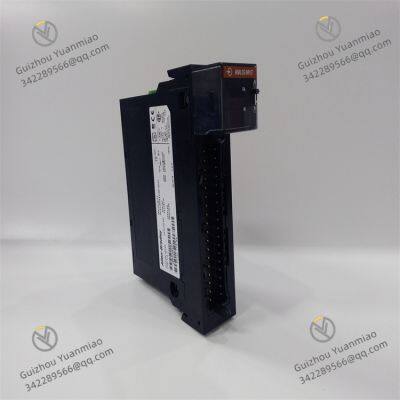
Negotiable MOQ: 1 Unit (Price negotiable depending on order volume and customization)
Key Specifications
Get Latest Price
Material:
Other, Global universal model
Condition:
Other, Global universal model
Task:
Other, Global universal model
Payment & Shipping
Payment Methods:
Port of Shipment:
China
Delivery Detail:
Delivery time depends on order quantity.
Material Other, Global universal model
Condition Other, Global universal model
Task Other, Global universal model
Mathematical Model Other, Global universal model
Signal Other, Global universal model
Customized Non-Customized
Structure Other, Global universal model
Operating temperature 0°C to 60°C
Humidity 5% - 95% (non - condensing)
Power Input 24V DC

I. Overview


1756-IF8 is a high-performanceperformance analog input module in Rockwell Automation's ControlLogix series, primarily designed for collecting multiple channels of analog signals in industrial automation systems. It can convert analog signals from various sensors and transmitters (such as those measuring temperature, pressure, and flow) into digital signals and transmit them to the ControlLogix processor, providing accurate raw data for monitoring, control, and data analysis in industrial production processes.


This module is widely used in industrial fields. For example, in chemical production, it can simultaneously collect temperature and pressure signals from multiple reaction kettles; in the metallurgical industry, it can gather parameters such as temperature and liquid level of furnaces; in water treatment systems, it can monitor multiple indicators of water quality. As an important part of the ControlLogix system, 1756-IF8 works in collaboration with other modules to help build a stable and efficient industrial automation control system, ensuring the smooth progress of production processes.


1756-IF8 (3)


II. Technical Parameters


  1. Number of Input Channels: Equipped with 8 independent analog input channels, capable of collecting 8 channels of analog signals simultaneously. It can meet the needs of multi-parameter monitoring in small and medium-sized industrial equipment or production lines, reducing the number of modules used and optimizing the system structure.

  2. Input Signal Types: Supports various common analog input signal types, including current signals (such as 4-20mA DC) and voltage signals (such as 0-10V DC, ±5V DC, etc.). These can be flexibly configured through software to adapt to different types of sensors and transmitters, offering strong compatibility.

  3. Resolution: Typically 16 bits, enabling accurate identification of tiny signal changes, ensuring high-precision collection of analog signals and providing a reliable data basis for control systems.

  4. Accuracy: High measurement accuracy, generally within ±0.1% of full scale (specific accuracy varies with signal type and range). It can ensure the accuracy of collected data, reduce the impact of measurement errors on control decisions, and is suitable for industrial scenarios with high requirements for parameter accuracy.

  5. Sampling Rate: The single-channel sampling rate can reach a high level, for example, each channel can sample hundreds of times per second (specific values refer to the product manual). A stable rate is maintained during simultaneous multi-channel sampling, ensuring timely collection of rapidly changing analog signals to meet real-time control needs.

  6. Isolation Method: Adopts inter-channel isolation or group isolation design, with an isolation voltage usually of 250V AC. It can effectively suppress electromagnetic interference and common-mode interference between different channels, improving the module's anti-interference ability in complex industrial electromagnetic environments and ensuring stable signal collection.

  7. Power Requirements: Obtains power from the ControlLogix rack backplane, with low typical power consumption. The current consumption is approximately 550mA at 5V DC (specific parameters are subject to the product data sheet), which has little impact on the system power load, ensuring stable power supply to the system.

  8. Environmental Adaptability Range:

    • Operating Temperature: Can work normally in the temperature range of 0°C to 60°C, adapting to temperature changes in industrial production sites, and can operate stably in both high-temperature production workshops and normal-temperature control rooms.

    • Relative Humidity: Can withstand 5% to 95% non-condensing relative humidity, maintaining reliable signal collection performance in humid environments such as food processing workshops and water treatment plants.

  9. Dimension Specifications: Adopts the standard module size of the ControlLogix series, perfectly matching the 1756 series rack. It is easy to install without the need for additional space adjustment, facilitating system integration and later maintenance.


1756-IF8 (2)


III. Functional Features


  1. Multi-channel Signal Collection: 8 input channels can simultaneously collect multiple channels of analog signals, enabling centralized monitoring of various key parameters in the industrial production process. This reduces the number of modules used in the system, lowers costs, and simplifies on-site wiring.

  2. Flexible Signal Adaptation: Supports multiple current and voltage signal types, and the signal type and range of each channel can be configured through software. It can adapt to different types of sensors and transmitters without replacing hardware, greatly improving the module's versatility and flexibility to meet diverse industrial application needs.

  3. High-precision Collection Performance: 16-bit resolution and high accuracy ensure precise collection of analog signals, accurately reflecting subtle changes in parameters, providing reliable data support for control systems, and ensuring the stability of production processes and product quality.

  4. Fast Response and Real-time Monitoring: The high sampling rate ensures that the module can quickly capture dynamic changes in analog signals. For rapidly changing parameters, it can collect and transmit them to the processor in a timely manner, enabling the control system to respond quickly and avoid production accidents caused by signal delays.

  5. Reliable Anti-interference Ability: The isolation design between channels and good electromagnetic compatibility can effectively resist electromagnetic interference and common-mode interference in industrial sites, ensuring the purity and stability of collected signals, reducing measurement errors caused by interference, and ensuring that control systems make decisions based on accurate data.

  6. Comprehensive Diagnostic Functions: The module has self-diagnostic capabilities, which can monitor its own operating status (such as power failure, channel failure, etc.) and communicate with the processor through the backplane to report diagnostic information in real-time. It also supports the detection of faults such as sensor disconnection and short circuit, facilitating engineers to quickly locate and troubleshoot problems, and shortening fault handling time.

  7. Easy Integration and Configuration: As a standard module of the ControlLogix series, 1756-IF8 has excellent compatibility with other modules in the series and can be seamlessly integrated into the ControlLogix system. Through Rockwell Automation's Studio 5000 programming software, engineers can conveniently complete module parameter configuration, channel calibration, and data mapping without complex programming, reducing the difficulty of system integration.

  8. Industrial-grade Stability: Adopting industrial-grade components and a robust structural design, it has good anti-vibration and anti-impact performance, can withstand mechanical stress and environmental challenges in industrial sites, ensuring long-term stable operation in harsh industrial environments and reducing production interruptions caused by module failures.


1756-IF8 (1)


IV. Operation Guide


  1. Installation Steps:

    • Preparation: Confirm that the installation environment meets the module's environmental adaptation requirements and that the rack power supply is turned off. Prepare necessary tools such as screwdrivers, and check whether the module's appearance is intact and the connectors are undamaged.

    • Rack Installation: Align the 1756-IF8 module with the empty slot of the ControlLogix 1756 series rack, push it smoothly along the guide rail until the module is in close contact with the rack backplane, then fix both sides of the module with screws to prevent loosening.

    • Wiring Connection: According to the module's wiring diagram and the signal type of the sensor/transmitter, use shielded wires to connect the output signal of the external device to the corresponding input terminal of the module. Pay attention to distinguishing the positive and negative polarities of the signal and the ground terminal, ensure the wiring is firm and correct, and the shield layer should be properly grounded to enhance anti-interference ability. After wiring, carefully check for any errors.

    • Power On: After confirming that all connections are correct, turn on the rack power supply. The module will start initialization, and at this time, the status indicator of the module can be observed to determine whether it starts normally.

  2. Configuration Process:

    • Software Preparation: Install Studio 5000 software on the programming computer and ensure that the software version is compatible with the module. Establish a communication connection between the computer and the ControlLogix processor using a programming cable.

    • Module Addition: Open the corresponding project in Studio 5000 software, enter the I/O configuration interface, add the 1756-IF8 module according to its actual installation position in the rack, and the software will automatically identify the module model.

    • Parameter Configuration: Based on the signal type of the sensor/transmitter in actual applications (such as 4-20mA, 0-10V, etc.), configure the corresponding signal type and range for each channel in the software. At the same time, signal filtering parameters (such as filtering time) can be set as needed to reduce the impact of signal noise.

    • Channel Calibration: For application scenarios with extremely high precision requirements, each channel of the module can be calibrated through software (including zero calibration and full-scale calibration) to ensure the accuracy of collected data. The calibration process requires the use of a standard signal source and follows the software prompts step by step.

    • Data Mapping: Associate the data collected by each channel of the module with the internal tags of the processor, enabling the processor to read and process the collected analog data. After completing the configuration, download the project to the ControlLogix processor.

  3. Troubleshooting:

    • Abnormal Signal Collection: If the data collected by a certain channel is inaccurate or there is no signal, first check whether the external sensor/transmitter is working normally and whether the output signal is within the module's range. Check whether the wiring is firm and correct, and whether the shield layer is well grounded. A multimeter or signal generator can be used to detect the input signal to rule out problems with external equipment and wiring. If the external is normal, try to recalibrate the channel or check for channel faults in the module.

    • Abnormal Status Indicator: If the module's status indicator shows an abnormality (such as a fault light being on), view the module's diagnostic information through Studio 5000 software to obtain the specific cause of the fault (such as power failure, channel overload, etc.), and handle it according to the prompts.

    • Communication Failure: If the processor cannot read the module's data or configuration information, check whether the connection between the module and the rack backplane is tight and whether the communication between the computer and the processor is normal. Try re-downloading the configuration or replacing the module slot for testing to rule out poor contact or communication link problems.

    • Overall Module Failure: If the module cannot start or has a serious failure, and problems such as power supply, wiring, and configuration are ruled out, it may be that the module's hardware is damaged. Contact professional maintenance personnel for repair or replacement.

Product Tags: Allen-Bradley , 1756-IF8

Send Inquiry to This Supplier

Message
0/5000
Want the best price? Post an RFQ now!
1Yr
Business Type
Trading Company
Year Established
2014
Factory Size
1,000-3,000 square meters
Product Certifications
SA8000