Home > Electrical & Electronics > Electrical Control System > Allen-Bradley 1756-OB32 Discrete Output Module

Allen-Bradley 1756-OB32 Discrete Output Module
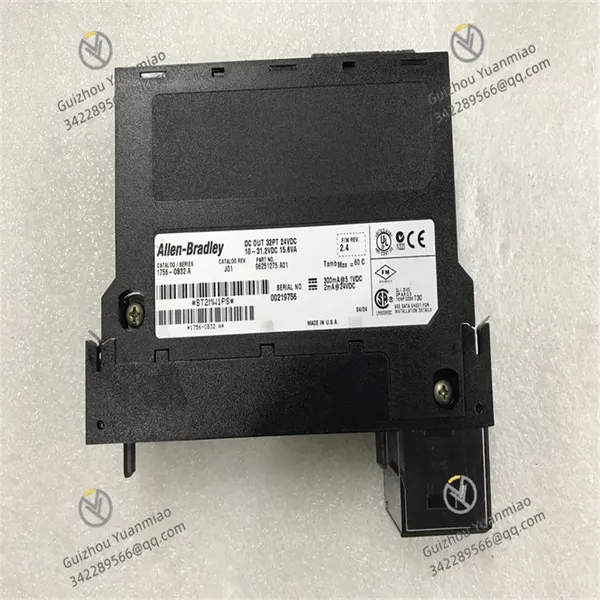
Allen-Bradley 1756-OB32 Discrete Output Module photo-1
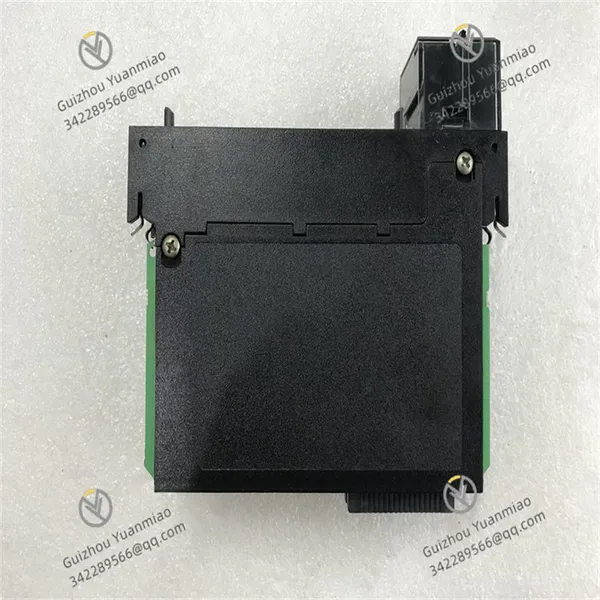
Allen-Bradley 1756-OB32 Discrete Output Module photo-2
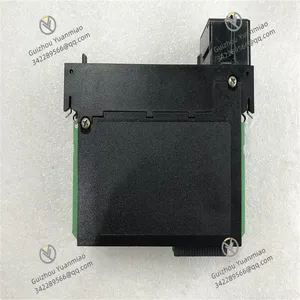
Allen-Bradley 1756-OB32 Discrete Output Module photo-3
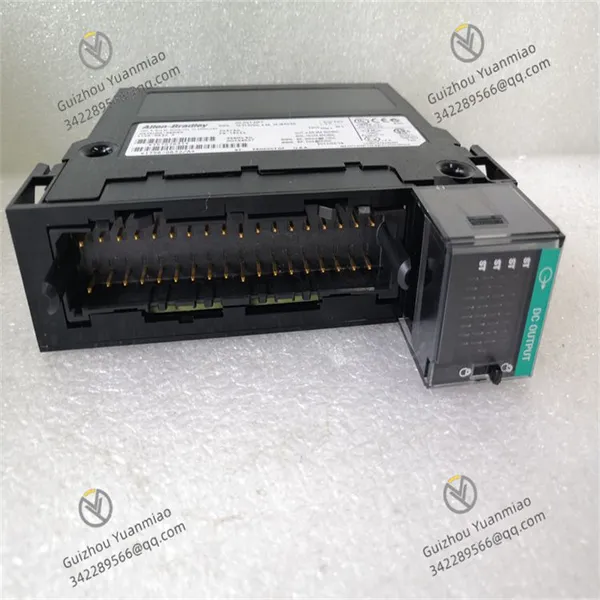
Negotiable MOQ: 1 Unit (Price negotiable depending on order volume and customization)
Key Specifications
Get Latest Price
Material:
Other, Global universal model
Condition:
Other, Global universal model
Task:
Other, Global universal model

Payment & Shipping
Payment Methods:
Port of Shipment:
China
Delivery Detail:
Delivery time depends on order quantity.
Material Other, Global universal model
Condition Other, Global universal model
Task Other, Global universal model
Mathematical Model Other, Global universal model
Signal Other, Global universal model
Customized Non-Customized
Structure Other, Global universal model
Operating temperature 0°C to 60°C
Humidity 5% - 95% (non - condensing)
Power Input 24V DC

I. Overview


1756-OB32 is a high-channel-density digital output module in Rockwell Automation's ControlLogix series. It is mainly used in medium and large industrial automation systems to convert digital control signals from the controller into switching signals that can drive external actuators, realizing centralized control of a large number of devices.


This module can be seamlessly integrated with ControlLogix series controllers (such as 1756-L73, 1756-L84ES, etc.) and can control 32 external actuators (such as solenoid valves, contactors, indicator lights, etc.) at the same time. It is suitable for industrial scenarios that require controlling a large number of devices, such as large production lines, warehousing and logistics centers, and metallurgical equipment. With its high channel density, stable output performance and good compatibility, it provides strong support for the efficient operation of industrial automation systems.


1756-OB32 (3)


II. Technical Parameters


Output channels: It has 32 independent digital output channels, which can control 32 external actuators at the same time. It meets the needs of multi-equipment collaborative work in medium and large automation systems, reduces the number of modules used, saves rack space, and lowers system costs.
Output signal type: It adopts relay output mode, which has strong versatility, can be adapted to AC or DC loads, can flexibly meet the driving needs of different types of actuators, and has good electrical isolation effect to protect the control system from external circuit interference.
Rated load capacity: The rated load of each output channel is usually AC 250V/2A or DC 30V/2A (specific parameters are subject to the product manual). It can drive small and medium-sized solenoid valves, contactor coils, indicator lights, micro motors and other equipment to ensure reliable action of the actuators.
Electrical isolation: An electrical isolation design is adopted between the output channel and the backplane bus. The isolation voltage can generally reach more than 2500V AC, which effectively blocks external interference signals from entering the control system, prevents high voltage and large current from damaging the controller and modules, and ensures stable operation of the system. There may also be isolation between output channels to prevent a single channel failure from affecting other channels.
Response time: The response time of relay output is at the millisecond level, which can meet the real-time requirements of general industrial control scenarios and ensure that the actuator acts in time according to the control command.
Power supply requirements: It is powered by the power module of the ControlLogix rack, with a typical supply voltage of 5V DC. It has low power consumption, has little impact on the system power load, and is convenient for system integration and installation.
Environmental adaptability:


  • Operating temperature: It can work stably in the temperature range of 0°C - 60°C, adapting to common temperature fluctuations in industrial sites.

  • Relative humidity: It can operate normally in a relative humidity environment of 5% - 95% (non-condensing), and is suitable for humid production workshops and other environments.

  • Vibration and shock resistance: It complies with relevant industrial standards such as IEC 61131-2, has certain vibration and shock resistance capabilities, and can work reliably in industrial occasions with slight vibrations (such as near production lines and machine tools).


1756-OB32 (2)


III. Functional Characteristics


High channel density: The design of 32 independent output channels can realize the control of a large number of devices in limited rack space, reduce the number of modules and wiring complexity, simplify the system architecture, and improve system integration efficiency.
Reliable output performance: The relay of each channel has stable switching performance, which can reliably connect or disconnect the load circuit, ensure that the actuator acts accurately according to the control command, reduce the risk of production interruption caused by output failure, and improve the stability of the industrial production process.
Effective electrical isolation: The multiple electrical isolation design can not only prevent external interference signals from affecting the control system, but also avoid the impact of a single output channel failure on other channels and the entire system, enhance the safety and anti-interference ability of the system, and ensure long-term stable operation of the system.
Intuitive status indication: The module is equipped with LED status indicators for each output channel. When the channel output is "ON", the indicator light is on; when the output is "OFF", the indicator light is off. Operators can quickly understand the working status of each channel through the indicator lights, which is convenient for system debugging, operation monitoring and fault troubleshooting, and improves maintenance efficiency.
Convenient installation and integration: It adopts a standardized rack installation method, and the installation process is simple and fast. It can be flexibly combined with other modules of the ControlLogix series (such as input modules, controllers, etc.) to form a complete automation control system. At the same time, the module is compatible with Rockwell Automation's Logix Designer programming software, which is convenient for users to configure the system and debug programs, and realize seamless connection with the entire automation system.
Certain overload protection: Some models have overload protection function. When the load current connected to the output channel exceeds the rated value, it can protect the relay from damage to a certain extent and prolong the service life of the module.


1756-OB32 (1)


IV. Common Faults and Solutions


No signal output from multiple output channels
Phenomenon: The control system has sent a control command, but multiple output channels have no signal output, the corresponding external actuators do not act, and the LED indicators of these channels are not on.
Causes and solutions:


  • Power failure: Check whether the power supply voltage of the module is normal (such as 5V DC), whether the power module is damaged, or whether the power supply line is broken or has poor contact. Use a multimeter to measure the power supply voltage, replace the damaged power module or repair the power supply line to ensure normal power supply.

  • Poor connection between module and rack: Check whether the module is firmly installed on the rack and whether the backplane bus connection is reliable. Re-plug the module to ensure good contact between the module and the rack.

  • Module hardware failure: If the power supply and connection are normal, the internal circuit of the module may be damaged. Contact professional maintenance personnel for testing and replace the module if necessary.


No signal output from a single output channel
Phenomenon: The control system has sent a control command, but a certain output channel has no signal output, the corresponding external actuator does not act, and the LED indicator of this channel is not on.
Causes and solutions:


  • Incorrect channel configuration: Check whether the parameter settings (such as output address, signal type, etc.) of the channel in the programming software are correct. Reconfigure the parameters correctly, download the program and test again.

  • Relay damage: If the channel configuration is normal, the relay of the channel may be damaged. Switch the control signal to other standby channels. If the standby channel can work normally, it indicates that the relay of the original channel is damaged, and the module needs to be repaired or replaced.


Abnormal output signal (indicator is on but the load does not act)
Phenomenon: The LED indicator of the module's output channel is on, but the corresponding external actuator does not act or acts abnormally.
Causes and solutions:


  • Load failure: Check whether the actuator is damaged and whether the load power supply is normal. Use a multimeter to detect the on-off and resistance value of the load, replace the damaged load; check the voltage and current of the load power supply to ensure they meet the load requirements.

  • Line problem: Check whether the connection line between the module output end and the load is broken, and whether the connector is loose or oxidized. Reconnect the line, clean the oxide layer of the connector and fasten it to ensure the line is unobstructed.

  • Load overload: If the load current exceeds the rated load capacity of the channel, the relay will not be able to drive the load normally. Replace the actuator that meets the rated load requirements, or add an intermediate relay to drive the large load.


Unstable module communication
Phenomenon: The communication between the module and the controller is intermittent. The controller can sometimes send commands and receive module status information, and sometimes cannot.
Causes and solutions:


  • Loose connection: Check whether the connection between the module and the rack is firm and whether the backplane bus has poor contact. Re-plug the module to ensure reliable connection.

  • Electromagnetic interference: There is strong electromagnetic interference (such as large motors, frequency converters, etc.) around the module, which affects communication stability. Take shielding measures (such as using shielded wires, adding grounding, etc.) to reduce electromagnetic interference.

  • Improper communication parameter settings: Check whether the communication parameters (such as baud rate, address, etc.) of the module match the controller. Reset the communication parameters in the programming software to ensure that the parameters are consistent.

Product Tags: Allen-Bradley , 1756-OB32

Send Inquiry to This Supplier

Message
0/5000

Want the best price? Post an RFQ now!
Gold Verified Supplier
1Yr
Verified Business License
Business Type
Trading Company
Year Established
2014
Factory Size
1,000-3,000 square meters
Product Certifications
SA8000