Material
Other, Global universal model
Condition
Other, Global universal model
Task
Other, Global universal model
Mathematical Model
Other, Global universal model
Signal
Other, Global universal model
Customized
Non-Customized
Structure
Other, Global universal model
Operating temperature
0°C to 60°C
Humidity
5% - 95% (non - condensing)
Power Input
24V DC
I. Overview
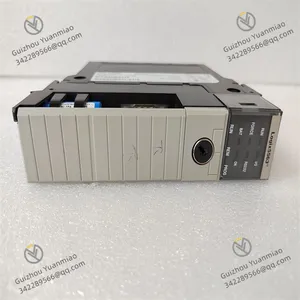
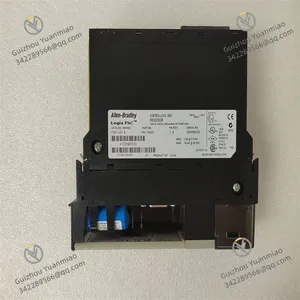
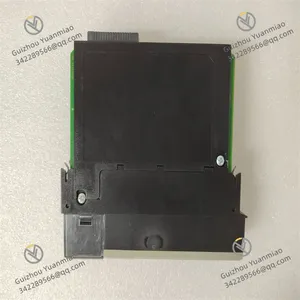
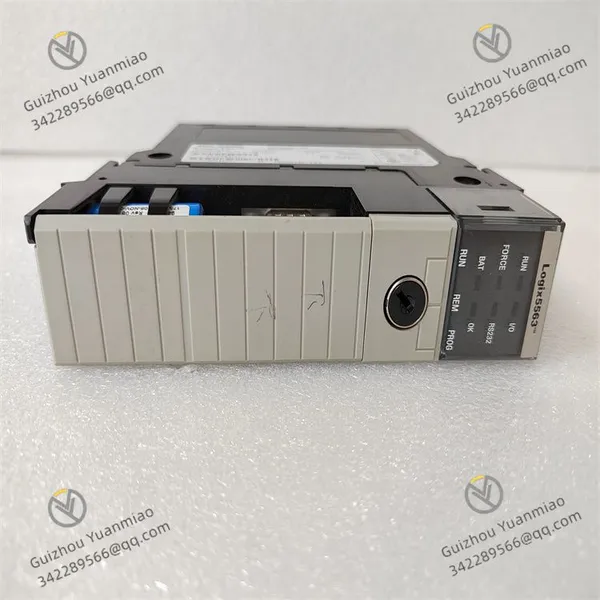
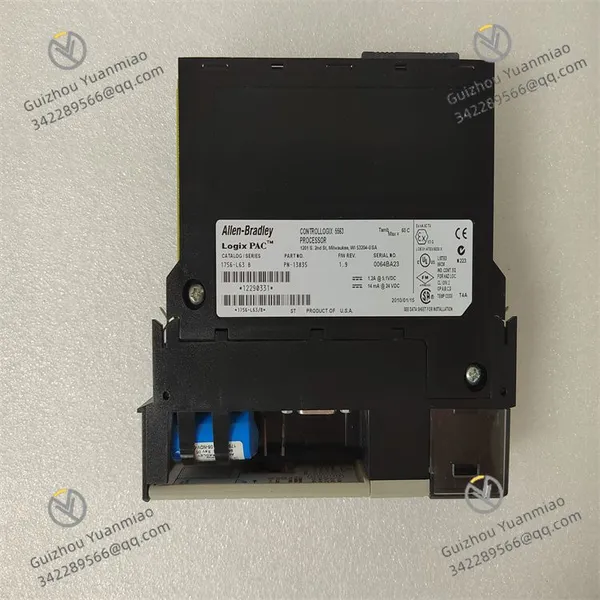
1756-L63 is a high-performance medium-sized processor module in Rockwell Automation's ControlLogix series, playing a core role in industrial automation control systems. With stronger computing power and richer functions, it can easily handle complex control tasks in medium and large-scale industrial production processes. It can connect various types of I/O modules to realize precise control and data acquisition of a large number of devices.
This module is widely used in medium and large-scale industrial scenarios such as automobile manufacturing production lines, large chemical production equipment, and metallurgical processing equipment. As a key component of the ControlLogix system, 1756-L63 works in collaboration with input/output modules, communication modules and other modules of the same series to build an efficient and stable automation control system, providing a solid guarantee for the smooth operation of the production process, strict control of product quality and improvement of production efficiency.

II. Technical Parameters
Processor Performance: It adopts a high-performance 32-bit processor with a relatively high main frequency (refer to the product manual for specific values). It has excellent logical operation and data processing capabilities, and can handle multiple complex control tasks and a large amount of I/O data at the same time, meeting the strict real-time requirements of medium and large-scale control systems.
Memory Configuration: The capacity of program memory and data memory is relatively sufficient. For example, the program memory can reach 16MB, and the data memory can reach 8MB (the specific capacity is subject to the product data sheet). It can store complex control programs and massive process data, supporting the development and operation of medium and large-scale control logic.
I/O Processing Capacity: It supports large-scale I/O point expansion. A large number of I/O modules can be connected through the ControlLogix rack, and the total number of I/O points can reach thousands or even tens of thousands, which can meet the comprehensive control needs of multiple devices and parameters in medium and large-scale industrial production lines.
Communication Interface: It integrates 2 or more EtherNet/IP interfaces, supporting high-speed industrial Ethernet communication with a communication rate of up to 100Mbps. It can perform high-speed data exchange with HMI, remote I/O stations, other controllers, upper computers and other devices, realizing networked control and real-time monitoring of the system. At the same time, it supports ControlNet, DeviceNet and other fieldbus communications (via expansion modules), which greatly enhances the communication flexibility and compatibility of the system.
Power Requirements: It obtains power from the ControlLogix rack backplane, with a typical current consumption of about 1.8A at 5V DC (specific parameters are subject to the product data sheet). The power consumption is reasonable, has little impact on the system power load, and can share the rack power with other modules.
Environmental Adaptability Range:
Operating Temperature: The normal operating temperature range is 0°C to 60°C, which can adapt to large temperature fluctuations in industrial sites and can run stably in different environments such as high-temperature workshops and normal-temperature control rooms.
Relative Humidity: It can withstand 5% to 95% non-condensing relative humidity, and can still maintain reliable performance in humid environments such as food processing workshops and water treatment plants.
Size Specification: It adopts the standard single-slot module size of the ControlLogix series, which perfectly fits the 1756 series rack. It is easy to install, saves rack space, and is convenient for system integration and later maintenance.
Certification Standards: It complies with multiple international industrial certification standards such as UL, CSA, and CE, ensuring safe and compliant use in industrial environments in different countries and regions around the world.

III. Functional Features
Medium and Large-Scale Control Capability: Relying on strong processor performance and sufficient memory capacity, 1756-L63 can be competent for the core control work of medium and large-scale industrial control systems. It can run complex control programs, such as advanced logic control, multi-loop PID regulation, complex sequence control, etc., meeting the control needs of complex production processes such as automobile manufacturing and metallurgical processing.
Flexible and Large-Scale I/O Expansion: It supports seamless connection with various I/O modules of the ControlLogix series, including digital input/output, analog input/output, special function modules, etc. Users can flexibly configure the number and types of I/O points according to actual production needs, easily realize system expansion and upgrading, so as to adapt to the increase or decrease of equipment or process changes in the production line.
High-Speed and Diversified Communication: Through multiple integrated EtherNet/IP interfaces, high-speed network communication is realized, facilitating real-time data interaction with upper computers and HMI, and realizing comprehensive monitoring and data acquisition of the production process. At the same time, with the help of expansion modules, it supports multiple fieldbus communications, facilitating the connection of various field devices and improving the openness and compatibility of the system.
Efficient Programming and Development: It supports Rockwell Automation's Studio 5000 programming software, which provides multiple programming languages such as ladder diagrams, function block diagrams, and structured text. Engineers can choose the appropriate programming method according to their own habits and project requirements, quickly complete the development, debugging and modification of control programs, and greatly improve development efficiency.
Excellent Operational Reliability: It adopts industrial-grade high-quality components and a robust shell design, with excellent anti-vibration and anti-impact capabilities. It can withstand mechanical stress and strong electromagnetic interference in industrial sites, ensuring long-term stable operation in harsh environments and minimizing production interruptions caused by controller failures.
Comprehensive Diagnostic and Alarm Functions: It has powerful self-diagnostic and fault alarm functions, which can real-time monitor the operating status of the processor, memory usage, communication status, and the working status of I/O modules. When a fault occurs, alarm information can be sent in time through indicators or communication interfaces, facilitating engineers to quickly locate and troubleshoot problems and shorten fault handling time.
Powerful Data Processing and Storage: It can real-time process and store the collected massive process data, support data recording, archiving, analysis and tracing, provide strong data support for quality analysis and performance optimization of the production process, and help enterprises improve production management levels.

IV. Common Faults and Solutions
Startup Fault:
Phenomenon: The module cannot start after power-on, the power indicator is not on, flickers or displays abnormally, and there is no normal operation indication.
Causes and Solutions:
Power Supply Problem: Check whether the rack power supply is normally powered, use a multimeter to measure whether the power output voltage is within the specified range; check whether the connection between the module and the rack backplane is tight, re-plug the module to ensure good contact; if the power supply is faulty, replace the rack power module in time.
Module Hardware Fault: If the power supply and connection are normal, the internal hardware of the module may be damaged, and professional maintenance personnel should be contacted for repair or replacement of the module.
Communication Fault:
Phenomenon: Unable to communicate with HMI, other controllers, remote I/O stations and other devices, data transmission is interrupted, delayed or error occurs.
Causes and Solutions:
Network Connection Problem: Check whether the EtherNet/IP cable is loose, damaged or aged, replace with a new cable or re-plug it; check whether network devices such as network switches and routers are working normally, restart the devices or check network configurations to eliminate network device faults.
Incorrect IP Address or Communication Parameters: Confirm that the processor's IP address, subnet mask, gateway and other parameters are set correctly and match the parameters of the communication device; check the communication protocol settings, such as baud rate, data format, etc., and reconfigure the correct parameters according to the device manual.
Communication Interface Fault: If the network connection and parameter settings are normal, the communication interface of the processor may be damaged, and the module needs to be replaced or the interface repaired.
Abnormal Program Operation:
Phenomenon: The control program runs unstable, with logical errors, abnormal output, program stuck or interruption.
Causes and Solutions:
Program Error: Check whether the control program has logical loopholes, instruction errors, data overflow and other problems, debug the program in Studio 5000 software, find and correct the errors.
Memory Problem: If the program is too large or the amount of data is too much, resulting in insufficient memory, optimize the program code, delete redundant data, and free up memory space; if the memory hardware fails, replace the module.
External Interference: Strong electromagnetic interference in industrial sites may affect program operation, check whether the system grounding is good, add shielding measures, and reduce the impact of interference sources on the processor.
I/O Module Communication Fault: