I. Overview
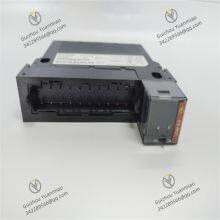
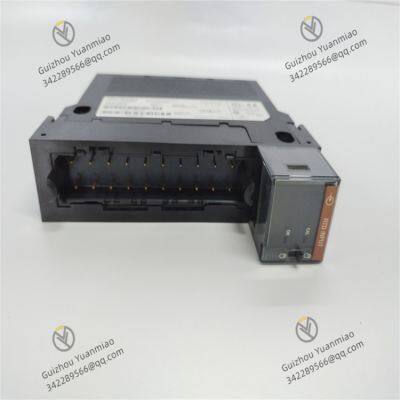
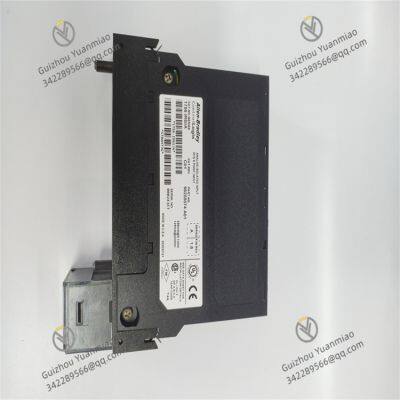
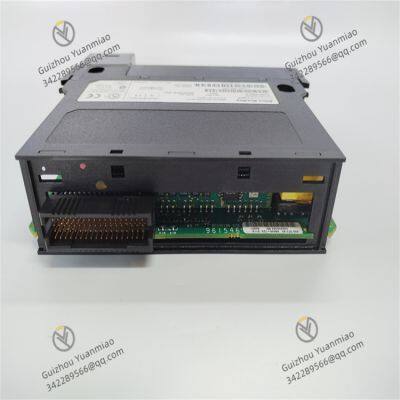
1756-IR6I is a dedicated RTD (Resistance Temperature Detector) input module in Rockwell Automation's ControlLogix series, specifically designed for the precise acquisition of temperature signals in industrial automation systems. It can directly connect to various types of RTD sensors (such as PT100, PT1000, Cu100, etc.), convert the resistance change signals output by the sensors into digital signals recognizable by the ControlLogix processor, and provide reliable data support for real-time monitoring, control, and analysis of temperature parameters in industrial production processes.
This module is widely used in the industrial field, especially suitable for scenarios requiring high-precision temperature measurement. In the food processing industry, it can be used to monitor the temperature of cold storage and cooking equipment; in pharmaceutical production, it can accurately collect temperature parameters in reaction kettles; in the mechanical processing process, it can real-time monitor the temperature changes of machine tool spindles and molds. As an important part of the ControlLogix system, 1756-IR6I works in collaboration with processors and output modules of the same series to help build a stable and efficient temperature control system, ensuring temperature stability during production and product quality.

II. Technical Parameters
Number of Input Channels: Equipped with 6 independent RTD input channels, which can collect 6 temperature signals simultaneously. It can meet the needs of multi-point temperature monitoring in small and medium-sized industrial equipment or production lines, reduce the number of modules used, and optimize the system layout.
Supported RTD Types: Compatible with various common RTD sensors, mainly including PT100 (platinum resistor with a resistance of 100Ω at 0°C), PT1000 (platinum resistor with a resistance of 1000Ω at 0°C), Cu100 (copper resistor with a resistance of 100Ω at 0°C), etc. It can be flexibly configured through software to adapt to different temperature measurement requirements.
Measurement Range: The measurement range varies depending on the type of connected RTD. For example, for PT100 RTDs, the temperature can usually be measured from -200°C to 850°C; for Cu100 RTDs, the measurement range is generally from -50°C to 150°C (the specific range is subject to the product data sheet), which can meet the temperature measurement needs of most industrial scenarios.
Accuracy: The measurement accuracy is high. Within a certain temperature range (such as 0°C to 100°C), the error can usually be controlled within ±0.1°C (the specific accuracy varies depending on the RTD type, measurement range, and environmental conditions), ensuring the precise acquisition of temperature signals and providing an accurate basis for temperature control.
Resolution: The temperature resolution can reach 0.1°C, which can accurately identify small temperature changes, suitable for industrial production links sensitive to temperature fluctuations, such as precision chemical reactions and semiconductor manufacturing.
Sampling Rate: The single-channel sampling rate can reach a high level, for example, each channel can sample more than 50 times per second (the specific value is subject to the product data sheet). The rate is stable when multiple channels sample simultaneously, which can timely capture dynamic changes in temperature and meet real-time monitoring needs.
Lead Compensation: Supports 2-wire, 3-wire, and 4-wire RTD connection methods, and has a lead resistance compensation function, which can effectively eliminate measurement errors caused by the length of sensor leads, ensure measurement accuracy in long-distance wiring situations, and is particularly suitable for temperature monitoring in large industrial sites.
Isolation Method: Adopts inter-channel isolation design with an isolation voltage usually of 250V AC, which can effectively suppress electromagnetic interference and common-mode interference between different channels, improve the anti-interference ability of the module in complex industrial electromagnetic environments, and ensure the stability of temperature signal acquisition.
Power Requirements: Power is obtained from the ControlLogix rack backplane, with low typical power consumption. The current consumption is approximately 500mA at 5V DC (specific parameters are subject to the product data sheet), which has little impact on the system power load and ensures stable power supply to the system.
Environmental Adaptability Range:
Operating Temperature: Can work normally in the temperature range of 0°C to 60°C, adapting to temperature fluctuations in industrial production sites, and can run stably in both high-temperature production workshops and normal-temperature control rooms.
Relative Humidity: Can withstand 5% to 95% non-condensing relative humidity, and can still maintain reliable temperature acquisition performance in humid environments such as food processing workshops and water treatment plants.
Dimension Specifications: Adopts the standard module size of the ControlLogix series, perfectly matching the 1756 series rack, with convenient installation, no additional space occupation, and easy system integration and later maintenance.
III. Functional Features
Dedicated RTD Signal Acquisition: Specifically designed for RTD sensors, 6 independent channels can collect multiple temperature signals simultaneously, enabling centralized monitoring of temperature parameters at multiple points in the industrial production process. For example, in a food processing line, it can monitor the temperature of multiple devices such as heating furnaces and coolers at the same time, reducing the number of modules used in the system, lowering costs, and simplifying on-site wiring.
High-precision Temperature Measurement: The high measurement accuracy and 0.1°C resolution ensure that the module can accurately capture subtle changes in temperature. For industrial scenarios that require strict temperature control (such as pharmaceutical fermentation, material heat treatment, etc.), it can provide accurate temperature data, ensuring the stability of the production process and product quality.
Flexible Sensor Adaptation: Supports multiple types of RTD sensors (PT100, PT1000, Cu100, etc.), and the RTD type of each channel can be configured through software. It can adapt to different temperature measurement needs without replacing hardware, improving the versatility and flexibility of the module and adapting to diverse industrial application scenarios.
Lead Compensation and Long-distance Wiring: Supports multiple lead connection methods and has a lead resistance compensation function, which can effectively eliminate the impact of lead resistance on measurement accuracy, allowing RTD sensors to be wired over long distances. It is suitable for temperature monitoring in large industrial plants, such as temperature monitoring of blast furnaces in steel mills and environmental temperature monitoring of large warehouses.
Fast Response and Real-time Monitoring: The high sampling rate enables the module to timely capture dynamic changes in temperature. For industrial processes with rapid temperature changes (such as the heating and cooling processes of heat treatment furnaces), it can quickly collect and transmit to the processor, enabling the control system to respond in a timely manner and avoid production accidents caused by temperature out of control.
Reliable Isolation Protection: The isolation design between channels effectively blocks electrical interference between different channels, preventing the failure of one channel from affecting the normal operation of other channels. At the same time, it protects core equipment such as the ControlLogix processor from interference and damage from external signals, improving the reliability of the entire automation system.
Comprehensive Diagnostic Functions: The module has self-diagnostic capabilities, which can monitor its own operating status (such as power failure, channel failure, etc.) and communicate with the processor through the backplane to report diagnostic information in real-time. At the same time, it supports the detection of faults such as RTD sensor disconnection and short circuit, facilitating engineers to quickly locate and troubleshoot problems and shorten the fault handling time.
Easy Integration and Configuration: As a standard module of the ControlLogix series, 1756-IR6I has excellent compatibility with other modules in the series and can be seamlessly integrated into the ControlLogix system. Through Rockwell Automation's Studio 5000 programming software, engineers can conveniently complete module parameter configuration (such as RTD type, lead mode, etc.), channel calibration, and data mapping without complex programming, reducing the difficulty of system integration.
Industrial-grade Stability: Adopting industrial-grade components and a robust structural design, it has good anti-vibration and anti-impact performance, can withstand mechanical stress and electromagnetic interference in industrial sites, ensures long-term stable operation in harsh industrial environments, and reduces production interruptions caused by module failures.
IV. Operation Guide
Installation Steps:
Preparation: Confirm that the installation environment meets the module's environmental adaptation requirements, and the rack power supply is turned off. Prepare necessary tools such as screwdrivers and wire strippers, and check whether the module's appearance is intact and whether the connectors are damaged or deformed.
Rack Installation: Align the 1756-IR6I module with the idle slot of the ControlLogix 1756 series rack, push it smoothly along the guide rail to ensure that the module is in close contact with the rack backplane, then firmly fix both sides of the module with screws to prevent the module from loosening due to vibration during equipment operation.
Wiring Connection: According to the type of RTD sensor (such as PT100) and the lead mode (2-wire, 3-wire, or 4-wire), refer to the module's wiring diagram, and use shielded wires to connect the sensor to the corresponding input terminal of the module. Pay attention to distinguishing the lead polarity of the sensor, ensure the wiring is firm and correct, and the shield layer should be properly grounded to enhance anti-interference ability. After wiring, carefully check each wiring to avoid wrong connection or virtual connection.
Power On: After confirming that all connections are correct, turn on the rack power supply, and the module will start initialization. At this time, the status indicator of the module can be observed. If the indicator shows normal (such as the power light is on and no fault light is on), it indicates that the module starts normally.
Configuration Process:
Software Preparation: Install Studio 5000 software on the programming computer and ensure that the software version is compatible with the module. Establish a stable communication connection between the computer and the ControlLogix processor through a programming cable.
Module Addition: Open the corresponding project in Studio 5000 software, enter the I/O configuration interface, add the 1756-IR6I module according to its actual installation position in the rack, and the software will automatically identify the module model.
Parameter Configuration: According to the actual connected RTD type (such as PT100) and lead mode (2-wire, 3-wire, or 4-wire), configure corresponding parameters for each channel independently in the software. At the same time, parameters such as temperature units (such as Celsius, Fahrenheit) can be set as needed.
Channel Calibration: For scenarios with extremely high requirements for temperature measurement accuracy, each channel of the module can be calibrated through software. The calibration process requires the use of a standard temperature source and high-precision temperature measuring equipment, and follow the software prompts step by step to ensure the accuracy of temperature measurement for each channel.
Data Mapping: Associate the temperature data collected by the 6 channels of the module with the internal tags of the processor respectively, so that the processor can accurately read and process each channel of the collected temperature information. After completing the configuration, download the project to the ControlLogix processor.
Troubleshooting:
Abnormal Temperature Collection: If the temperature data collected by one or several channels is inaccurate or shows abnormalities (such as over-range, excessive value fluctuation), first check whether the corresponding RTD sensor is working normally. A multimeter can be used to measure the resistance value of the sensor to determine whether it is damaged. Check whether the relevant wiring is firm and correct, and whether the lead mode is consistent with the software configuration. If the external is normal, try to recalibrate the channel or check whether the module has a channel fault.
Abnormal Status Indicator: If the status indicator of the module shows abnormally (such as the fault light is on, the power light is off, etc.), the detailed diagnostic information of the module can be viewed through Studio 5000 software to obtain the specific cause of the fault (such as power failure, sensor disconnection, channel short circuit, etc.), and targeted treatment can be carried out according to the prompts.
Communication Failure: If the processor cannot read the module's temperature data or configuration information, check whether the connection between the module and the rack backplane is tight, whether the communication between the computer and the processor is normal, and whether the module's firmware version is compatible with the system. You can try to re-download the configuration, replace the module slot, or restart the processor for testing to rule out poor contact or communication link problems.
Overall Module Failure: If the module cannot start or has a serious failure, and after ruling out problems such as power supply, wiring, and configuration, it may be that the module hardware is damaged. Contact professional maintenance personnel for repair or replacement.









 Contact Platform Support
 Help Center