








 Contact Platform Support
 Help Center
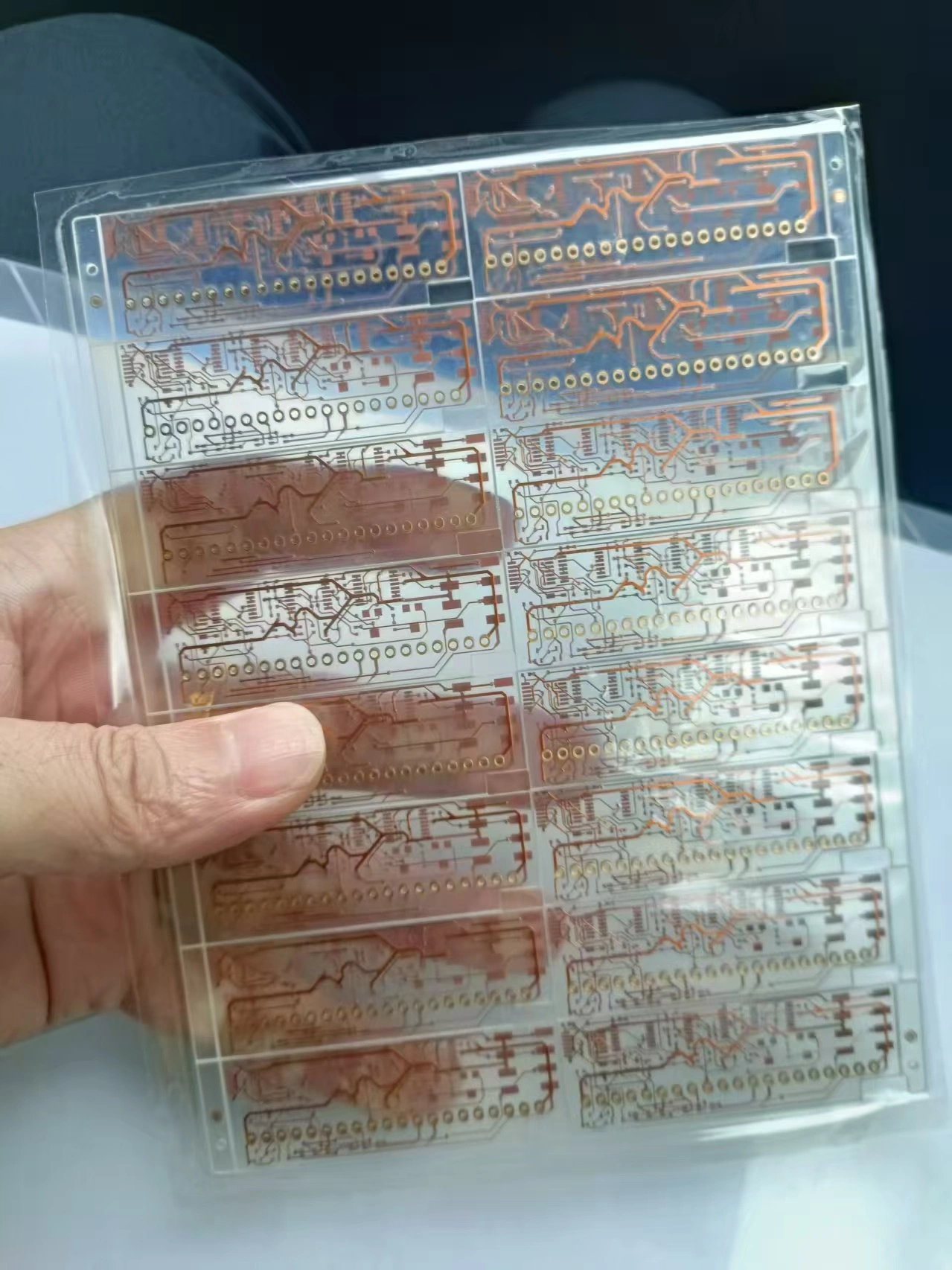
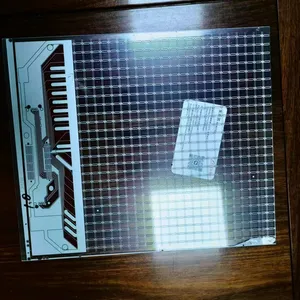
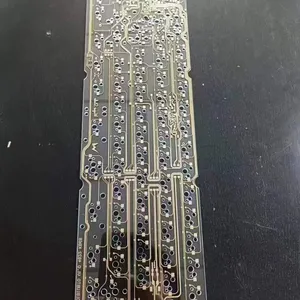
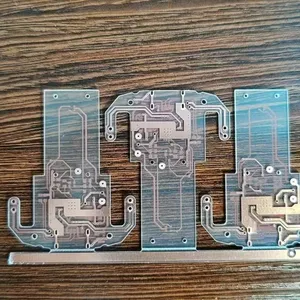
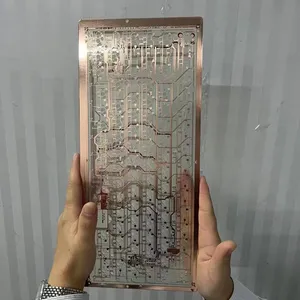
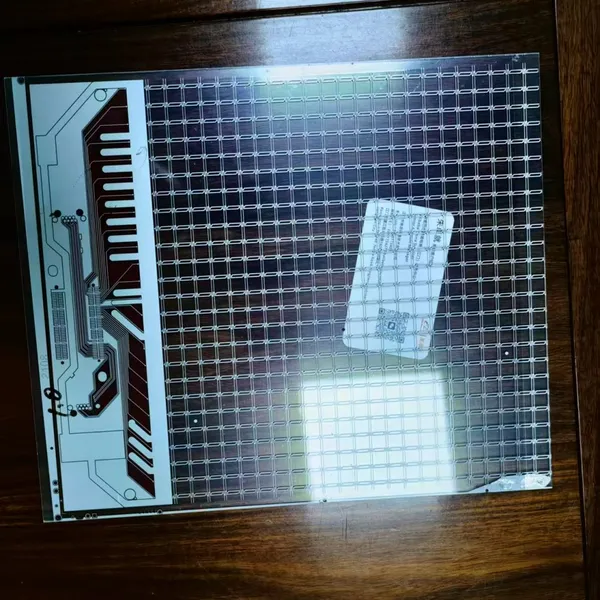
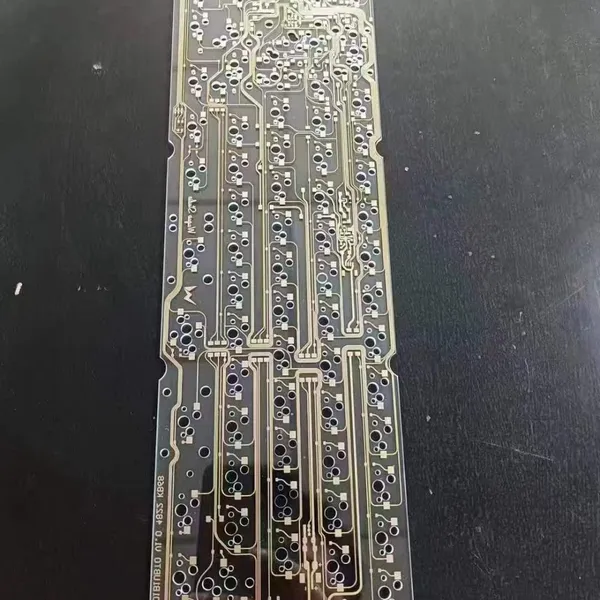
Double Layer Transparent FR-4PCB,Multi Layer FR-4 Transparent PCB,Is the Cost of Producing Multi-layer Transparent Circuit
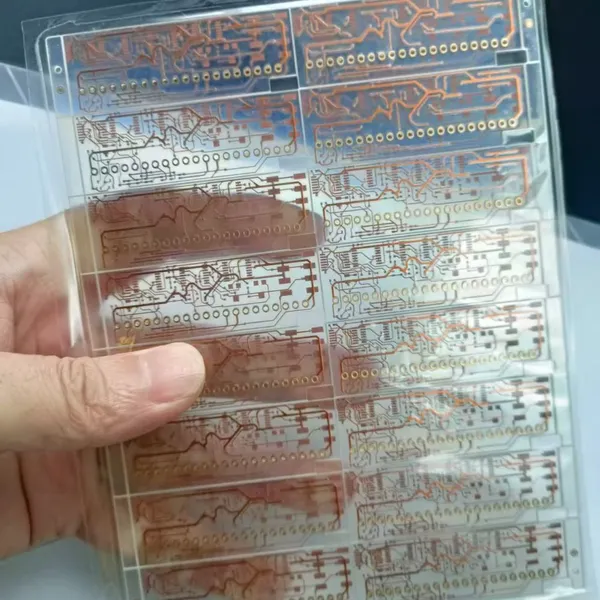
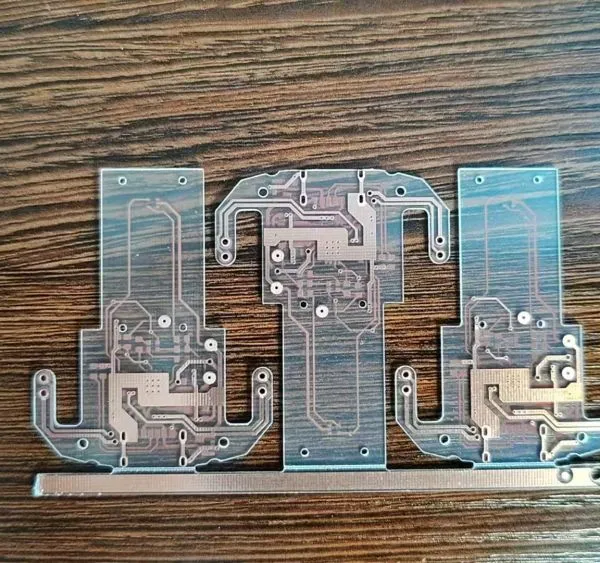
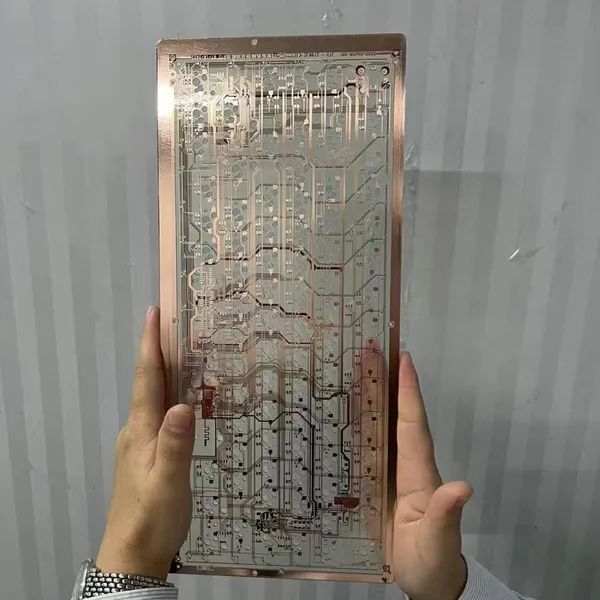
Product Spotlights
LED transparent screen PCB,Transparent PET carbon wire FPC button,Thin film switch transparent PET silver wire FPC,Thin film switch FPC,
Thin film switch ca



Related Products
-
 Transparent FR-4PCB,FR-4, TG130 Material,PI Transparent Flexible Board FPC,Computer Keyboard Transparent FR-4 Transparent Material PCBNegotiableMOQ: 1 Unit
 -
1.60mm Transparent FR-4PCB,Ultra Thin Transparent FR-4PCBNegotiableMOQ: 1 Unit
-
PET Transparent Single-layer Double-layer Flexible FPC,Single Layer PET Material Flexible Flexible Board FPC,pcb,fpc,pcba,SMTNegotiableMOQ: 1 Unit
-
2-layer PET Material Ultra Long Board FPCNegotiableMOQ: 1 Blade
-
2-layer Transparent FR-4 Material Ultra Long Ultra-thin PCB,Ultra Thin Transparent FR-4PCBNegotiableMOQ: 1 Blade
Is the cost of producing multi-layer transparent circuit boards high for transparent FR-4 circuit boards?
The cost of producing transparent FR-4 circuit boards is relatively high, mainly due to various factors such as high cost of raw material characteristics, production process requirements, and market supply and demand. Specifically, it can be analyzed from the following dimensions:
1. Higher raw material costs
The resin and glass fiber cloth of ordinary FR-4 substrate are based on meeting insulation and mechanical strength requirements, with no requirement for transparency and low raw material costs; Transparent FR-4 requires high-purity epoxy resin (to reduce impurity scattering) and low refractive index glass fiber cloth (such as ultrafine glass fiber, to reduce the refractive index difference between fiber and resin and reduce light reflection), and the procurement cost of such special materials is much higher than that of ordinary raw materials.
The thickness of transparent substrates is usually thin (such as 0.1mm-0.3mm), and the production process requires extremely high material uniformity. The scrap rate is also higher than that of ordinary FR-4, further pushing up the cost of high altitude materials.
2. Increased complexity of production processes
Compression process: The interlayer alignment accuracy of multi-layer transparent PCBs requires higher precision (deviations may lead to uneven light transmission), and the compression temperature and pressure need to be precisely controlled to avoid uneven resin flow or the generation of bubbles (bubbles can seriously affect transparency). The process parameter debugging is difficult, and the production efficiency is lower than that of ordinary multi-layer boards.
Surface treatment and etching: Transparent PCBs are commonly used in optical scenes such as sensors and display modules, which require extremely high edge smoothness and surface flatness of copper foil circuits. High precision photolithography or laser etching processes are required, resulting in higher equipment investment and processing time costs.
Defect detection: Ordinary PCBs mainly test electrical performance, while transparent PCBs also need to undergo optical testing (such as transmittance and uniformity) to screen for non-conforming products, making the testing process more complex and increasing quality inspection costs.
3. Impact of Market Supply and Demand
Transparent FR-4 PCB belongs to niche demand products, mainly used in special fields such as medical equipment, optical sensors, and transparent modules for high-end consumer electronics. The market demand is much lower than that of ordinary PCB, making it difficult to dilute costs through large-scale production, resulting in high manufacturing costs per unit product.
Summary: Cost Comparison and Applicable Scenarios
The cost of transparent FR-4 circuit boards is usually 3-5 times that of ordinary FR-4 multilayer boards of the same specification (depending on the number of layers, size, and accuracy requirements). Its high cost limits its application in general electronic devices and is only used in scenarios where there is a rigid requirement for transparency, such as products that require optical signal transmission, visualization of internal structures, or integration of optical components. If there is no requirement for transparency in the application scenario, ordinary FR-4 is still a more economical choice.
| Transparent FR- 4 material layers |
1-2layer | 1-2layer | 1-8layer | |
| Transparent FR-4 minimum hole |
0.35mm | 0.35mm | 0.35mm | |
| Transparent FR-4 minimum line width and spacing |
4/4Mil | 4/4Mil | 3.5/3.5Mil | |
| Transparent FR- 4 maximum size |
23.63*47.25″ | 23.63*47.25 ″ | 23.63*47.25 ″ | |
| Number of tempered glass base layers |
1-2layer | 1-2layer | 1-2layer | |
| Minimum line width and spacing of glass |
4/4Mil | 4/4Mil | 3.5/3.5Mil | |
| The smallest hole in glass |
0.35mm | 0.35mm | 0.35mm | |
| Maximum size of glass |
23.63*47.25″ | 23.63*47.25 ″ | 23.63*47.25 ″ | |
| Number of layers of transparent PETmaterial |
1-2layer | 1-2layer | 1-2layer | |
| Maximum size of transparent PET |
19.68 ″*7874" | 19.68 ″*7874" | 19.68 ″*7874" | |
|
The company's main product types |
Halogen free materials, high TG materials, high-frequency materials, high-speed materials, metal materials, glass materials, embedded materials, transparent FR- 4 materials, high thermal conductivity metals, high thermal conductivity aluminum substrates, environmentally friendly circuit boards, BT materials, ABF materials, and other imported materials, DU busbars, iron-based and metal based (core) mixed pressure plates, embedded buried copper, buried resistors, buried capacitors, buried ceramic bead plates, buried ceramics, ceramic mixed pressure plates, multi-layer ceramics, ultra-thin BT plates, ultra-thin PCBs, ultra-thin PCBs, multi-layer aluminum substrates, multi-layer ceramic plates, multi-layer ultra-thin HDI、 High frequency mixed voltage, differential impedance board, thick copper plate, gold-plated plate, high and low copper, high and low copper, high carbon resistance, transparent multilayer, glass plate, HDI arbitrary order (cross blind buried) Anylayer, flexible double-sided, flexible multilayer, soft hard combination HDI, roll to roll FPC, ultra long size, ultra large size board (single, double, multi-layer) PCB production and product design, product development, software development, etc |
|||
| Main material |
Rogers, Taikoni, Yaron, Mitsui, Isola, 3M, Taiyao, Taiguang, Tenghui, Shengyi,Lianmao, Nanya, Doosan, DuPont, Taihong, Hongren, Xinyang, Nippon Steel, Teflon,Yasen, Panasonic, RCC, Mitsui, Mitsubishi, Yingye, 3M, Kyocera, Jiuhao, Zhongci,Huaqing, Aishengda, Sliton, Kaichangde, Tongxin, Beige, Yalong, Taikoni,Hitachi, Laird System, etc |
|||
|
Main material categories |
Halogen-free、halogenated、 high thermal conductivity, high TG135 、TG140、 TG150、 TG170、TG180、TG240、TG320 |
|||
| Build-up Material | FR-4 ,TG150,TG70,TG180 | |||
| Conventional plate thickness (mm) |
Min.1-2L(mm) | 0.10mm | 0.10-12.0mm | 0.10-18.0mm |
| Min.4-10L(mm) | 0.35mm | 0.35mm~10.0mm | 0.35-18.0mm | |
| Min.12L(mm) | 0.43 | 0.38~10.0mm | 0.38~18.0mm | |
| Min.16L(mm) | 0.53 | 0.45~10.0mm | 0.45~18.0mm | |
| Min.18L(mm) | 0.63 | 0.51~10.0mm | 0.51~18.0mm | |
| Min.52L(mm) | 0.8 | 0.65~10.0mm | 0.65~18.0mm | |
| MAX(mm) | 3.5 | 12.0mm | 18.0mm | |

Send Inquiry to This Supplier



You May Also Like
-
Button Transparent PET Carbon Wire FPCNegotiableMOQ: 1 Blade
-
Film Switch Transparent PET Silver Wire FPCNegotiableMOQ: 1 Blade
-
1-6 Transparent FR-4 Circuit Board PCBNegotiableMOQ: 1 Blade
-
6 Transparent FR-4 Circuit Boards PCBNegotiableMOQ: 1 Blade
-
Transparent Glass Circuit Board PCB, Copper Wiring Transparent Glass PCBNegotiableMOQ: 1 Blade
-
Transparent Tempered Glass Circuit Board PCB, Copper WiringNegotiableMOQ: 1 Blade
-
Tempered Glass PCB Glass PCBNegotiableMOQ: 1 Blade
-
6L Flexible FPC Second OrderNegotiableMOQ: 1 Unit
-
10L Flexible FPC Second StageFPC,Single Layer Roll to Roll Flexible FPCNegotiableMOQ: 1 Unit
-
10 Layer Third-order HDI Flexible FPC,multi-layer Ultra Large Flexible FPCNegotiableMOQ: 1 Unit


