Home > Electrical & Electronics > Electrical Control System > GE IC695CPE400 PACSystems RX3i Series CPU Module

GE IC695CPE400 PACSystems RX3i Series CPU Module
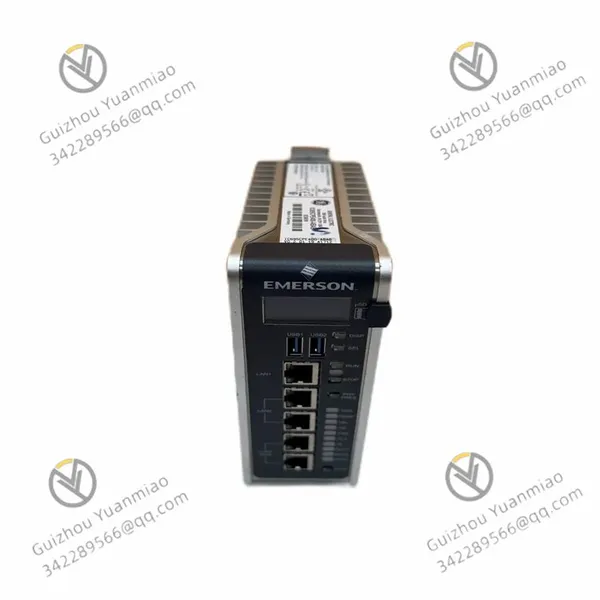
GE IC695CPE400 PACSystems RX3i Series CPU Module photo-1
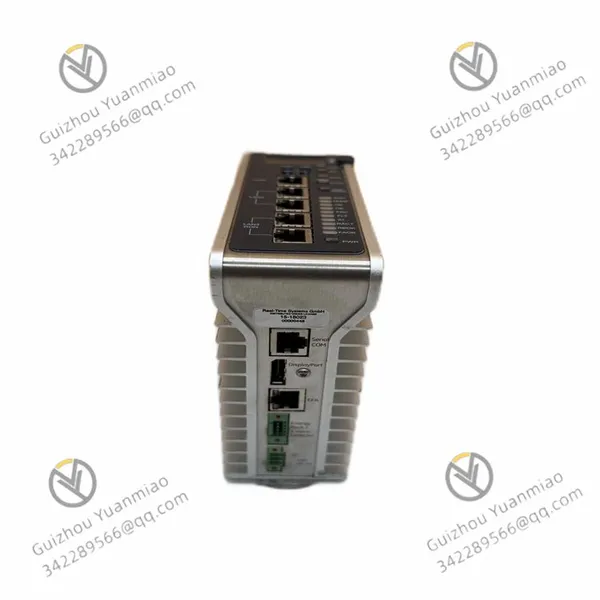
GE IC695CPE400 PACSystems RX3i Series CPU Module photo-2
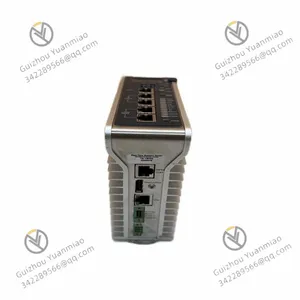
GE IC695CPE400 PACSystems RX3i Series CPU Module photo-3
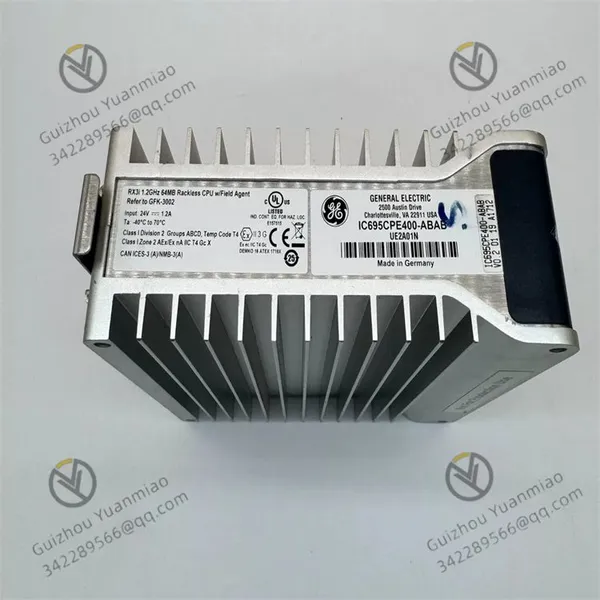
Negotiable MOQ: 1 Piece (Price negotiable depending on order volume and customization)
Key Specifications
Get Latest Price
Material:
Other
Certification:
Other
Function:
Other

Payment & Shipping
Payment Methods:
Port of Shipment:
China
Delivery Detail:
Delivery time depends on order quantity.
Material Other
Certification Other
Function Other
Condition Other
Task Other
Mathematical Model Other
Signal Other
Customized Other
Structure Other
GE IC695CPE400 PACSystems RX3i series CPU module

IC695CPE400—03


The IC695CPE400 is a high-performance central processing unit (CPU) module in GE's PACSystems RX3i series, primarily used in industrial automation control systems. The following is a detailed introduction:


Core Functions and PositioningEthernet Communication Capability
  • Equipped with 2 independent Gigabit Ethernet interfaces (RJ-45), supporting protocols such as Modbus TCP/IP, SRTP, Ethernet Global Data (EGD), and OPC-UA. It enables remote I/O communication, HMI/SCADA data interaction, and controller synchronization, facilitating connection and data transmission with other devices and systems.

High-performance Processing Capability
  • Adopts a dual-core ARM Cortex-A9 processor with powerful computing power, supporting high-speed logic operations and large-scale application requirements. It is suitable for complex control processes such as multi-axis coordinated motion control and energy-saving optimization.

Compatibility and Expandability
  • Compatible with all I/O modules and communication modules in the RX3i series, serving as the main control unit for standard or redundant control systems. It also supports programming via PAC Machine Edition software, allowing multiple programming languages such as ladder diagrams, structured text, and function blocks to facilitate program development for engineers.


Technical ParametersStorage and Memory
  • 64MB user logic memory and 64MB data memory, supporting external SD card expansion for storing more programs and data.

  • 64MB flash memory for program and firmware storage.

Operating Environment
  • Working temperature range: 0°C to 60°C, adapting to most industrial temperature conditions.

  • Power requirement: 5V DC (powered by the rack), installed via standard rail for convenience.

Communication Protocols
  • In addition to the aforementioned Ethernet protocols, it supports multiple industrial Ethernet protocols and general communication standards, enabling seamless integration with third-party systems and demonstrating strong compatibility and versatility.


Application ScenariosIndustrial Automation
  • In mechanical processing, robot control, printing, and packaging, it realizes multi-axis motion control and coordination to ensure precise equipment operation.

  • Serves as the core control unit for high-efficiency motor drives in energy-saving optimization systems to improve energy utilization.

Process Control
  • As the main control module in distributed control systems (DCS) for oil & gas and chemical industries, it precisely controls and monitors the entire production process.

  • In smart grids, it implements advanced control logic for switching equipment to ensure stable grid operation.

Simulation and Testing
  • Integrates with simulation software like MapleSim for closed-loop testing and verification of dynamic systems such as AGV carts, helping engineers optimize and debug systems before practical application.

IC695CPE400—02
Core Advantages1. High-performance Dual-core Processor and Real-time Performance
  • Dual-core ARM Cortex-A9 Architecture:
    Compared with traditional single-core processors (e.g., PowerPC architecture of IC695CPE310/330), the dual-core design of IC695CPE400 enables true parallel processing, executing control logic and communication tasks simultaneously to significantly enhance multitasking capabilities.
    • Typical scan cycle: Boolean instruction scan speed reaches 0.04ms/k (superior to 0.07ms/k of peer products), suitable for high-speed synchronous control (e.g., multi-axis robots, flying shear control).

    • Deterministic real-time response: Through the hardware-accelerated SRTP protocol (GE's proprietary clock synchronization protocol), it supports sub-millisecond I/O refreshing, ensuring time synchronization accuracy (error

  • Comparison with similar products:
    • Siemens S7-1500 (CPU 1516-3 PN/DP): Single-core processor, Boolean instruction scan speed ~0.08ms/k, slightly inferior in real-time performance.

    • Schneider Unity Quantum (140CPU65160): Single-core PowerPC, scan speed ~0.1ms/k, no dual-core parallel support.

2. Industrial Ethernet Protocol Integration
  • Multi-protocol parallel processing:
    Two Gigabit Ethernet ports simultaneously support protocols such as PROFINET IO Controller, Ethernet/IP Adapter, Modbus TCP, and OPC UA Server without additional communication modules.
    • Industry-specific protocols: Natively supports IEC 61850 (power automation) and DNP3 (energy monitoring), eliminating the need for third-party gateways and simplifying system architecture.

  • Comparison with similar products:
    • Mitsubishi Q-series CPU (Q06UDVCPU): Requires expansion modules for PROFINET support and only allows single-protocol master stations.

    • Rockwell ControlLogix (1756-L83E/B): Excellent Ethernet/IP performance but needs additional modules for PROFINET support.

IC695CPE400—04
3. Redundancy Architecture and Reliability
  • Triple redundancy design:
    • CPU redundancy: Supports hot standby (with PNC001 redundancy module), with primary/standby CPU switching time

    • Network redundancy: Built-in MRP (Media Redundancy Protocol) and RSTP (Rapid Spanning Tree Protocol), supporting ring network topology with link failure recovery time

    • Power redundancy: Configurable dual power modules supporting 24V DC redundant input to avoid single-point failures.

  • Comparison with similar products:
    • Omron CJ2M-CPU33: Only supports network redundancy (Ethernet), no CPU hot standby.

    • Honeywell HC900: Redundancy switching time ~500ms, slower than IC695CPE400's 100ms level.

4. Software Programming and Engineering Efficiency
  • Multi-language programming and integrated development environment:
    • Compatible with five IEC 61131-3 programming languages (LD, FBD, ST, IL, SFC), supporting modular programming and code reuse.

    • PAC Control programming environment supports drag-and-drop configuration and offline simulation, shortening debugging cycles.

    • Preconfigured function block library: Provides standardized modules for motion control, PID regulation, safety logic, etc., reducing development difficulty.

  • Advanced diagnosis and maintenance:
    • Built-in Web server for remote monitoring and configuration (IP: 192.168.1.100).

    • Real-time health monitoring: View CPU load, memory usage, and communication status via LED indicators or Modbus registers.

  • Comparison with similar products:
    • B&R PLC (Power Panel 620): Requires additional Codesys license, higher programming environment costs.

    • Yokogawa FA-MATIC MX: Only supports ladder diagrams and FBD, no advanced languages like structured text (ST).

IC695CPE400—05
5. Application Scenario Adaptability
  • Power and energy industry:
    • Supports IEC 61850-8-1 protocol for direct access to smart substation systems without intermediate gateways.

    • Built-in DNP3 Master/Slave to meet grid data acquisition and control needs.

  • Discrete manufacturing and robotics:
    • Supports 200kHz input via high-speed counting modules (e.g., IC695ACC300), suitable for high-speed synchronous control like flying shears.

    • Supports electronic cam and synchronous axis control, replacing dedicated motion controllers.

  • Harsh industrial environments:
    • Certified by ATEX Zone 2/22 and IECEx for deployment in explosion-proof areas.

    • Wide-temperature design (-20°C to +70°C optional), resistant to vibration (5g) and shock (50g), adapting to extreme conditions.

6. Lifecycle and Technical Support
  • Global service network:
    Provides localized technical support, including remote diagnosis and firmware upgrade services, reducing downtime.

  • Ecosystem compatibility:
    Seamlessly integrates with DeltaV DCS and Plantweb Optics industrial IoT platforms to support digital transformation.

Summary: Application Scenario Comparison
Requirement Dimension IC695CPE400 Typical Competitor
High-speed multitask control Dual-core parallel, 0.04ms/k scan Siemens S7-1500 (single-core, 0.08ms/k)
Multi-protocol industrial Ethernet Dual ports supporting PROFINET/Ethernet/IP Rockwell ControlLogix (needs expansion)
Power industry-specific protocols Native support for IEC 61850/DNP3 Schneider Quantum (needs gateway)
Redundancy reliability Triple redundancy (CPU/network/power) Honeywell HC900 (slower switching)
Extreme environment adaptability ATEX Zone 2/wide-temperature design B&R (standard -5°C to +55°C)
Conclusion
The IC695CPE400 demonstrates significant advantages in four dimensions: real-time performance, protocol integration, redundancy design, and industry adaptability. It is particularly suitable for scenarios with extremely high reliability and performance requirements, such as power automation, high-speed synchronous control, and redundant safety systems. For users already within the GE/RX3i ecosystem, its compatibility and software continuity are also key value points.


Product Tags: IC695CPE400

Send Inquiry to This Supplier

* Message
0/5000

Want the best price? Post an RFQ now!
Verified Business License
Business Type
Trading Company
Year Established
2014
Factory Size
1,000-3,000 square meters
Product Certifications
SA8000