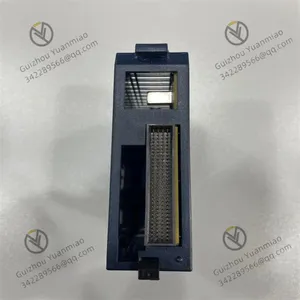
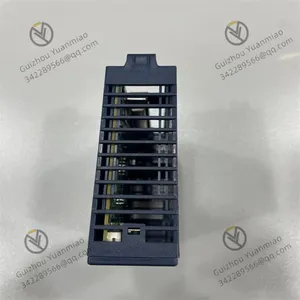
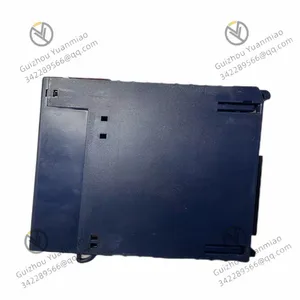
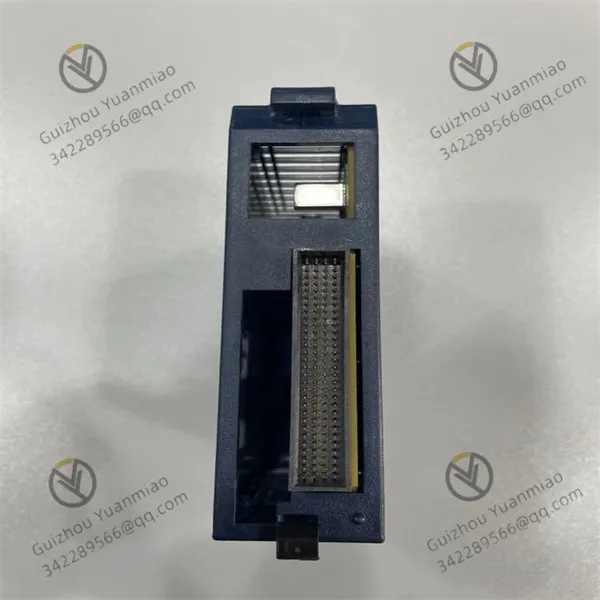
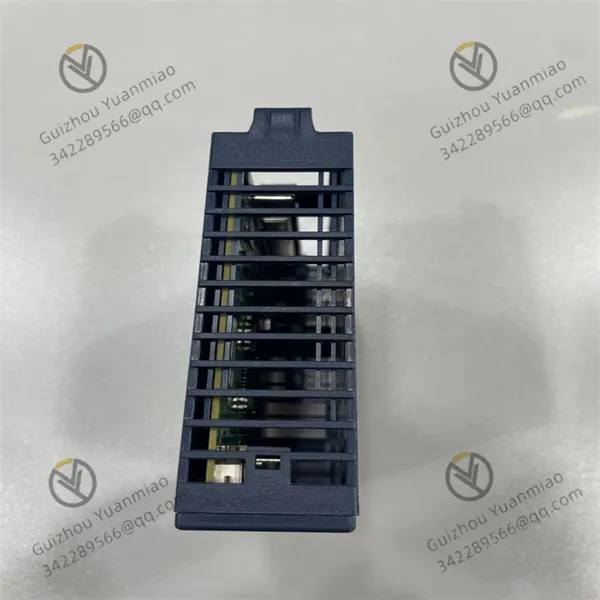
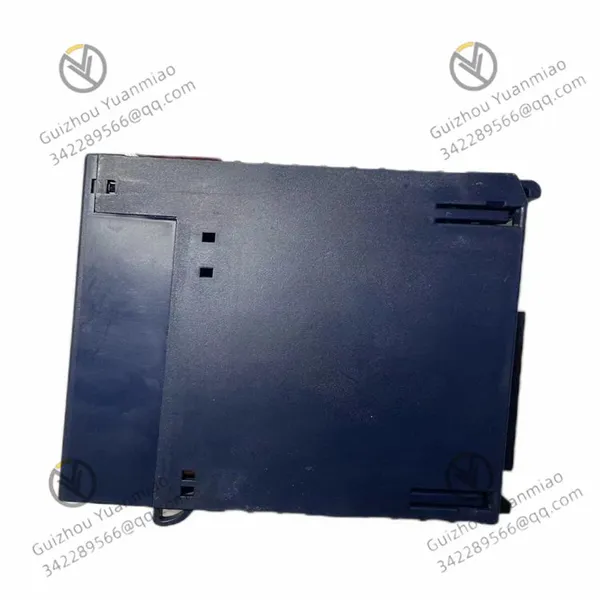
GE IC695CMX128 Control memory Swap module

Working PrincipleReflective Memory Technology Principle
The module employs reflective memory technology, connecting multiple nodes via an optical fiber network to form a reflective memory network. In this network, each node owns an identical memory mirror image. When any node writes data to its local memory, the data is immediately and automatically propagated to all other nodes in the network through the optical fiber network, synchronously updating the memory of other nodes. This ensures real-time data synchronization among all connected nodes without requiring additional complex processing by the CPU, significantly reducing the CPU burden and improving data transmission efficiency and real-time performance.
Data Transmission Principle
It supports a network speed of up to 2.1Gbps for high-speed data transmission. The data packet size is dynamic, ranging from 4 to 68 bytes. The data transmission rate varies with the packet size—for example, 43MB/s for a 4-byte packet and 174MB/s for a 64-byte packet. This high-speed and flexible data transmission mode meets the demand for fast transmission of large volumes of data in industrial fields.
Multi-Node Connection Principle
It can support up to 256 nodes in a daisy-chain loop. Nodes are sequentially connected by optical fiber cables to form a closed loop: the transmitter of the first node connects to the receiver of the second, the second’s transmitter to the third’s receiver, and so on, with the last node’s transmitter connecting to the first node’s receiver. This enables communication between all nodes, allowing numerous devices to easily access the same network for data interaction.
Interrupt and Error Detection Principle
It features programmable interrupt functions, providing four general-purpose network interrupts. When specific events or status changes occur in the network (e.g., data transmission completion, errors), the module sends signals to the CPU via these interrupts to notify it for corresponding processing, ensuring timely responses to network status. Meanwhile, the module has an error detection function, which real-time monitors network integrity, promptly identifies potential faults (such as optical fiber link disconnection or data transmission errors), and takes corresponding measures to ensure stable network operation.

Main FunctionsData Exchange
It provides deterministic data exchange via the optical fiber network, ensuring real-time synchronization among connected nodes. Supporting up to 256 nodes in a daisy-chain loop, it enables seamless communication between nodes without additional processing overhead from the CPU.
Program Data Processing
It can serve as a removable storage device for programs and data used by RX3i controllers, facilitating program transmission, backup, and update between the controller and computer without direct controller access. It also provides backup and recovery functions for critical control programs, enabling easy software updates for RX3i systems.
Technical Parameters
Memory: Equipped with 128MB SDRAM with parity check.
Network Link Speed: Up to 2.1Gbps.
Transmission Rate: 43MB/s for 4-byte packets; 174MB/s for 64-byte packets.
Data Packet Size: Dynamic, ranging from 4 to 68 bytes.
Power Consumption: 660mA at +3.3V DC; 253mA at +5V DC.
Connector: LC-type optical fiber connector (compliant with IEC 61754-20 standard).
Installation Method: Can be installed on RX3i universal backplanes.
Hot Swapping: Supports hot swapping for convenient maintenance and replacement during system operation.
Features
Reflective Memory Technology: Utilizes reflective memory technology to ensure real-time data synchronization—when data is written to one node, all nodes on the network automatically update to the new data.
High-Speed Data Transmission: Capable of high-speed data transmission to meet application scenarios with strict requirements for data transmission speed.
Redundant Transmission Mode: Adopts a redundant transmission mode to reduce data packet loss and improve data transmission reliability.
Programmable Interrupts: Provides four general-purpose network interrupts that can be programmatically set according to actual needs to meet different control logic requirements.
Error Detection: Features error detection to monitor network integrity and promptly detect and feedback network issues.

Application ScenariosIndustrial Automation Production Lines
In large-scale automation production lines for automobile manufacturing, electronic device production, etc., numerous devices (such as robots, CNC machine tools, conveyor systems) need to collaborate. The IC695CMX128 module realizes real-time data synchronization and exchange among these devices through its high-speed data transmission capability and reflective memory technology, ensuring precise coordination of devices to improve production efficiency and product quality. For example, in automobile final assembly lines, it enables devices at different workstations to quickly obtain each other’s working status and data for precise component assembly.
Process Control Fields
In production processes of industries such as chemical, pharmaceutical, and food & beverage, precise control and real-time monitoring of parameters (e.g., temperature, pressure, flow) are required. The module can connect devices like reaction kettles, mixers, and filling machines, rapidly transmitting their data to the control system while promptly conveying control instructions to the devices, ensuring production process stability and product quality consistency. Its error detection function also timely identifies process anomalies to guarantee production safety.
Power Systems
In power systems (both power plants and substations), numerous intelligent devices require data interaction and monitoring. The IC695CMX128 module connects these devices to enable high-speed collection and transmission of power data, helping staff master the operating status of the power system in real time. For instance, in substations, it quickly aggregates data from relay protection devices, transformer monitoring equipment, etc., to the monitoring system for timely fault detection and handling, ensuring stable power supply.
Rail Transit
In the rail transit field, real-time and reliable data transmission is critical for train operation control and station equipment management. The module applies to communication between trains and ground control systems, as well as data interaction among station devices (e.g., signal systems, platform screen doors, lighting systems), ensuring safe train operation and efficient station management. For example, it real-time transmits train position, speed, and other information to provide accurate data support for train scheduling.
Redundancy Systems
Due to its hot-swapping support, the module can be used in redundancy systems in conjunction with related modules. As a dedicated memory module for redundant RX3i CPU pairs, it quickly synchronizes data to the standby CPU when the main CPU fails, ensuring continuous system operation and improving system reliability. Thus, it plays a vital role in critical systems with extremely high reliability requirements, such as aerospace ground control equipment and power control systems of large financial data centers.
Intelligent Traffic Monitoring
In intelligent transportation systems, data collection and transmission from various road sensors (e.g., traffic flow sensors, environmental sensors) and monitoring devices are required. The IC695CMX128 module rapidly transmits data from these devices to the control center, supporting real-time monitoring and intelligent regulation of traffic flow to optimize traffic and reduce congestion.