Home > Electrical & Electronics > Electrical Control System > DEIF DELOMATIC-3 Printed Circuit Board

DEIF DELOMATIC-3 Printed Circuit Board
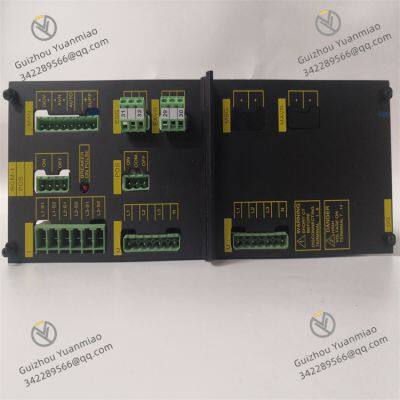
DEIF DELOMATIC-3 Printed Circuit Board photo-1
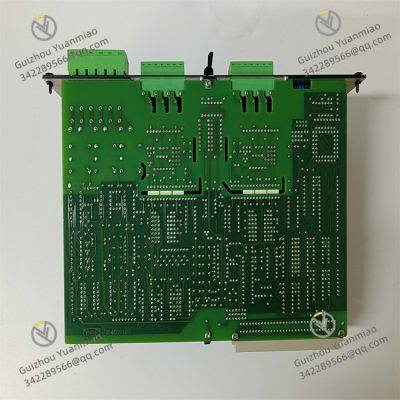
DEIF DELOMATIC-3 Printed Circuit Board photo-2
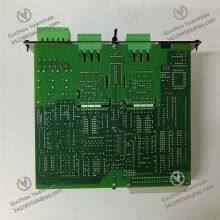
DEIF DELOMATIC-3 Printed Circuit Board photo-3
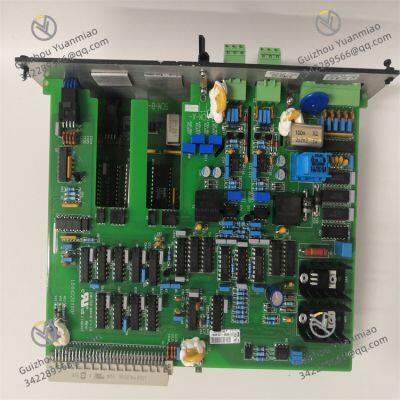
Negotiable MOQ: 1 Piece (Price negotiable depending on order volume and customization)
Key Specifications
Get Latest Price
Material:
Other, Global universal model
Condition:
Other, Global universal model
Task:
Other, Global universal model
Payment & Shipping
Payment Methods:
Port of Shipment:
China
Delivery Detail:
Delivery time depends on order quantity.
Material Other, Global universal model
Condition Other, Global universal model
Task Other, Global universal model
Mathematical Model Other, Global universal model
Signal Other, Global universal model
Customized Non-Customized
Structure Other, Global universal model
Overview


The DELOMATIC-3 is primarily used to detect fault conditions and trigger circuit breaker tripping to prevent damage to power equipment such as generators and transformers. It can be widely applied in industries such as power generation, marine, and industrial automation.


Functional Features

  • Customized Design: Typically customized according to the specific models and functions of DEIF control systems to meet different application requirements.

  • High Reliability: Adopting industrial-grade materials and processes, it has excellent electrical performance and mechanical strength, enabling stable operation in harsh environments.

  • Modular Design: Facilitates installation and maintenance, demonstrates good compatibility with other DEIF modules, and can be seamlessly integrated into DEIF control systems.

  • Signal Processing Functions: Provides physical support for electronic components, realizes functions such as circuit connection, signal transmission, and power distribution, and can also perform some simple signal processing functions.


Technical Parameters

  • Protection Class: IP21.

  • Ambient Temperature: -60°C.

  • Program Capacity: 1.22bit.

  • Control Mode: Pulse Width Modulation (PWM) control mode.

  • Communication Interfaces: Dual RS-232 ports.

  • Current Consumption: 1.22mA.

  • I/O Channels: 8 input channels, 2 output channels.


DEIF SCM-1 (6)


Working Principle

The DELOMATIC-3 receives signals from various sensors in the power system, such as current and voltage signals, through its input channels. It processes and analyzes these signals using onboard electronic components and circuits, comparing them with preset thresholds. When abnormal signals are detected and a fault condition is determined, it sends control signals through the output channels to trigger the circuit breaker to trip and cut off the circuit, thereby protecting the power equipment from damage. Meanwhile, it can also communicate with other devices or control systems through dual RS-232 ports to transmit fault information or receive control commands.


Common Fault Categories and Solutions


1. Unit Fails to Start

Possible Causes:
  • Power Issues: Malfunctions in the controller's power supply (such as low DC power voltage, blown fuse).

  • Abnormal Start Signal: Poor contact of the start button, or remote start signal not transmitted to the controller.

  • Safety Interlock Activation: Protection signals are triggered, such as low lubricating oil pressure, high cooling water temperature, or unreset emergency stop button.

  • Incorrect Parameter Settings: Parameters such as start timeout and number of start attempts are not correctly configured.


Solutions:
  • Check the controller's power input (e.g., DC 24V), replace the fuse, and ensure the voltage is stable within ±10% of the rated value.

  • Use a multimeter to detect the continuity of the start circuit, clean the button contacts or replace the cable; confirm whether the remote control signal (such as PLC output) is normal.

  • Check whether the unit's sensors (such as pressure switches, temperature sensors) are malfunctioning, reset the emergency stop button, and eliminate mechanical failures (such as a Stuck fuel pump).

  • Access the controller menu (e.g., via LCD or PC software), check the "start parameters" settings, for example, set the start timeout to 10-15 seconds and the number of attempts to 3.


DEIF SCM-1 (5)


2. Unstable Voltage/Frequency

Possible Causes:
  • AVR (Automatic Voltage Regulator) Failure: Parameter drift or hardware damage of the AVR module inside the controller.

  • Sudden Load Changes: The controller's response speed is insufficient when suddenly adding/removing large loads.

  • Sensor Errors: Loose wiring or incorrect ratio settings of voltage transformers (PT) and current transformers (CT).

  • Governor Abnormality: Interruption of the diesel engine governor feedback signal (such as a faulty speed sensor), leading to frequency fluctuations.


Solutions:
  • Enter the "voltage regulation" parameters through the controller menu, readjust the PID parameters (such as increasing the proportional coefficient Kp to improve dynamic response), and replace the AVR module if ineffective.

  • Check the load switching sequence to avoid suddenly adding excessive loads; enable the controller's "load staging" function to connect loads in stages.

  • Tighten the PT/CT wiring and confirm that the transformer ratio settings in the controller are consistent with the actual ones (e.g., PT ratio 10000/100V, CT ratio 500/5A).

  • Detect the output voltage of the speed sensor (such as a magnetoelectric sensor) (it should be an AC voltage during operation, with the frequency proportional to the speed), and replace the damaged sensor.


3. Communication Failures (e.g., Modbus, CANopen)

Possible Causes:
  • Mismatched Communication Parameters: Baud rate, data bits, parity bits (e.g., 9600bps, 8N1) are inconsistent with the host computer or other devices.

  • Physical Link Damage: Short circuit, open circuit of the communication cable, or oxidation of interface pins (such as RS-485).

  • Address Conflict: Multiple devices use the same Modbus slave address (the default address is often 1).

  • Protocol Compatibility Issues: The corresponding communication protocol is not enabled in the controller (e.g., Modbus RTU needs to be manually activated).


Solutions:
  • Through the controller menu or configuration software (such as DEIF Toolbox), verify and unify the communication parameters with the host computer, for example, set the baud rate to 19200bps and the parity bit to none.

  • Use a multimeter to detect the resistance of the communication cable (the RS-485 bus should have a resistance of approximately 120Ω between A/B lines and an insulation resistance to ground >1MΩ), and replace the cable or interface module.

  • Modify the device slave address (e.g., set to 2-247) to avoid conflicts with other devices, and test the communication of a single device through a serial debugging tool.

  • Enable the corresponding protocol in the controller configuration software, for example, check the "Modbus RTU Enable" option, and restart the device to make the settings effective.


DEIF SCM-1 (1)


4. Overload or Short Circuit Protection Activation

Possible Causes:
  • Actual load exceeds the rated value: The unit runs under overload for a long time, triggering current protection.

  • Current detection error: CT wiring is reversed, or the controller's current threshold is set too low (e.g., 110% of the rated current should trigger an alarm, and 120% should trigger shutdown).

  • Load-side short circuit: Short circuit in electrical equipment or lines, causing a sudden increase in current.


Solutions:
  • Check whether the total load power exceeds the unit's rated capacity (e.g., a 1000kVA unit carrying a 1200kVA load), and reduce non-essential loads.

  • Confirm the CT wiring phase sequence (e.g., the current directions of A, B, and C phases are consistent), and adjust the overload protection threshold through the controller menu (e.g., set it to 115% of the rated current with a 10-second delay for shutdown).

  • Use an insulation resistance meter (megohmmeter) to detect the insulation resistance of the load line to ground (should be >1MΩ), and troubleshoot and repair the short circuit point.

Product Tags: DELOMATIC-3 , DEIF

Send Inquiry to This Supplier

Message
0/5000

Want the best price? Post an RFQ now!
Gold Verified Supplier
1Yr
Verified Business License
Business Type
Trading Company
Year Established
2014
Factory Size
1,000-3,000 square meters
Product Certifications
SA8000