Home > Electrical & Electronics > Electrical Control System > BERTHOLD LB4460 Communication Manager
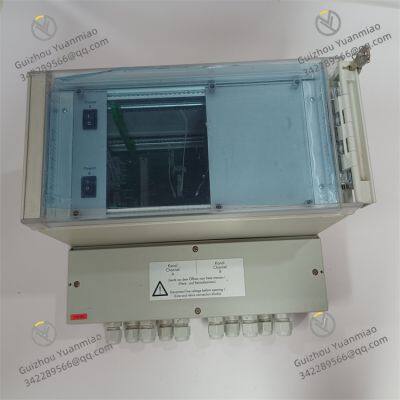
BERTHOLD LB4460 Communication Manager
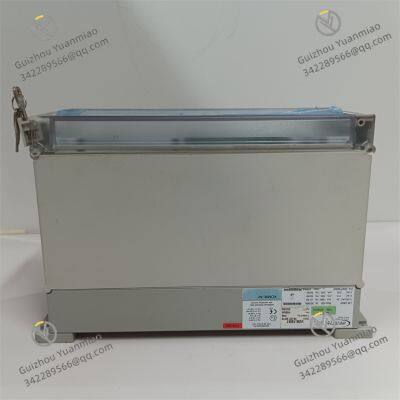
BERTHOLD LB4460 Communication Manager photo-1
BERTHOLD LB4460 Communication Manager photo-2
Negotiable MOQ: 1 Piece (Price negotiable depending on order volume and customization)
Key Specifications
Get Latest Price
Material:
Other, Global universal model
Condition:
Other, Global universal model
Task:
Other, Global universal model
Payment & Shipping
Payment Methods:
Port of Shipment:
China
Delivery Detail:
Delivery time depends on order quantity.
Material Other, Global universal model
Condition Other, Global universal model
Task Other, Global universal model
Mathematical Model Other, Global universal model
Signal Other, Global universal model
Customized Non-Customized
Structure Other, Global universal model
BERTHOLD LB4460
Overview
The BERTHOLD LB4460 is a device for industrial process measurement manufactured by German company BERTHOLD. It primarily uses radioactive principles to determine the material level height by detecting the intensity of gamma rays. It can be applied in industries such as chemical, petrochemical, steel, and coal, and is used for measuring the material level in containers such as storage tanks and silos.
Functional Features
  • Non-Contact Measurement: No direct contact with the measured material is required, allowing measurement without interfering with the normal production process of the material. It is suitable for harsh working conditions such as high temperature, high pressure, strong corrosion, and flammable/explosive environments.

  • High Stability: Utilizing the characteristics of radioactive isotopes, the radiation source has a long half-life, stable measurement performance, and is less affected by external environmental factors (such as temperature, pressure, viscosity, etc.), enabling long-term and reliable operation.

  • Wide Measurement Range: Capable of adapting to material level measurements of different heights. The measurement range can be adjusted according to actual needs to meet the material level detection requirements of various industrial containers.

BERTHOLD LB4460 (2)

General Framework of Working Principle1. Signal Input and Acquisition
  • Radiation Detection Scenario:
    If it is a radiation detector, its core components (such as scintillators, Geiger tubes) interact with incident rays (α/β/γ):

    • The scintillator absorbs the energy of the rays and generates fluorescent photons, which are converted into electrical signals through a photomultiplier tube (PMT);

    • The gas in the Geiger tube produces current pulses under the ionization effect of the rays, forming detectable electrical signals.

  • Biological/Chemical Detection Scenario:
    If it is a liquid scintillation counter, radioactive isotopes in the sample release particles during decay, react with the scintillation solution to produce fluorescence, which is converted into electrical signals by a photodetector.

2. Signal Processing and Amplification
  • Faint input electrical signals (such as pulse signals) are enhanced by amplification circuits (preamplifiers, main amplifiers) for subsequent analysis.

  • Filter circuits remove noise interference to ensure signal accuracy (such as eliminating environmental electromagnetic interference and circuit thermal noise).

3. Data Conversion and Analysis
  • Analog signals are converted into digital signals through an analog-to-digital converter (ADC) and processed by a built-in microprocessor or control unit:

    • Calculate parameters such as signal frequency, amplitude, and energy (such as radiation dose rate, isotope activity);

    • Calibrate the data through preset algorithms (such as background radiation deduction, energy linear correction).

BERTHOLD LB4460 (1)

4. Result Output and Control
  • Output processed data through a display screen, communication interfaces (such as USB, RS-232, Ethernet), or link with external devices (such as computers, PLCs).

  • Some devices support automatic control functions (such as triggering alarms and adjusting working parameters based on detection results).

Differences in Working Principles of Different Device Types
Device Type Core Working Mechanism Typical Applications
Radiation Detector Utilizes the ionization or excitation effect of rays on matter, converts radiation energy into electrical signals through a detector, and then calculates the radiation intensity. Nuclear industry, environmental monitoring, medical radiation protection
Liquid Scintillation Counter Particles generated by the decay of radioactive isotopes excite the scintillation solution to emit light, and the radioactive activity is quantified through photoelectric detection and counting technology. Medical isotope detection, biological molecule labeling research
Laboratory Analysis Instrument Detects the content of specific substances (such as proteins, nucleic acids) in samples through principles such as fluorescence, chemiluminescence, and electrochemistry. Molecular biology experiments, drug research and development
Product Tags: LB4460

Send Inquiry to This Supplier

Message
0/5000

Want the best price? Post an RFQ now!
Gold Verified Supplier
1Yr
Verified Business License
Business Type
Trading Company
Year Established
2014
Factory Size
1,000-3,000 square meters
Product Certifications
SA8000