Home > Electrical & Electronics > Electrical Control System > Yokogawa AIP830 Operation Keyboard

Yokogawa AIP830 Operation Keyboard

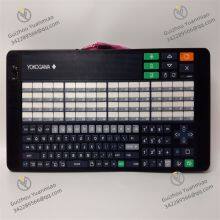
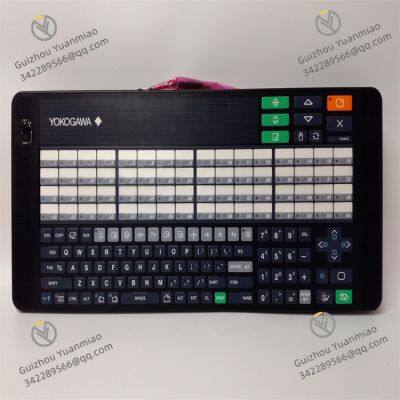
Yokogawa AIP830 Operation Keyboard photo-1
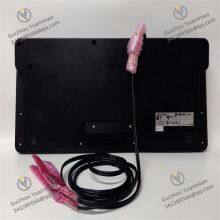
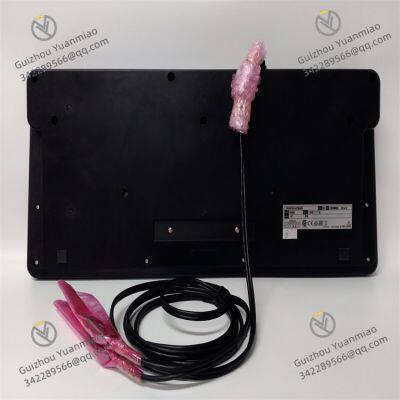
Yokogawa AIP830 Operation Keyboard photo-2
Negotiable MOQ: 1 Piece (Price negotiable depending on order volume and customization)
Key Specifications
Get Latest Price
Material:
Other, Global universal model
Condition:
Other, Global universal model
Task:
Other, Global universal model
Payment & Shipping
Payment Methods:
Port of Shipment:
China
Delivery Detail:
Delivery time depends on order quantity.
Material Other, Global universal model
Condition Other, Global universal model
Task Other, Global universal model
Mathematical Model Other, Global universal model
Signal Other, Global universal model
Customized Non-Customized
Structure Other, Global universal model
Dimensions 96mm×96mm×100mm
Temperature -10℃~+55℃
Control Accuracy ±0.1% FS
Yokogawa AIP830
I. Overview
The Yokogawa AIP830 is a high-performance intelligent temperature controller launched by Yokogawa Electric, belonging to the AIP series. It is specially designed for precise temperature regulation in industrial process control. Its core function is to achieve real-time monitoring and adjustment of temperature in heating/cooling systems through PID control algorithms, suitable for scenarios requiring strict temperature control such as chemical engineering, food processing, metallurgy, and heat treatment. The controller adopts a modular design, supports multiple input/output signals and communication protocols, and features high reliability and anti-interference capabilities, enabling stable operation in complex industrial environments.
II. Functional FeaturesHigh-Precision Control Capability
  • Temperature control accuracy reaches ±0.1℃ (typical value), with a sampling period as short as 50ms and fast response speed, suitable for processes sensitive to temperature fluctuations (e.g., semiconductor annealing, constant-temperature pharmaceutical reactions).

Flexible Input/Output Configuration
  • Supports multiple thermocouples (K, J, T, E, etc.), resistance thermometers (Pt100, Ni100, etc.), and analog inputs (e.g., 4-20mA, 0-10V). Output modes include relay contacts, SSR drive, and analog output (4-20mA), adapting to different actuators.

Advanced Control Algorithms
  • Built-in adaptive PID control algorithm automatically optimizes proportional (P), integral (I), and derivative (D) parameters to reduce overshoot and adjustment time; supports fuzzy control and ramp heating/cooling modes to meet complex process requirements.

Communication and Networking Capability
  • Standard RS-485 interface (Modbus RTU protocol), optional Ethernet interface (Modbus TCP), facilitating integration into DCS (Distributed Control System) or SCADA systems for remote monitoring and data logging.

Safety and Alarm Functions
  • Supports upper/lower temperature alarms and sensor fault alarms (e.g., open circuit, short circuit), and can send alarm signals via relay outputs or communication interfaces; features self-diagnosis to monitor hardware status in real time.

Human-Machine Interaction and Usability
  • Equipped with a 4-digit digital display and operation buttons for quick parameter setting; supports panel locking to prevent misoperation; enables batch configuration and debugging through dedicated software (e.g., Yokogawa Setup Tool).

AIP830 (2).jpg

III. Technical Parameters
Parameter Type Specific Indicators
Input Signals Thermocouples: K, J, T, E, R, S, B, etc.; Resistance thermometers: Pt100 (3-wire/4-wire), Ni100;
Analog: 4-20mA, 0-5V, 1-5V, etc.
Output Signals Relay contacts (250VAC/3A), SSR drive (DC 12V/50mA), analog output (4-20mA, 0-10V)
Control Accuracy ±0.1% FS (full scale) or ±0.1℃ (whichever is larger), resolution 0.1℃
Sampling Period 50ms
Communication Interfaces Standard RS-485 (Modbus RTU), optional Ethernet (Modbus TCP)
Power Supply AC 100-240V (50/60Hz), power consumption ≤10VA
Operating Environment Temperature: -10℃~+55℃, humidity: 10%-90% (non-condensing)
Protection Class Front panel IP66 (dustproof and water jet-proof), back IP20
Dimensions 96mm×96mm×100mm (panel-mounted), compliant with DIN 43700 standard
IV. Working Principle
The AIP830 achieves precise temperature control based on the closed-loop feedback control principle through the process of "signal acquisition - algorithm calculation - output adjustment - feedback correction," as follows:
Temperature Signal Acquisition
Thermocouples or resistance thermometers convert temperature into electrical signals, which are amplified and filtered by the signal conditioning circuit before being input into the controller. The controller converts analog quantities into digital quantities (A/D conversion).
Control Algorithm Calculation
The controller compares the collected temperature value with the setpoint (SP) and calculates the output value (MV) through the adaptive PID algorithm. When the temperature deviation is large, the algorithm automatically adjusts the proportional term for a fast response; as the deviation decreases, the integral term eliminates static errors; the derivative term suppresses overshoot. For nonlinear systems, fuzzy control can be enabled to optimize dynamic characteristics.
Output Adjustment Execution
Based on the calculation results, the controller drives heating/cooling equipment (e.g., heating wires, fans) through relays, SSRs, or analog outputs, adjusting power output (e.g., PWM pulse width modulation) to achieve temperature approaching the setpoint.
Closed-Loop Feedback Correction
Continuously acquiring temperature signals forms a closed-loop control, real-time correcting the output to ensure temperature stability within the target range. When system parameters change (e.g., load fluctuations), the adaptive algorithm automatically optimizes PID parameters to maintain control accuracy.

AIP830 (1)

V. Common Faults and Solutions (Based on Similar Product Logic, Refer to the Official Manual for Details)▶ Signal Acquisition Faults
  • Fault Phenomenon: Display shows "OPEN" (sensor open circuit) or "SHORT" (short circuit).
    • Causes: Thermocouple/resistance thermometer cable breakage, loose terminal connections, or sensor damage.

    • Solutions: Check cable connections and replace damaged cables; measure sensor resistance with a multimeter to confirm damage and replace the sensor if necessary.

  • Fault Phenomenon: Abnormal temperature display (e.g., jumping, fixed value).
    • Causes: Signal electromagnetic interference, A/D conversion circuit failure.

    • Solutions: Add a shield layer to the cable and ground it; check the controller's grounding and replace the main board if necessary.

▶ Control Output Faults
  • Fault Phenomenon: No heating/cooling action.
    • Causes: Oxidized output relay contacts, damaged SSR drive circuit, or actuator power failure.

    • Solutions: Manually short-circuit relay contacts to test actuator normality; use a multimeter to detect output terminal voltage (e.g., whether SSR drive has DC 12V) and replace damaged relays or drive modules.

  • Fault Phenomenon: Large temperature overshoot or significant fluctuations.
    • Causes: Improper PID parameter settings, severe load changes, or too long control cycle.

    • Solutions: Access parameter settings via the panel, decrease the proportional coefficient (P) or increase the integral time (I); enable adaptive tuning; check load stability (e.g., heating furnace sealing).

▶ Communication Faults
  • Fault Phenomenon: Host computer cannot read data (Modbus communication failure).

    • Causes: Mismatched communication parameters (baud rate, parity bit), incorrect RS-485 cable connection (A/B wires reversed), or damaged interface chip.

    • Solutions: Ensure consistent communication parameters between the controller and host computer; check cable connections (A to A, B to B) and use an oscilloscope to detect communication waveforms; replace the communication module.

▶ Hardware Faults
  • Fault Phenomenon: Controller has no display (black screen).
    • Causes: Blown power fuse, faulty power module, or loose display cable connection.

    • Solutions: Disconnect power, check if the fuse is blown (replace with the same specification); measure input power voltage; open the housing, re-plug the display cable, and replace the power board or display module if ineffective.

  • Fault Phenomenon: Internal abnormality alarm (e.g., "ERR" code).
    • Causes: Overheated internal circuit, lost memory parameters, or hardware failure.

    • Solutions: Check if the controller's cooling holes are blocked to ensure good ventilation; try power cycling and restoring factory settings; contact the manufacturer for maintenance or motherboard replacement.

Product Tags: AIP830 , AIP830-111

Send Inquiry to This Supplier

Message
0/5000

Want the best price? Post an RFQ now!
Gold Verified Supplier
1Yr
Verified Business License
Business Type
Trading Company
Year Established
2014
Factory Size
1,000-3,000 square meters
Product Certifications
SA8000