Home > Electrical & Electronics > Electrical Control System > ALSTOM NRD108033 8RDC44667G01 SA44667.C Interface Module

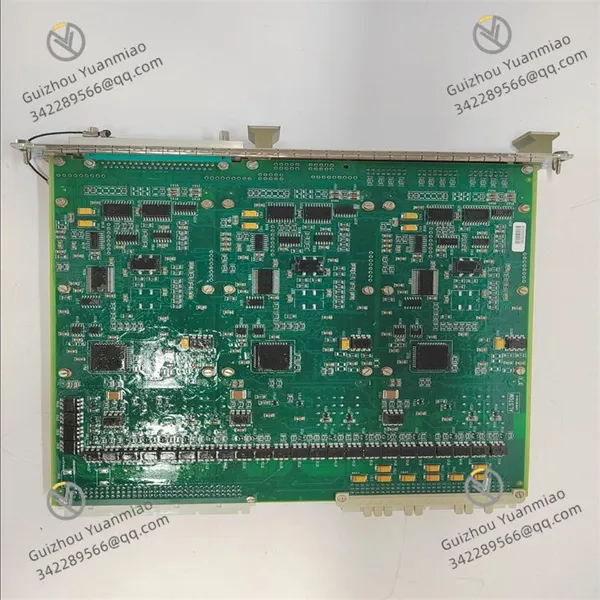
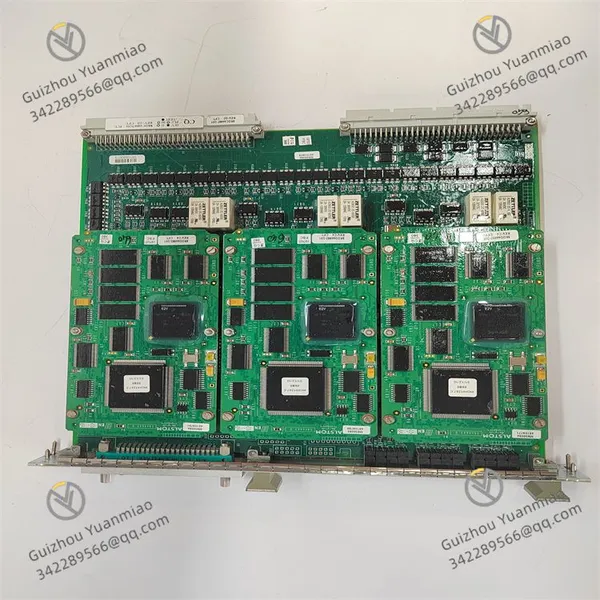
ALSTOM NRD108033 8RDC44667G01 SA44667.C Interface Module
ALSTOM NRD108033 8RDC44667G01 SA44667.C Interface Module photo-1
ALSTOM NRD108033 8RDC44667G01 SA44667.C Interface Module photo-2
Negotiable MOQ: 1 Piece (Price negotiable depending on order volume and customization)
Key Specifications
Get Latest Price
Material:
Other, Global universal model
Condition:
Other, Global universal model
Task:
Other, Global universal model

Payment & Shipping
Payment Methods:
Port of Shipment:
China
Delivery Detail:
Delivery time depends on order quantity.
Material Other, Global universal model
Condition Other, Global universal model
Task Other, Global universal model
Mathematical Model Other, Global universal model
Signal Other, Global universal model
Customized Non-Customized
Structure Other, Global universal model
ALSTOM NRD108033 8RDC44667G01 SA44667.C
Functional Features
  • High Security: Equipped with comprehensive safety mechanisms, ensuring stable operation in harsh environments and preventing data leakage or damage.

  • Powerful Processing Capability: Features strong data processing and analysis capabilities, enabling real-time processing and analysis of received signals, and outputting corresponding control commands.

  • Multiple Communication Protocols: Supports various communication protocols and data formats, enabling communication and data exchange with multiple external devices. It typically integrates interfaces such as Ethernet and serial communication.

  • Fault Diagnosis and Alarm: Provides rich fault diagnosis and alarm functions, facilitating maintenance personnel to detect and resolve issues promptly, and enabling easy integration and interconnection with other systems.

Performance Advantages
  • High Reliability: Features reliable design and manufacturing quality, ensuring stable operation in various industrial environments.

  • Multifunctionality: Offers multiple functions and configuration options, supporting various input/output interfaces, communication protocols, and signal processing functions to meet different application requirements.

  • Flexibility and Expandability: Typically supports modular design, allowing customization and expansion according to specific application needs. Users can add or replace functional modules as required.

  • Real-time Response: Enables fast data processing and high-precision control, achieving accurate motion control and real-time response.

  • Easy Integration: Comes with user-friendly interfaces and software tools, facilitating integration into existing systems and simplifying configuration and operation.

Power-related Features
The power supply circuit can convert 220VAC or 380VAC alternating current into different levels of direct current required by the circuit board, such as +5V, 12V, 15V, 18V, and 24V.

NRD108033 8RDC44667G01 SA44667

NRD108033 8RDC44667G01 SA44667

Common Fault Categories and General Troubleshooting Approaches for Industrial Equipment1. Power Supply Failures
  • Fault Symptoms: Equipment fails to power on, indicator lights do not turn on, frequent restarts, or abnormal heating of the power module.

  • Possible Causes:

    • Unstable input power voltage, reverse polarity, or damaged power adapter.

    • Aging of internal power supply filter capacitors, blown fuses, or faulty power management chips.

  • Solutions:

    • Check if the external power supply voltage meets the equipment requirements (e.g., DC 24V±10% or AC 220V±15%), and use a multimeter to measure the stability of the input voltage.

    • If the power adapter is damaged, replace it with an original or certified power module; if the internal fuse is blown, replace it with a fuse of the same specification after powering off (pay attention to distinguishing fast-blow/slow-blow types).

    • Disassemble the equipment (requires professional operation), check if the capacitors on the power board are bulging or leaking, and replace them if necessary; if the chip overheats, inspect the load for short circuits and replace the power management chip if necessary.

2. Communication Interface Failures
  • Fault Symptoms: Inability to communicate with the host computer via interfaces such as Ethernet, USB, or CANopen, data transmission interruptions, or error reports.

  • Possible Causes:

    • Damaged communication cables, poor interface contact (e.g., oxidized RJ45 interface).

    • Faulty interface chips, incorrect communication protocol configuration (e.g., IP address conflict, baud rate mismatch).

    • Signal attenuation caused by electromagnetic interference (common in industrial environments).

  • Solutions:

    • Replace the communication cable, wipe the interface gold fingers with alcohol, and ensure a secure connection; use an oscilloscope to detect the signal waveform of the cable to confirm interference or attenuation.

    • Check the equipment's communication parameter settings (e.g., IP address, subnet mask, port number) to ensure consistency with the host computer; reset the communication module (e.g., power off and restart or use the hardware reset button).

    • If electromagnetic interference occurs, add a shielding layer to the cable or switch to fiber optic communication, and ensure the equipment grounding meets industrial standards (ground resistance ≤4Ω).

3. Data Acquisition and I/O Failures
  • Fault Symptoms: Abnormal analog input data (e.g., jumps, constant values), unresponsive digital inputs, or large deviations in analog output signals.

  • Possible Causes:

    • Faulty sensors (e.g., zero drift in pressure sensors), short circuit/break in signal cables.

    • Reduced accuracy of ADC/DAC chips, input impedance mismatch (e.g., high-impedance signal sources connected to voltage channels).

    • Incompatible logic levels of digital I/O interfaces (e.g., TTL-level devices connected to 24V industrial signals).

  • Solutions:

    • Connect a standard signal source (e.g., calibrated voltage source) to the equipment's input channel, compare the collected data with the standard values, and calibrate or replace the ADC module if the deviation exceeds the accuracy range (e.g., ±0.01%).

    • Check the logic level settings of the digital I/O interfaces (e.g., switch between 5V/24V modes via DIP switches), and test the output driving capability (e.g., voltage stability after connecting a load to the DO channel).

    • If the sensor is faulty, replace it and reconfigure the input range (e.g., voltage ±10V or current 4-20mA) to ensure the normal operation of the signal conditioning circuit.

Product Tags: NRD108033 , 8RDC44667G01 , SA44667.C

Send Inquiry to This Supplier

* Message
0/5000

Want the best price? Post an RFQ now!
Verified Business License
Business Type
Trading Company
Year Established
2014
Factory Size
1,000-3,000 square meters
Product Certifications
SA8000