Home > Electrical & Electronics > Electrical Control System > NI PXLE-8133 Embedded Controller

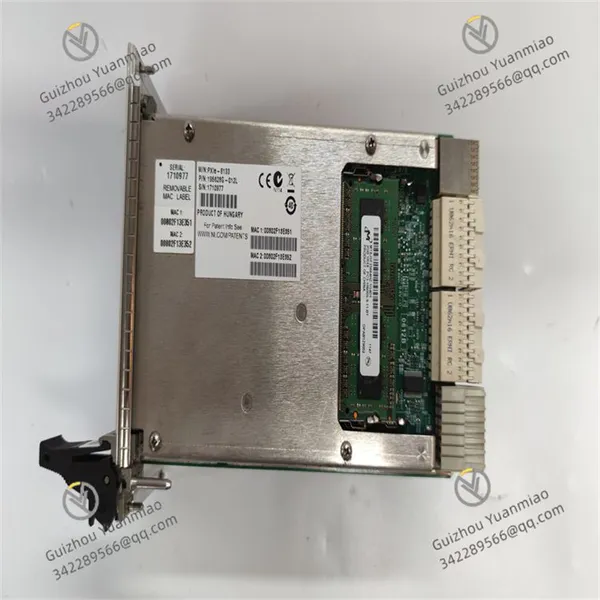
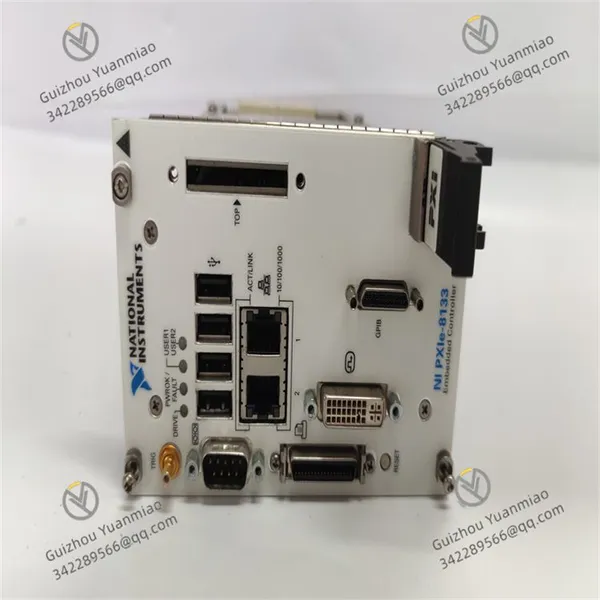
NI PXLE-8133 Embedded Controller

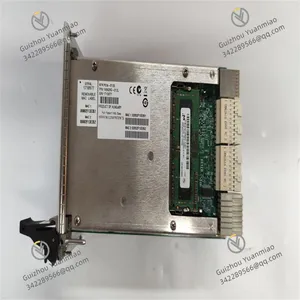
NI PXLE-8133 Embedded Controller photo-1
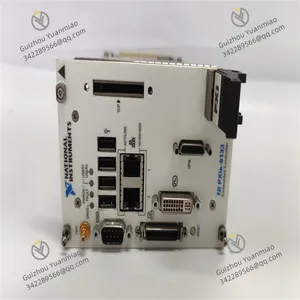
NI PXLE-8133 Embedded Controller photo-2
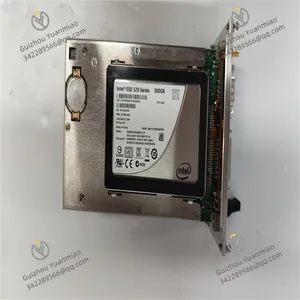
NI PXLE-8133 Embedded Controller photo-3
Negotiable MOQ: 1 Piece (Price negotiable depending on order volume and customization)
Key Specifications
Get Latest Price
Material:
Other, Global universal model
Condition:
Other, Global universal model
Task:
Other, Global universal model

Payment & Shipping
Payment Methods:
Port of Shipment:
China
Delivery Detail:
Delivery time depends on order quantity.
Material Other, Global universal model
Condition Other, Global universal model
Task Other, Global universal model
Mathematical Model Other, Global universal model
Signal Other, Global universal model
Customized Non-Customized
Structure Other, Global universal model
NI PXle-8133
The NI PXle-8133 is a high-performance embedded controller specifically designed for PXI Express (PXle) systems, suitable for testing, measurement, and industrial automation scenarios requiring high computing power, reliability, and expandability. Its core features are as follows:
Hardware Configuration and Specifications
  • Processor: Typically equipped with high-performance Intel processors (such as the Core i series), with specific models referenced in the product manual. It supports multi-threaded processing to meet complex computing requirements.

  • Memory: Standard large-capacity DDR memory (e.g., 8GB/16GB) supports high-speed data processing and parallel multi-task operation.

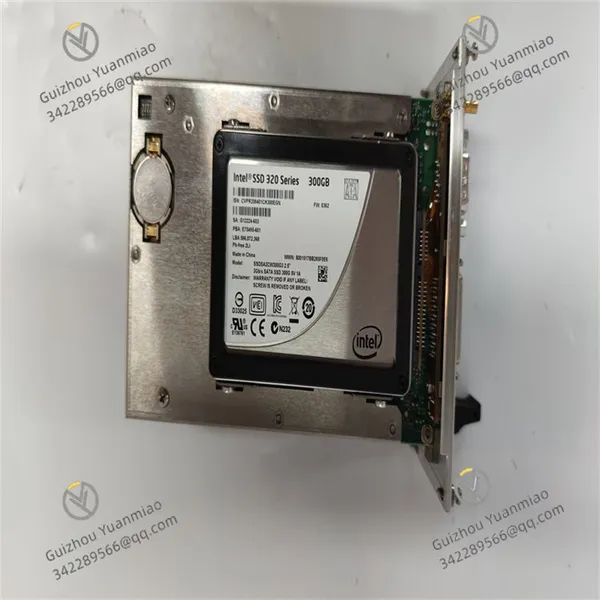
  • Storage: Equipped with an SSD (solid-state drive) to enhance system boot speed and data read/write efficiency, ensuring fast storage of test data.

  • Interfaces:

    • Standard PXle interface for communication with PXI chassis and modules;

    • External interfaces include USB 3.0, Ethernet (e.g., Gigabit Ethernet), serial port (RS-232), GPIB, etc., facilitating connection to external devices (e.g., instruments, sensors).

  • Power Supply and Environment: Supports wide voltage input to adapt to industrial environments; the operating temperature range is typically 0°C to 55°C, meeting stability requirements in conventional industrial scenarios.

Software Compatibility
  • Operating Systems: Supports Windows or NI real-time operating systems (such as NI Linux Real-Time, NI RTOS), selected based on test scenario requirements:

    • Windows System: Suitable for general testing, data visualization, and office software integration;

    • Real-Time System: Applicable to scenarios with extremely high requirements for time synchronization and determinism (e.g., high-frequency data acquisition, real-time control).

  • Development Tools: Compatible with NI development environments such as LabVIEW, LabWindows/CVI, Measurement Studio, etc., enabling quick construction of test programs.

PXLE-8133 (3)

How to Build a Testing System Using NI PXle-8135?
(Note: The following steps use the NI PXle-8135 as an example, and the construction logic is similar to that of the PXle-8133, which can be adjusted according to specific model parameters.)
I. System Planning and Hardware Selection
  1. Clarify Testing Requirements

  • Determine testing objectives: such as electronic device performance testing, sensor calibration, automated production line monitoring, etc.

  • Key parameters: test signal type (analog/digital), sampling rate, accuracy, number of channels, real-time performance requirements, etc.

  • Select a PXIe Chassis

    • Choose a chassis with corresponding slots (e.g., 4-slot, 8-slot, 18-slot) based on the number of modules, ensuring the chassis supports the PXle bus and matches power requirements.

    • Example: If 4 functional modules are needed, a 6-slot PXIe chassis can be selected to reserve expansion space.

  • Configure Functional Modules

    • Data acquisition modules (such as the NI PXIe-4300 series): used for analog and digital input/output;

    • Instrument modules (such as the NI PXIe-5644R vector signal transceiver): used for RF testing;

    • Switch modules (such as the NI PXIe-2597): used for multi-channel signal switching;

    • Motion control modules: used for automated equipment control.

    • Select suitable PXIe modules based on testing requirements, for example:

    II. Hardware Integration and Connection
    1. Install the Controller and Modules

    • Insert the NI PXle-8135 into the main control slot of the chassis (usually slot 1), and insert other modules into expansion slots in order, ensuring secure interfaces.

  • External Device Connection

    • Connect external instruments such as oscilloscopes and signal sources through the controller's external interfaces (e.g., USB, GPIB, Ethernet);

    • Connect sensors and the device under test (DUT) to the signal interfaces (e.g., BNC, terminal blocks) of PXIe modules using cables, paying attention to anti-interference design (e.g., shielded cables, grounding treatment).

    PXLE-8133 (2)

    III. Software Environment Setup and Programming
    1. Install the System and Drivers

    • Install the operating system (such as Windows 10 or NI RTOS) and deploy NI hardware drivers (such as NI-VISA, NI-DAQmx).

    • Identify hardware devices and configure module parameters (such as channels, sampling rate) through NI MAX (Measurement & Automation Explorer) software.

  • Develop Test Programs

    • Hardware initialization: Configure module functions through NI MAX or code calls;

    • Data acquisition/control: Write loop logic to implement signal acquisition, processing, or equipment control;

    • Data processing and display: Use controls such as charts and tables to display test results, supporting data storage (such as CSV, TDMS formats);

    • Exception handling: Add error capture mechanisms to ensure system stability.

    • Use tools like LabVIEW to write test logic, including the following steps:

    • Example framework (LabVIEW pseudocode):

      plaintext
      [Initialize the PXle system]   → Configure data acquisition module channels (e.g., AI0~AI7, sampling rate 100kS/s)   → Start the data acquisition loop   → Process data in real time (filtering, calculation, threshold judgment)   → Display and store results   → Stop acquisition and release resources
    IV. System Debugging and Verification
    1. Single Module Testing

    • Use NI MAX to self-test individual modules (such as short-circuit/open-circuit detection for data acquisition modules) to ensure normal hardware functionality.

  • Overall Joint Debugging

    • Run the test program to check whether data acquisition accuracy and control response speed meet requirements;

    • Simulate abnormal scenarios (such as power outages, signal interruptions) to verify system fault tolerance.

  • Performance Optimization

    • If high real-time performance is required, switch to the NI real-time operating system and optimize the code (such as reducing loop overhead and using multi-threaded processing);

    • For high-frequency data transmission, ensure sufficient bus bandwidth (PXle bus bandwidth is higher than traditional PXI bus).

    PXLE-8133 (1)

    V. Application Expansion and Maintenance
    • Function Expansion: Add new modules through PXIe hybrid slots or integrate with other testing systems through network interfaces (such as Ethernet).

    • Remote Control: Utilize the controller's network interface to achieve remote monitoring and operation through LabVIEW Web Service or remote desktop.

    • Maintenance and Upgrades: Regularly update NI drivers and software patches, and back up system configurations for easy fault recovery.

    Typical Application Scenarios
    • Electronic Component Testing: Combined with digital multimeter modules and oscilloscope modules, conduct electrical performance testing on chips and circuit boards;

    • Automotive Component Testing: Read sensor data (such as pressure, temperature) through analog acquisition modules, and implement engine control testing in conjunction with real-time systems;

    • Communication Equipment Verification: Use RF modules in conjunction with PXle-8135 to test the signal transmission quality of base stations and antennas.

    Product Tags: PXLE-8133

    Send Inquiry to This Supplier

    * Message
    0/5000

    Want the best price? Post an RFQ now!
    Verified Business License
    Business Type
    Trading Company
    Year Established
    2014
    Factory Size
    1,000-3,000 square meters
    Product Certifications
    SA8000