Home > Electrical & Electronics > Electrical Control System > NI SCXI-1121 4-Channel Universal Input Module

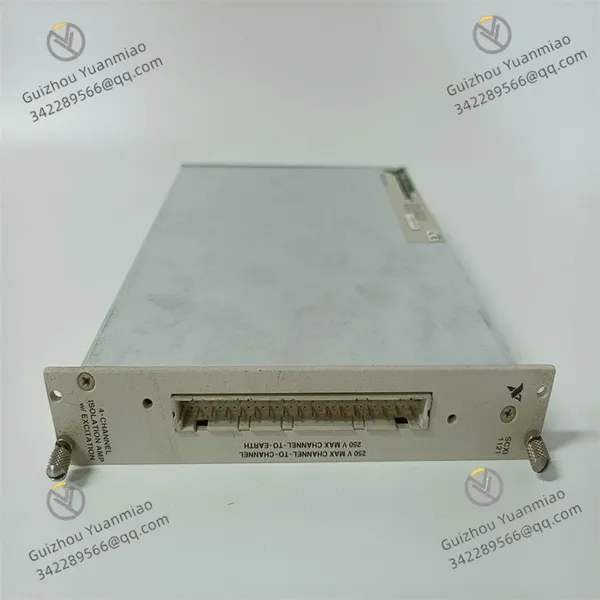
NI SCXI-1121 4-Channel Universal Input Module
NI SCXI-1121 4-Channel Universal Input Module photo-1
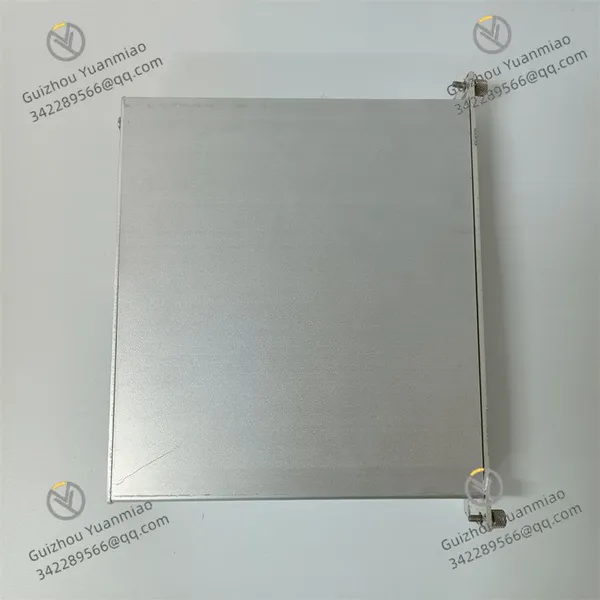
NI SCXI-1121 4-Channel Universal Input Module photo-2
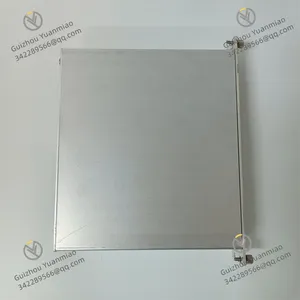
NI SCXI-1121 4-Channel Universal Input Module photo-3
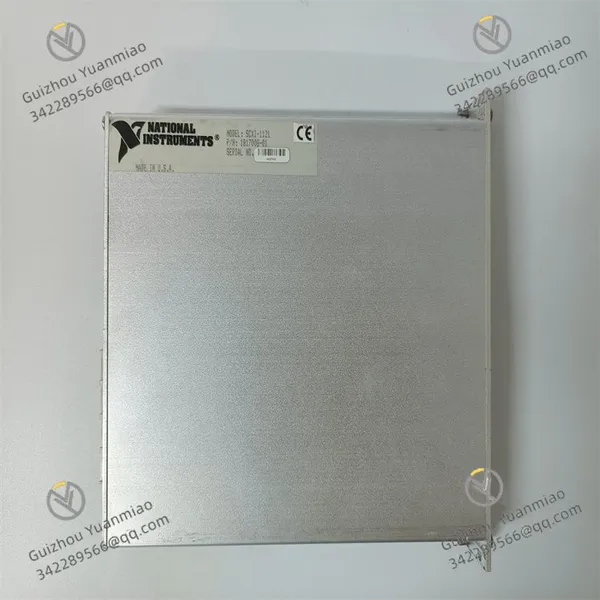
Negotiable MOQ: 1 Piece (Price negotiable depending on order volume and customization)
Key Specifications
Get Latest Price
Material:
Other, Global universal model
Condition:
Other, Global universal model
Task:
Other, Global universal model

Payment & Shipping
Payment Methods:
Port of Shipment:
China
Delivery Detail:
Delivery time depends on order quantity.
Material Other, Global universal model
Condition Other, Global universal model
Task Other, Global universal model
Mathematical Model Other, Global universal model
Signal Other, Global universal model
Customized Non-Customized
Structure Other, Global universal model
Bridge Excitation Voltage ±2.5V, ±5V, ±10V
Linearity ±0.01% FSR
Operating Temperature 0°C to +55°C
NI SCXI-1121Overview
The NI SCXI-1121 is a high-precision signal conditioning module specifically designed for strain gauges and bridge-type sensors, suitable for use with signal conditioning chassis such as the NI SCXI-1000. It primarily amplifies, provides bridge excitation, and linearizes weak differential signals output by strain gauges or bridge-type sensors (e.g., pressure, force, torque sensors), while suppressing interference through electrical isolation to adapt signals to the input range of data acquisition (DAQ) devices. This module is widely applied in scenarios requiring high-precision strain measurement, including structural stress analysis, material mechanics testing, and industrial process monitoring.
Core Functions and FeaturesDedicated Processing for Bridge-Type Sensors
  • Bridge Excitation and Configuration:

    • Built-in configurable bridge excitation power supplies (±2.5V, ±5V, ±10V) support 1/4 bridge, half-bridge, and full-bridge sensor connections, adapting to different bridge circuit types.

    • Automatically compensates for bridge imbalance and supports external balancing resistors to ensure stable output under zero load.

  • High-Precision Signal Amplification:

    • Gain range adjustable from 1, 10, 100, to 1000 times, adapting to microvolt-level signals output by strain gauges (e.g., approximately 1mV/V output at 1000με strain), amplifying them to the optimal sampling range (e.g., ±10V) of DAQ devices.

  • Linearization and Calibration:

    • Supports hardware linearization correction to compensate for the non-linear characteristics of sensors, directly outputting voltage signals linearly proportional to physical quantities (strain, pressure, etc.).

Anti-Interference and Reliability Design
  • Electrical Isolation Protection:

    • Built-in 2500V rms electrical isolation between channels and between channels and ground effectively suppresses ground loop noise and common-mode interference, suitable for strong electromagnetic environments (e.g., near motors and high-voltage equipment).

  • Filtering and Noise Suppression:

    • Integrates a fourth-order Bessel low-pass filter with selectable cutoff frequencies of 10Hz, 100Hz, 1kHz, or 10kHz to filter out high-frequency noise (such as mechanical vibration and power supply interference).

  • Overload Protection:

    • Input channels can withstand ±40V voltage without damage, adapting to complex wiring environments in industrial fields.

Hardware Compatibility and Expandability
  • Chassis and Channel Configuration:

    • Supports insertion into 8-slot chassis such as the SCXI-1000. A single module provides 4 independent differential channels, each of which can be independently configured for bridge type and excitation parameters with mutual isolation between channels.

  • Bus Connection with DAQ Devices:

    • Seamlessly connects to NI DAQ devices (such as PCIe, USB, and PXI series) via SCXI-1324 cables, supporting plug-and-play and hot swapping for convenient system expansion.

SCXI-1121 (3)

Technical Parameters
Parameter Type Specific Index
Signal Input Range Differential input, adapting to 1/4 bridge, half-bridge, and full-bridge sensors; input voltage range varies with bridge configuration
Output Voltage Range ±10V (fixed, dependent on gain settings)
Isolation Voltage 2500V rms (between channels and between channels and ground)
Bridge Excitation Voltage ±2.5V, ±5V, ±10V (adjustable)
Strain Measurement Accuracy ±0.05% FSR (typical value at 1000× gain)
Linearity ±0.01% FSR (full scale range)
Filter Cutoff Frequency 10Hz, 100Hz, 1kHz, 10kHz (software-selectable)
Common-Mode Rejection Ratio (CMRR) 110dB (at 1kHz)
Sampling Rate Up to 100kS/s (dependent on DAQ device performance)
Operating Temperature 0°C to +55°C (non-condensing)
Typical Application Scenarios
  1. Structural Stress Monitoring
  • Scenario: Bridge health monitoring system

  • Configuration: SCXI-1000 chassis + SCXI-1121 module (1/4 bridge strain gauge) + NI PXIe-6366 DAQ card

  • Function: Drives strain gauges with ±10V bridge excitation, sets 1000× gain to amplify microvolt-level strain signals, eliminates environmental vibration interference with 10Hz filtering, acquires strain data of key bridge nodes in real time, and analyzes stress distribution and structural deformation via LabVIEW for fault early warning.

  • Industrial Pressure Testing
    • Scenario: Dynamic pressure monitoring of hydraulic systems

    • Configuration: SCXI-1121 + full-bridge pressure sensor + chassis + USB-6341 acquisition card

    • Function: Drives full-bridge sensors with ±5V excitation, amplifies pressure signals 100 times, directly outputs pressure values using linearization correction, sets sampling rate to 1kHz to capture transient pressure fluctuations in hydraulic systems, and records data in real time via LabVIEW to generate pressure-time curves.

  • Material Mechanics Experiments
    • Scenario: Strain measurement in metal tensile tests

    • Configuration: SCXI-1121 + half-bridge strain gauge + multi-channel SCXI chassis + NI PCIe-6353 DAQ card

    • Function: Conditions multiple strain gauge signals, avoids equipment interference through 2500V electrical isolation, synchronously acquires strain data at different positions during the tensile process, calculates material elastic modulus in combination with force sensor signals, and provides high-precision data support for material performance analysis.

    SCXI-1121 (2)

    Collaborative Applications with Other ModulesMixed Signal Acquisition Systems
    • Advantage: Mixed installation of SCXI-1121 (strain conditioning), SCXI-1102 (thermocouple conditioning), SCXI-1180 (current conditioning), and other modules in the SCXI chassis adapts to synchronous acquisition of multiple signal types such as strain, temperature, and current.

    • Case: In an automotive engine testing system, simultaneously acquire cylinder head strain (SCXI-1121), cylinder block temperature (SCXI-1102), and fuel injection current (SCXI-1180), achieve unified conditioning through the same chassis, and use LabVIEW to synchronously analyze the coupling relationship between mechanical stress and thermal effects.

    Deep Integration with LabVIEW
    • Function: Using LabVIEW's SCXI driver library, one-click configuration of module parameters (such as bridge type, excitation voltage, gain, filter frequency), real-time display of strain waveforms, generation of trend charts, and support for custom algorithm development (such as stress threshold alarms and fatigue life prediction).

    Installation and Maintenance Key PointsInstallation Notes
    • Wiring Specifications:

      • Use low-noise shielded cables for strain gauge signal lines, ensure correct differential input polarity (+/- poles correspond to module terminals), and route bridge excitation lines separately from signal lines to reduce interference.

      • For long-distance wiring, use bridge compensation wires or balancing resistors to avoid wire resistance affecting bridge balance.

    • Calibration and Configuration:

      • When first used or replacing sensors, calibrate bridge excitation voltage and zero offset via NI MAX software to ensure measurement accuracy; set appropriate gain according to sensor sensitivity (e.g., a strain gauge with 2mV/V sensitivity can amplify 1000με strain to 2V with 1000× gain).

    Troubleshooting
    • Abnormal Fluctuations in Measured Values:

      • Check whether the bridge type configuration is correct (e.g., 1/4 bridge requires connecting the module's built-in compensation resistor), or re-calibrate bridge balance via NI MAX.

    • High Signal Noise:

      • Confirm whether the filter frequency setting matches the signal bandwidth (e.g., 10Hz filtering can be set for static strain measurement), or check whether the cable shielding layer is well grounded. Add a grounding plane if necessary to reduce electromagnetic interference.

    SCXI-1121 (1)

    Summary
    As a professional signal conditioning module for bridge-type sensors, the NI SCXI-1121 becomes a core component in the field of strain and pressure measurement with its high-precision bridge excitation, flexible gain configuration, and strong isolation capability. Its core advantages include:


    • Specialization: Specifically designed for strain gauges and bridge-type sensors, supporting multiple bridge configurations without additional signal conversion circuits;

    • High Precision: Strain measurement accuracy reaches ±0.05% FSR, and linearization processing adapts to precise mechanics testing requirements;

    • Flexibility: Deep integration with NI hardware and LabVIEW supports multi-channel synchronous acquisition and custom algorithm development, adapting to complex application scenarios in laboratory research and industrial fields.

    Product Tags: SCXI-1121 , SCXI-1102B , SCXI-1104C

    Send Inquiry to This Supplier

    * Message
    0/5000

    Want the best price? Post an RFQ now!
    Verified Business License
    Business Type
    Trading Company
    Year Established
    2014
    Factory Size
    1,000-3,000 square meters
    Product Certifications
    SA8000