Home > Electrical & Electronics > Electrical Control System > NI SCXI-1141 Elliptical Lowpass Filter Input Module

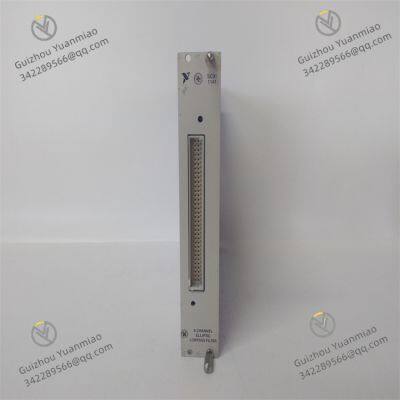
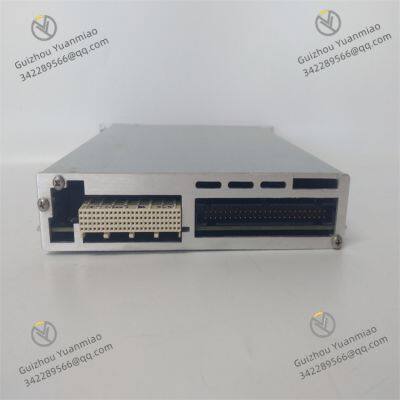
NI SCXI-1141 Elliptical Lowpass Filter Input Module
NI SCXI-1141 Elliptical Lowpass Filter Input Module photo-1
NI SCXI-1141 Elliptical Lowpass Filter Input Module photo-2
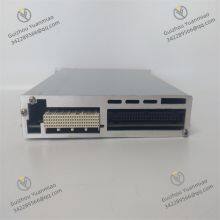
NI SCXI-1141 Elliptical Lowpass Filter Input Module photo-3
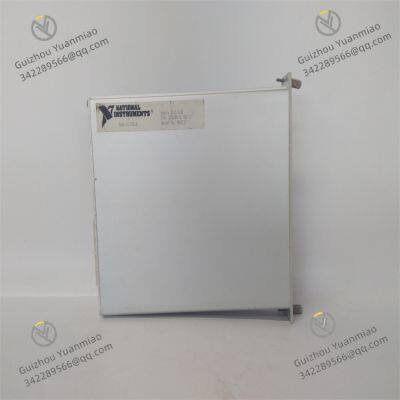
Negotiable MOQ: 1 Piece (Price negotiable depending on order volume and customization)
Key Specifications
Get Latest Price
Material:
Other, Global universal model
Condition:
Other, Global universal model
Task:
Other, Global universal model
Payment & Shipping
Payment Methods:
Port of Shipment:
China
Delivery Detail:
Delivery time depends on order quantity.
Material Other, Global universal model
Condition Other, Global universal model
Task Other, Global universal model
Mathematical Model Other, Global universal model
Signal Other, Global universal model
Customized Non-Customized
Structure Other, Global universal model
Stopband Attenuation 120dB
Overvoltage Protection ±30V
Dimensions 1.2×6.8×8.0 inches
NI SCXI-1141Product Features
  • Programmable Filter
    Equipped with an eighth-order programmable low-pass elliptical filter, configurable with cutoff frequencies from 10Hz to 25kHz, or set from 0.1Hz to 100kHz.
  • Combined Filter Technology
    Adopts a combination of analog and switched-capacitor filters, providing 10,000 discrete, software-programmable cutoff frequencies while maintaining low noise performance.
  • External Clock I/O
    Provides external clock input and output options, allowing external clocks to set filter cutoff frequencies in tracking filter applications.
  • Channels and Gain
    Features 8 channels, each with programmable gain. Input range: ±50mV to ±5V.
  • Sampling Rate
    Maximum sampling rate: 333kS/s (at any gain).
  • Modular Design
    Adopts a modular design for easy integration and expansion with other SCXI modules to build complete control systems.
  • Programming and Control
    Supports multiple programming languages and development environments (e.g., LabVIEW, LabWindows/CVI) and can be configured via the Measurement & Automation Explorer tool.

SCXI-1141 (2)

Technical Specifications
  • Attenuation Rate: 135dB/octave

  • Passband Flatness: ±0.1dB

  • Stopband Attenuation: 120dB

  • Input Noise: Low

  • Input Impedance: High

  • Overvoltage Protection: ±30V

  • Operating Voltage: ±5V (Category I, channel to ground), ±10V (Category I, channel to channel)

  • Dimensions: 1.2×6.8×8.0 inches

Typical Applications
  • Sensor Interfaces
    Connects to various sensors (temperature, pressure, displacement, etc.) to acquire and process sensor output signals.
  • Industrial Automation Systems
    Integrates into industrial automation systems for real-time monitoring, control, data acquisition, and process optimization in industrial environments.
  • Laboratory Measurements
    Supports scientific measurements and experiments in physics, chemistry, biology, and other research fields.
  • Control Systems
    Processes sensor signals to enable system feedback and control in custom control system architectures.
  • Data Acquisition Systems
    Serves as a front-end component for acquiring and conditioning sensor signals, supporting real-time monitoring and data logging.
  • Vibration and Acoustic Analysis
    Conditions and analyzes output signals from vibration and acoustic sensors for diagnostic applications.
  • Education and Training
    Facilitates student learning of data acquisition, signal processing, and instrument control principles in educational laboratories.

SCXI-1141 (3)

Working Principle of NI SCXI-1141I. Hardware Architecture and Core Components
The NI SCXI-1141 is a signal conditioning module for analog signal acquisition in industrial environments, leveraging a modular design with the following key components:


  • Input Front-End Circuit
    Includes signal buffers and protection circuits, supporting input ranges (±10V, ±5V, ±1V, ±0.1V) to interface with sensors (voltage, current, thermocouples, etc.).
  • Instrumentation Amplifier
    Features high common-mode rejection ratio (CMRR) to amplify differential signals while suppressing common-mode interference (e.g., ground loop noise), ensuring signal accuracy.
  • Filter Module
    Integrates a low-pass filter with configurable cutoff frequencies (e.g., 10kHz or 4Hz) to remove high-frequency noise and prevent signal distortion.
  • Isolation Circuit
    Provides 300V rms electrical isolation per channel via transformer or optocoupler technology, breaking electrical connections between channels and ground to eliminate interference.
  • Calibration and Storage Unit
    Built-in EEPROM stores calibration constants, supporting software-programmable offset calibration to eliminate zero-drift errors via ground reference points.
II. Signal Processing Flow
  1. Signal Input and Protection
  • Analog signals from sensors (voltage, current, thermocouple emf) enter the module's input channels, protected by front-end circuits against overvoltage/overcurrent.

  • High input impedance (1MΩ) minimizes sensor loading to maintain signal integrity.

  • Differential Amplification and Common-Mode Rejection
    • Instrumentation amplifiers amplify differential signals (e.g., voltage differences across sensors) with software-configurable gain (1, 10, 100, 1000×) for varying input amplitudes.

    • High CMRR (>100dB) suppresses environmental common-mode interference (e.g., power line noise) to improve SNR.

  • Filtering and Noise Elimination
    • Low-pass filters attenuate out-of-band noise based on configured cutoff frequencies (e.g., 10kHz for high-frequency dynamic signals, 4Hz for low-frequency slow-varying signals), adhering to the Nyquist sampling theorem.

  • Electrical Isolation
    • Isolation circuits electrically separate input signals from output circuits to avoid ground potential difference-induced loop interference, protecting downstream DAQ devices (e.g., NI DAQ cards) from high-voltage surges.

  • Calibration and Output
    • Software-triggered offset calibration: Inputs are grounded via analog switches to measure and store offset errors, which are auto-compensated during subsequent acquisitions.

    • Buffered output signals with 50Ω impedance match cable transmission characteristics, reducing signal reflection.

    SCXI-1141 (1)

    III. Communication and Control Mechanisms
    • Driver and Software Interface
      Relies on NI-DAQmx driver (9.0 or later) for programming via development environments (LabVIEW, C/C++), enabling configuration of gain, filtering, calibration, etc.
    • Output Modes
      Supports parallel output (each channel connects independently to a DAQ card) or multiplexed output (8 channels time-share a single DAQ channel via internal multiplexers).
    • Power and Compatibility
      Requires external ±5V/±15V power, operating from -40°C to +85°C for harsh industrial environments.
    IV. Key Technical Points
    • Role of Isolation Technology
      300V rms isolation prevents interference and avoids ground loop issues between measurement systems, ideal for environments with strong EMI (motors, variable frequency drives).
    • Advantages of Programmable Gain
      Dynamically adjusts gain based on input signal amplitude (from mV-level thermocouple signals to V-level voltage signals), optimizing ADC sampling range for higher resolution.
    • Significance of Calibration Mechanisms
      EEPROM-stored calibration constants compensate for errors from temperature drift and component aging, ensuring long-term measurement accuracy (±0.05% of reading + 2μV).
    Product Tags: SCXI-1141 , SCXI-1125 , SCXI-1104C

    Send Inquiry to This Supplier

    Message
    0/5000

    Want the best price? Post an RFQ now!
    Gold Verified Supplier
    1Yr
    Verified Business License
    Business Type
    Trading Company
    Year Established
    2014
    Factory Size
    1,000-3,000 square meters
    Product Certifications
    SA8000