Home > Electrical & Electronics > Electrical Control System > NI-9505 Series Motor Drive Module
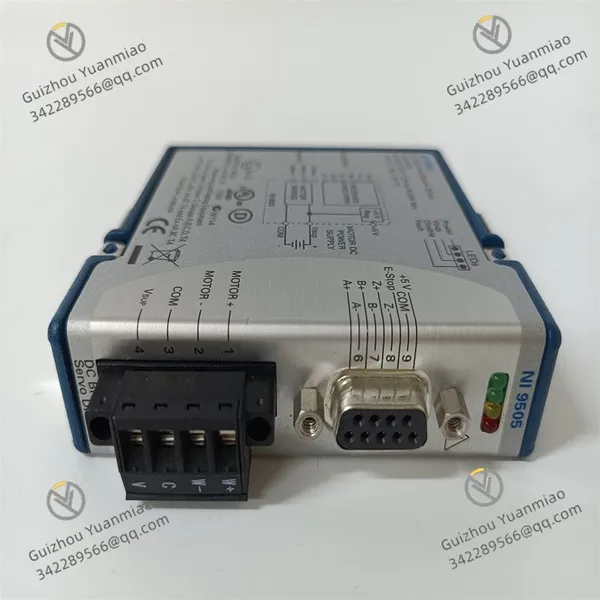
NI-9505 Series Motor Drive Module
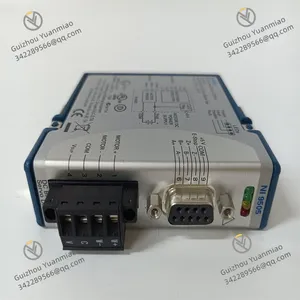
NI-9505 Series Motor Drive Module photo-1
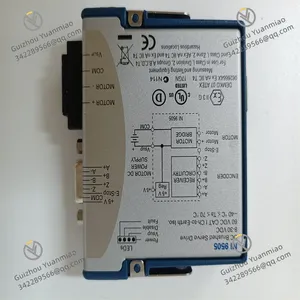
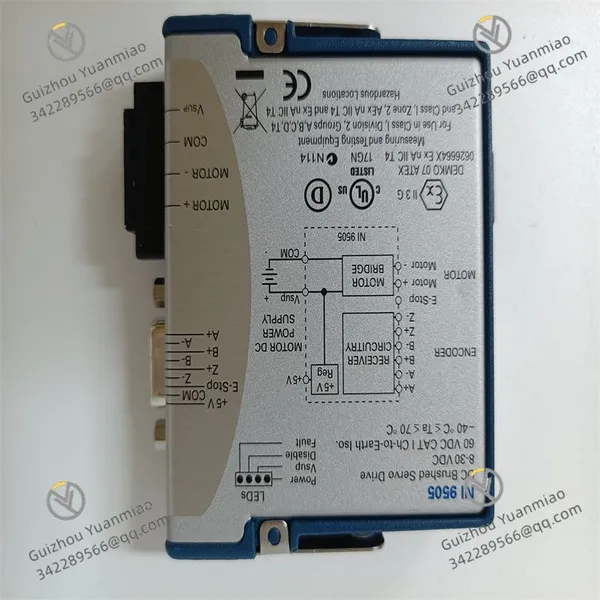
NI-9505 Series Motor Drive Module photo-2
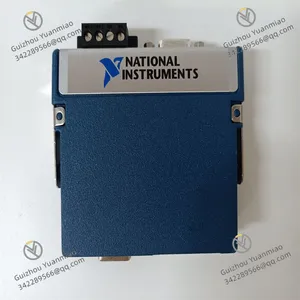
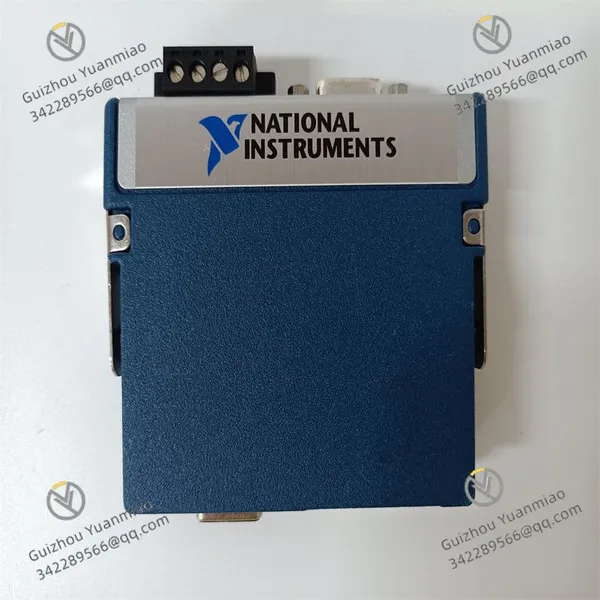
NI-9505 Series Motor Drive Module photo-3
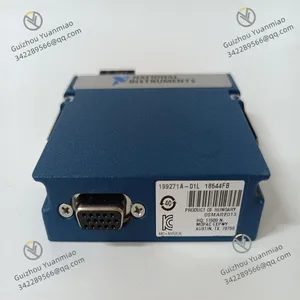
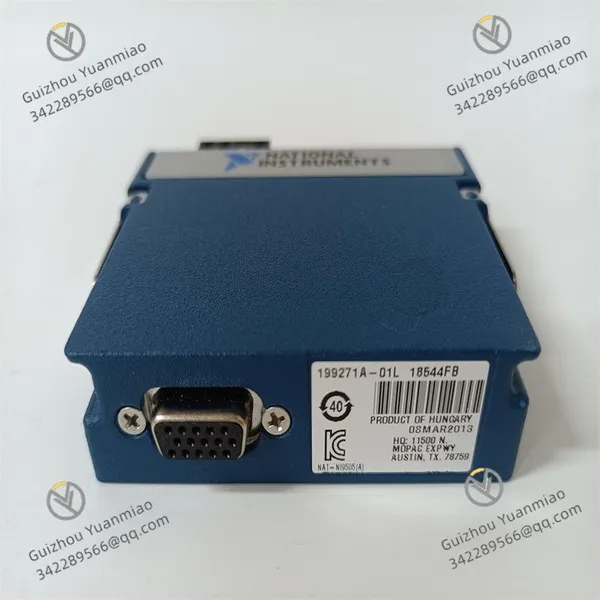
NI-9505 Series Motor Drive Module photo-4
Negotiable MOQ: 1 Piece (Price negotiable depending on order volume and customization)
Key Specifications
Get Latest Price
Material:
Other, Global universal model
Condition:
Other, Global universal model
Task:
Other, Global universal model

Payment & Shipping
Payment Methods:
Port of Shipment:
China
Delivery Detail:
Delivery time depends on order quantity.
Material Other, Global universal model
Condition Other, Global universal model
Task Other, Global universal model
Mathematical Model Other, Global universal model
Signal Other, Global universal model
Customized Non-Customized
Structure Other, Global universal model
Operating voltage 24VDC
Operating Temperature -40°C to 70°C
Power Input 18–30VDC
NI-9505Functions and Working Principles
Working in conjunction with LabVIEW FPGA modules, it enables the creation of highly customizable motor drivers or actuator amplifiers. In typical applications, it achieves position loop, speed loop, and current loop control. The module returns motor/actuator current data to the LabVIEW FPGA module for current loop control or monitoring, and also transmits information such as fault status, VSUP presence, and emergency stop status to the FPGA module for system monitoring.
Product Features
  1. High-Precision Servo Control
  • Three-Loop Control Architecture: Integrates position, speed, and current loops, supporting full closed-loop control for sub-micron positioning accuracy.

  • Adaptive PID Algorithm: Built-in intelligent PID controller auto-adjusts parameters based on load changes to optimize system response and suppress oscillations.

  • High-Resolution Encoder Interface: Supports incremental encoders (up to 20 MHz) and absolute encoders (e.g., SSI, BiSS) for precise position feedback.

  • Flexible Power Configuration
    • Wide Voltage Input Range: 18–30VDC, compatible with various industrial power systems.

    • Programmable Current Limiting: Peak current up to 10A, continuous current 5A; dynamically adjustable via software to protect motors and drivers.

    • Four-Quadrant Operation: Enables forward/reverse rotation and energy feedback, suitable for applications requiring rapid start/stop and braking.

  • Industrial-Grade Reliability Design
    • Wide Temperature Range: -40°C to 70°C, adapting to harsh industrial environments.

    • Rugged Mechanical Structure: Metal housing with DIN rail mounting, resistant to vibration (5g) and shock (50g).

    • Multiple Protection Mechanisms: Integrates overvoltage, overcurrent, short-circuit, and overheat protection for safe operation.

    • Explosion-Proof Certification: Complies with Class I, Division 2, Groups A–D, T4 and Zone 2, suitable for potentially explosive environments.

  • Seamless Integration with NI Ecosystem
    • CompactDAQ Compatibility: As part of the NI cDAQ platform, supports hot-swapping and distributed control.

    • LabVIEW FPGA Integration: Enables custom control algorithms via LabVIEW FPGA, supporting Hardware-in-the-Loop (HIL) testing.

    • TEDS Sensor Support: Automatically identifies and configures TEDS-compatible sensors for simplified system deployment.

  • Diverse Communication Interfaces
    • Analog I/O: Provides ±10V analog input/output for legacy control system integration.

    • Digital I/O: 8 digital inputs (4 configurable as encoder inputs) and 4 digital outputs for logic control.

    • Industrial Bus Support: Optional CANopen, EtherCAT, or Modbus TCP modules for distributed motion control.

  • Advanced Diagnostics and Monitoring
    • Real-Time Status Feedback: Monitors motor current, voltage, temperature, and other parameters in real time.

    • Fault Diagnosis: Built-in fault code system supports remote diagnostics and predictive maintenance.

    • Data Logging: Enables high-speed data acquisition and storage for system performance analysis.

  • Simplified Programming and Configuration
    • Graphical Programming: Develops control logic rapidly via LabVIEW without low-level coding.

    • Plug-and-Play Configuration: Auto-identifies modules through NI MAX, supporting parameter import/export.

    • Preconfigured Control Templates: Provides standard templates for position, speed, and torque control to accelerate development.

  • Application Scenarios
    • Automated Production Lines: Precision positioning, conveyor synchronization, robot joint actuation.

    • Semiconductor Equipment: Wafer handling and high-precision motion control in lithography systems.

    • Medical Devices: Precision control for surgical robots and medical imaging equipment.

    • Aerospace Testing: Wind tunnel model control and load simulation systems.

  • Technical Specifications
  • Parameter Specification
    Power Input 18–30VDC
    Continuous Output Current 5A
    Peak Output Current 10A (30 seconds)
    Control Algorithms PID, adaptive PID, feedforward
    Encoder Resolution Up to 20 MHz (incremental)
    Communication Interfaces Analog I/O, digital I/O, optional industrial buses
    Operating Temperature -40°C to 70°C

    NI-9505 (2)

    NI-9505 (4)

    NI-9505 (3)

    Working Modes of NI-9505 Module
    1. Position Control Mode
    • Working Principle:
      Receives target position commands (e.g., pulse sequences, analog voltage, or digital values), calculates the deviation from the current position, and drives the motor to the specified position via three-loop control (position→speed→current).

    • Applications:

      • Precision positioning in automated production lines (e.g., robotic end-effector positioning).

      • Wafer handling in semiconductor equipment and lithography systems.

      • Nozzle positioning in 3D printing devices.

    • Features:

      • Supports absolute and relative position control.

      • Configurable electronic gear ratio for different drive systems.

      • S-curve acceleration/deceleration to reduce mechanical shock

  • Speed Control Mode
    • Working Principle:
      Maintains constant motor speed via speed and current loop feedback control based on input speed commands (analog or digital). Speed feedback typically comes from encoders or tachogenerators.

    • Applications:

      • Conveyor belt synchronization control.

      • Winding systems (e.g., textile, paper industries).

      • Constant-speed rotating platforms in testing equipment.

    • Features:

      • Wide speed regulation range (typically >1:1000).

      • Speed fluctuation

      • Supports dynamic speed adjustment (e.g., acceleration/deceleration ramps).

  • Torque Control Mode (Current Control)
    • Working Principle:
      Directly controls motor output torque (proportional to current) by adjusting current based on input torque commands (typically analog voltage), independent of position or speed.

    • Applications:

      • Tension control (e.g., film production, cable winding).

      • Simulated load testing (e.g., engine dynamometers).

      • Precision force control (e.g., material tensile testing).

    • Features:

      • High-precision torque control (typically ±1% or better).

      • Supports four-quadrant operation (forward/reverse and energy feedback).

      • Configurable current limiting for motor protection.

  • Mixed Mode (Composite Control)
    • Working Principle:
      Combines advantages of multiple control modes (e.g., adding speed feedforward or torque compensation to position control) to enhance dynamic response and anti-interference capabilities.

    • Applications:

      • Scenarios requiring rapid start/stop and high-precision positioning (e.g., pick-and-place machines).

      • Systems with large load variations (e.g., robot joint control).

    • Features:

      • Customizable composite control algorithms via LabVIEW FPGA.

      • Supports real-time mode switching (requires transition parameter configuration).

  • Homing Mode (Origin Search)
    • Working Principle:
      Drives the motor to find the mechanical origin (zero position) via limit switches or encoder Z-phase pulses, supporting methods like direct search and slow approach.

    • Applications:

      • Equipment power-on initialization.

      • Position system error calibration.

    • Features:

      • Configurable homing speed, direction, and trigger mode.

      • Supports multiple origin settings (e.g., segmented motion systems).

  • Following Mode (Master-Slave Control)
    • Working Principle:
      Multiple NI-9505 modules form a master-slave system where slave modules follow the position, speed, or torque output of the master module for synchronized motion.

    • Applications:

      • Multi-axis linkage equipment (e.g., gantry cranes).

      • Synchronized conveyor systems.

    • Features:

      • Supports electronic cam and gear functions.

      • Enables low-latency synchronization via industrial buses (e.g., EtherCAT).

  • Manual Mode (Jog Control)
    • Working Principle:
      Controls motor movement at preset speeds or increments via external switches or software commands, commonly used for equipment debugging and maintenance.

    • Applications:

      • Equipment installation and commissioning.

      • Manual operation in emergency situations.

    • Features:

      • Configurable jog speed and step size.

      • Supports bidirectional Jog+ and Jog- control.

    Product Tags: NI-9505

    Send Inquiry to This Supplier

    * Message
    0/5000

    Want the best price? Post an RFQ now!
    Verified Business License
    Business Type
    Trading Company
    Year Established
    2014
    Factory Size
    1,000-3,000 square meters
    Product Certifications
    SA8000