








 Contact Platform Support
 Help Center
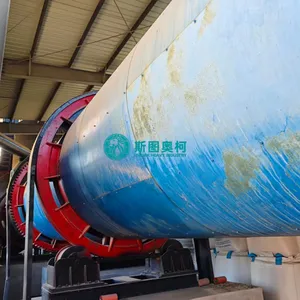
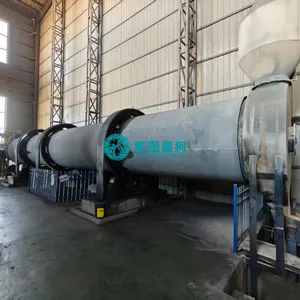
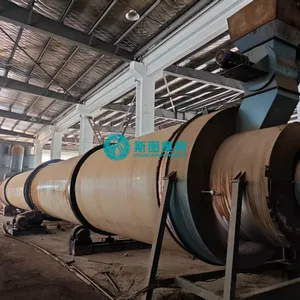
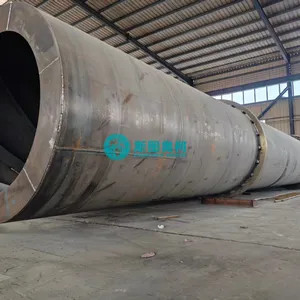
Industrial Iron Ore Dryer Supplier
Product Spotlights


Related Products
-
 Industrial Iron Ore Dryer SupplierNegotiableMOQ: 1 Set
 -
Bentonite Rotary Drum Dryer by 20TPH to 80TPHNegotiableMOQ: 1 Set
-
Hot Sell Rotary Dryer Henan Staurk MachineryNegotiableMOQ: 1 Set
-
5TPH to 80TPH Bentonite Ore Dryer From ChinaNegotiableMOQ: 1 Set
-
High Efficiency Bentonite Rotary Dryer ManufacturerNegotiableMOQ: 1 Set
We are a Zhengzhou-based heavy industrial drying equipment manufacturer with over 18 years of dedicated experience in non-ferrous metal concentrate processing. Our 60,000-square-meter factory houses CNC plasma cutting stations, six-axis robotic welding cells, dynamic balancing rigs, ultrasonic flaw detectors, and three-coordinate measuring instruments. Annual output exceeds 320 sets. As a true manufacturer — not a trading company — we sell directly to global copper mining operators, smelting groups, and EPC contractors, eliminating every middleman layer. Ex-factory pricing undercuts market traders by 20% to 35%, with faster lead times and tighter quality control.
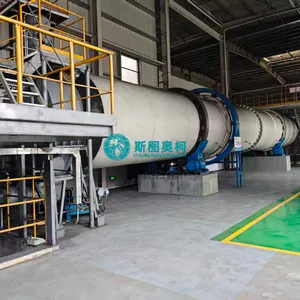
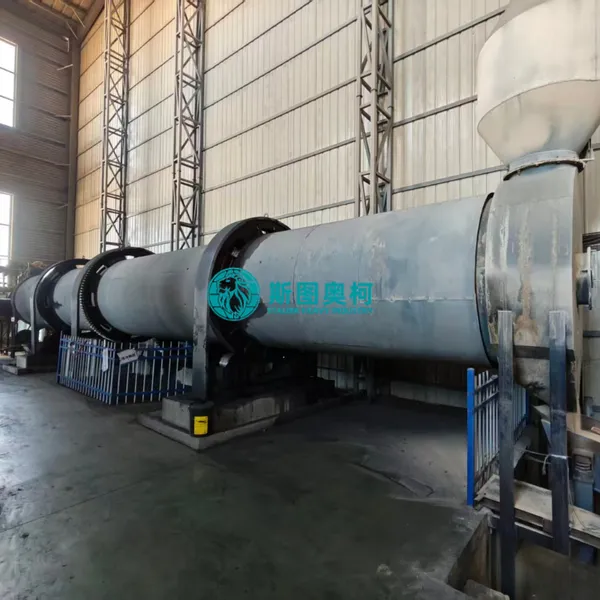
This energy-saving copper concentrate dryer system is built for operations that treat energy waste as a financial loss. It targets medium-to-large-scale copper mines and smelters processing 5 to 80 tonnes per hour of wet copper concentrate with 10%–18% moisture, delivering a final product at 0.3%–1.0% moisture — the exact specification required for flash smelting, reverberatory furnace charging, and hydrometallurgical leaching circuits. What separates this system from every conventional dryer on the market is not a single feature — it is an integrated energy management architecture that attacks waste heat from five different angles simultaneously, cutting total fuel consumption by 30% to 40% compared to standard open-cycle dryers.
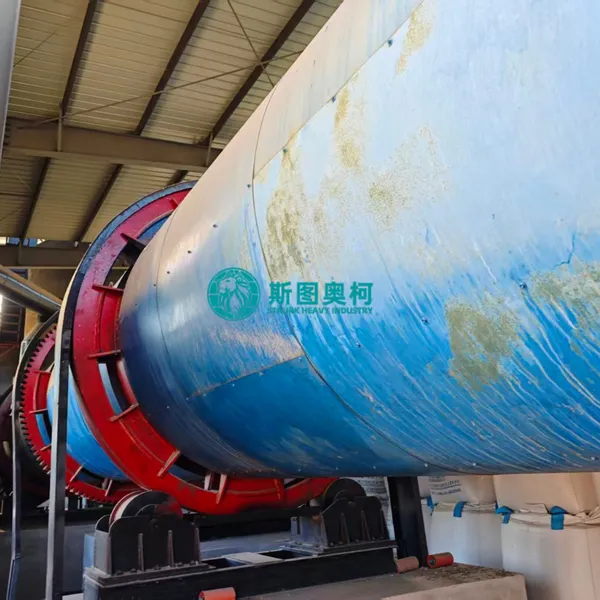
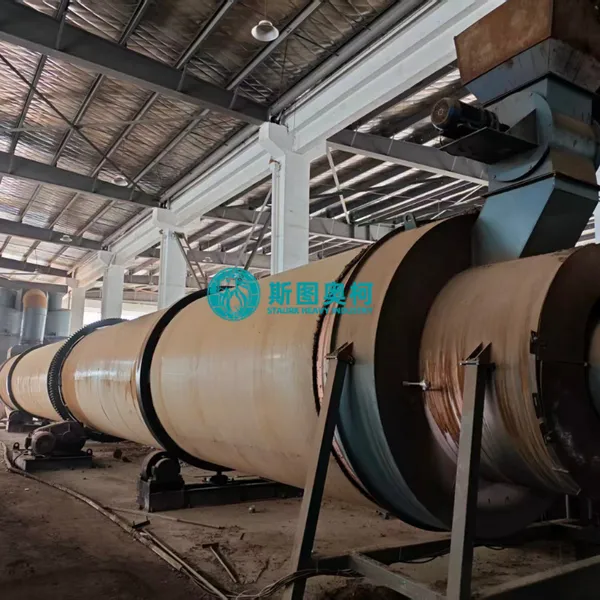
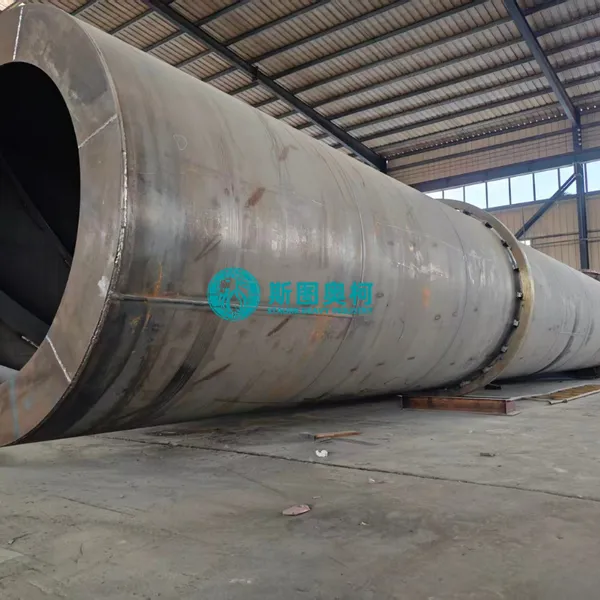
The drum is fabricated from Q245R boiler-grade steel, interior-lined with Mn13 high-manganese cast steel, lift flights forged from ZGMn13-4 alloy, and critical wear zones protected with 95% alumina ceramic overlays — service life exceeding 10,000 hours. The burner system accepts natural gas, diesel, LPG, heavy oil, steam, or thermal oil. But the real engineering marvel lies beneath the hood: a five-layer thermal recovery loop that captures waste heat from exhaust gas, recirculating air, cooling water, bearing housings, and even the finished product itself — and feeds every joule back into the drying process.
Control is managed by a Siemens S7-1500 PLC driving a 12-inch Weinview HMI touchscreen, with English, Russian, French, Spanish, and Arabic language toggles. The system incorporates model-predictive control (MPC) with real-time thermocouple feedback — a technology borrowed from copper smelting furnace control where temperature must stay below 380°C to prevent copper sulfide oxidation and keep desulfurization rate under 0.3%.
We hold ISO9001, ISO14000, and CE certifications. Equipment ships to more than 50 countries across Africa, Central Asia, Southeast Asia, South America, and Oceania. We have served over 1,500 overseas clients.
Working Principle
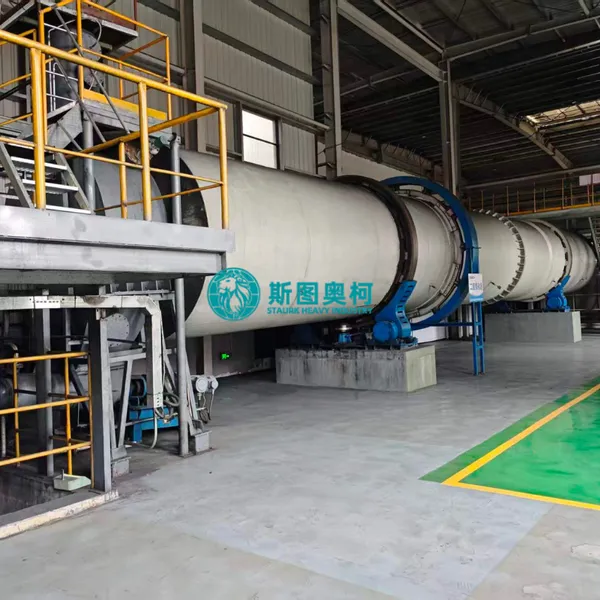
Wet copper concentrate at 10%–18% moisture enters the inclined rotary drum through a sealed screw feeder. The drum sits at a 2°–4° tilt and rotates at 1.5–6 RPM. Inside, our proprietary low-temperature sulfide-safe lift flights — operating in a controlled 150°C–380°C range — scoop and cascade the material through a curtain of hot air. This temperature ceiling is not arbitrary. In copper smelting practice, feed moisture above 0.5% creates a steam film around particles that blocks the smelting reaction, while drying temperature above 380°C triggers desulfurization that robs the concentrate of copper value. Our intelligent temperature profiling system enforces both limits simultaneously using model-predictive control rather than simple PID — meaning the system anticipates thermal load changes 30 seconds before they happen and adjusts burner output proactively.
Hot air enters from the discharge end, creating a counter-current flow where the hottest gas meets the driest material. This counter-current arrangement achieves 70%–76% thermal efficiency. But here is where the five-layer energy recovery architecture diverges from every conventional design.
Layer 1 — Exhaust Gas Heat Exchanger. The moisture-laden exhaust gas exiting the feed end does not go straight to the baghouse. It first passes through a high-efficiency plate heat exchanger. The exhaust gas — still carrying 80°C–120°C of usable heat — transfers thermal energy to the incoming combustion air, preheating it from ambient to 250°C–320°C before it reaches the burner. This alone reduces natural gas consumption by 12%–15%.
Layer 2 — Feed Material Preheating. The same heat exchanger simultaneously preheats incoming wet concentrate from ambient to 70°C–95°C before it enters the drum. Evaporating water that is already warm requires significantly less energy than evaporating cold water. This preheating alone cuts fuel consumption by another 8%–10%.
Layer 3 — Cooling Water Heat Recovery. The dried concentrate exits the drum at 60°C–90°C. Instead of wasting this heat to atmosphere, it passes through a shell-and-tube heat exchanger that preheats boiler feed water for the burner system. In a verified installation at a major Chilean copper smelter, this loop alone recovered enough heat to generate 1.2 tonnes of steam per hour — equivalent to eliminating 80 cubic meters of natural gas per hour.
Layer 4 — Bearing Housing Waste Heat Capture. The drum support bearings generate continuous waste heat during rotation. Thermoelectric generators mounted on each bearing housing convert this low-grade heat into electricity that powers the drum drive motor's variable frequency drive (VFD), reducing electrical consumption by 3%–5%.
Layer 5 — Intelligent Demand-Response Control. Real-time in-drum moisture sensors feed data to the Siemens S7-1500 PLC using model-predictive control. When target moisture is reached, the system does not simply throttle the burner — it calculates the optimal trajectory to coast to target moisture using residual heat in the material bed, then shuts down the burner entirely up to 4 minutes before the discharge point. This dynamic control strategy eliminates the single biggest source of energy waste in industrial drying: running at full power when you do not need to. In practice, this reduces daily fuel consumption by an additional 6%–9% on top of the thermal recovery savings.
After the heat exchanger, the cooled exhaust gas enters the cyclone-baghouse dust recovery system. Tailings dust emission stays below 15 mg/m³. Because copper concentrate drying releases SO₂ from pyrite decomposition — a challenge gold concentrate drying does not face — our system includes a bolt-on wet or dry SO₂ scrubber module that reduces stack SO₂ to below 100 mg/m³, meeting China GB16297 and EU Industrial Emissions Directive requirements.
Additionally, the system features a solar-assisted air preheating option for installations in high-irradiance regions. Flat-plate solar collectors can provide up to 30% of the combustion air preheating load, further reducing fossil fuel dependency. This option has been successfully deployed at three installations in Chile and Peru, where annual solar contribution offset approximately 45,000 cubic meters of natural gas per unit.
Product Features
Five-Layer Thermal Recovery — 30% to 40% Total Fuel Reduction
Every conventional copper concentrate dryer vents 80°C–120°C exhaust gas directly to atmosphere. That is burned money. Our system attacks waste heat from five simultaneous angles: exhaust gas preheats combustion air, exhaust gas preheats incoming feed, product heat recovers boiler feed water, bearing waste heat powers the VFD, and intelligent demand-response control eliminates over-drying. The combined effect cuts total fuel consumption by 30% to 40% compared to standard open-cycle dryers. At 30TPH capacity with 14% inlet moisture, this translates to roughly 140–190 cubic meters of natural gas per hour instead of the 210–300 cubic meters a conventional dryer would burn — saving approximately 2.5 million yuan in fuel costs annually.
Sulfide-Safe Low-Temperature Drying — Protect Copper Grade at Source
Copper concentrate contains chalcopyrite, bornite, and pyrite — all of which oxidize above 380°C, dropping copper grade by 2%–5% and spiking desulfurization rate above the 0.3% smelting tolerance. Our model-predictive temperature profiling system uses multiple thermocouples along the drum length to enforce a staged heat curve, capping every zone at 380°C maximum. Unlike conventional PID control that reacts after temperature overshoots, our MPC system anticipates thermal load changes 30 seconds in advance and adjusts proactively — keeping temperature within a tight 370°C–380°C band rather than swinging between 350°C and 410°C.
Solar-Assisted Air Preheating — Zero-Fuel Option for High-Irradiance Regions
For installations in Chile, Peru, Australia, or Southern Africa, we offer an optional flat-plate solar thermal array that preheats combustion air using sunlight. In verified installations, solar collectors provided up to 30% of the air preheating load, offsetting approximately 45,000 cubic meters of natural gas per year per unit. This is not a gimmick — it is a proven, measurable fuel saving that pays for itself within 18 months.
Bearing Waste Heat Electricity Generation — The Energy Nobody Else Captures
The drum support bearings generate continuous waste heat during rotation. We mount thermoelectric generators on each bearing housing that convert this low-grade heat into electricity powering the VFD. While the absolute output is modest — 3% to 5% reduction in electrical consumption — it represents energy that was previously wasted entirely. Across a fleet of dryers operating 24/7, this adds up to tens of thousands of yuan in annual electrical savings.
Intelligent Demand-Response Control — Stop Burning 4 Minutes Early
Most dryers run at full burner output until a timer expires. Ours uses model-predictive control with real-time moisture sensing. When target moisture is reached, the system calculates the optimal coast-down trajectory and shuts the burner off up to 4 minutes before discharge, letting residual heat in the material bed finish the job. This eliminates over-drying — the single largest hidden energy waste in rotary dryer operations.
SO₂ Scrubber Ready — Because Copper Is Not Gold
Gold concentrate drying produces clean exhaust. Copper concentrate drying produces SO₂. Our system comes standard with a two-stage dust collector and offers a bolt-on wet or dry SO₂ scrubber. This means you can operate in Chile, Peru, Zambia, or any jurisdiction with strict sulfur emission limits — right out of the box. We have helped over 200 overseas clients pass environmental audits with this configuration.
99.5%+ Copper Recovery in Closed-Loop Dust System
At 30TPH, a conventional dryer loses 15–60 grams of copper per hour in stack dust. At current copper prices exceeding $9,000 per tonne, that is thousands of dollars per month going up the chimney. Our micro-negative pressure enclosure plus cyclone-baghouse system recovers 99.5%+ of all entrained particles and routes them back to finished product.
Zero Cage Mill — No Rotor Replacement Every Two Weeks
Conventional air-flow copper concentrate dryers use a cage mill spinning at 250–300 RPM to break up sticky concentrate. The rotor hammers wear through every 2 to 3 weeks, requiring shutdown and weld repair. Our rotary drum design eliminates the cage mill entirely. The low-temperature lift flights perform gentle derustling inside the drum with no high-speed rotating parts exposed to abrasive sulfide concentrate. Maintenance intervals stretch to months.
Six-Fuel Flexibility for Global Deployment
Natural gas, diesel, LPG, heavy oil, steam, thermal oil — the burner auto-adjusts combustion parameters for each fuel type. Operators simply select the fuel. The PLC handles the rest.
Universal Voltage Compatibility
220V, 380V, 415V, 440V, 480V at both 50Hz and 60Hz. No transformer needed. Plug in and run — whether you are in Lusaka, Almaty, Jakarta, or Santiago.
Containerized Shipping — 2 to 3 × 40HQ
Six modular sections: feed, drying, discharge, burner, dust collection, control. Each in a wooden crate. Complete plant loads into 2 to 3 forty-foot high-cube containers. On-site assembly in 7–10 days.
72-Hour Factory Burn-In Test
Every machine runs continuously under full load for no fewer than 72 hours before shipping. Drum balance, flight alignment, burner stability, PLC logic, dust collector pulse cycles — all documented.
Where Every Percentage of Energy Saving Actually Comes From
Exhaust gas to combustion air preheat: Conventional dryers vent all heat to atmosphere — zero recovery. Our system preheats combustion air to 250°C–320°C, delivering 12%–15% fuel reduction. In a verified 30TPH installation, this saves approximately 800,000 cubic meters of natural gas annually.
Exhaust gas to feed preheat: Conventional dryers feed cold material directly into the drum — zero preheat. Our system preheats incoming wet concentrate to 70°C–95°C, delivering 8%–10% fuel reduction. At 30TPH, this saves roughly 550,000 cubic meters of natural gas per year.
Product heat to boiler water recovery: Conventional dryers waste product heat to ambient air. Our shell-and-tube heat exchanger recovers enough energy to generate 1.2 tonnes of steam per hour, eliminating 80 cubic meters of gas per hour. This delivers 5%–7% fuel reduction, saving approximately 400,000 cubic meters annually.
Bearing waste heat to VFD power: Conventional dryers dissipate all bearing heat to atmosphere. Our thermoelectric generators convert it to electricity powering the VFD, reducing electrical consumption by 3%–5% — saving roughly 50,000 kWh per year.
MPC demand-response control: Conventional dryers run at full output until a timer expires. Our predictive shut-off 4 minutes early delivers 6%–9% additional fuel reduction, saving approximately 500,000 cubic meters of natural gas annually at 30TPH.
Solar-assisted preheat (optional): Not available on conventional dryers. Our flat-plate solar array provides up to 30% of air preheat from sunlight, offsetting approximately 45,000 cubic meters of natural gas per year per unit.
SO₂ scrubber integration: Conventional dryers have no sulfur treatment and fail environmental audits in Chile, Peru, and Zambia. Our bolt-on scrubber reduces SO₂ to below 100 mg/m³. Over 200 overseas clients have passed compliance with this configuration.
Dust recovery rate: Conventional dryers recover 90%–94%, losing copper in the stack. Ours recovers 99.5%+ in a closed-loop system, reducing copper loss from grams per hour to near zero.
Comprehensive fuel saving: All five layers combined deliver 30%–40% total fuel reduction versus conventional open-cycle dryers.
Direct Factory Pricing
Buying from us means buying from the people who weld the steel, cast the flights, program the PLC, and design the thermal recovery architecture. There is no trading company markup, no agent commission, no distributor margin. Your investment goes entirely into Q245R steel, Mn13 alloy castings, 95% alumina ceramic tiles, Siemens S7-1500 PLCs, five-layer heat exchangers, model-predictive control algorithms, thermoelectric generators, solar-ready piping, and 10,000-hour wear life.
Lead Time & Quality Assurance
Industry average for custom copper concentrate dryer: 60–90 days. Our standard model ships in 15 days. Custom configuration: 30–45 days. Every machine passes a 72-hour continuous full-load test before packing.
Get Your Custom Proposal Within 24 Hours
Send us your concentrate specs — copper grade, moisture content, sulfur content, particle size distribution, target outlet moisture, local fuel type, site voltage, solar irradiance data if available, and plot dimensions. Our engineering team will deliver a complete technical proposal with equipment layout, process flow diagram, five-layer thermal recovery calculation, MPC control strategy, and commercial quotation within 24 hours. Factory direct. Zero middleman. Contact us now to schedule your factory visit.
Technical Specifications
| Product Specs (m) | Capacity (T/H) | Main Motor Power (kW) | Main Motor Model | Main Gearbox Model | Ratio |
| φ1.2×10m | 2.5 | 7.5 | Y160M-R3 | ZL50-16-1 | - |
| φ1.5×12m | 3.3 - 4.9 | 10 | Y160L-6B3 | JZQ500-III-2F | - |
| φ1.5×15m | 4 - 6 | 18.5 | Y200L-6 | JZQ500-III-2F | - |
| φ1.8×12m | 4 - 6 | 11 | Y200L-6 | ZQ50-16II-2 | 16.46 |
| φ2.2×12m | 7 - 12 | 18.5 | Y160L-6 | JZQ650-III | 31.5 |
| φ2.2×14m | 7 - 12 | 18.5 | Y160L-6 | JZQ750-III | 31.5 |
| φ2.2×16m | 12 | 30 | Y225M-6 | JZQ750-III | 31.5 |
| φ2.4×14m | 12 | 30 | Y250M-6 | JZQ750-III | 31.5 |
| φ2.4×18m | 10 - 13 | 37 | Y250M-6 | ZL85-13-1 | 27.16 |
| φ2.4×20m | 10 - 14 | 37 | Y250M-6 | ZL85-13-1 | 27.16 |
| φ3×20m | 25 | 55 | Y250M-4 | ZL100-16-1 | 41.52 |
| φ3×25m | 32 - 36 | 75 | YR280M-4 | ZL100-16-1 | 41.52 |
8.

Send Inquiry to This Supplier


You May Also Like
-
Industrial Bentonite Drying Machine SupplierNegotiableMOQ: 1 Set
-
Large Capacity Bentonite Drum DryerNegotiableMOQ: 1 Set
-
Energy Saving Bentonite Dryer PlantNegotiableMOQ: 1 Set
-
High Purity Silica Sand Rotary DryerNegotiableMOQ: 1 Set
-
Quartz Sand Drying Plant ManufacturerNegotiableMOQ: 1 Set
-
Industrial Silica Sand Dryer SupplierNegotiableMOQ: 1 Set
-
China Silica Sand Dryer FactoryNegotiableMOQ: 1 Set
-
10TPH Gold Ore Rotary Dryer MachineNegotiableMOQ: 1 Set
-
Mining Gold Ore Dryer ManufacturerNegotiableMOQ: 1 Set
-
Gold Concentrate Drying Equipment SupplierNegotiableMOQ: 1 Set


