








 Contact Platform Support
 Help Center
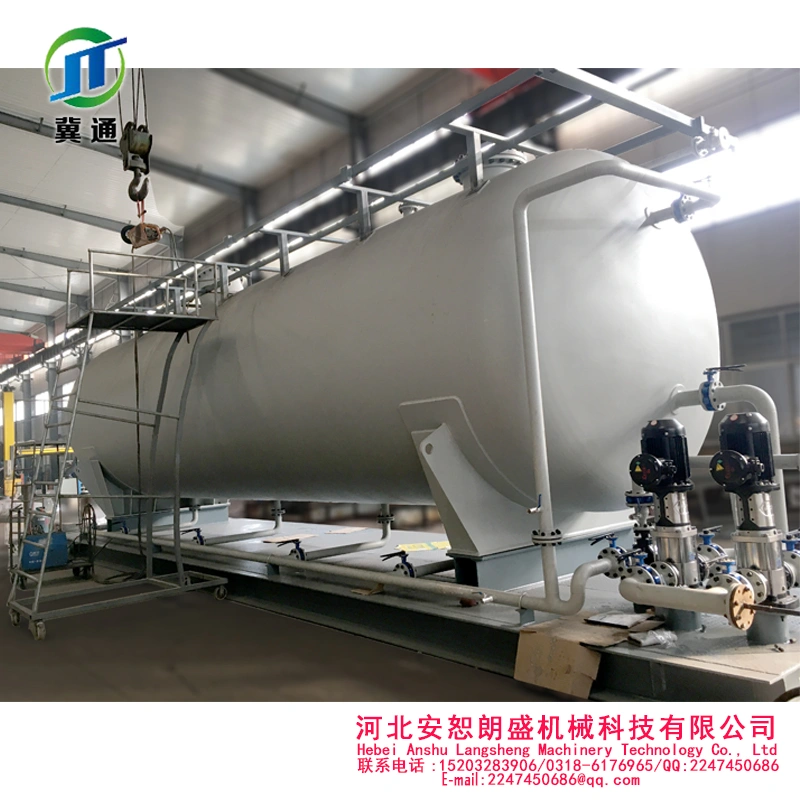
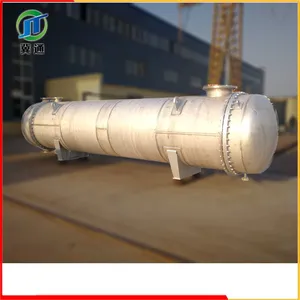
Oil and Gas Chemical Equipment and Storage Tank Heat Exchangers, Refrigerator Tube Bundles, DEG Evaporators
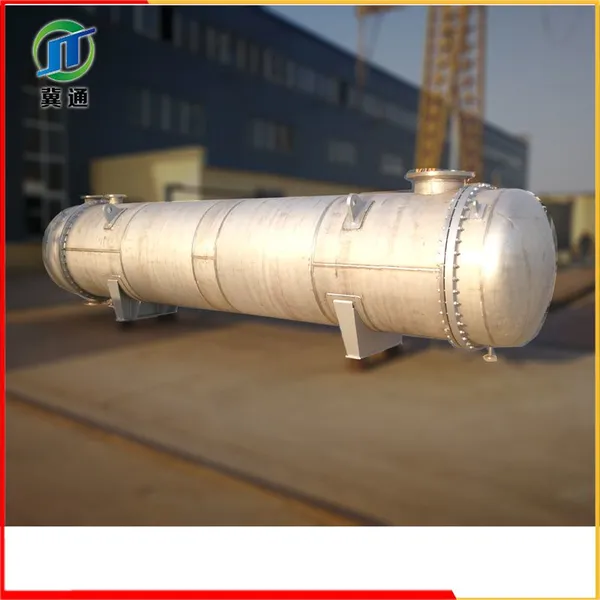
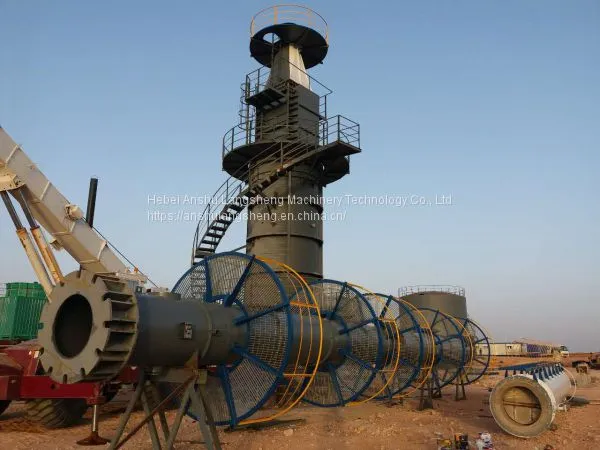
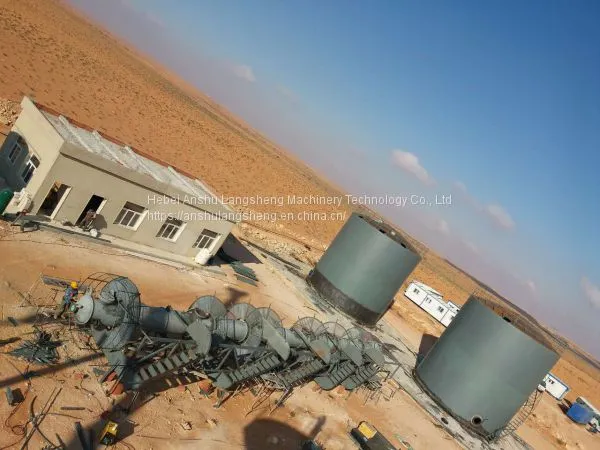
Product Spotlights


Related Products
-
 Finned Tube Heat Exchangers Are Highly Efficient and Energy-saving for Gas-to-gas, Gas-to-liquid, and Liquid-to-liquid Heat ExchangeNegotiableMOQ: 1 Metric Ton
 -
Custom Coupling & Transmission Parts Manufacturer | Machining of Mechanical Parts/Gears/Bearings/Steel StructuresNegotiableMOQ: 1 Combo
-
Mechanical Power Transmission Components, Gears, Couplings, Universal Couplings, MachiningNegotiableMOQ: 1 Combo
-
Prefabricated Petrochemical Storage Equipment, Including Storage Tanks for Gasoline, Diesel, Fire-fighting Water, Sulfuric Acid, and Crude Oil.US$ 50001 - 50002MOQ: 1 Combo
-
Tube Bundle Heat Exchanger | Core Steel Component for Gas Cooling in Shell & Tube Exchangers | Custom Designs AvailableUS$ 10000 - 12000MOQ: 1 Combo
Oil and gas chemical equipment, including heat exchangers for storage tanks, refrigeration unit tube bundles, and diethylene glycol evaporators, are key pieces of equipment in petrochemical production. Together, they constitute the core equipment system for petrochemical production, from raw material handling and processing to product storage and transportation.
I. Overview of Oil and Gas Chemical Equipment
Oil and gas chemical equipment refers to the general term for equipment used throughout the entire process of oil and chemical production, covering a series of stages from drilling and extraction, transportation, to processing into finished chemical products.
1. It mainly includes static equipment such as tower equipment, heat exchangers, reactors, and storage tanks, as well as dynamic equipment such as pumps and compressors that transport media. Specific classifications include oil drilling and extraction equipment, heat exchange equipment, refrigeration equipment, and storage and transportation equipment.
II. Storage Tank Heat Exchangers
Storage tank heat exchangers generally refer to heat exchange equipment configured to meet the temperature control requirements of materials within storage tanks, belonging to the broad category of heat exchange equipment. In the petrochemical industry, heat exchangers are core equipment for achieving energy recovery and temperature control, widely used in scenarios such as crude oil preheating, reactant cooling, and waste heat recovery. Functions and Types: The main function of heat exchangers in storage tanks is to maintain the process temperature of materials (such as crude oil, refined oil, and chemical raw materials) within the tank, preventing excessively high or low temperatures from affecting quality or safety. Common types include fixed tube sheet type, floating head type, and U-tube type.
Technical Characteristics: Given the corrosive nature of petrochemical media (containing sulfur, chlorine, acids, etc.), these heat exchangers often use corrosion-resistant materials such as 316L stainless steel and Hastelloy.
3. To prevent scaling of high-viscosity media from affecting heat transfer, the design may employ shaped tubes to enhance turbulence or include online cleaning functions.
III. Refrigeration Unit Tube Bundles
Refrigeration unit tube bundles are the core components of heat exchangers in refrigeration equipment, belonging to a sub-field of "heat exchange equipment."
In petrochemical production, refrigeration equipment is used to provide a low-temperature environment for specific process stages, such as cracked gas separation and liquefied natural gas (LNG) production. **Structure and Function:** The tube bundle, composed of multiple heat exchange tubes arranged in a specific pattern and fixed on a tube sheet, is the site for heat exchange between hot and cold fluids. In a refrigeration unit, refrigerant flows on one side of the tube bundle, while the process fluid requiring cooling flows on the other, achieving refrigeration through heat exchange via the tube walls.
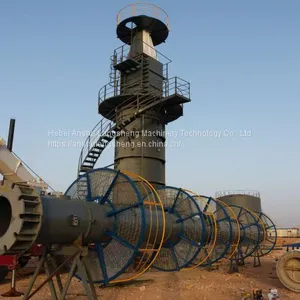
**High-Performance Type—Wound Tube Heat Exchanger:** A highly efficient and compact heat exchange device, its tube bundle consists of heat exchange tubes spirally wound around a central cylinder, forming a multi-layered concentric circular structure. This design induces turbulence, significantly improving heat transfer efficiency and possessing self-compensating thermal stress capabilities, ensuring stable operation. It is particularly suitable for harsh conditions such as high pressure and cryogenic environments, and is also used in advanced compressed air energy storage systems.
**Manufacturing and Development:** The manufacturing of large wound tube heat exchangers involves precision winding, welding, and leak testing.
Current technological trends include the use of new corrosion-resistant materials (such as nickel-based alloys and duplex steel), integrated intelligent monitoring and control technologies, and the application of advanced manufacturing processes such as 3D printing to optimize the structure. IV. Diethylene Glycol Evaporator
A diethylene glycol evaporator is a specialized piece of equipment used in specific chemical processes (such as natural gas dehydration and polyester raw material preparation). It falls under the category of "heat exchange equipment," and its core function is to vaporize and separate water or other components from a diethylene glycol (DEG) solution through heating.
Process Role: In natural gas dehydration processes, a water-rich diethylene glycol solution is heated in an evaporator, where the water is evaporated and removed, allowing the concentrated diethylene glycol to be regenerated and recycled. In polyester production, the purification or recovery of diethylene glycol may be involved.
Design Considerations: Because diethylene glycol may degrade at high temperatures, the evaporator design requires precise control of heating temperature and residence time. The materials used must consider the mild corrosiveness of diethylene glycol and the potential impact of impurities. Its structure must facilitate the cleaning of any small amounts of polymer or deposits that may be generated.
V. Industry Application Value and Trends
These devices are not only the carriers of process implementation in the petrochemical industry but also key to energy conservation and carbon reduction. Energy Saving Benefits: Significant waste heat recovery can be achieved through a highly efficient heat exchange network (including various heat exchangers and evaporators). For example, in large refineries, overall energy consumption can be reduced, and in ethylene plants, the recovered heat can generate high-pressure steam to meet some of the power demand.
Chinese Supplier of Storage Tanks, Pressure Vessels, Heat Exchangers, and Industrial Couplings
Professional Manufacturer and Supplier of:
API 650 Storage Tanks
Crude Oil Storage Tanks
Diesel Storage Tanks
Chemical Storage Tanks
Pressure Vessels
Distillation Towers
Separators
Shell-and-Tube Heat Exchangers
Process Equipment
Skid-Mounted Systems
Gear Couplings
Universal Joint Couplings
Diaphragm Couplings
CNC Machining Services
Services:
Engineering Design | Manufacturing | Installation | OEM Turnkey Solutions
Contact Person: Li Fei
Mobile/WhatsApp: +86 15203283906
Email: 2247450686@qq.com
Website:
Keywords: Chinese storage tank manufacturer, API 650 storage tank supplier, pressure vessel manufacturer, heat exchanger supplier, distillation tower manufacturer, gear coupling manufacturer, universal joint shaft supplier, Chinese OEM processing services

Send Inquiry to This Supplier


You May Also Like
-
Turnkey Storage Tank Solutions | Custom Design & Shop Fabrication | Dome, Floating Roof, Spherical, Horizontal TanksUS$ 50000 - 190000MOQ: 1 Combo
-
Customized Manufacturing of Crude Oil Refining Equipment and Natural Gas Refining Equipment Based on Provided DrawingsUS$ 78947 - 79000MOQ: 1 Combo
-
Universal Joint Coupling Manufacturer | Custom & Drawing-Based Machining | ISO 9001 FactoryNegotiableMOQ: 1 Combo
-
Custom CS/SS304/FRP Distillation Column & Absorption Tower, Chemical Packed Scrubber Tower OEM ManufacturerUS$ 11112MOQ: 1 Set
-
SWC Series Cardan Shaft / Universal Joint Shaft Coupling — Heavy Duty Drive Shaft for Rolling Mill & Mining Equipment (OEM Supported)NegotiableMOQ: 1 Set
-
Shaft Couplings GIICL Drum Gear Coupling Mechanical High TorqueUS$ 998 - 9999MOQ: 10 Pieces
-
GICL Series Drum Gear Coupling (Curved Tooth), High Torque Heavy Duty Shaft Coupling for Rolling Mill & Mining, JB/T 8854.3-2001US$ 10000 - 100000MOQ: 1 Set
-
Custom Oil Refinery Equipment Manufacturer | Modular Refinery Process SystemsUS$ 100001 - 500001MOQ: 1 Bag
-
SWC550BH Industrial Cardan Shaft | Heavy Duty Universal Joint Coupling Manufacturer ChinaUS$ 500 - 5000MOQ: 1 Bag
-
Custom Diaphragm Coupling Manufacturer | We Build to Your Prints & Specifications (OEM/ODM Supported)NegotiableMOQ: 1 Acre
