








 Contact Platform Support
 Help Center
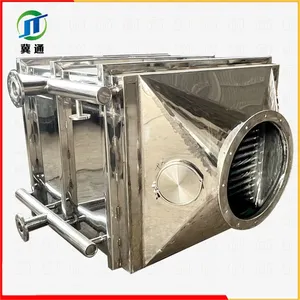
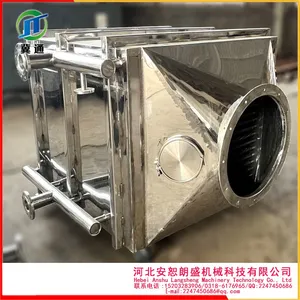
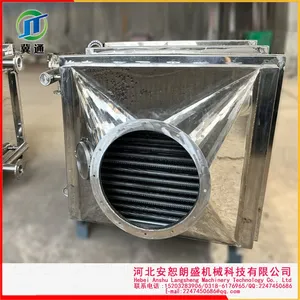
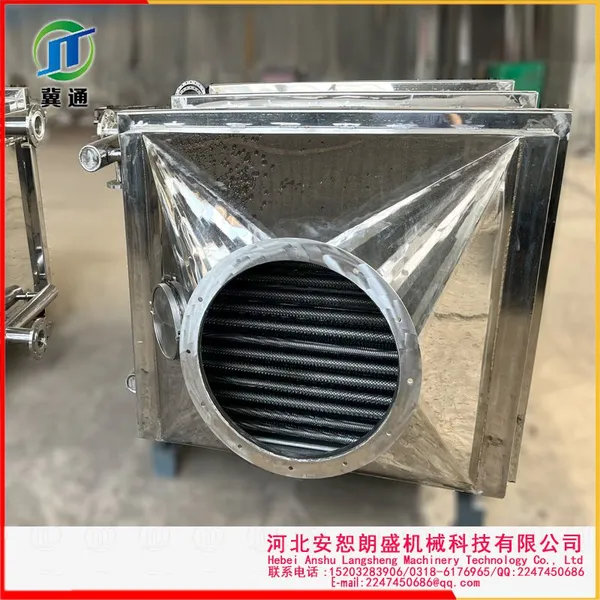
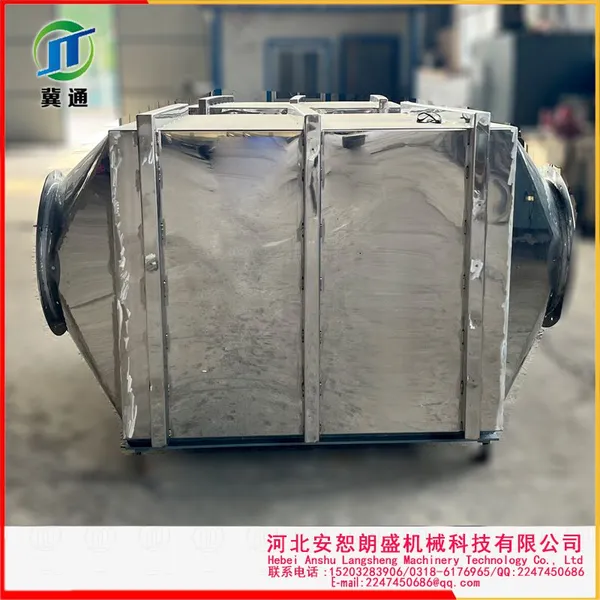
Finned Tube Heat Exchangers Are Highly Efficient and Energy-saving for Gas-to-gas, Gas-to-liquid, and Liquid-to-liquid Heat Exchange

Product Spotlights


Related Products
-
 Custom Coupling & Transmission Parts Manufacturer | Machining of Mechanical Parts/Gears/Bearings/Steel StructuresNegotiableMOQ: 1 Combo
 -
Mechanical Power Transmission Components, Gears, Couplings, Universal Couplings, MachiningNegotiableMOQ: 1 Combo
-
Prefabricated Petrochemical Storage Equipment, Including Storage Tanks for Gasoline, Diesel, Fire-fighting Water, Sulfuric Acid, and Crude Oil.US$ 50001 - 50002MOQ: 1 Combo
-
Tube Bundle Heat Exchanger | Core Steel Component for Gas Cooling in Shell & Tube Exchangers | Custom Designs AvailableUS$ 10000 - 12000MOQ: 1 Combo
-
Turnkey Storage Tank Solutions | Custom Design & Shop Fabrication | Dome, Floating Roof, Spherical, Horizontal TanksUS$ 50000 - 190000MOQ: 1 Combo
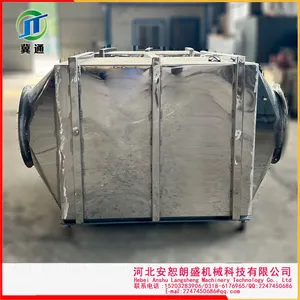
Finned heat exchangers are primarily used for air heating in drying systems and are a key component of hot air systems. The heat transfer medium used in these exchangers can be steam, hot water, or thermal oil. The steam operating pressure typically does not exceed 0.8 MPa, and the hot air temperature is below 170°C.
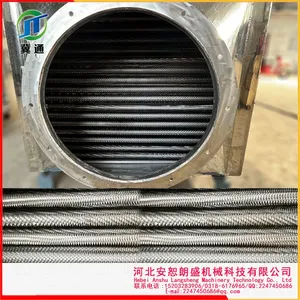
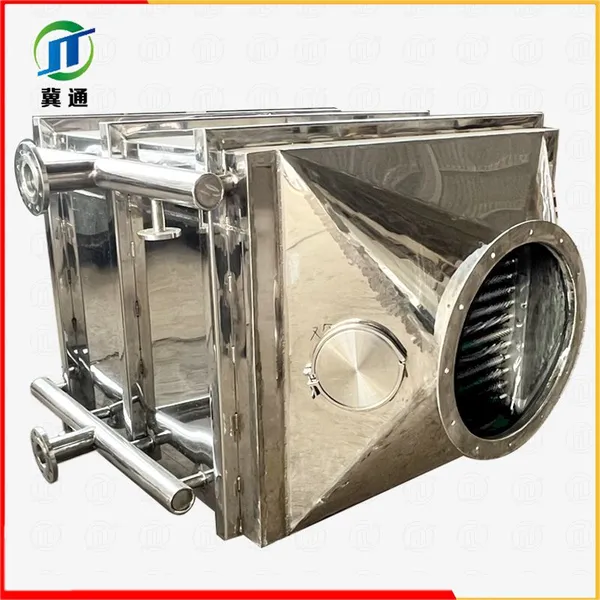
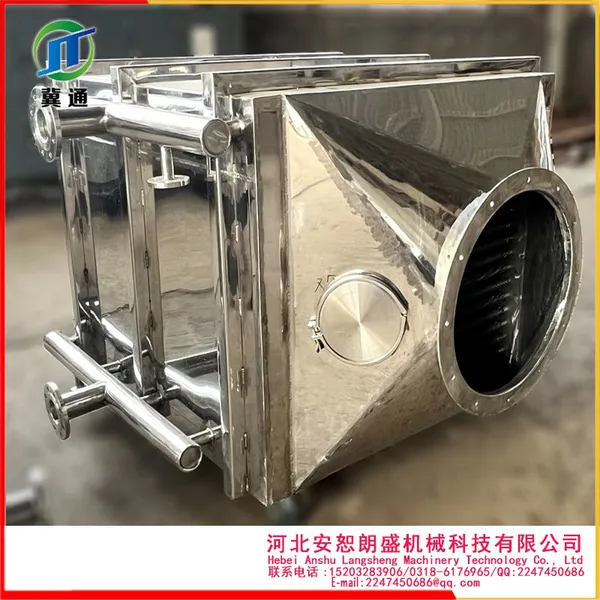
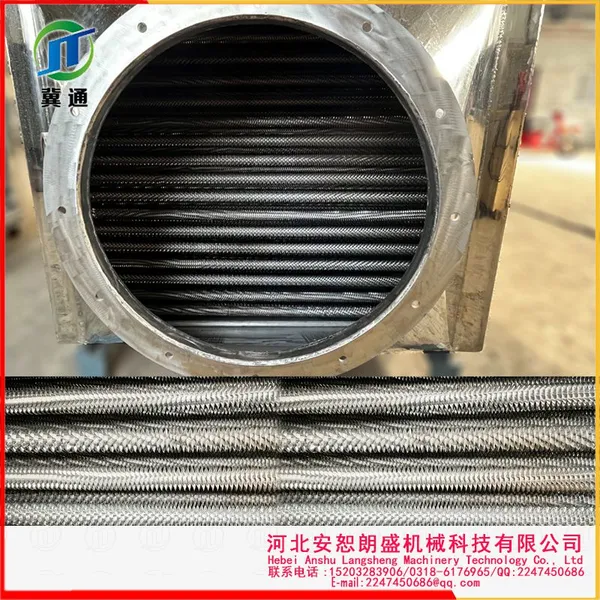
Finned tube heaters are available in heat pipe and shell-and-tube types, capable of gas-to-gas, gas-to-liquid, and liquid-to-liquid heat exchange. A finned tube consists of a base tube and fins. The base tube is usually round, and the fin surface structures include flat fins, interrupted fins, corrugated fins, and perforated fins.
Finned heat exchangers offer advantages such as simple structure, high thermal efficiency, long service life, safety and reliability, and convenient maintenance. They are widely used in coating, power, chemical, petrochemical, air conditioning, and refrigeration engineering fields.
A finned tube heat exchanger is a highly efficient heat exchange device that significantly expands the heat exchange area and improves heat transfer efficiency by adding fins to the surface of a base tube. It is widely used in heat transfer scenarios in industrial and civil applications. Its core principle is to use fins to expand the heat exchange surface, which was originally limited to the tube wall, allowing heat to be conducted more quickly from the medium inside the tube to the fins and exchanged with the external fluid (such as air). The two media typically do not directly contact each other.
I. Structural Composition and Working Principle
A finned tube heat exchanger mainly consists of the following parts:
Finned Tubes: Fins are machined onto the outer surface of a base tube (such as carbon steel, stainless steel, copper, etc.) to form the core heat transfer element. The fin material and shape can be customized according to operating conditions; for example, aluminum fins have good thermal conductivity, while stainless steel fins are corrosion-resistant.
Fin Arrangement: There are mainly two types: linear and staggered. Staggered arrangement has greater disturbance and a higher heat transfer coefficient but higher resistance; linear arrangement has lower resistance and is suitable for systems sensitive to pressure drop.
Tube box or tube sheet: Used to connect multiple finned tubes, forming a fluid channel and ensuring uniform medium distribution.
Frame: Supports the entire finned tube bundle, ensuring structural stability.
During operation, high-temperature fluids (such as steam and hot water) flow inside the tubes. Heat is transferred to the fins through the tube walls. External cold air flows through the gaps between the fins, absorbing heat and achieving temperature rise, thus completing gas-liquid or gas-gas heat exchange.
II. Main Advantages
High heat exchange efficiency: Fins increase the heat exchange area by 4–10 times compared to bare tubes, improving heat exchange efficiency by 30%–50% or more.
Compact structure: Stronger heat exchange capacity per unit volume, saving installation space.
High adaptability: Adaptable to various heat media such as steam, hot water, and thermal oil; wide temperature range (-30℃ to 450℃); suitable for high-temperature, high-pressure, and corrosive environments.
Easy maintenance: Daily maintenance only requires cleaning dust from the fins and checking the joint seals. Some condensate can be recycled, making it energy-efficient and economical. III. Typical Application Scenarios
Power Industry: Used in boiler air preheaters and flue gas waste heat recovery to reduce exhaust gas temperature and improve fuel utilization; removes operating heat in turbine cooling systems to ensure unit stability.
Chemical and Petrochemical Industries: Used in reactor temperature control, raw material preheating, and tail gas treatment; corrosion-resistant materials can withstand acid and alkali media.
Metallurgy and Iron & Steel: Blast furnace flue gas waste heat recovery, achieving energy savings of over 15%.
Food and Pharmaceutical Industries: Heat exchange in drying and sterilization processes; stainless steel materials meet cleanliness and hygiene requirements.
Civil and HVAC: Condensers/evaporators in central air conditioning systems, heating in large factories/warehouses, and winter temperature control in greenhouses.

Send Inquiry to This Supplier


You May Also Like
-
Customized Manufacturing of Crude Oil Refining Equipment and Natural Gas Refining Equipment Based on Provided DrawingsUS$ 78947 - 79000MOQ: 1 Combo
-
Universal Joint Coupling Manufacturer | Custom & Drawing-Based Machining | ISO 9001 FactoryNegotiableMOQ: 1 Combo
-
Custom CS/SS304/FRP Distillation Column & Absorption Tower, Chemical Packed Scrubber Tower OEM ManufacturerUS$ 11112MOQ: 1 Set
-
SWC Series Cardan Shaft / Universal Joint Shaft Coupling — Heavy Duty Drive Shaft for Rolling Mill & Mining Equipment (OEM Supported)NegotiableMOQ: 1 Set
-
Shaft Couplings GIICL Drum Gear Coupling Mechanical High TorqueUS$ 998 - 9999MOQ: 10 Pieces
-
GICL Series Drum Gear Coupling (Curved Tooth), High Torque Heavy Duty Shaft Coupling for Rolling Mill & Mining, JB/T 8854.3-2001US$ 10000 - 100000MOQ: 1 Set
-
Custom Oil Refinery Equipment Manufacturer | Modular Refinery Process SystemsUS$ 100001 - 500001MOQ: 1 Bag
-
SWC550BH Industrial Cardan Shaft | Heavy Duty Universal Joint Coupling Manufacturer ChinaUS$ 500 - 5000MOQ: 1 Bag
-
Custom Diaphragm Coupling Manufacturer | We Build to Your Prints & Specifications (OEM/ODM Supported)NegotiableMOQ: 1 Acre
-
API 650 Welded Steel Storage Tank Fuel Oil Diesel Gasoline Tank Large Capacity Industrial Water TankUS$ 10000 - 50001MOQ: 1 Acre
