








 Contact Platform Support
 Help Center
Tube Bundle Heat Exchanger | Core Steel Component for Gas Cooling in Shell & Tube Exchangers | Custom Designs Available
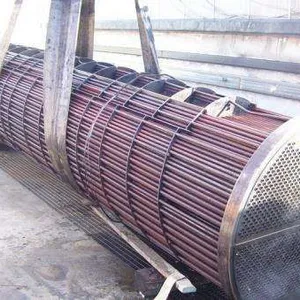
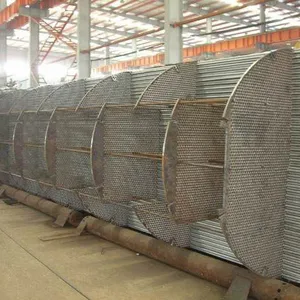
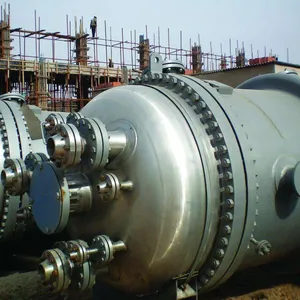
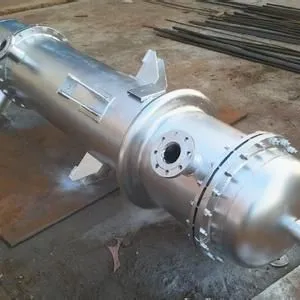
Product Spotlights
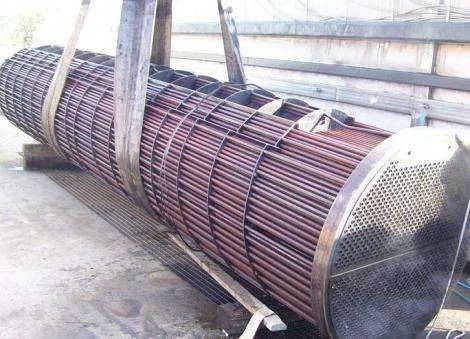
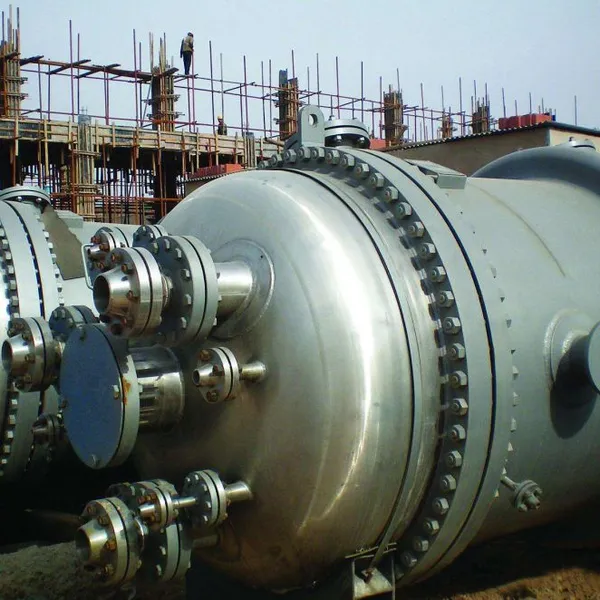
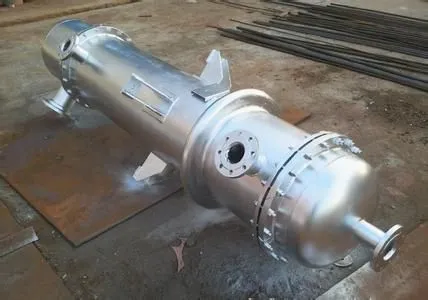
Robust Steel Construction: Built with materials like seamless steel tubes, offering durability and resistance to high pressure, temperature, and corrosive media.


Related Products
-
 Heat Exchanger Tube Bundle Manufacturer | Replacement Tube Bundle SupplierNegotiableMOQ: 1 Set
 -
Turnkey Storage Tank Solutions | Custom Design & Shop Fabrication | Dome, Floating Roof, Spherical, Horizontal TanksUS$ 50000 - 190001MOQ: 1 Combo
-
Customized Manufacturing of Crude Oil Refining Equipment and Natural Gas Refining Equipment Based on Provided DrawingsUS$ 78947 - 79000MOQ: 1 Combo
-
Universal Joint Coupling Manufacturer | Custom & Drawing-Based Machining | ISO 9001 FactoryNegotiableMOQ: 1 Combo
-
Custom CS/SS304/FRP Distillation Column & Absorption Tower, Chemical Packed Scrubber Tower OEM ManufacturerUS$ 11117MOQ: 1 Set
Detailed Explanation of Tube Bundle Heat Exchangers
A tube bundle is the core heat transfer component of a shell-and-tube (or tubular) heat exchanger. It consists of multiple parallel metal tubes and is responsible for the primary heat exchange function between two fluids. This technology is widely used in chemical, petroleum, power, pharmaceutical, and other industrial fields.
1. Structural Composition and Function
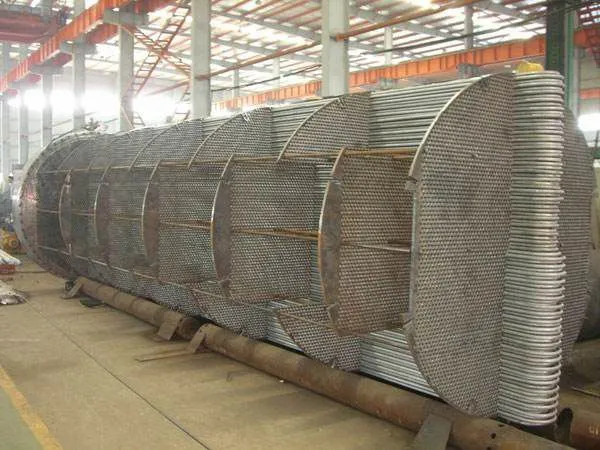
A standard heat exchanger tube bundle comprises the following four key components that work together:
Component |
Function & Description |
|---|---|
Heat Exchange Tubes |
Function: These form the primary heat transfer surface. One medium (e.g., water, steam) flows inside the tubes, transferring heat through the tube walls to another medium on the shell side. |
Tube Sheet |
Function: A thick plate that secures the ends of the tube bundle. It connects to the exchanger shell and creates a critical seal that separates the tube-side and shell-side spaces, preventing fluid mixing and ensuring pressure integrity. |
Baffles |
Function: Plates installed inside the shell. Their primary role is to redirect the flow of the shell-side fluid. This increases turbulence, which significantly enhances heat transfer efficiency. Baffles also provide structural support for the tube bundle, preventing flow-induced vibration and deformation. |
Tube Boxes (Channel Heads/Ends) |
Function: Enclosures located at each end of the tube bundle. They distribute the tube-side fluid into and out of the tubes. Their design (e.g., single-pass or multi-pass) is optimized to control flow velocity and improve overall heat exchange performance. |
2. Tube Bundle Arrangement on the Tube Sheet
The pattern in which tubes are arranged on the tube sheet directly impacts fluid dynamics and thermal performance.
Arrangement |
Characteristics & Application |
|---|---|
Equilateral Triangle (Staggered) |
Characteristics: Tubes are positioned at the vertices of equilateral triangles. This staggered layout enhances shell-side fluid disturbance and turbulence, leading to high heat transfer efficiency (typically 15%-20% higher than in-line arrangements). However, mechanical cleaning of the shell side is more difficult. |
Square (In-Line) |
Characteristics: Tubes are aligned in straight rows and columns. This layout offers lower fluid resistance and, most importantly, allows for easy mechanical cleaning (e.g., using drills or brushes) through the lanes between tubes. |
Rotated Square (Staggered) |
Characteristics: A compromise between the two arrangements above. It provides a good balance between improved heat transfer (better than in-line) and adequate cleaning access (better than triangular). |
3. Main Types and Applicable Scenarios
Based on how the tube bundle is connected to the shell, there are three primary designs, each suited for different operating conditions.
Type |
Structure & Application |
|---|---|
Fixed Tube Sheet Type |
Structure: Both tube sheets are rigidly fixed (often welded) to the exchanger shell. This results in a simple, compact, and low-cost construction. |
Floating Head Type |
Structure: One tube sheet is fixed, while the opposite end's tube sheet (the "floating head") is free to move axially within the shell. This design completely eliminates thermal stress. The entire tube bundle can be easily removed for inspection, cleaning, or replacement. |
U-Tube Type |
Structure: Tubes are bent into a "U" shape, with both ends fixed to a single tube sheet. This allows each tube to expand and contract freely, offering excellent resistance to thermal stress. The tube bundle can also be removed for shell-side cleaning. |
4. Performance Advantages and Industry Applications
-
Key Performance Advantages:
-
High-Efficiency Heat Transfer: Through optimized tube diameter, arrangement, and baffle design, the heat transfer coefficient can exceed 1000 W/(m²·K).
-
Strong Adaptability & Robustness: Capable of operating across an extremely wide temperature range (-200°C to 500°C) and handling high pressures (up to 40 MPa). Can be constructed from various materials to handle corrosive media.
-
Typical Industry Applications:
-
Chemical Industry: Cooling of ammonia synthesis reaction gas, reboilers for distillation columns.
-
Power Industry: Boiler feedwater preheating, waste heat recovery from flue gas.
-
Food & Pharmaceutical Industry: Pasteurization of dairy products, temperature control in beer fermentation.
5. Maintenance and Development Trends
-
Regular Maintenance: Essential for sustained performance. Involves inspection for tube wall corrosion and removal of scale/fouling. Chemical cleaning or mechanical methods (like rodding) are recommended.
-
Future Trends:
-
Intelligentization: Integration of IoT sensors and digital twin technology for real-time monitoring, fault early warning, and predictive maintenance.
-
Green & Energy-Saving: Adoption of advanced materials like silicon carbide and titanium to improve corrosion resistance and lifecycle energy efficiency.
-
Structural Optimization: Implementation of enhanced tube designs (e.g., spiral grooved tubes) and irregularly shaped baffles to further improve heat exchange efficiency and reduce pressure drop.
Summary Comparison Table
Feature |
Fixed Tube Sheet |
Floating Head |
U-Tube |
|---|---|---|---|
Thermal Stress Handling |
Poor |
Excellent (Free floating head) |
Excellent (Free tube expansion) |
Ease of Cleaning/Maintenance |
Difficult (Shell side hard to clean) |
Excellent (Bundle removable) |
Shell-side easy, Tube-side very difficult |
Complexity & Cost |
Simple, Low Cost |
Complex, High Cost |
Moderately Complex |
Ideal Application |
Small ΔT, Low Pressure, Clean Media |
Large ΔT, High Pressure, Frequent Cleaning Needed |
Large ΔT, High Pressure, Frequent Shell-SideCleaning |
Chinese Supplier of Storage Tanks, Pressure Vessels, Heat Exchangers, and Industrial Couplings
Professional Manufacturer and Supplier of:
API 650 Storage Tanks
Crude Oil Storage Tanks
Diesel Storage Tanks
Chemical Storage Tanks
Pressure Vessels
Distillation Towers
Separators
Shell-and-Tube Heat Exchangers
Process Equipment
Skid-Mounted Systems
Gear Couplings
Universal Joint Couplings
Diaphragm Couplings
CNC Machining Services
Services:
Engineering Design | Manufacturing | Installation | OEM Turnkey Solutions
Contact Person: Li Fei
Mobile/WhatsApp: +86 15203283906
Email: 2247450686@qq.com
Website:
Keywords: Chinese storage tank manufacturer, API 650 storage tank supplier, pressure vessel manufacturer, heat exchanger supplier, distillation tower manufacturer, gear coupling manufacturer, universal joint shaft supplier, Chinese OEM processing services

Send Inquiry to This Supplier


You May Also Like
-
Custom Finned Tube Heat Exchanger Manufacturer for Industrial Heat Transfer SystemsUS$ 10000MOQ: 1 Set
-
API 650 Welded Steel Storage Tank | Prefabricated & Custom Tank Solutions for Oil, Gas, Chemical Storage | Manufacturer in Hebei, ChinaUS$ 802 - 1002MOQ: 1 Set
-
SWC550BH Universal Drive Shaft for Steel Rolling Mill | OEM Industrial Cardan Shaft SupplierUS$ 2303 - 2501MOQ: 1 Set
-
Snake Spring Coupling | High Torque Flexible Shaft Coupling ManufacturerUS$ 500MOQ: 1 Set
-
Grid Coupling for Pumps, Motors & Gearboxes | Flexible Mechanical Coupling SupplierUS$ 500MOQ: 1 Set
-
Heavy Duty Snake Spring Coupling for Pumps, Fans, Compressors & Mining EquipmentUS$ 500MOQ: 1 Set
-
Customized 5000 Cubic Meters Large Capacity Fire Water Storage Tanks for Industrial Fire Protection SystemsUS$ 10000 - 50004MOQ: 1 Set
-
Industrial Pressure Vessel Manufacturer | Customized Process Equipment SupplierNegotiableMOQ: 1 Set
-
Chemical Reactor Vessel Manufacturer | Customized Industrial Reactor EquipmentNegotiableMOQ: 1 Set
-
Industrial Separator Vessel Manufacturer | Oil Gas Separation Equipment SupplierUS$ 62500 - 65501MOQ: 1 Set
