








 Contact Platform Support
 Help Center
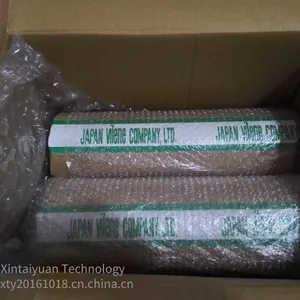
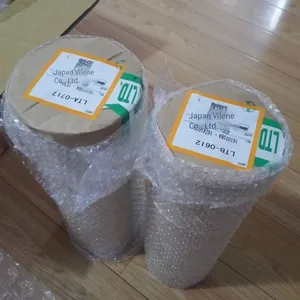
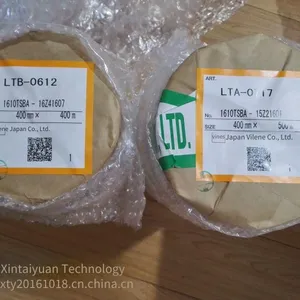
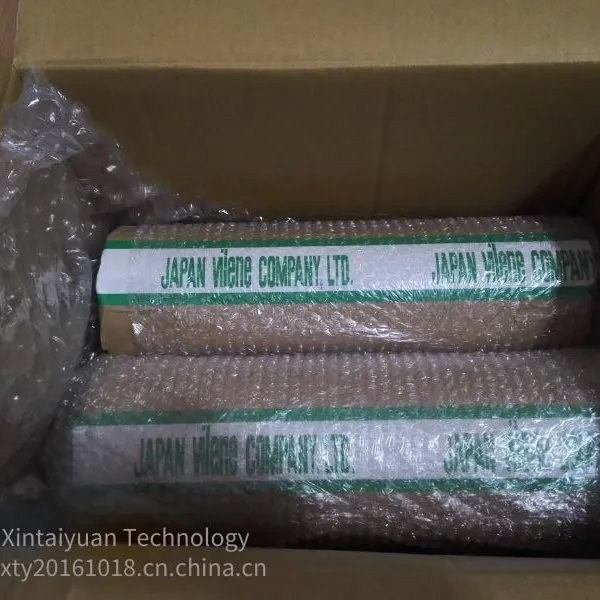
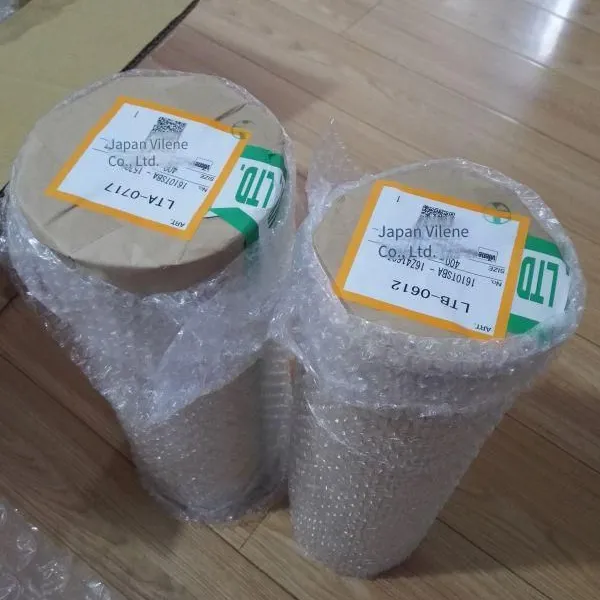
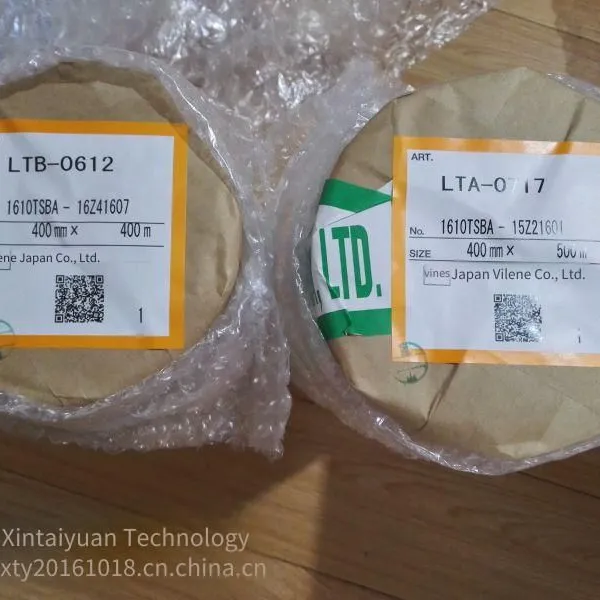
Nanometer Pet Non-woven Fabric for Ceramic Separators of Power Lithium Batteries


Related Products
-
 Food-grade Packaging, Fragrance Packaging, Smokeless Tobacco Packaging, Non-woven FabricNegotiableMOQ: 0 Meter
 -
Fabric Softener Sheets, Fragrant Dryer Sheets, Fabric Softening Sheets Made of Non-woven Fabric, 20 - 30 GramsNegotiableMOQ: 0 Kilogram
-
Heat-sealed Non-woven Fabric for Tea BagsUS$ 2.92 - 3.08MOQ: 5000 Kilograms
-
Non-woven Fabric for Automotive Interior Molded and Die-cut Structural PartsUS$ 2.77 - 3.08MOQ: 5000 Meters
-
Hns 100 Nanometer Spherical Silica PowderUS$ 1.54MOQ: 5000 Kilograms
The positive electrode, negative electrode, electrolyte, and separator constitute the four basic electrode materials of lithium-ion batteries. Unlike the first three, the separator has not received extensive attention from the academic and industrial circles for a long time because it does not participate in the electrochemical reactions in the battery. The most basic function of the separator is to conduct lithium ions and mechanically separate the positive and negative electrodes of the battery to prevent short circuits caused by contact between the two electrodes. Currently, the main material for lithium-ion battery separators is porous polyolefin membranes, including polyethylene(PE) or polypropylene(PP), etc. Generally, separators of different specifications are used according to the application, such as single-layer, double-layer, and three-layer wet or dry separators.
Currently, the mainstream separator production processes on the market include two major technological schools, namely the dry method(melt stretching process) and the wet method(thermally induced phase separation process). Among them, the dry method can be further divided into the dry uniaxial stretching process and the dry biaxial stretching process. The shutdown temperature of commonPE separators is around130°C, and the melting temperature is around150°C; the shutdown temperature ofPP separators is around145°C, and the melting temperature is around170°Cor so.PP/PEcomposite separators combine the advantages ofPP/PEmembranes, with good mechanical strength and higher safety, but poor gas permeability. Currently, power batteries mainly usePP/PEcomposite separators. In addition, ceramic-coated separators(mainlyAl2O3ceramic coating)can also effectively improve the thermal stability of the separators.
The current challenge for lithium-ion power batteries is the safety issue.2014The most popular Tesla electric vehicles sold only tens of thousands of units, but7of them caught fire. In addition, the Boeing787Dreamliner using lithium-ion batteries from Japan's Yuasa Corporation also had several incidents of lithium battery fires, which once led to the grounding and inspection of this type of aircraft. Although the specific causes of the accidents are different, without exception, they are all caused by the thermal runaway of lithium batteries, which causes the separator to melt, resulting in a short circuit between the positive and negative electrodes and the release of huge amounts of heat in a short time.
When the temperature of the battery cell rises to130°Cor above, theSEIfilm on the surface of the negative electrode decomposes, exposing the highly active lithium-carbon negative electrode to the electrolyte and causing a violent redox reaction. The heat generated puts the battery in a high-risk state. When the internal temperature of the battery rises to200°Cor above, the passivation film on the surface of the positive electrode decomposes, the positive electrode releases oxygen, and continues to react violently with the electrolyte, generating a large amount of heat and forming a high internal pressure. When the battery temperature reaches240°CWhen the temperature is above, there is also a violent exothermic reaction between the lithium-carbon anode and the binder. And the organic electrolyte becomes a flammable culprit in the environment of oxygen and heat.
The national requirements for the energy density of power batteries for electric vehicles are gradually becoming clear. Lithium iron phosphate and lithium manganate can no longer meet the future use requirements of pure electric vehicles. The industrialization of lithium-sulfur and lithium-air batteries is still far away, so high-capacity ternary material power batteries have become the only choice. However, through communication with R & D personnel of many domestic power battery enterprises, the author learned that even if a ceramic-coated polyolefin separator is used, it is still difficult for high-capacity power batteries using ternary materials to pass the safety test. The safety issue seems to have become an insurmountable Achilles' heel for polyolefin separators.
Non-woven separators are widely used in lead-acid, alkaline batteries, nickel-hydrogen and supercapacitors. They have the advantages of high temperature resistance and high porosity, and have attracted more and more attention from the lithium battery industry in recent years. Common non-woven separator materials include polyimide(PI), polyester(mainly refers to polyethylene terephthalate(PET), and customarily also includes polybutylene terephthalate(PBT)) film, cellulose film, polyamide(PA) film, aramid(poly-p-phenylene terephthalamide,Aramid fiber) film, spandex(polyurethane fiber,PU) film, etc.
DuPont in the United States was the first to develop a polyimide nanofiber separator prepared by electrospinning technology and has already2011At the beginning of the year, mass production of this separator started in Wilmington, USA and Seoul, South Korea.2010In 2010, Shougang Corporation and the Technical Institute of Physics and Chemistry of the Chinese Academy of Sciences jointly established Shouke Penbo(SKPB), and implemented industrialization using the polyimide nanofiber separator technology developed by the technical team led by Wu Dayong of the Technical Institute of Physics and Chemistry.
Another separator that has attracted much attention is the polyimide nanofiber separator produced by Jiangxi Xiancai(Invested by Shenzhen Huicheng). Polyimide has excellent thermal stability and mechanical strength and is widely used in the aerospace field. However, due to the relatively complex production process(Electrospinning process), the price of polyimide separators is high. It is still questionable whether the price of polyimide nanofiber separators can drop to below10 yuan/m2, which is an acceptable market price.
In addition, Hirose Paper of Japan has developed a lithium-ion battery separator made of polyolefin non-woven fabric as the base material and electrospun with PVA (Polyvinyl alcohol) nanofibers. Compared with the mainstream polyolefin porous film separators, this product has a higher upper limit of melting temperature and is therefore more heat-resistant(The upper limit of melting temperature is as high as200℃ or above). In addition, according to the company, adding inorganic substances such as silicon(SiO2) to the nanofibers can further increase the upper limit of the melting temperature.
In terms of cellulose non-woven fabric andPET non-woven fabric separators, Germany'sEvonik(Degussa) was the first to launch theSeparion? separator. Its preparation method is to compoundAl2O3 orSiO2 and other inorganic oxides on thePET non-woven fabric.Evonic andDaimler-Benz jointly established theLi-Tec company(later Mercedes-Benz took sole control) which uses theSeparion? composite ceramic separator for the production of its ternary power batteries. Due to the low mechanical strength of this composite ceramic separator, the ternary batteries ofLi-Tec adopt the lamination process instead of the winding process.
Germany'sFreudenberg(Freudenberg) also launched a similar product, in2014At the CIBF conference in CIBF, Freudenberg presented the experimental data of over - charging, acupuncture, and hot - box tests on a 5Ah ternary pouch battery using this separator. All pouch batteries using traditional polyolefins caught fire and exploded, while the batteries using the ceramic - coated PET non - woven fabric separator did not catch fire or emit smoke. Tokai Special Paper in Japan claimed to have developed a cellulose separator material technology and planned to achieve mass production by the end of 2014. The US company Dreamweaver developed a non - woven fabric separator based on a mixture of nano - and micro - cellulose and has sent samples to many lithium - battery and super - capacitor manufacturers for testing. Porous Power Technology located in Colorado, USA, developed a PET separator filled with PVDF and Al2O3. Oji Paper in Japan forms a wet - laid non - woven fabric substrate through a papermaking method and coats the substrate with PU, PET or PTFE resin. The resin layer forms a porous structure with smaller pore sizes than the substrate through additives, and a separator with a pore size of about 200nm can be prepared. Mitsubishi Paper, in cooperation with Tokyo Institute of Technology, developed a non - woven fabric separator technology using high - heat - resistant cellulose and polyethylene terephthalate (PET) directly.
Domestically, currently only Ningbo Aitemic Lithium Battery Technology Co., Ltd. has launched a nanofiber separator with closed-cell characteristics. It is reported that the porosity of the separator produced by the company is above 60%, the pore size is about 300 nanometers, it has no deformation at 200℃, and the pore size does not expand under the needle-punching test at 560℃. In addition, its liquid absorption and wettability to the electrolyte are both improved compared with existing separators. It is reported that the company's pilot line for producing 400 square meters of nanofiber separators per year is expected to be completed and put into production in the middle of 2015.
In addition to polyimide and nanocellulose materials, aramid separators are also getting more and more attention. A separator material enterprise jointly established by Toray (Toray) and TonenGeneral Sekiyu KK (TonenGeneral Sekiyu KK) has developed a porous film “microporous aramid film” material product based on aramid resin with excellent heat resistance and dimensional stability. Teijin (Teijin) also announced in February 2012 that it had developed an aramid fiber separator material product for polymer laminated lithium-ion batteries, which increased the output power of polymer lithium-ion batteries by 20%.
In terms of manufacturing technology, Teijin of Japan claims that with its"world's first" double-sided simultaneous coating and high-speed coating process with a speed more than 5 times that of the original, it can achieve high-efficiency production. Several domestic aramid enterprises have also reported that they are developing aramid separator products for lithium batteries, such as Shenzhen Longbang. Like polyimide, aramid has excellent mechanical properties at high temperatures and is used in fields such as bulletproof vests and aircraft composites. However, the production cost of aramid is relatively high, and it remains to be seen whether its price can ultimately be accepted by lithium battery enterprises. So far, there has been no report of non-woven separators being widely used by power battery enterprises.

Send Inquiry to This Supplier


You May Also Like
-
Non-woven Fabric for Industrial and Precision Instrument WipingNegotiableMOQ: 0 Meter
-
High-temperature-resistant Non-woven Fabric for Far-infrared Health Care CabinsNegotiableMOQ: 0 Meter
-
High-performance Filter Non-woven Fabric Imported From GermanyNegotiableMOQ: 0 Meter
-
Pps (polyphenylene Sulfide) Film Has High Temperature Resistance and Stable Physical Properties, and Can Replace Imported ProductsUS$ 0.38 - 0.46MOQ: 5000 Kilograms
-
High-purity Quartz SandUS$ 9.23MOQ: 5000 Kilograms
-
Industrial Cleaning Non-woven Wiping Cloth, Green Industrial Wiping Paper, Dust-free Wiping Paper, Large Roll Oil-absorbing PaperUS$ 5 - 5.38MOQ: 5000 Kilograms
-
Aramid Specialty Paper, High-temperature Resistant and Flame-retardant Specialty PaperNegotiableMOQ: 0 Square Meter
-
Flame-retardant Felt Made of Molded Non-woven Fabric for Automotive InteriorUS$ 3.23 - 4MOQ: 1000 Meters
-
Flow Battery Energy Storage, Aviation Single Crystal Wafers, Carbon Fiber Felt for Thermal Insulation Buckets, Graphite FeltNegotiableMOQ: 0 Meter
-
Carbon Fiber Pre-oxidized Silk FeltUS$ 2.92 - 3.08MOQ: 5000 Meters


