








 Contact Platform Support
 Help Center
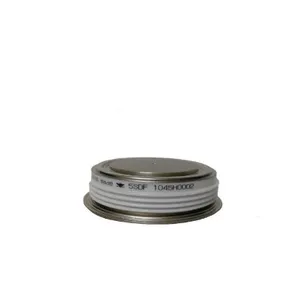
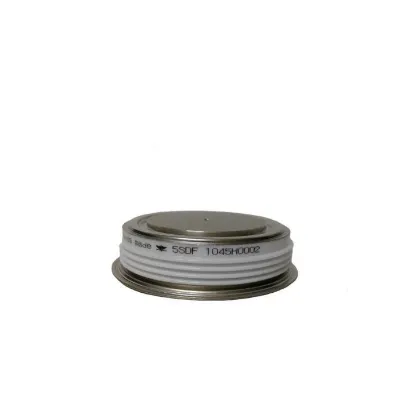
ABB 5SDF1045H0002 Disc Type Thyristor Diode Module



Related Products
-
 ABB PM861K01 3BSE018105R1 Processor Unit KitNegotiableMOQ: 1 Piece
 -
ABB 1MRK0023505-AA Feeder Protection RelayNegotiableMOQ: 1 Piece
-
ABB KUC755AE105 3BHB005243R0105 Gate Unit Power Supply ModuleNegotiableMOQ: 1 Piece
-
ABB ICSF08D1 FPR3323101R1012 24VDC Standard RepairNegotiableMOQ: 1 Piece
-
ABB SUE3000 1VCR007346 G0028 Communication UnitNegotiableMOQ: 1 Piece
I. Overview
ABB 5SDF1045H0002 is a diode module. Its core function is to realize accurate conversion between alternating current (AC) and direct current (DC). Meanwhile, it has the functions of circuit regulation, energy consumption control and fault protection, which can effectively resist the damage to the rear-end circuit caused by load overload and short-circuit faults. As a key core component in the power electronic system, this module, relying on its compact structural design, reliable performance and long service life, is widely used in fields such as frequency converters, rectifiers, uninterruptible power supplies (UPS), new energy power generation equipment and industrial control systems. It provides stable rectification and protection support for various power conversion circuits, and is an important component to ensure the safe and efficient operation of industrial power systems.
II. Product Features
High-performance Fast Recovery Characteristic: As a fast recovery diode module, it has an extremely short reverse recovery time, which can quickly respond to the voltage polarity changes in the circuit, effectively reduce switching losses, improve the operation efficiency of the entire power conversion system, and adapt to the working requirements of high-frequency switching circuits.
Multiple Circuit Protection Functions: It has core circuit protection capabilities related to overload protection and short-circuit protection. When the rear-end load is overloaded or a short-circuit fault occurs in the circuit, it can quickly cut off or limit the conduction of fault current, avoid the expansion of faults causing damage to the module itself and the entire circuit system, and ensure the operation safety of the system.
Compact Structure and High Reliability: Adopting a modular and compact design, it is small in size and easy to arrange in the limited installation space of equipment. The internal part uses high-quality semiconductor materials and packaging technology, which has excellent electrical performance stability and long service life, and can meet the long-term continuous operation requirements of industrial scenarios.
Efficient Power Conversion Capability: One of its core functions is to realize efficient rectification conversion from AC to DC. The energy loss during the conversion process is low, which can provide stable DC power for rear-end equipment and ensure the accurate operation of subsequent industrial control or power drive equipment.
Strong Environmental Adaptability: It is suitable for the complex operating environment of industrial sites, has good anti-electromagnetic interference capability, can work stably in an environment with a certain range of high and low temperatures and humidity changes, and meets the operation requirements of industrial power electronic equipment under different working conditions.
Standardized Compatibility: Following the standardized design of ABB 5SDF series products, its interface and installation dimensions comply with general industrial specifications, have good compatibility and interchangeability, and facilitate module replacement and upgrading during system maintenance.
III. Technical Parameters
1. Core Basic Parameters
Product Model: 5SDF1045H0002
Series: ABB 5SDF Series Fast Recovery Diode Module
Product Type: Industrial-grade Fast Recovery Diode Module
Manufacturer: ABB
Package Type: Standard Modular Package
Protection Class: IP20 (module body, suitable for internal installation in equipment)
Service Life: ≥ 100,000 hours (under rated working conditions)
2. Electrical Performance Parameters
Rated Forward Current: 10A (typical value, subject to the specifications of the actual product)
Reverse Repetitive Peak Voltage: 450V (typical value, matching the H45 specification characteristics of the 5SDF series)
Reverse Recovery Time: ≤ 50ns (core parameter of fast recovery characteristic, subject to the product manual)
Forward Voltage Drop: ≤ 1.2V (under rated forward current, typical value)
Maximum Reverse Leakage Current: ≤ 10μA (at room temperature, under reverse rated voltage)
3. Environmental and Physical Parameters
Operating Temperature: -40℃ to +125℃
Storage Temperature: -55℃ to +150℃
Relative Humidity: 5% to 95% (non-condensing)
Dimensions: Typical size 45mm × 35mm × 12mm (length × width × height, subject to the actual product)
Weight: Approximately 50-80g (subject to the actual product)
Cooling Method: Natural cooling (can be matched with the overall heat dissipation system of the equipment to enhance heat dissipation)
IV. Working Principle
The core working principle of the ABB 5SDF1045H0002 fast recovery diode module is based on the unidirectional conductivity of semiconductor PN junction, combined with the fast recovery structure design, to realize the dual functions of power conversion and circuit protection. The specific working process can be divided into three core stages:
The first stage is the rectification conversion stage: In the AC circuit, when the module bears forward voltage (the anode potential is higher than the cathode potential), the internal PN junction conducts, allowing forward current to pass through, and converting the positive half-cycle signal of AC into DC signal; when it bears reverse voltage, the PN junction cuts off, preventing reverse current from passing through, thus realizing the rectification conversion from AC to DC and providing stable power for the rear-end DC load. Its fast recovery characteristic enables an extremely short reverse recovery time when the voltage polarity switches rapidly, which can quickly switch from the conducting state to the cut-off state, greatly reducing the energy loss during the reverse recovery process, and adapting to the working requirements of high-frequency rectification and switching circuits.
The second stage is the circuit regulation stage: During the conduction process of the module, through its own stable forward voltage drop characteristic, it can initially regulate the output current to avoid the impact of current mutation on the rear-end circuit; at the same time, its low forward loss characteristic can reduce the energy waste during the power conversion process and improve the energy utilization efficiency of the entire circuit system.
The third stage is the fault protection stage: When the rear-end load is overloaded, the module avoids device damage caused by exceeding the rated forward current through its own current carrying limit; if a short-circuit fault occurs in the circuit, the short-circuit current will quickly exceed the rated carrying capacity of the module, and the module will trigger the protection mechanism together with the front-end protection circuit through its fast cut-off characteristic, cut off the fault current path, prevent the expansion of the short-circuit fault, and protect the safety of the entire circuit system and related equipment.
V. Common Troubleshooting
1. Abnormal Rectification Output / No DC Output
Phenomenon: After the module is connected to the rectifier circuit, there is no stable DC output at the rear end, or the output voltage fluctuates excessively; the equipment cannot start normally, or reports errors frequently after startup.
Causes: The internal PN junction of the module is damaged, resulting in the failure of unidirectional conductivity; the connection between the module pins and the circuit is loose, with poor contact, or there is wiring error; the input AC voltage is abnormal (exceeding the applicable range of the module); the rear-end load is short-circuited, causing the module to trigger the protection state; the reverse recovery characteristic of the module fails, unable to meet the requirements of high-frequency rectification.
Solutions: 1. Disconnect the power supply, use the diode gear of the multimeter to detect the unidirectional conductivity of the module. If both forward and reverse directions are conducting or cut off, it indicates that the internal part of the module is damaged, and it is necessary to replace it with the same model. 2. Check the connection status between the module pins and the circuit board, re-solder the loose pins, verify the wiring polarity, and ensure that it is connected to the circuit in the forward direction. 3. Use a multimeter to measure the input AC voltage to ensure it is within the applicable range of the module. If the voltage is abnormal, it is necessary to first troubleshoot the front-end power supply circuit. 4. Disconnect the rear-end load, test the rectification output of the module alone. If it returns to normal, it indicates that there is a short-circuit fault in the load, and the load can be connected again after repair. 5. If it is a high-frequency rectifier circuit, detect the reverse recovery time of the module. If it does not meet the requirements, it is necessary to confirm whether the module model is suitable, and replace it with a fast recovery diode module of corresponding specifications if necessary.
2. Severe Module Overheating / Burnout
Phenomenon: The surface temperature of the module rises rapidly during operation, exceeding the normal working temperature range; in severe cases, the shell is deformed, the pins are ablated, and even the equipment over-temperature protection is triggered to shut down.
Causes: The actual working current of the circuit exceeds the rated forward current of the module, resulting in overload heating; the heat dissipation channel of the module is blocked, and the natural cooling effect fails; the working environment temperature exceeds the range of -40℃ to +125℃; the reverse leakage current of the module is too large, leading to increased static power consumption and heating; there is high-frequency interference in the circuit, which aggravates the internal energy loss of the module.
Solutions: 1. Immediately disconnect the power supply, stop the operation of the equipment, and wait for the module to cool down to room temperature. 2. Use an ammeter to measure the actual working current of the circuit. If it exceeds the rated value of the module, it is necessary to replace it with a module with a higher rated current, or optimize the circuit design to shunt the load. 3. Clean the dust and debris on the surface and around the module to ensure the heat dissipation channel is unobstructed. If necessary, install a cooling fan for the equipment to enhance the overall heat dissipation effect. 4. Check the working environment temperature. If it exceeds the specified range, take cooling or heat preservation measures to ensure that the ambient temperature meets the working requirements of the module. 5. Use a multimeter to detect the reverse leakage current of the module. If it exceeds the rated value, it indicates that the performance of the module has deteriorated, and it is necessary to replace it with a new one. 6. Check whether there is a high-frequency interference source in the circuit, and install a filtering device to suppress the interference and reduce the additional energy loss of the module.
3. Module Breakdown Damage / Short-circuit Fault
Phenomenon: After the module is connected to the circuit, the front-end protection device (such as fuse) operates immediately; when using a multimeter to detect the module, both forward and reverse directions are conducting, and the unidirectional conductivity is completely lost; the equipment cannot supply power normally, and even a circuit short-circuit alarm occurs.
Causes: The input voltage has an instantaneous surge, exceeding the reverse repetitive peak voltage of the module, resulting in PN junction breakdown; the rear-end load is severely short-circuited, generating excessive short-circuit current to impact the module; the module type is improperly selected, and the reverse voltage or forward current specifications do not meet the circuit requirements; the performance of the module deteriorates after long-term use, and the insulation performance decreases.
Solutions: 1. Replace it with a genuine ABB 5SDF1045H0002 module of the same model and specification. Before replacement, the power supply must be disconnected to ensure operation safety. 2. Check the front-end power supply circuit, install a surge protector to suppress voltage surges and avoid breaking down the module again. 3. Conduct a comprehensive troubleshooting of the rear-end load circuit, repair the short-circuit fault point, and ensure that the load is normal before connecting the module. 4. Re-verify the module selection parameters, confirm that the reverse repetitive peak voltage, rated forward current and other specifications match the circuit requirements. If not, replace it with a module of suitable specifications. 5. Check the circuit wiring, avoid short circuits between module pins, and ensure that the wiring is standardized and firm.
4. Excessive Output Voltage Fluctuation
Phenomenon: The fluctuation range of the DC voltage output by the module rectification exceeds the allowable range, resulting in unstable operation of the rear-end equipment (such as motor jitter, misoperation of the control system, etc.).
Causes: The fast recovery characteristic of the module deteriorates, and the reverse recovery time is prolonged, leading to a decrease in rectification efficiency; the input AC voltage fluctuates excessively, exceeding the applicable range of the module; the contact of the module pins is poor, resulting in unstable conduction state; the rear-end load is unstable, with large current loads that start and stop frequently; the module has poor heat dissipation, and the temperature rise causes the drift of electrical performance parameters.
Solutions: 1. Detect the reverse recovery time of the module. If the parameters deteriorate, replace it with a new module. 2. Install a filtering device or voltage stabilizer in the front-end input circuit to stabilize the input AC voltage. 3. Re-tighten the connection of the module pins, clean the oxide layer of the pins to ensure good contact. 4. Optimize the rear-end load configuration, separate the power supply of large current loads that start and stop frequently from precision equipment, or install a buffer device to reduce load impact. 5. Improve the heat dissipation conditions of the module, clean the heat dissipation channel to avoid parameter drift caused by temperature rise.

Send Inquiry to This Supplier


You May Also Like
-
ABB 5SDD1060F0001 Diode Disc ModuleNegotiableMOQ: 1 Piece
-
ABB REM610C55HCNN02 Motor Protection RelayNegotiableMOQ: 1 Piece
-
ABB UNS2880B-P V1 3BHE014967R0001 Control BoardNegotiableMOQ: 1 Piece
-
ABB UFC718AE01 HIEE300936R0101 Main Circuit Interface BoardNegotiableMOQ: 1 Piece
-
ABB RF522 3BSE000743R1 Including BackplaneNegotiableMOQ: 1 Piece
-
ABB UFC760BE41 3BHE004573R0141 Interface BoardNegotiableMOQ: 1 Piece
-
ABB PFTL201C-50KN 3BSE007913R50 Pressure SensorNegotiableMOQ: 1 Piece
-
ABB 5SHY3545L0016 3BHB020720R0002 Integrated Gate-Commutated Thyristor (IGCT)NegotiableMOQ: 1 Piece
-
ABB 3BHE019719R0101 GVC736BE101 Integrated Gate-Commutated Thyristor (IGCT)NegotiableMOQ: 1 Piece
-
ABB 216NG61A HESG441633R1 HESG216875/K Main Control BoardNegotiableMOQ: 1 Piece


