








 Contact Platform Support
 Help Center
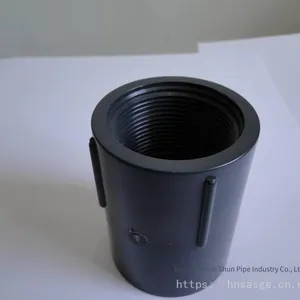
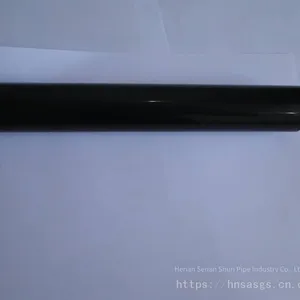
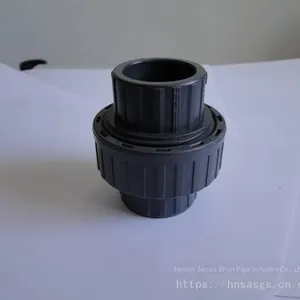
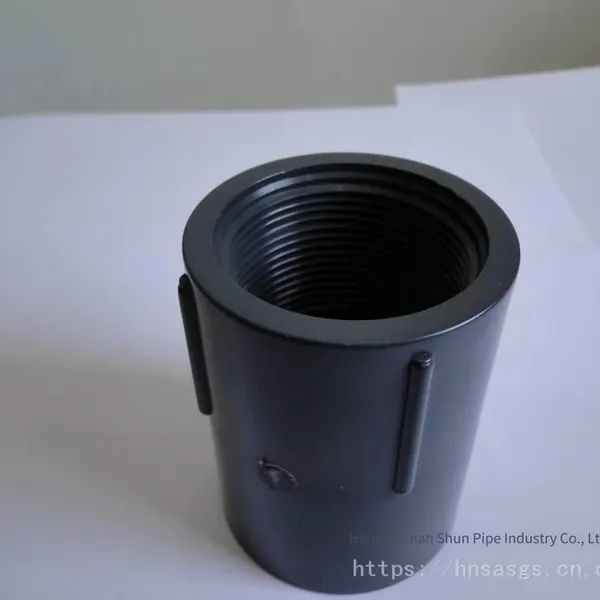
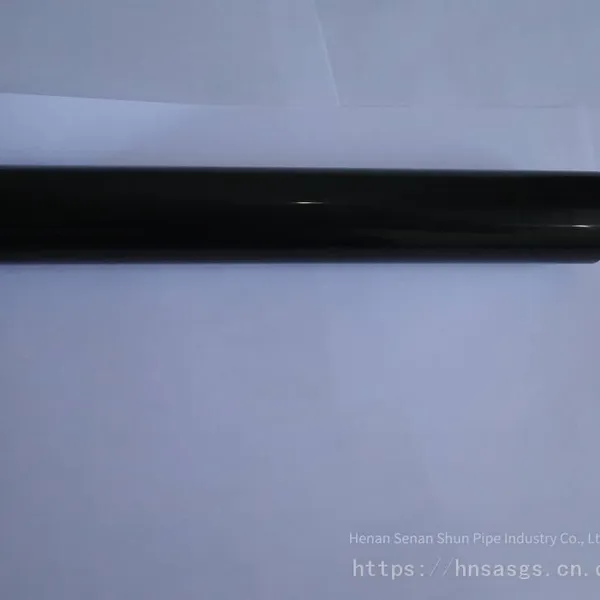
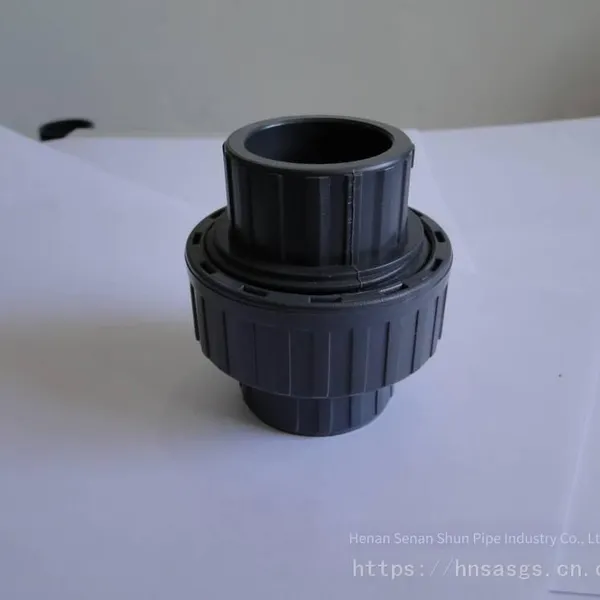
Upvc Pipes, Upvc Pipes Price, Upvc Pipes Specifications


Related Products
-
 Sekisui Clean-pvc Pipes, Sekisui Clean-pvc Pure Water Pipes, Sekisui Cl-pvc Pure Water PipesUS$ 10.46 - 13.23MOQ: 5 Meters
 -
Pvdf Pipes, Pvdf Pipe Prices, Pvdf Pipe SpecificationsUS$ 13.23 - 18.46MOQ: 5 Meters
-
Cl-pvc Union Ball Valve, Specifications of Cl-pvc Union Ball Valve, Price of Cl-pvc Ball ValveUS$ 39.69 - 43.08MOQ: 1 Piece
-
Pph Pipes, Pph Pipe Specifications, Pph Pipe PricesUS$ 0.89 - 1.31MOQ: 5 Meters
-
Upvc Union Ball ValveUS$ 8.62MOQ: 50 Pieces
Characteristics of UPVC pipes
1. Excellent physical and chemical properties. Pipes and fittings produced with UPVC are corrosion-resistant, have high impact strength, and low fluid resistance (the flow rate is 30% higher than that of cast iron pipes of the same diameter). They are resistant to aging and have a long service life (according to test data from authoritative institutions, the service life is 40 - 50 years), making them ideal materials for building drainage and chemical sewage discharge.
2. Practical texture and easy installation. The weight is only 1/7 of that of cast iron pipes of the same diameter, which can greatly speed up the project progress and reduce construction costs.
3. Smooth inner wall, smooth drainage, and the pipes are not easy to block.
4. Save construction costs. The comprehensive cost of using UPVC pipes is lower than that of using cast iron pipes of the same specifications, and the maintenance cost is also low.
Industrial-grade UPVC products have the following characteristics
Strong structure: Under normal temperature conditions, the mechanical strength of UPVC greatly exceeds that of materials such as PP, PB, PE, and ABS, making it a good choice to replace traditional metal pipes.
Smooth inner wall: The smooth inner wall can reduce pressure friction losses, reduce the chance of inner wall attachments affecting the flow rate, and effectively maintain system efficiency .
UPVC pipes also have the advantages of light weight and convenient transportation. They are very convenient for transportation, loading, unloading, and construction. Often, the construction environment of water supply pipelines is harsh, and the construction site is muddy. It would be ideal if the labor intensity of workers can be reduced and the construction period can be shortened. Using UPVC pipes can achieve this ideal.
Use of glue in CPVC/UPVC pipe connections 1. Glue: 1.1. Glue is generally composed of high-molecular resin and solvent in a certain proportion. When used for pipe bonding, the solvent in the glue will soften and penetrate the outer diameter of the pipe socket and the inner diameter of the fitting socket, so that the pipes/fittings can be more tightly bonded together when under bonding stress; and the high-molecular resin in the glue will fill the bonding gap between the pipe socket and the fitting socket, and after curing, the pipes/fittings will be bonded into one body. 2. Cleaner: 2.1. The cleaner is used for cleaning, softening, and penetrating the outer diameter of the pipe socket and the inner diameter of the fitting socket before glue bonding. For pipe connections below 3", the cleaner may not be used. For pipe connections above 3", the cleaner needs to be used in advance before applying the glue. 3. Socket: 3.1. The inner diameter of the fitting socket for glue bonding is generally designed with a taper, that is, its opening diameter is slightly larger than the bottom diameter. The purpose of the taper design is to ensure that the inner surface of the socket and the outer surface of the socket can be bonded together after softening and pressing, so as to achieve the corresponding bonding strength. 3.2. Before applying the glue, the pipe socket and the fitting socket should be trial-fitted. The insertion depth of the pipe into the fitting socket is about 1/4 - 3/4 of the total depth of the socket (sometimes, although the pipe/fitting can be inserted to the bottom with some effort, if the fit is relatively tight, the bonding can be achieved by appropriately increasing the amount of glue or the number of times of applying the glue, and the curing time should be appropriately extended; but if the pipe/fitting is still loose after being inserted to the bottom, this fitting cannot be used). 4. Bonding points: 4.1. Before bonding the pipes and fittings, the bonding interfaces of the socket and the spigot should be wiped clean with a dry cloth to ensure that they are clean, free of dust, sand, water stains, oil stains, etc.; when the oil on the bonding interface is difficult to wipe off, it can be sanded off with fine sandpaper. 4.2. The glue layer must have a sufficient amount to fill the bonding surface gap between the socket and the spigot. A coating of sufficient thickness can keep the glue moist for a long time, so that it remains moist on the surface when the pipes are connected (when applying the glue, first apply it to the inner diameter of the socket, and then to the outer diameter of the spigot. Apply a little less glue to the socket to avoid excessive glue in the socket being squeezed into the inner wall of the pipe from the top of the spigot during socket bonding, which may contaminate the pipe or the valve body). 4.3. After applying the glue, the bonding surfaces of the pipes must be fully dissolved and softened. Note that the pipes must be bonded when the glue is in a semi-fluid state and the glue layer is moist and softened, so that the two bonding surfaces can be quickly bonded into the same sol layer. Otherwise, the "dry bonding" phenomenon is likely to occur. 4.4. When bonding, the pipe spigot needs to be inserted to the bottom of the fitting socket, rotated 1/4 - 3/8 turns, and a force must be maintained for 1 - 3 minutes until it is initially cured to prevent slippage. 4.5. After bonding, the excess glue overflowing from the socket and the spigot should be wiped off with a cloth in time (it should be observed whether the overflowing glue forms an annular glue ring. If the annular glue ring is intermittent or has bubbles, it indicates that the amount of glue is insufficient, and this bonded fitting should be discarded and the construction should be redone). 4.6. After bonding, the pipes must be kept for a sufficient curing time to make the bonding force of the fittings stronger through the volatilization and reaction of the solvent in the glue. 5. Precautions: 5.1. Pipe bonding should not be carried out in an environment with high humidity. The operation site should be far away from fire sources, protected from impact and direct sunlight, and it is not suitable to operate in an environment with a temperature ≤ -5℃. 5.2. Due to different requirements for the use temperature and pressure of CPVC and UPVC pipes, corresponding glue and cleaner should be used. 5.3. Choose a bristle brush or a nylon brush as the glue application tool. The brush width should be 1/3 - 1/2 of the pipe diameter (for small pipe bonding, the ball brush in the glue can can be used directly), and use an open container with a lid to hold the glue, and open it as needed. 5.4. The glue may be stratified due to storage and other reasons (precipitation occurs due to different specific gravities of the proportioning substances). It can be stirred evenly with a metal rod or the like before use (the ball brush in the glue can has insufficient length to reach the bottom of the can, so its stirring effect is not good). 5.5. For large-diameter pipes (above 6"), a tractor is required to assist in the construction during pipe bonding, and it is strictly prohibited to use tools to knock during the insertion process. 5.6. During construction at low temperatures 38℃, it should be noted that as much as possible, the pipe ends, fittings, and welding agents should be placed in a cool place before bonding, or the bonding operation should be carried out in the morning or evening; wiping the pipe surface with a wet cloth with water can reduce the pipe temperature (but it must be ensured that the water on the pipe surface has dried before applying the glue); after applying the glue, connect the pipe (spigot) and the fitting (socket) as soon as possible.
Other supply information of this company

Send Inquiry to This Supplier


You May Also Like
-
Pph Check Valve, Pph Union Check Valve, Pph Union Joint Check ValveUS$ 8.92 - 13.08MOQ: 1 Piece
-
Industrial-grade Cl-pvc Ultra-pure Water PipesUS$ 9.69 - 10MOQ: 4 Meters
-
Industrial-grade Pph Manual Butterfly Valve, Industrial-grade Manual Butterfly ValveUS$ 86.62 - 90.15MOQ: 1 Piece
-
Cold-rolled Hydrochloric Acid Pickling Pph PipesUS$ 0.86 - 0.89MOQ: 5 Meters
-
Industrial-grade Pph Pipes, Industrial-grade Pph Pipe Fittings, Industrial-grade Pph ValvesUS$ 0.86 - 0.89MOQ: 5 Meters
-
Pph Butterfly ValveUS$ 25.38 - 28.46MOQ: 1 Piece
-
Pickled Pph Pipe for PipelineUS$ 0.74 - 0.86MOQ: 5 Meters
-
Pvdf Butt-welded ElbowUS$ 4.31 - 5.85MOQ: 1 Piece
-
Upvc Butterfly Valve, Upvc Wafer Butterfly Valve, Price of Upvc Butterfly ValveUS$ 10 - 13.08MOQ: 1 Piece
-
Pph Pneumatic Ball Valve, Price of Pph Pneumatic Ball Valve, Specifications of Pph Pneumatic Ball ValveUS$ 101.23 - 105.85MOQ: 1 Piece
