Home > Electrical & Electronics > Electrical Control System > NI PXI-8186 Embedded Controller

NI PXI-8186 Embedded Controller

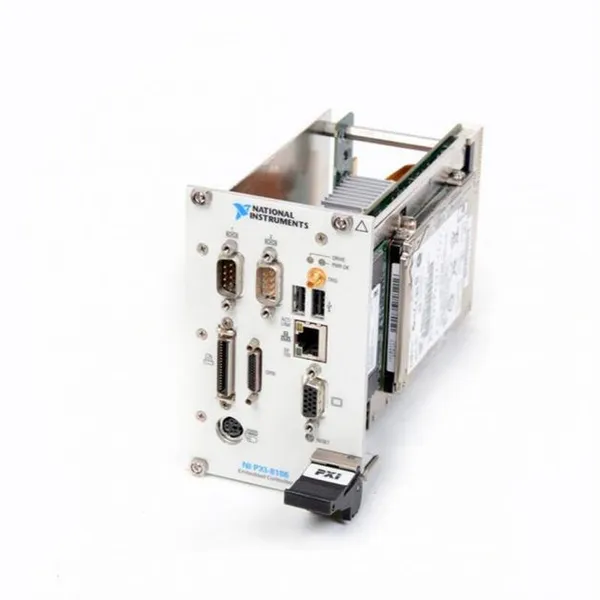
NI PXI-8186 Embedded Controller photo-1
Negotiable MOQ: 1 Piece (Price negotiable depending on order volume and customization)
Key Specifications
Get Latest Price
Material:
Other, Global universal model
Condition:
Other, Global universal model
Task:
Other, Global universal model
Payment & Shipping
Payment Methods:
Port of Shipment:
guizhou
Delivery Detail:
Delivery time depends on order quantity.
Material Other, Global universal model
Condition Other, Global universal model
Task Other, Global universal model
Mathematical Model Other, Global universal model
Signal Other, Global universal model
Customized Non-Customized
Structure Other, Global universal model
Operating Temperature 0℃ to +60℃
Relative Humidity 5%-95% (non-condensing)
Dimensions 2.7×146×190.5mm

I. Product Overview


National Instruments PXI-8186 is an embedded controller with the part number including 782672-01. Built on the Intel high-performance processor architecture, it is specifically designed for PXI modular test and measurement systems. As the core control unit of the PXI chassis, it is responsible for key tasks such as system resource management, data acquisition and processing, and external device communication.


Adopting the 3U PXI standard form factor, this product is compatible with PXI-1, PXIe hybrid chassis (e.g., NI PXIe-1073, PXI-1042) and third-party chassis complying with PXI specifications. It supports PXI bus and PCI Express expansion, and integrates a rich set of I/O interfaces (Gigabit Ethernet, USB, serial port, etc.). It can directly connect to peripherals such as monitors, keyboards, and mice, and also link with upper computers or other test systems via networks. Widely used in scenarios such as automated test systems, industrial control platforms, aerospace testing, and automotive electronics testing, it is a core component in PXI systems for achieving high-performance computing data processing and flexible control. With advantages of high stability, excellent expandability, and fast computing speed, it can meet the real-time and precision requirements of complex test and measurement tasks.


II. Functional Features


High-Performance Computing and Real-Time Processing Capability

  • Equipped with Intel Core i7/i5 series processors (specific models vary by configuration, e.g., Core i7-6700EQ), it features 4-core 8-thread computing cores with a maximum frequency of up to 2.6GHz (turbo frequency 3.5GHz). Supporting 16GB/32GB DDR4-2133 SODIMM memory with a memory bandwidth ≥ 34GB/s, it can efficiently handle multi-channel data acquisition, complex algorithm computing (e.g., filtering, Fourier transform), and real-time control tasks.

  • Integrated with Intel HD Graphics 530 core graphics, it supports 4K resolution display output (maximum 3840×2160@60Hz), meeting the requirements of multi-monitor expansion and adapting to the visualized operation interface and real-time data display scenarios of test systems.

  • Equipped with high-speed storage interfaces, it supports M.2 NVMe SSD (maximum 2TB) and SATA III hard drives with a storage read/write speed ≥ 1500MB/s. It can quickly store massive test data, reduce data transmission bottlenecks, and ensure the stability of continuous system operation.


Comprehensive Compatibility and Flexible Expansion

  • Strictly complying with the PXI 2.0 specification and PCI Express 3.0 standard, it supports the PXI hybrid bus architecture and can seamlessly be compatible with PXI-1 and PXIe modules. It enables the collaborative operation of multiple types of modules such as analog, digital, and counter modules in the same chassis, expanding the number of channels and functions.

  • Integrated with rich external interfaces: 2 Gigabit Ethernet ports (RJ45), 4 USB 3.0 ports (compatible with USB 2.0/1.1), 2 RS232 serial ports, 1 HDMI 2.0 port, 1 DisplayPort interface, and 1 PS/2 interface. It can directly connect to peripherals such as printers, barcode scanners, and external storage devices, meeting the needs of diverse scenarios.

  • Supporting optional Wi-Fi 802.11ac and Bluetooth 4.2 wireless communication, it can realize wireless data transmission and remote control, adapting to wireless or mobile test scenarios; the optional built-in GPS module supports positioning and time synchronization functions, suitable for outdoor test systems.


Stable and Reliable Industrial-Grade Design

  • Adopting industrial-grade components and fanless heat dissipation design (for some models), it has a wide operating temperature range (0℃~+55℃), can adapt to different environments such as industrial sites and laboratories, has no mechanical wear, improves long-term operation reliability, and features a Mean Time Between Failures (MTBF) ≥ 100,000 hours.

  • Supporting wide voltage input (9V~36V DC), it has overvoltage, overcurrent, and reverse connection protection functions, can be directly connected to industrial power supply systems, and avoids system shutdown caused by power fluctuations; it has a vibration resistance of 5g (10Hz~500Hz) and an impact resistance of 50g (11ms), adapting to vibration environments such as vehicle-mounted and airborne applications.

  • Compatible with operating systems such as Windows 10 IoT Enterprise and LabVIEW Real-Time, it supports software toolchains such as NI-DAQmx and LabVIEW. It enables rapid development of test programs, realizes seamless collaboration with other NI hardware (e.g., DAQ modules, signal conditioning modules), and simplifies the system integration process.


Efficient Management and Remote Operation & Maintenance

  • Integrated with NI System Configuration software, it can monitor the hardware status of the controller (CPU temperature, memory usage, hard disk space) and the connection status of PXI modules in real time, supports fault alarm and log recording, facilitating quick troubleshooting.

  • Supporting remote control protocols such as Remote Desktop, SSH, and VNC, it can realize remote configuration, program debugging, and data transmission of the controller via the network without on-site operation, improving operation and maintenance efficiency; it supports Network Time Protocol (NTP) to ensure time consistency when multiple devices work collaboratively.

  • With optional hardware encryption function, it supports the TPM 2.0 security chip, which can protect the security of test programs and data, prevent unauthorized access and data leakage, and is suitable for classified test scenarios.


Full-Scenario Adaptation and Core Functions

  • Core functions include: core control and resource scheduling of PXI systems, multi-channel data acquisition and real-time processing, communication collaboration between external devices and modules, and test program operation and data storage. It is the "brain" of the PXI modular system.

  • Suitable for multi-field applications: automotive electronics automated testing (engine, chassis testing), aerospace airborne test systems, semiconductor equipment testing, industrial automation production line control, laboratory multi-channel scientific research testing, etc., especially suitable for complex test tasks requiring high computing power, high stability, and flexible expansion.


PXI-8186


III. Technical Specifications


Category Specific Parameters
Product Type 3U PXI Embedded Controller (PXI-1/PCIe Compatible)
Core Functions PXI System Control, Data Acquisition and Processing, Module Collaboration, Peripheral Communication
Processor Configuration Intel Core i7-6700EQ (4-core 8-thread, 2.6GHz base frequency, 3.5GHz turbo frequency) or equivalent processors
Memory Configuration 16GB/32GB DDR4-2133 SODIMM (maximum support 64GB)
Storage Configuration M.2 NVMe SSD (256GB/512GB/1TB/2TB) + optional SATA III hard drive
Bus Interface PXI 2.0 Bus (32-bit/66MHz), PCI Express 3.0 (x16 link)
External Interfaces 2×Gigabit Ethernet (RJ45), 4×USB 3.0, 2×RS232 Serial Ports, 1×HDMI 2.0, 1×DisplayPort, 1×PS/2
Wireless Communication Optional Wi-Fi 802.11ac, Bluetooth 4.2, GPS Module
Power Parameters Input Voltage: 9V~36V DC; Power Consumption: Typical 65W, Maximum 90W
Environmental Adaptability Operating Temperature: 0℃~+55℃; Storage Temperature: -40℃~+85℃; Humidity: 5%-95% (non-condensing)
Mechanical Performance Dimensions: 160×100×233mm (3U PXI Standard); Weight: approx. 1.2kg; Vibration Resistance: 5g (10Hz~500Hz); Impact Resistance: 50g (11ms)
Protection Performance Overvoltage/Overcurrent/Reverse Connection Protection; Optional TPM 2.0 Security Chip
Compatible Systems Windows 10 IoT Enterprise, LabVIEW Real-Time, Linux (Customized Version)
Software Compatibility NI-DAQmx, LabVIEW, TestStand, System Configuration
Service Life MTBF ≥ 100,000 hours (at 25℃)
Application Scenarios Automotive Electronics Testing, Aerospace Testing, Semiconductor Testing, Industrial Automation, Laboratory Scientific Research


IV. Working Principle


The core working logic of the NI PXI-8186 is "System Initialization → Module Collaboration → Data Acquisition → Processing and Storage → Communication Interaction", with the specific process as follows:
  1. System Initialization: After the controller is powered on, it scans all PXI/PXIe modules in the chassis through the PXI bus, identifies the module models and functions, loads the corresponding drivers, completes system resource allocation (address, interrupt, DMA channel), and initializes the operating system and application software.


  2. Module Collaboration: According to the test program instructions, the controller sends control commands to target modules (e.g., DAQ modules, signal conditioning modules) through the PXI bus, configures module parameters (sampling rate, range, trigger mode), and coordinates the synchronous operation of multiple modules (supporting trigger synchronization and clock synchronization).


  3. Data Acquisition: After the signals from external sensors or signal sources are converted into digital signals by the PXI modules, they are transmitted to the controller memory through the PXI/PCIe bus. The controller realizes high-speed data transmission through DMA (Direct Memory Access) technology, avoiding excessive CPU usage and ensuring real-time performance.


  4. Processing and Storage: The controller uses the high-performance CPU to process the collected data in real time (e.g., filtering, calibration, feature extraction). On the one hand, the processed data is stored in the local SSD hard drive; on the other hand, it is transmitted to the upper computer or cloud platform through Ethernet or wireless communication, and the data curves and test results are displayed in real time on the local monitor.


  5. Communication Interaction: The controller communicates with external peripherals (printers, barcode scanners) through USB, serial port and other interfaces to output test reports; it receives remote control instructions from the upper computer through the network, adjusts test parameters or starts/stops test tasks, realizing full-process automated control.

Product Tags: PXI-8186

Send Inquiry to This Supplier

Message
0/5000

Want the best price? Post an RFQ now!
Gold Verified Supplier
1Yr
Verified Business License
Business Type
Trading Company
Year Established
2014
Factory Size
1,000-3,000 square meters
Product Certifications
SA8000