








 Contact Platform Support
 Help Center


Related Products
-
 VCCI Certification Application Process: A Complete Guide to Registration, Testing, and Mark UsageUS$ 100MOQ: 1 Piece
 -
UAE ECAS Certification: Conformity Assessment and ESMA Mark Application ProcessNegotiableMOQ: 1 Piece
-
Energy Star Certification Official Application Steps and Energy Efficiency Test Data Submission GuidelinesUS$ 100MOQ: 1 Piece
-
What is TSCA Certification in the US? The Importance of TSCA Certification for ProductsUS$ 100MOQ: 1 Piece
-
Exporting Wireless and Telecommunications Products to the UAE Requires TRA/TDRA CertificationNegotiableMOQ: 1 Piece
WEEE Certification and Registration
1. What is WEEE Certification?
WEEE: Waste Electrical and Electronic Equipment (WEEE), is the directive for the recycling of end-of-life electrical and electronic equipment. To properly manage the vast amount of electrical and electronic waste and recycle valuable resources, the European Union passed two directives with significant impact on electrical and electronic equipment products in 2002: WEEE (EU Recycling Directive) and RoHS (EU Environmental Directive). In 2016, the German environmental authorities issued a law targeting e-commerce, requiring Amazon to notify overseas sellers on its platform to register for electronic device recycling. Amazon must order sellers to cease sales before obtaining a WEEE electronic device recycling code.
2. Which Products Require WEEE Certification?
Taking the German marketplace as an example, WEEE registration mainly applies to one category of products. According to official information, the WEEE directive applies to 10 categories of electronic and electrical products: large household appliances; small household appliances; IT and communication equipment; consumer electronics and electrical equipment; lighting equipment; electrical and electronic tools (excluding large stationary industrial tools); toys, leisure and sports equipment; medical devices; testing and control instruments; and vending machines.
3. Which countries require WEEE certification?
Germany, the United Kingdom, France, Italy, Spain, Sweden, the Netherlands, Denmark, Portugal, Poland, Belgium, Finland, Luxembourg, Austria, Ireland, etc.
4. Is WEEE mandatory?
Currently, Amazon has a policy of forcibly shutting down companies selling cross-border e-commerce. Products without a WEEE registration code will be forcibly removed from the platform. Among all European countries, Germany has the strictest environmental requirements, so WEEE is mandatory in Germany!
Consequences of not registering for WEEE:
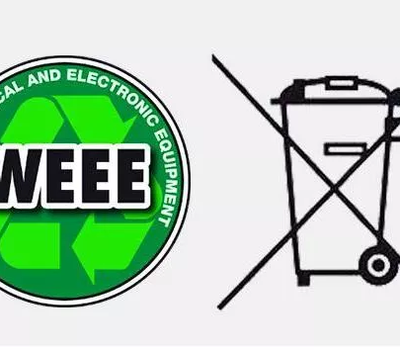
Failure to register for WEEE may result in your listing being blocked and removed from Amazon's platform. More seriously, even if a seller is doing well, a competitor might target them. If the competitor buys the seller's products and the products don't have the diagonally crossed trash can logo printed on them, or if the products aren't registered for recycling in Germany, the competitor might hire a German lawyer to send a letter to Amazon demanding the cessation of sales and initiating court proceedings to destroy all of the seller's products on Amazon. In this case, the seller not only loses all inventory but also has to pay for the lawyer's letter and the cost of destroying the products. This could essentially mean the company is driven out of the German market (as seen in previous cases where a large number of small sellers and top sellers collectively complained and suffered significant losses).
5. What is the purpose of WEEE certification in Germany?
To ensure that end-users' electronic waste is sorted, recycled, and reused (environmentally friendly, reducing waste dumping in developing countries).
6. What products need to be recycled?
Products that operate on an electrical energy basis.
7. Which electrical appliances need WEEE registration? How are they classified?
Class 1: Heat Exchangers
Heat exchangers (any size) are electrical appliances with integrated circuits that use substances other than water – such as gases, oils, refrigerants, and other similar substances – for cooling/heating or dehumidification purposes.
Class 2: Display Screens
Screens and monitors (any size) are electronic devices used to display images and information on an electronic screen, regardless of the screen's size. Furthermore, devices containing screens with a surface area exceeding 100 square centimeters fall into this category. However, these are only those electrical appliances whose primary purpose is to display images and information on a screen.
Class 3: Lamps
Lamps (any size) are facilities used for the production of lamps (§3.14 ElektroG). These should be understood to refer to electric light sources that can be installed or replaced by end users in designated terminal equipment (e.g., lamps, projectors, solariums, etc.).
Class 4: Large Electrical and Electronic Equipment
Appliances with at least one external dimension exceeding 50 cm but not yet covered by Classes 1-3, as these categories are more specific.
Class 5: Small Electrical and Electronic Equipment
Appliances with a maximum external dimension less than or equal to 50 cm but not belonging to Classes 1-4 or 6, as these categories are more specific.
Class 6: Small IT and Telecommunications Equipment
Electronic devices intended to collect, transmit, process, store, and present information (Information Technology Equipment) and electronic devices used for telecommunications transmission of signals—voice, video, and data—at spatial distance (Telecommunications Equipment), where the maximum external dimension is less than or equal to 50 cm, but these are not yet covered by Classes 1-4, as these categories are more specific.
8. How does the WEEE Directive's governing body, EAR, regulate this?
If EAR discovers illegal activities/the German Environmental Protection Association/competitors directly complain to EAR: the following situations may occur:
1. Fine: Up to €100,000
2. Confiscation: All profits currently held in Germany
3. Direct ban: Sales
4. Engage a lawyer: and apply for court proceedings
9. What are the obligations of Chinese manufacturers?
1) Registration:
Step 1: Foreign companies must designate a German company as their agent (takes 4 to 8 weeks)
Step 2: Register, apply for a recall number (takes 4-6 weeks), submit product brand and category, and submit estimated tonnage.
2) Bankruptcy Exit Protection: A bankruptcy exit protection report must be submitted annually to ensure the company has a designated company to recycle sold used electrical appliances in the event of bankruptcy or withdrawal from the EU or EU markets (must be underwritten by a relevant insurance company).
3) Monthly and Annual Reports: A total sales weight report for the previous month must be submitted at the beginning of each month, and a sales data report for the previous year must be submitted annually.
4) Used Product Recycling: Upon receiving an EAR notification at any time, the company must transport the waste container to the designated recycling station (must be carried out by a recycling company).
10. The WEEE registration process in Germany is as follows:
Step 1: The customer fills out the registration application form and submits the relevant materials to the WEEE agent.
Step 2: After confirming the information is correct, the WEEE agent issues a contract to the customer.
Step 3: The customer signs the contract and returns it to the WEEE agent.
Step 4: The WEEE agent provides an invoice to the customer.
Step 5: The customer pays according to the invoice.
Step 6: The WEEE agent submits the documents to the EAR certification body to apply for WEEE registration.
Step 7: The EAR certification body confirms the WEEE agent's authorization to the customer.
Step 8: The WEEE registration certificate is issued and entered into the German electronic recycling computer query system; registration is complete.
11. How long does WEEE registration take?
Generally, it takes 12 weeks.

Send Inquiry to This Supplier

You May Also Like
-
Introduction to TISI Certification and List of Regulated Products in ThailandNegotiableMOQ: 1 Piece
-
Singapore PSB Certification for Rice CookersNegotiableMOQ: 1 Piece
-
CB Certification for Hair Dryers: IEC60335 Testing and CertificationNegotiableMOQ: 1 Piece
-
By 2025, Mice and Keyboards Listed on E-commerce Platforms Will be Required to Provide Full GB/T 14081-2010 and GB/T 26245-2010 Test Reports.NegotiableMOQ: 1 Piece
-
Remote Control Switch IEC 60669-2-2 Standard Test ReportNegotiableMOQ: 1 Piece
-
Safety Standard EN 50604 for Secondary Lithium Batteries in Light Electric Vehicles (EN 50604-1) - Enforcement DateNegotiableMOQ: 1 Piece
-
Brazil ANATEL Certification Process and Testing CycleUS$ 100MOQ: 1 Piece
-
CCC Certification Process, Cycle, and Standards IntroductionUS$ 100MOQ: 1 Piece
-
Russian EAC Certification RequirementsUS$ 100MOQ: 1 Piece
-
DNV (Det Norske Veritas) Test Reports and Certifications IntroductionUS$ 100MOQ: 1 Piece
