








 Contact Platform Support
 Help Center


Related Products
-
 A Comprehensive Guide to US ETL CertificationNegotiableMOQ: 1 Piece
 -
The Impact of EN 303 645 IoT Device Security Standard on CE CertificationUS$ 100MOQ: 1 Piece
-
Saudi SASO/SABER/SFDA CertificationUS$ 100MOQ: 1 Piece
-
WERCS Certification and WERCS RegistrationUS$ 100MOQ: 1 Piece
-
WEEE Certification and RegistrationNegotiableMOQ: 1 Piece
EN 62680 Certification
I. Introduction to EN 62680 Mandatory Certification
1. Directive Issuance and Implementation Dates
On December 7, 2022, the EU issued a revised directive. The new directive will be mandatory in all EU member states from December 28, 2024, with the requirement for laptop devices relaxed to April 28, 2026.
2. Scope of Covered Devices
EN 62680 mandatory certification covers 13 categories of wireless devices, such as mobile phones, tablets, and digital cameras. These devices must be equipped with a USB Type-C charging port compliant with the EN IEC 62680-1-3 standard and support the USB PD protocol compliant with EN IEC 62680-1-2. The specific devices covered include:
Handheld mobile phones;
Tablets;
Digital cameras;
Headphones;
Headsets with microphones;
Handheld videogame consoles;
Portable speakers;
E-readers;
Keyboards;
Mice;
Portable navigation systems;
Earbuds;
Laptops. --Mandatory implementation on April 28, 2026
3. Key Points of the New Directive
Product types explicitly exempt from the directive's provisions: wireless products with removable batteries that can only be charged via a separate battery charger; wireless devices with built-in power supplies powered directly by AC power; wireless devices that use only wireless charging; and charging cables shipped with the wireless device.
The conditions for wireless devices to support USB PD are specified as follows: Whether a wireless device needs to support USB PD (EN IEC 62680-1-2) is determined by the product's rated voltage, rated current, and rated power. If the rated voltage is ≤5V, or the rated current is ≤3A, or the rated power is ≤15W, USB PD is not required; otherwise, it is required. If, during charging, the charging voltage, current, or power instantaneously exceeds the threshold (>5V, >3A, or >15W), the wireless device does not need to support USB PD.
Regulations for systems containing multiple wireless devices: For a system containing multiple wireless devices, where one device is subject to the RED Common Charger directive, and if that device cannot operate independently but must operate in conjunction with the entire system, then the system should be considered as a whole to determine whether it is subject to the RED Common Charger directive.
Type-C Socket Pin Specifications: Wireless devices are only permitted to use Type-C sockets specified in standard EN IEC 62680-1-3 (12, 16, or 24 pins).
Charging Protocol Specifications: In addition to the USB PD charging protocol, wireless devices are also permitted to use proprietary charging protocols, but these proprietary protocols must not affect or restrict the USB PD charging protocol.
Implementation Date and Regulations for Products Already on the Market: The RED Common Charger Directive will take effect on December 28, 2024 (April 28, 2026 for laptops). Wireless products already on the market before the implementation date are allowed to continue to be sold. For wireless products of the same "Model," even if they were already on the market before the implementation date, their continued market placement after the implementation date will still be subject to the RED Common Charger Directive. The EU does not recognize the concept of "Model"; it is merely a commercial term.
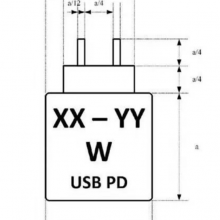
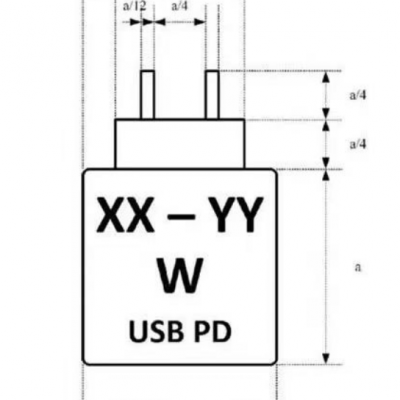
Packaging and Labelling Requirements: When wireless communication equipment is sold and circulated in the EU market, it may be optional to include a charger, and the instructions for use must be clearly stated. The type and configuration of the charger must be indicated on the outer packaging or label, and the information must be displayed in a readable manner, with the "a" mark no less than 7mm. When the charger is compatible with USB PD (charging power exceeding 5V, current exceeding 3A, or output power exceeding 15W), it must be labeled with the abbreviation "USB PD".
4. Impact on Products
Currently, there is no impact on chargers and cables sold separately.
Package shipments and specific products must meet directive requirements: For packages shipped together, if the terminal device in the package falls within the 13 categories of products regulated by Directive (EU) 2022/2308, the terminal device + cable + charger must all meet the requirements of this directive. Special Reminder: TWS earbuds + USB Cable. TWS earbuds are products regulated by Directive (EU) 2022/2380. The charging case's USB-C port must meet IEC 62680-1-3, while the earbud charging port has no requirements. The charging case's USB-C female connector only accepts 16-pin or 24-pin connectors, while the USB cable's USB-C male connector can accept 9, 12, 14, 16, 22, or 24 pins and must meet IEC 62680 requirements. The included USB cable does not need to be a USB-C to USB-C cable; a USB-C to USB-A cable is acceptable. Wireless portable speakers (such as portable Bluetooth speakers), wireless mice, and wireless keyboards are also regulated by Directive (EU) 2022/2308.

Send Inquiry to This Supplier

You May Also Like
-
VCCI Certification Application Process: A Complete Guide to Registration, Testing, and Mark UsageUS$ 100MOQ: 1 Piece
-
UAE ECAS Certification: Conformity Assessment and ESMA Mark Application ProcessNegotiableMOQ: 1 Piece
-
Energy Star Certification Official Application Steps and Energy Efficiency Test Data Submission GuidelinesUS$ 100MOQ: 1 Piece
-
What is TSCA Certification in the US? The Importance of TSCA Certification for ProductsUS$ 100MOQ: 1 Piece
-
Exporting Wireless and Telecommunications Products to the UAE Requires TRA/TDRA CertificationNegotiableMOQ: 1 Piece
-
Introduction to TISI Certification and List of Regulated Products in ThailandNegotiableMOQ: 1 Piece
-
Singapore PSB Certification for Rice CookersNegotiableMOQ: 1 Piece
-
CB Certification for Hair Dryers: IEC60335 Testing and CertificationNegotiableMOQ: 1 Piece
-
By 2025, Mice and Keyboards Listed on E-commerce Platforms Will be Required to Provide Full GB/T 14081-2010 and GB/T 26245-2010 Test Reports.NegotiableMOQ: 1 Piece
-
Remote Control Switch IEC 60669-2-2 Standard Test ReportNegotiableMOQ: 1 Piece
