Home > Electrical & Electronics > Electrical Control System > ABB 3BSE024388R3 PFXA401F Millmate Controller 400
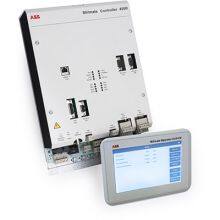
ABB 3BSE024388R3 PFXA401F Millmate Controller 400
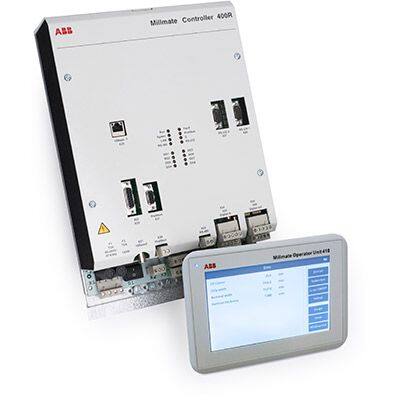
ABB 3BSE024388R3 PFXA401F Millmate Controller 400 photo-1
Negotiable MOQ: 1 Piece (Price negotiable depending on order volume and customization)
Key Specifications
Get Latest Price
Material:
Other, Global universal model
Condition:
Other, Global universal model
Task:
Other, Global universal model
Payment & Shipping
Payment Methods:
Port of Shipment:
guizhou
Delivery Detail:
Delivery time depends on order quantity.
Material Other, Global universal model
Condition Other, Global universal model
Task Other, Global universal model
Mathematical Model Other, Global universal model
Signal Other, Global universal model
Customized Non-Customized
Structure Other, Global universal model
Operating Temperature -20℃ ~ 60℃
Relative Humidity 5%-95% (non-condensing)
Dimensions 180mm × 140mm × 55mm

I. Overview


The ABB 3BSE024388R3 PFXA401F is a high-performance compact controller module, serving as a core component of the AC 800M series Distributed Control System (DCS). Specifically designed for medium-to-large industrial process control scenarios, this module focuses on meeting the precise control requirements of process industries. It undertakes key tasks such as control logic calculation, real-time on-site signal processing, cross-module data interaction, and communication with upper-level systems, acting as a core hub connecting on-site equipment and the control system.


With its modular design and high compatibility, the PFXA401F can be seamlessly integrated into the AC 800M control system architecture. It is suitable for harsh operating environments across multiple industries, including power generation, petrochemicals, metallurgy, water treatment, and papermaking. Not only does it possess efficient computing capabilities and a rich interface configuration, but it also ensures operational stability through comprehensive redundancy design and self-diagnostic mechanisms. This provides solid technical support for the continuity and automation of industrial production, effectively reducing the risk of equipment downtime and operational maintenance costs.


II. Technical Specifications


Parameter CategorySpecific SpecificationsDetailed Description
Core Processing UnitProcessor Configuration32-bit RISC industrial-grade processor with a clock speed of 800MHz, supporting multi-task priority scheduling to ensure efficient parallel execution of complex logic.

Storage CapacityRAM: 1GB (for real-time data caching and program operation); Flash: 512MB (for firmware storage, control program, and historical data backup), supporting external SD card for expanded storage.


Power Supply Parameters

Input Specification


24V DC redundant input, with an allowable voltage fluctuation range of 19.2V DC ~ 28.8V DC, supporting automatic and non-disturbing switching between main and backup power supplies.


Power Consumption IndicatorRated power consumption ≤ 25W, no-load power consumption ≤ 8W, equipped with four-fold protection functions: overvoltage, undervoltage, short circuit, and overtemperature protection.


I/O Interface Parameters

Analog Input (AI)


8-channel differential input, supporting 4-20mA current signal / 0-10V voltage signal / thermocouple (Type K/J/T) / RTD (PT100) signal, with an accuracy of ±0.05% FS and a sampling rate of 2kHz.


Analog Output (AO)4-channel output, supporting switching between 4-20mA current signal and 0-10V voltage signal, with a load capacity of ≥ 600Ω and an output accuracy of ±0.1% FS.

Digital I/O16-channel Digital Input (DI): response time ≤ 0.1ms, supporting dry contact/wet contact (24V DC) switching; 8-channel Digital Output (DO): transistor output, with a capacity of 24V DC/2A per channel.


Communication Parameters


Interface Type


2 Gigabit Ethernet interfaces (RJ45), 2 RS485 interfaces, 1 PROFIBUS-DP master/slave interface, 1 dedicated Modbus interface.


Supported ProtocolsPROFINET, EtherNet/IP, Modbus-TCP/RTU, PROFIBUS-DP, and ABB AC 800M dedicated communication protocol; Ethernet supports redundant ring network configuration.


Environmental Parameters


Temperature and Humidity Range


Operating temperature: -20℃ ~ 60℃; Storage temperature: -40℃ ~ 85℃; Relative humidity: 5% ~ 95% (non-condensing), supporting gradual humidity changes.


Anti-interference and Protection LevelComplies with IEC 61000-4 anti-interference standards, with ESD contact discharge of ±8kV, air discharge of ±15kV, and surge immunity of ±2kV; Protection level IP20, suitable for standard cabinet installation.
Physical Parameters


Dimensions and Installation


180mm × 140mm × 55mm (Length × Width × Height), installed on DIN 35mm standard guide rail, compatible with the AC 800M system cabinet layout.

PFXA401


III. Functional Features


1. Efficient and Precise Control Capability

The module is equipped with a 32-bit RISC industrial-grade processor with a clock speed of 800MHz, combined with 1GB high-speed RAM. It can quickly execute complex control logics such as PID regulation, fuzzy control, sequential control, and interlock protection, with a minimum control cycle of 0.1ms. This enables it to accurately respond to dynamic changes in on-site parameters (e.g., pressure, temperature, flow rate) and achieve refined control in process industries. It supports a multi-task parallel processing mechanism, which can simultaneously complete the calculation and data transmission of 128 independent control loops, avoiding control delays caused by task blocking.


2. Multi-Protocol Compatibility and Redundant Communication

It is equipped with multiple communication interfaces including Gigabit Ethernet, RS485, and PROFIBUS-DP, covering mainstream industrial communication scenarios. It can be seamlessly connected to upper-level monitoring systems (e.g., ABB Control Builder M, WinCC), on-site PLCs, intelligent instruments, and third-party equipment. Supporting mainstream industrial Ethernet protocols such as PROFINET and EtherNet/IP, as well as the general Modbus protocol, it enables cross-brand data interaction without the need for additional conversion modules. The Ethernet interface supports redundant ring network configuration, with a ring network recovery time of ≤ 20ms, ensuring the continuity of the communication link.


3. Comprehensive Self-Diagnosis and Fault Early Warning

A three-level self-diagnostic mechanism is built-in: the first level diagnoses the module's power supply and core circuit status; the second level diagnoses the signal integrity of I/O channels; the third level diagnoses the communication link and connection status of external equipment. When an abnormality is detected, on-site hierarchical alarms are triggered via the LED indicators (power indicator, operation indicator, fault indicator, communication indicator) on the front of the module. Meanwhile, information such as fault codes, occurrence time, and fault location is uploaded to the upper-level system, enabling accurate fault localization. For potential faults such as power supply fluctuations and channel drift, it supports pre-alarm threshold setting, providing a 30s-60s advance warning of risks to reserve maintenance time for operation and maintenance personnel.


4. Adaptability to Harsh Environments and Redundancy Guarantee

Adopting industrial-grade wide-temperature components and reinforced circuit design, it has an operating temperature range of -20℃ ~ 60℃, making it adaptable to extreme industrial environments such as high-temperature workshops and low-temperature warehouses. It has passed the full-item anti-interference certification of IEC 61000-4, capable of resisting on-site interferences such as electromagnetic radiation and voltage pulses, thus ensuring the accuracy of signal acquisition. It supports 24V DC dual-power redundant input; in case of main power failure, it can automatically switch to the backup power supply within 5ms. Combined with the redundant backup design of program memory, it significantly reduces the risk of system downtime.


5. Convenient Configuration and Operation & Maintenance Management

It supports graphical configuration through ABB's dedicated Control Builder M software, providing a rich library of control function blocks (e.g., PID blocks, interlock blocks). Control logic can be written through drag-and-drop operations without complex coding, lowering the development threshold. The module supports online debugging and firmware upgrading, allowing remote program updates via Ethernet to complete system optimization without shutting down the system. The combination of front-panel LED indicators and built-in diagnostic ports enables operation and maintenance personnel to troubleshoot faults without disassembling the module, improving maintenance efficiency.


IV. Common Faults and Solutions


Common FaultsPossible CausesSolutions
Power indicator not on, module unresponsive1. Redundant power supply not connected or terminal block loose; 2. Input voltage beyond the range of 19.2-28.8V; 3. Internal power module burned out or fuse blown; 4. Power interface oxidized and poor contact.
  1. Check the connection of dual power supply lines, and tighten the terminal blocks with a torque wrench (torque: 0.8-1.0N·m); 2. Measure the input voltage with a multimeter; repair the power supply circuit or install a voltage stabilizer if abnormal; 3. Replace the fuse with the same specification (2A/250V) after power-off; if the fault persists, return to the factory to repair the power module; 4. Polish the oxidized layer of the interface with sandpaper, and re-plug the connection.


Analog input signal drift or distortion1. Loose connection between sensor and module or ungrounded shielding layer; 2. Sensor not calibrated or beyond the verification period; 3. Input channel affected by strong electromagnetic interference; 4. Aging of internal signal conditioning circuit of the module.
  1. Re-tighten the terminal blocks and ensure single-ended grounding of the shielding layer (ground resistance ≤ 4Ω); 2. Calibrate the sensor with a standard signal source; send it to a metrology institution for verification if it exceeds the period; 3. Keep the signal line away from interference sources such as frequency converters and motors, and replace it with a twisted-pair shielded cable; 4. Switch to the backup input channel; if normal, the original channel is faulty and needs to be returned to the factory for repair.


Communication interruption, unable to access redundant ring network1. Incorrect Ethernet wiring (e.g., mixed use of crossover cables/straight-through cables); 2. Mismatched ring network parameters (IP address, subnet mask, ring network ID); 3. Damaged communication interface or aged network cable; 4. Number of ring network nodes exceeding the upper limit (maximum 32).
  1. Replace with an industrial-grade straight-through network cable, and check the T568B wiring sequence against the wiring diagram; 2. Unify the ring network parameters through Control Builder M software to ensure unique node IDs; 3. Test the continuity of the network cable with a cable tester, and replace the damaged interface or network cable; 4. Reduce the number of ring network nodes, or add a ring network switch for expansion.


Frequent module restart or program loss1. Input power voltage fluctuation exceeding ±10%; 2. Poor heat dissipation causing module temperature to exceed 60℃; 3. Faulty Flash storage module; 4. Abnormal redundant power supply switching logic.
  1. Install an industrial-grade voltage stabilizer (voltage stabilization accuracy ±0.5), and monitor power supply ripple (≤ 100mVp-p); 2. Clean the dust at the cabinet air vent, and install an axial fan (air speed ≥ 2m/s); 3. Re-flash the firmware; replace the Flash module if the flashing fails; 4. Reconfigure the power supply switching parameters through diagnostic software and test the switching logic.


No action from digital output1. Open circuit in output line or short circuit in load; 2. Burned-out transistor output stage; 3. Output channel enable signal not activated; 4. Load current exceeding the rated value of 2A.1. Test the continuity of the line with a multimeter, locate the short-circuit point, and replace the burned wire; 2. Switch to the backup output channel; the damaged channel needs to be returned to the factory for repair; 3. Check the channel enable status in the configuration software and re-activate it; 4. Calculate the total load current; add a relay expansion module if it exceeds the rated value.
Product Tags: 3BSE024388R3 , PFXA401F

Send Inquiry to This Supplier

Message
0/5000

Want the best price? Post an RFQ now!
Gold Verified Supplier
1Yr
Verified Business License
Business Type
Trading Company
Year Established
2014
Factory Size
1,000-3,000 square meters
Product Certifications
SA8000