I. Overview
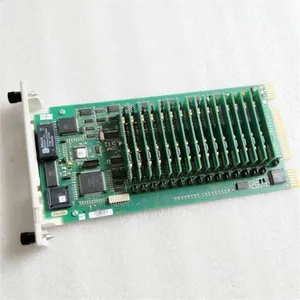
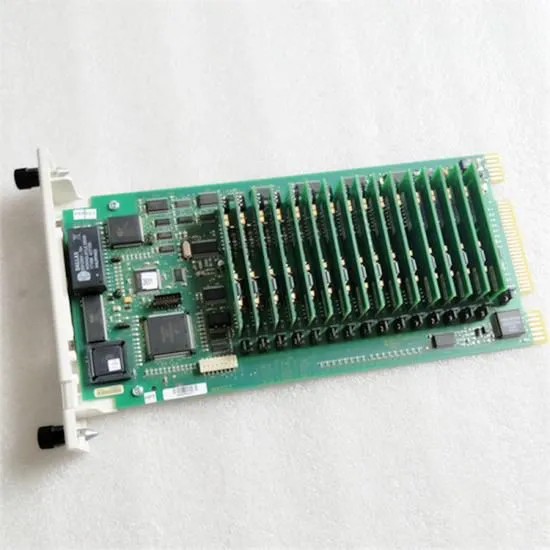
The ABB NINT-72C is an industrial-grade intelligent network interface module, serving as a core communication component of the ABB Advant Controller 400/800 series controllers. It is positioned as a "cross-network data interaction terminal for distributed control systems (DCS)". Its core function is to achieve precise conversion and transparent data transmission between different industrial network protocols, establishing a communication bridge between controllers, upper-level monitoring systems, third-party equipment, and remote I/O. Meanwhile, it features data caching, communication status monitoring, and fault alarm functions, providing highly reliable communication support for the networked interconnection of distributed control systems, multi-equipment collaborative control, and remote monitoring.
With its multi-protocol compatibility, high transmission rate, robust anti-interference design, and flexible configuration methods, this module is well-adapted to complex industrial communication scenarios in fields such as electric power, petrochemicals, metallurgy, and municipal engineering. It is a key communication unit for ABB Advant series control systems to realize "equipment interconnection - data intercommunication - centralized monitoring".
Its application scenarios accurately match the communication needs of multi-network integration in industrial sites:
In the electric power field, as a communication gateway between the thermal power unit DCS and the plant-level supervisory information system (SIS), it enables protocol conversion between the Advant Controller 800 and the SIS. It converts real-time unit operating parameters (such as main steam temperature, pressure, and power generation) from PROFIBUS DP protocol to Ethernet/IP protocol for upload to the SIS, while receiving optimized control commands from the SIS. The transmission delay is ≤10ms, ensuring the real-time performance of data interaction.
In the petrochemical field, it is suitable for multi-equipment collaborative control scenarios in refining and chemical plants. It connects ABB controllers with third-party PLCs (e.g., Siemens S7-400) and online analyzers. Through bidirectional conversion between Modbus RTU and PROFINET protocols, it realizes centralized collection of parameters such as flow rate, liquid level, and composition in the plant, as well as precise issuance of control commands, ensuring the collaborative stability of refining and chemical processes.
In the municipal water treatment field, it is used to build remote monitoring systems for sewage treatment plants. The module is deployed in on-site control stations, uploading water quality parameters and equipment operating status collected by distributed I/O to the cloud monitoring platform via GPRS/4G protocol, while receiving equipment start-stop commands from the platform. It supports breakpoint resume functionality to avoid data loss caused by network interruptions.
As a standard network interface module of the ABB Advant series, it supports seamless connection with controllers such as the Advant Controller 410/450/800. Through the ABB Control Builder configuration software, it enables rapid configuration of protocol parameters and data mapping relationships, meeting the strict requirements of industrial communication for "high compatibility, low latency, and high reliability".
In terms of hardware architecture and system compatibility, the NINT-72C adopts a hardware architecture of "multi-protocol processing unit + dual communication interfaces + centralized monitoring". Its core consists of a high-performance embedded processor, a dual-protocol conversion module (supporting 8 mainstream industrial protocols), a high-speed data caching unit, two independent communication interfaces, and a redundant power management module.
The module is equipped with 2 independent communication interfaces, each configurable as master/slave mode via DIP switches or configuration software. Interface types include RJ45 Ethernet port, RS485/RS232 serial port, and optional fiber optic interface, adapting to different communication scenarios such as wired/wireless and short-distance/long-distance communication. It has built-in firmware for 8 mainstream industrial protocols (PROFIBUS DP, PROFINET, Modbus RTU/TCP, Ethernet/IP, DeviceNet, CANopen, GPRS/4G, OPC UA), supporting bidirectional conversion between any two protocols. No firmware replacement is required to adapt to different network environments.
In terms of signal isolation, dual isolation technology (photoelectric isolation + magnetic isolation) is adopted to achieve electrical isolation between communication interfaces and the core circuit, as well as between the two communication interfaces. The isolation voltage is ≥2.5kVrms, effectively blocking common-mode interference, differential-mode interference, and ground loop interference in industrial sites, ensuring stable transmission of communication signals.
In terms of communication optimization, it has a built-in 16KB high-speed data caching unit, supporting batch data processing and cache-and-forward. When the network is temporarily interrupted, untransmitted data is cached (cache duration is configurable, up to 60s), and automatic resumption of transmission occurs once the network is restored. The embedded processor has a clock speed of 500MHz, supporting data conversion and transmission of 1,000 items per second, meeting the demand for high-concurrency data interaction.
Relying on industrial-grade reinforced design, the module uses wide-temperature-tolerant components (-25℃~70℃), a reinforced metal housing, and anti-vibration plug-in terminals. It complies with the IEC 60068-2 series of environmental adaptability standards and can operate stably in industrial sites with high temperature, high humidity, strong electromagnetic interference, and high vibration, meeting the high reliability requirements of critical industrial communication links.

II. Technical Parameters
III. Functional Features
1. Multi-Protocol Compatibility for Cross-Network Interconnection
The NINT-72C has built-in firmware for 8 mainstream industrial protocols, covering bus protocols (PROFIBUS DP, DeviceNet, CANopen), Ethernet protocols (PROFINET, Ethernet/IP, Modbus TCP, OPC UA), and wireless protocols (GPRS/4G). It supports bidirectional data conversion between any two protocols, eliminating the need for additional protocol conversion gateways and significantly reducing the cost of multi-network integration.
The module is equipped with 2 independent communication interfaces, each configurable with protocol type and operating mode (master/slave) via the ABB Control Builder configuration software. For example, Interface 1 can be configured as a PROFIBUS DP master to connect on-site sensors, and Interface 2 as an Ethernet/IP slave to connect to the upper-level monitoring system, enabling seamless connection between the bus network and Ethernet.
For special protocol requirements, the module supports online firmware upgrade. The protocol library can be updated via configuration software to adapt to communication needs of newly added third-party equipment. In addition, the module supports custom data mapping rules. Through configuration software, data source addresses and target addresses of different protocols can be mapped in one-to-one, one-to-many, or many-to-one modes. For instance, data from 3 PROFIBUS DP sensors can be aggregated and uploaded to the monitoring platform via Modbus TCP protocol, enhancing the flexibility of data interaction.
2. High-Speed Stable Transmission for Real-Time Requirements
The module adopts a high-performance embedded processor with a clock speed of 500MHz, combined with high-speed data processing algorithms, achieving a data conversion and transmission capacity of 1,000 items per second. The conversion delay is ≤10ms for a single data item and ≤50ms for a batch of 100 data items, meeting the strict real-time requirements of industrial control for communication.
The Ethernet interface supports 10/100/1000Mbps auto-negotiation transmission, compatible with industrial Ethernet environments of different bandwidths. It also supports transport layer protocols such as TCP/IP and UDP, allowing selection of reliable transmission (TCP) or fast transmission (UDP) modes based on communication needs.
For wireless communication scenarios, the module has a built-in GPRS/4G signal enhancement circuit, supporting automatic network switching (switching from GPRS to 4G when GPRS signal is weak). With a downlink rate of ≤150Mbps and an uplink rate of ≤50Mbps, it ensures the stability of remote data transmission.
In addition, the module has a built-in 16KB high-speed data caching unit, supporting batch data caching and forward. When the network is temporarily interrupted, it can cache up to 1,000 data items (cache duration configurable 0-60s), and automatically resume transmission once the network is restored, avoiding data loss. For example, in blast furnace temperature monitoring in a metallurgical workshop, the module converts temperature data from the on-site PROFINET network to Modbus TCP protocol for upload to the monitoring center, with a transmission delay of ≤10ms, ensuring the monitoring center obtains real-time blast furnace temperature changes and adjusts control strategies promptly.
3. Multiple Isolation & Anti-Interference for Complex Environments
The module adopts a dual-isolation design of "photoelectric isolation + magnetic isolation". The isolation voltage between communication interfaces and the core circuit is ≥2.5kVrms, and between the two communication interfaces is ≥1kVrms. This effectively blocks common-mode interference, differential-mode interference, and ground loop interference in industrial sites, preventing interference signals from affecting the core data processing circuit.
In terms of electromagnetic shielding, the module housing is made of high-strength galvanized steel, and copper foil shielding layers are laid on key internal circuits. The shielding effectiveness is ≥60dB, complying with the IEC 61000-4-3 RF radiation immunity standard (20V/m), which can resist strong electromagnetic radiation interference generated by equipment such as frequency converters and high-voltage motors.
In terms of signal processing, communication interfaces are equipped with common-mode filters, differential-mode filters, and surge suppressors, which can filter out 50/60Hz power interference, high-frequency noise, and transient surge signals (capable of absorbing ±15kV electrostatic pulses), improving communication stability by over 40%.
The wiring terminals adopt Phoenix plug-in design, featuring anti-loosening and anti-misplugging functions, with a contact resistance of ≤5mΩ. Combined with the IP40 dust-proof cover, the module can be used for a long time in industrial environments with high dust and high humidity. Its anti-vibration performance meets the 5g acceleration requirement of the IEC 60068-2-6 standard, allowing direct installation in control cabinets near vibration sources such as pumps and fans without additional shock absorption measures.
4. Comprehensive Status Monitoring & Fault Diagnosis for Improved O&M Efficiency
The module is equipped with comprehensive communication status monitoring and fault diagnosis functions, using a dual mechanism of "hardware monitoring + software diagnosis" to real-time monitor the module's operating status.
In terms of hardware, the front of the module is equipped with 2 interface status indicators (steady green for normal interface, blinking for data transmission, steady red for interface fault), a power indicator (steady green for normal power supply), and a system status indicator (steady green for normal system, blinking yellow for network interruption, steady red for system fault). Maintenance personnel can quickly determine the module's operating status through the indicators.
In terms of software, operating parameters of the module (including communication rate, data transmission volume, fault records, and network signal strength in GPRS/4G mode) can be read remotely via configuration software. The module supports automatic fault alarm: when faults such as interface failure, network interruption, power anomaly, or data transmission timeout occur, it can issue alarm signals to the controller or monitoring platform via optional relay output or communication protocol, and record fault codes (e.g., "ERR01: Interface 1 Communication Fault", "ERR05: Network Interruption"), facilitating maintenance personnel to quickly locate fault points. For example, in a petrochemical plant, if the module detects a communication fault in Interface 2 (connected to a third-party PLC), it immediately sends an alarm signal to the ABB controller via PROFIBUS DP protocol. The controller triggers an audible and visual alarm, while maintenance personnel check the fault code via configuration software to quickly troubleshoot wiring issues between the PLC and the module.
5. Redundant Design & Convenient Configuration for Reduced Operating Costs
The module supports a dual redundant power input design, with two independent power channels (A and B). When the voltage of the main power supply (Channel A) fluctuates beyond DC 24V±20% or a power outage occurs, the backup power supply (Channel B) is automatically activated within 1ms, ensuring continuous operation of the module and meeting the uninterrupted demand of critical industrial communication links.
In terms of configuration, the module supports mainstream configuration software such as ABB Control Builder and Industrial IT AssetVision, providing a graphical configuration interface. It allows intuitive configuration of interface protocol types, operating modes, data mapping relationships, cache parameters, and alarm thresholds, without the need to write underlying code, improving configuration efficiency by 60%. For example, via configuration software, Interface 1 can be quickly set as a Modbus RTU master (Address 1), Interface 2 as a PROFINET slave (Device Name "NINT-72C-01"), and data from Modbus RTU addresses 0x0001-0x0003 can be mapped to PROFINET addresses DB1.DBW0-DB1.DBW4, making the configuration process simple and efficient.
In addition, the module supports parameter backup and restoration. Configuration parameters can be exported as files for backup via configuration software. When replacing the module, parameters can be imported directly without reconfiguration, reducing replacement time to ≤10 minutes. It also supports hot-swapping (requires enabling in configuration software), so replacing the module does not require cutting off the main power supply of the control cabinet, avoiding production losses caused by system shutdown.









 Contact Platform Support
 Help Center