I. Overview
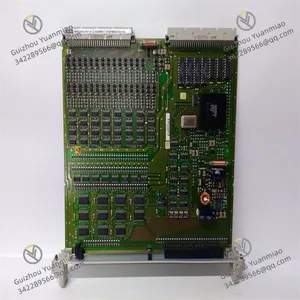
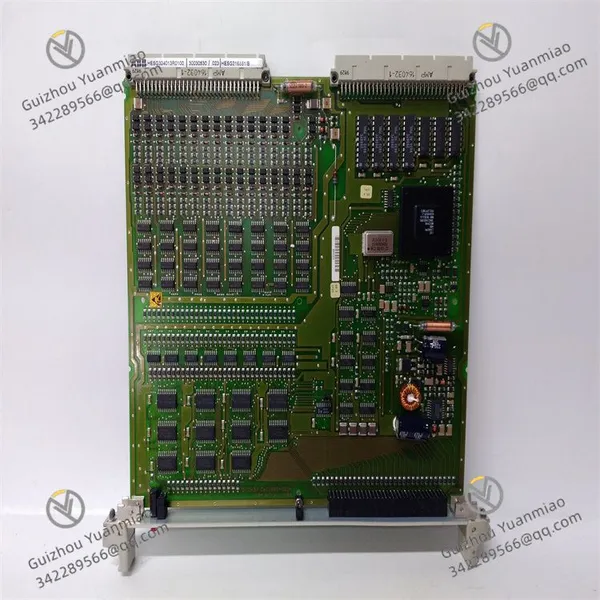
The ABB HESG324442R0112 216BVC62A is a high-performance digital input/output (I/O) module, which serves as a core I/O component of the ABB AC 800M series distributed control system. It is specifically designed for the accurate acquisition and reliable output of digital signals in industrial on-site environments. Its core positioning is "the bridge between on-site digital signals and the control system". By integrating highly reliable signal processing circuits, anti-interference protection designs, and standardized communication interfaces, it realizes real-time acquisition and output control of digital quantities such as industrial equipment start-stop status, limit switch signals, and solenoid valve control signals. It is widely applicable to production line control, equipment interlock protection, and process monitoring scenarios in fields including electric power, petrochemicals, metallurgy, papermaking, and water treatment.
With its core advantages of "high reliability, strong anti-interference capability, flexible expandability, and convenient operation & maintenance", this module highly meets the strict requirements of industrial control for digital I/O modules, such as "accurate signals, fast response, and stable operation". It performs excellently in typical application scenarios:
In the electric power field, it is used in the boiler combustion control system of thermal power plants. It collects the start-stop status of coal feeders, induced draft fans, and forced draft fans (digital input) and outputs solenoid valve control signals to realize the on-off control of fuel nozzles (digital output). The signal response time is ≤1ms, ensuring the stability of the combustion process.
In the petrochemical field, it is adapted to the interlock system of catalytic cracking units in refineries. It collects alarm signals from pressure switches and temperature switches (16-channel digital input) and outputs emergency shut-off valve control signals (8-channel digital output). The fault response time is ≤2ms, ensuring the safe operation of the unit.
In the metallurgical field, it is applied to the plate conveying control system of the steel rolling production line. It collects signals from conveyor belt limit switches and photoelectric sensors and outputs motor start-stop control signals. It supports high-frequency signal switching of 1000 times per hour without signal misoperation.
In the papermaking field, it is suitable for the wire section control system of paper machines. It collects wire section tension switch signals and deviation detection signals and outputs deviation-adjusting cylinder control signals. It can operate continuously without faults in high-humidity environments (85% humidity).
The hardware architecture adopts an industrial-grade solution of "signal conditioning unit + core processing chip + standardized bus interface", and its core consists of a high-performance microprocessor, digital input conditioning circuit, digital output drive circuit, PROFINET/ETHERNET I/P communication interface, and anti-interference protection circuit. The module adopts a standard 3U rack-mounted design, which is compatible with the ABB AC 800M series I/O racks and supports hot-swapping, enabling module replacement and maintenance without shutting down the system. In terms of core configuration, it has 16 digital input channels and 8 digital output channels. The input channels support the access of dry contact/wet contact signals, and the output channels support two modes: relay output and transistor output (configured via DIP switches). The communication interface supports dual-protocol compatibility of PROFINET and ETHERNET I/P, which can be flexibly switched through software, with a maximum communication rate of 100Mbps, realizing high-speed data interaction with the AC 800M controller. In terms of industrial-grade reinforced design, it uses components with a wide temperature range (-25℃~70℃), adopts multi-layer PCB boards and metal shielding enclosures (shielding effectiveness ≥80dB), and has built-in surge protection (±2kV), overcurrent protection, and EMC filtering circuits. It complies with international industrial standards such as IEC 61010-1 and IEC 61000-4, and can operate stably in industrial on-site environments with strong electromagnetic interference, high/low temperatures, and high humidity.

II. Technical Parameters

III. Functional Features
1. Multi-Channel Group Configuration for Flexible Adaptation to Control Requirements
The module adopts a channel configuration of "16 input channels + 8 output channels". Both input and output channels support group management, and channel functions can be flexibly configured according to on-site control requirements, greatly improving system adaptability.
Input channels are divided into 2 groups (8 channels per group), supporting mixed access of dry contact and wet contact signals. Through the ABB Control Builder M software, the signal type, response time, and diagnostic function of each group of channels can be independently configured:
The dry contact mode is suitable for collecting passive signals from limit switches, travel switches, etc.
The wet contact mode is suitable for collecting active signals from photoelectric sensors, pressure switches, etc.
The response time can be adjusted within the range of 0.1ms~10ms. For high-frequency signal acquisition scenarios (such as steel rolling production lines), it can be configured to 0.1ms for fast response; for low-frequency signal scenarios (such as warehousing and logistics), it can be configured to 10ms to reduce power consumption.
Output channels are divided into 2 groups (4 channels per group), supporting group configuration of relay and transistor output modes, which can be switched via the DIP switches on the side of the module:
The relay output group is suitable for controlling high-current loads such as solenoid valves and contactors (maximum 5A per channel) and has AC/DC wide-voltage output capability.
The transistor output group is suitable for controlling low-current loads such as indicator lights and small relays (maximum 0.5A per channel), with a response time of only 0.1ms and support for high-frequency switching operations.
The group configuration function enables the module to be compatible with control scenarios involving multiple signal types and load types simultaneously, eliminating the need for additional dedicated I/O modules and reducing system integration costs.
2. Full-Channel Isolation and Anti-Interference Design to Ensure Signal Reliability
It adopts a comprehensive protection design of "inter-channel isolation + bus isolation + multiple anti-interference measures", ensuring the accuracy and reliability of signals throughout the entire link from signal acquisition to data transmission, and adapting to industrial on-site environments with strong electromagnetic interference.
In scenarios with strong electromagnetic interference such as petrochemical and metallurgical fields, the module can stably collect and output signals, with a signal bit error rate of ≤10⁻⁹, which is far better than the industry average.
3. Dual-Protocol Communication Compatibility for Seamless Cross-System Interconnection
It integrates dual industrial Ethernet protocols of PROFINET and ETHERNET I/P, and protocol switching can be flexibly realized through software configuration without replacing hardware, greatly improving compatibility with control systems of different manufacturers.
The PROFINET protocol, as a mainstream industrial Ethernet protocol led by Siemens, can be seamlessly connected to the Siemens S7 series PLC control system, realizing cross-manufacturer data interaction with the AC 800M controller.
The ETHERNET I/P protocol, led by Rockwell, can directly communicate with Rockwell Allen-Bradley series controllers, adapting to industry scenarios such as automobile manufacturing and food processing that use Rockwell systems.
The communication interface supports 10/100Mbps auto-negotiation rate, with a data update cycle of ≤1ms, enabling real-time synchronous transmission of 16 input signals and 8 output signals to meet the needs of high-speed control scenarios. In addition, the module supports the expansion of ABB's unique DeviceNet communication protocol (via an external communication adapter), which can be connected to the traditional DeviceNet bus network to realize the smooth transition between old and new systems. The communication diagnosis function can monitor the link status in real-time. When problems such as communication interruption and protocol errors occur, fault codes are immediately uploaded to the AC 800M controller via the bus, and the module fault indicator is lit, facilitating maintenance personnel to quickly locate the fault point.
4. Full-Link Diagnostic Mechanism to Simplify Operation and Maintenance Management
It integrates a full-link diagnostic function of "channel-level diagnosis + module-level diagnosis + communication diagnosis". Through a combination of hardware monitoring and software verification, it realizes real-time fault detection, accurate positioning, and rapid reporting, significantly reducing the difficulty of operation and maintenance.
Channel-level diagnosis:
Input channels support short-circuit and open-circuit diagnosis: When the input signal line is short-circuited, the module automatically detects and marks the faulty channel, and at the same time cuts off the signal acquisition of this channel to avoid affecting other channels; when the line is open-circuited, the fault is identified through signal amplitude detection and reported.
Output channels support short-circuit and overload diagnosis: When the relay output channel detects a short-circuit current, it automatically disconnects the output contact and reports the fault; the transistor output channel identifies overload through current sampling, triggers overcurrent protection, and marks the fault.
-
Module-level diagnosis:
It monitors the power supply voltage, internal temperature, and operating status of the core processor in real-time. When the power supply voltage is lower than 21.6V or higher than 26.4V, or the internal temperature exceeds 75℃, it immediately reports a power fault or overheating fault and takes derating operation measures.
-
Communication diagnosis:
It monitors the Ethernet link connection status and the integrity of protocol data frames. When the link is interrupted, it reports a "communication interruption" fault; when there is a data frame error, it reports a "protocol error" fault.
All fault information includes the faulty channel number, fault type, and fault occurrence time. The historical fault log can be viewed through the ABB Control Builder M software, providing complete data support for fault tracing and cause analysis.
5. Hot-Swapping and Redundancy Design to Improve System Availability
It adopts dual designs of hot-swapping and power redundancy, minimizing system downtime and improving the continuity and availability of the industrial control process.
Hot-swapping function: It supports the plugging and unplugging of the module when the AC 800M I/O rack is powered on. Maintenance personnel can replace the faulty module without interrupting the operation of the production line:
Before plugging/unplugging, set the module to the "standby" state through the controller, and the module automatically cuts off the output channels and saves the current configuration parameters.
After plugging/unplugging, the module automatically restores power supply, loads the historical configuration parameters, and resumes normal operation. The entire process takes ≤3 seconds, avoiding the downtime loss of several hours caused by traditional module replacement.
Power redundancy: The module is connected to dual redundant DC 24V power supplies through the AC 800M I/O rack. When the main power supply fails, the backup power supply can be automatically switched within 1ms. During the power supply switching process, the module operation is not affected, and the output channels maintain their current state, ensuring the continuity of the control process.
In key industrial scenarios such as electric power and petrochemicals, the hot-swapping and redundancy design enables the module to achieve an availability of over 99.99%, significantly reducing production losses caused by equipment failures.
6. Convenient Configuration and Debugging to Reduce Deployment Costs
It supports the ABB Control Builder M full-graphical configuration software. Through intuitive drag-and-drop operations, module configuration, channel parameter setting, and fault diagnosis can be completed without writing underlying code, significantly reducing deployment and debugging costs.
During the configuration process: The software has a built-in dedicated configuration template for the module, which automatically identifies the module model and order number. Maintenance personnel can directly select parameters such as channel grouping mode, signal type, and response time. After configuration, the parameters can be downloaded to the module with one click. The software automatically verifies the rationality of the configuration parameters to avoid parameter setting errors.
In terms of debugging functions: The software supports "online monitoring" and "forced output" functions:
Online monitoring can display the signal status (high/low level) of each input channel and the operating status (on/off) of each output channel in real-time, allowing intuitive viewing of the signal change trend.
The forced output function can manually control the on/off status of the output channels, which is used for individual testing and fault Investigation of load equipment without building a dedicated test environment.
In addition, the software supports online firmware upgrade of the module. The latest firmware version can be downloaded to the module via Ethernet. During the upgrade process, the module remains in the standby state and automatically restarts to resume operation after the upgrade