Home > Electrical & Electronics > Electrical Control System > ABB BC810K02 3BSE031155R1 CEX-bus Interconnection Unit
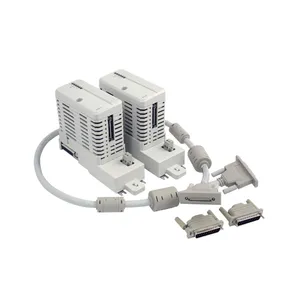
ABB BC810K02 3BSE031155R1 CEX-bus Interconnection Unit
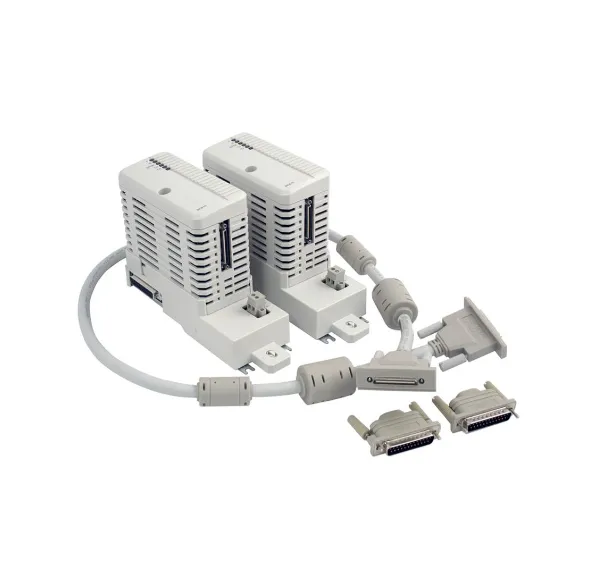
ABB BC810K02 3BSE031155R1 CEX-bus Interconnection Unit photo-1

Negotiable MOQ: 1 Piece (Price negotiable depending on order volume and customization)
Key Specifications
Get Latest Price
Material:
Other, Global universal model
Condition:
Other, Global universal model
Task:
Other, Global universal model
Payment & Shipping
Payment Methods:
Port of Shipment:
guizhou
Delivery Detail:
Delivery time depends on order quantity.
Material Other, Global universal model
Condition Other, Global universal model
Task Other, Global universal model
Mathematical Model Other, Global universal model
Signal Other, Global universal model
Customized Non-Customized
Structure Other, Global universal model
Operating Temperature -20℃~70℃
Relative Humidity 5%-95% (non-condensing)
Dimensions 180×120×80mm

I. Overview


The ABB BC810K02 3BSE031155R1 is a high-performance Central Processing Unit (CPU) module designed for industrial-grade distributed control systems. As a core computing component of the ABB AC 800K series controllers, it is positioned as a "core control terminal for medium-to-large industrial control scenarios". Its core function is to undertake the logical operation, process control, data processing, and equipment collaborative management tasks of the control system. By integrating high-speed computing units and multi-protocol communication interfaces, it realizes the issuance of real-time control commands to on-site equipment, the collection of operating status data, and the execution of complex control algorithms. Meanwhile, it features redundant backup, self-diagnosis for faults, and online maintenance functions, providing core computing support for the stable operation of medium-to-large industrial production processes in metallurgy, electric power, chemical engineering, papermaking, and other fields.


With high computing performance, flexible expandability, robust anti-interference design, and reliable redundancy mechanism, this module is well-adapted to industrial scenarios requiring multi-equipment collaboration, high-precision control, and continuous production. It serves as the core computing unit for the ABB AC 800K series control system to achieve "centralized management - distributed control - precise regulation".


Its application scenarios accurately match the core needs of medium-to-large industrial control:
  • In the metallurgical field, as the core CPU of the control system for hot rolling production lines in steel plants, it is deployed in the control cabinet of the central control room. It collects real-time parameters such as heating furnace temperature, roll speed, and steel strip thickness by connecting distributed I/O modules, runs PID regulation and logical interlock algorithms, and issues adjustment commands to actuators. The operation response time is ≤1ms, ensuring the thickness accuracy of hot-rolled steel strips is controlled within ±0.02mm.

  • In the electric power field, it is used in the boiler combustion control system of thermal power plants. Through integrated dedicated control algorithms, it processes real-time parameters such as furnace pressure, flue gas oxygen content, and coal feed rate, dynamically adjusts the burner damper and coal feed speed to achieve efficient boiler combustion and energy conservation. A single module can manage 8 burner groups simultaneously.


  • In the chemical engineering field, it is adapted to the continuous control scenario of large-scale fertilizer production equipment. While withstanding high-temperature and high-humidity environments, it realizes closed-loop control of key process parameters such as synthetic tower temperature, pressure, and liquid level, and supports communication compatibility with third-party analytical instruments to ensure the continuous and stable operation of the fertilizer synthesis process.


As the core CPU module of the AC 800K series, it supports seamless connection with in-series I/O modules (e.g., AI830, AO830), communication modules (e.g., CI854), and HMI (Human-Machine Interface). Through the ABB Control Builder configuration software, it enables rapid programming and downloading of control logic, meeting the strict requirements of "high computing performance, high reliability, and high adaptability" for industrial control.

In terms of hardware architecture and system compatibility, the BC810K02 3BSE031155R1 adopts a hardware architecture of "multi-core computing unit + redundant control unit + multi-protocol interface". Its core consists of a dual-core 32-bit industrial-grade processor, a high-speed cache unit, a redundant control circuit, a fault diagnosis module, and expansion interfaces.


The module is equipped with 1 main control bus interface and 2 expansion bus interfaces, supporting connection to up to 32 distributed I/O modules or expansion units. The number of input/output points can be flexibly expanded according to the control scale, with a maximum capacity of 4096 digital I/O points and 1024 analog I/O points. It has a built-in industrial-grade Real-Time Operating System (RTOS) that supports multi-task parallel processing, enabling simultaneous operation of more than 1000 control logic instructions. Its computing performance reaches 1 million instructions per second (MIPS), meeting the real-time computing needs of complex control algorithms.


In terms of redundancy design, the module supports dual backup of CPU redundancy and power supply redundancy. Through the redundant control circuit, the synchronous operation of the primary and backup CPU modules is realized. When the primary CPU fails, the backup CPU automatically switches within 20ms, with no interruption of control logic during the switching process, ensuring continuous production. The power interface supports dual-channel DC 24V redundant input; if one power supply fails, the other switches seamlessly to ensure continuous power supply to the module.


In terms of anti-interference performance, it adopts a triple anti-interference design of "electromagnetic shielding + signal isolation + power filtering". The module housing is made of galvanized steel sheet, and shielding layers are laid on key internal circuits, with a shielding effectiveness of ≥60dB, complying with the IEC 61000-4-3 standard for radio frequency radiation immunity. Photoelectric isolation technology is used between the core circuit and I/O interfaces, with an isolation voltage of ≥2kVrms, effectively blocking common-mode interference and differential-mode interference in industrial sites.

Relying on the industrial-grade reinforced design, the module uses wide-temperature-tolerant components (-20℃~70℃), anti-vibration plug-in terminals, and an enhanced heat dissipation structure. It complies with the IEC 60068-2 series of environmental adaptability standards and can operate stably in industrial sites with high temperature, high humidity, and strong electromagnetic interference.


BC810K02


II. Technical Parameters


Parameter Category Parameter Name Specific Parameters Unit
Basic Parameters Model ABB BC810K02 3BSE031155R1 -

Product Type Industrial-grade Central Processing Unit (CPU) Module -

Product Series ABB AC 800K Series Controllers -

Overall Dimensions (L×W×H) 180×120×80 mm

Installation Method DIN Rail Mounting (compatible with 35mm standard DIN rail) -

Weight ≤1.2 kg


Computing & Interface Parameters


Processor Specification


Dual-core 32-bit industrial-grade processor, 500MHz clock speed


-


Computing Performance 1 million instructions per second (MIPS), supporting multi-task parallel processing MIPS

Memory Configuration Program memory: 16MB; Data memory: 8MB; Cache: 512KB MB/KB

Number of Interfaces 1 main control bus interface, 2 expansion bus interfaces, 1 debugging interface (RS232), 1 Ethernet communication interface Interface

Maximum Expandability Supports 32 expansion units, max. 4096 digital I/O points, 1024 analog I/O points Point

Response Time ≤1ms (single control command), ≤10ms (100 logic commands) ms


Redundancy & Compatibility Parameters

Redundancy Mode


CPU redundancy (primary-backup synchronous operation), Power supply redundancy (dual-channel input)

-

Redundancy Switching Time ≤20ms (CPU primary-backup switching), ≤1ms (power supply switching) ms

Controller Compatibility Compatible with all ABB AC 800K series controllers, supporting interconnection with AC 800M series -

Configuration Software Compatibility Supports ABB Control Builder V5.1 and above, ABB System 800xA V6.0 and above -

Supported Programming Languages LD (Ladder Diagram), FBD (Function Block Diagram), ST (Structured Text), IL (Instruction List), SFC (Sequential Function Chart) -


Reliability & Environmental Parameters


Mean Time Between Failures (MTBF)

≥500,000 hours (at 25℃ ambient temperature) Hour

Power Supply Voltage DC 24V±20%, supporting dual-channel redundant input V

Maximum Power Consumption ≤18W (at full-load computing) W

Anti-Interference Performance Complies with IEC 61000-4-2/3/4/6 standards; ESD immunity ±15kV; RF radiation immunity 20V/m; Electrical fast transient burst immunity ±4kV -

Operating Environmental Conditions Temperature: -20℃~70℃; Relative humidity: 5%~95% (no condensation); Altitude: ≤3000m (derating required for higher altitudes); Vibration: ≤5g (complying with IEC 60068-2-6) -

Protection Level IP20 (module body) -


III. Functional Features


1. High-Performance Computing for Complex Control

The BC810K02 3BSE031155R1 is equipped with a dual-core 32-bit industrial-grade processor with a clock speed of up to 500MHz and computing performance of 1 million instructions per second (MIPS), enabling efficient execution of complex control logic and algorithms. The module has 16MB of program memory and 8MB of data memory, combined with a 512KB high-speed cache unit, supporting the storage of large amounts of control programs and real-time data. It can run more than 1000 control instructions simultaneously, meeting the multi-task parallel processing needs of medium-to-large industrial scenarios.


It supports a variety of industrial control programming languages, including Ladder Diagram (LD), Function Block Diagram (FBD), Structured Text (ST), Instruction List (IL), and Sequential Function Chart (SFC), adapting to programming habits for different control scenarios. For example, FBD graphical programming is used to implement PID regulation in continuous control scenarios, while SFC programming is used to manage process workflows in sequential control scenarios.
A rich library of dedicated control algorithms is built-in, covering PID regulation, fuzzy control, predictive control, and other algorithms. These can be directly invoked for precise control of parameters such as temperature, pressure, and flow, eliminating the need for users to develop complex algorithms independently. For instance, in the control of chemical synthesis towers, the module calls the built-in PID algorithm to process real-time temperature and pressure data of the synthesis tower. With an operation response time of ≤1ms, it adjusts the feed rate to achieve a temperature control accuracy of ±0.5℃ and a pressure control accuracy of ±0.01MPa.


2. Dual Redundancy Design for Reliable Operation

The module adopts a dual backup design of CPU redundancy and power supply redundancy, providing comprehensive system reliability from core computing to power supply.

In terms of CPU redundancy, it supports synchronous operation of two primary and backup BC810K02 modules. Real-time synchronization of control programs, real-time data, and operating status is achieved through the redundant control bus. The primary CPU module is responsible for normal computing and control tasks, while the backup CPU module monitors the status of the primary module in real time. If the primary module experiences issues such as processor failure, memory abnormality, or communication interruption, the backup module automatically switches to the main control mode within 20ms, taking over all control tasks. During the switching process, there is no interruption of control logic or data loss, ensuring continuous production.


In terms of power supply redundancy, the module is equipped with two independent DC 24V power input interfaces, supporting simultaneous operation of two power supplies. If one power supply encounters voltage fluctuations, power failure, or faults, the other power supply switches seamlessly within 1ms to maintain module operation without impact.
In addition, the module features redundant status monitoring. Through configuration software, the operating status, synchronization status, and power supply status of the primary and backup CPUs can be viewed in real time. If redundancy abnormalities occur, an alarm signal is sent promptly to facilitate quick handling by maintenance personnel. For example, in the boiler control system of a power plant, dual CPU redundant operation ensures that boiler combustion control continues normally even if one CPU fails, avoiding significant losses caused by boiler shutdown due to CPU failure.


3. Flexible Expandability for Diverse Needs

The module offers strong expandability, with 1 main control bus interface and 2 expansion bus interfaces, supporting connection to up to 32 AC 800K series expansion units. These include digital I/O modules (e.g., DI830, DO830), analog I/O modules (e.g., AI830, AO830), special function modules (e.g., counter modules, high-speed pulse modules), and communication modules (e.g., CI854 Ethernet module, CI853 PROFIBUS module).

The number of input/output points can be flexibly increased or decreased through expansion units, with a maximum capacity of 4096 digital I/O points and 1024 analog I/O points, adapting to different scale requirements from small control stations to large control systems.


The expansion bus adopts a high-speed serial bus design with a data transmission rate of 100Mbps, ensuring real-time data interaction between expansion modules and the CPU. The connection of expansion modules does not affect the response speed of core control.
Hot-swap expansion is supported, allowing expansion modules to be plugged in or out without system shutdown. This facilitates later system expansion or module maintenance, reducing production downtime caused by expansion. For example, in the renovation of a hot rolling production line in a metallurgical plant, 8 additional AI830 analog input modules are added to expand temperature collection points, and 4 additional DO830 digital output modules are added to expand actuator control points. The entire expansion process is completed without shutdown, requiring only simple configuration in the configuration software.


4. Comprehensive Fault Diagnosis for Improved O&M Efficiency

The module is equipped with comprehensive fault diagnosis and status monitoring functions, using a dual mechanism of "hardware monitoring + software diagnosis" to monitor the module's operating status in real time and quickly locate fault points.

In terms of hardware, the front of the module is equipped with an LED indicator group, including a power indicator (steady green for normal power supply, steady red for power failure), an operation status indicator (blinking green for normal operation, steady red for CPU failure), a redundancy status indicator (steady green for normal redundancy, blinking yellow for redundancy synchronization abnormality), and a bus status indicator (steady green for normal bus, steady red for bus failure). Maintenance personnel can quickly determine the basic operating status of the module through these indicators.


In terms of software, detailed operating parameters of the module (including CPU usage, memory usage, status of each expansion module, redundancy synchronization status, and power supply voltage) can be read remotely via the ABB Control Builder configuration software. It supports automatic fault alarm and recording: when faults such as CPU failure, memory overflow, bus communication failure, expansion module abnormality, or power fluctuation occur, the module sends an alarm signal to the HMI or monitoring platform through the communication interface, while recording the fault code and fault occurrence time (e.g., "ERR01: CPU main core failure", "ERR06: Expansion bus communication interruption"). Up to 1000 fault records can be stored, facilitating maintenance personnel to trace the cause of faults.
Remote diagnosis is supported, allowing maintenance personnel to perform self-tests, program verification, and parameter calibration on the module remotely via configuration software. Most fault troubleshooting tasks can be completed without on-site disassembly, significantly improving O&M efficiency.


5. Strong Anti-Interference & Environmental Adaptability for Stable Operation

The module adopts a triple anti-interference design of "electromagnetic shielding + signal isolation + power filtering", enabling stable operation in high-interference industrial environments.
In terms of electromagnetic shielding, the module housing is made of high-strength galvanized steel sheet, and a 0.3mm-thick copper foil shielding layer is laid on key internal circuits (e.g., processor, memory). The overall shielding effectiveness is ≥60dB, complying with the IEC 61000-4-3 standard for radio frequency radiation immunity (20V/m), which can effectively resist strong electromagnetic radiation interference generated by equipment such as frequency converters and high-voltage motors.
In terms of signal isolation, photoelectric isolation technology is used between the CPU core circuit and the control bus/expansion bus, with an isolation voltage of ≥2kVrms. This effectively blocks ground loop interference and common-mode interference, preventing on-site high-voltage signals from impacting the core computing circuit.

In terms of power filtering, the module has a built-in high-performance power filtering circuit and surge suppressor, which can filter out 50/60Hz power interference and high-frequency noise, and absorb ±4kV electrical fast transient burst interference to ensure stable power supply.


In terms of environmental adaptability, the module uses wide-temperature-tolerant components (-20℃~70℃), with core chips selected from industrial-grade wide-temperature models. Combined with an enhanced heat dissipation structure (aluminum heat sink + natural heat dissipation), it can operate stably in high-temperature metallurgical workshops or low-temperature outdoor control stations. Its anti-vibration performance meets the 5g acceleration requirement of the IEC 60068-2-6 standard, allowing direct installation in control cabinets near vibration sources such as pumps and fans without additional shock absorption measures. With a protection level of IP20, it can effectively prevent dust intrusion, adapting to dusty industrial environments.
Product Tags: BC810K02 , 3BSE031155R1

Send Inquiry to This Supplier

* Message
0/5000

Want the best price? Post an RFQ now!
Verified Business License
Business Type
Trading Company
Year Established
2014
Factory Size
1,000-3,000 square meters
Product Certifications
SA8000