I. Overview
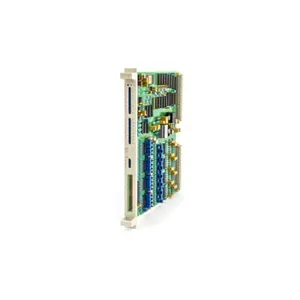
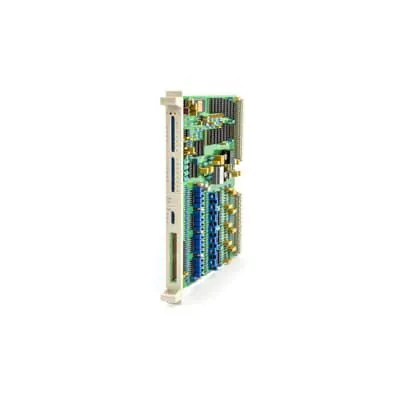
The ABB DSAI130 57120001-P is an analog input module developed by ABB Group, belonging to the core I/O component family of the ABB Advant OCS (Open Control System) and AC 800M controllers. Its core positioning is to serve as a "precision sensing node" for analog signal acquisition in industrial sites, focusing on the stable acquisition and preprocessing of voltage and current-type analog signals. It covers sensing signals of key process parameters such as pressure, temperature, flow rate, and liquid level. Through professional signal conditioning technology, enhanced anti-interference design, and flexible configuration capabilities, it converts continuously changing physical quantities on-site into digital signals recognizable by the control system, providing reliable front-end data support for closed-loop control, condition monitoring, safety interlocking, and process optimization in process industries.
The application scenarios of this module extensively cover various fields of process industries:
In the chemical industry, it can be used for real-time acquisition of temperature and pressure signals of reaction kettles, providing data support for the precise regulation of reaction processes.
In the power industry, it is adapted for monitoring parameters such as boiler drum water level and steam pressure, ensuring the stable operation of generator sets.
In the water treatment industry, it is used for collecting analog signals such as water turbidity and pH value, supporting the automatic adjustment of water treatment processes.
In the food and beverage industry, it is adapted for collecting parameters such as the temperature and liquid level of fermentation tanks, meeting the needs of precise control and quality traceability in food production processes.
As a dedicated I/O module for ABB's mid-to-high-end control systems, it can not only realize parallel acquisition of multi-channel signals but also seamlessly collaborate with controllers such as ABB AC 800M and AC 700F. It supports functions like signal calibration, range conversion, and fault diagnosis, and serves as a key hardware foundation for building highly reliable industrial automation control systems.
In terms of hardware architecture and system compatibility, the ABB DSAI130 57120001-P adopts a standardized modular design. It can be seamlessly embedded into I/O racks such as CI801 and CI802 of the ABB Advant OCS system, occupying only one standard I/O slot, and realizes high-speed data interaction with the system controller through the Controller Link bus. The module is compatible with ABB Control Builder M configuration software, supporting the configuration of key parameters (including channel signal type, range, filtering parameters, and alarm threshold) through a graphical interface. System integration can be quickly completed without writing underlying code. Relying on an industrial-grade reinforced design, the module uses wide-temperature-resistant components, a metal shielded enclosure, and an anti-vibration installation structure. It can operate stably under complex working conditions in industrial sites with high temperature, high humidity, dust, and strong electromagnetic interference, ensuring the continuity and accuracy of analog signal acquisition.
II. Technical Parameters

III. Functional Features
1. 8-Channel Precision Acquisition with Flexible Adaptation to Multiple Signal Types
The ABB DSAI130 57120001-P adopts a high-density integrated design with 8 channels, enabling parallel and synchronous acquisition of 8 independent analog signals within the space of one standard I/O slot. Compared with traditional 4-channel modules, its acquisition density is increased by 100%, which can effectively reduce the number of rack slots occupied, lowering system hardware costs and cabinet space requirements. The module has rich signal adaptation capabilities; through ABB Control Builder M configuration software, it can complete the switching configuration between current signals (4mA~20mA, 0mA~20mA) and voltage signals (0V~5V, 1V~5V, 0V~10V). It can adapt to the access needs of different types of on-site sensors without replacing the module. For example, in a chemical reaction kettle monitoring scenario, channels 1-2 can be configured as 4mA~20mA current input (connecting to a pressure transmitter), channels 3-4 as 0V~10V voltage input (connecting to a temperature sensor), and channels 5-8 as 1V~5V voltage input (connecting to a liquid level sensor). This realizes centralized acquisition and unified management of multiple types of process parameters, greatly improving the flexibility of on-site configuration. Meanwhile, the module uses a 16-bit high-precision ADC conversion chip, combined with factory calibration and online self-calibration technology, ensuring that the measurement accuracy of both current and voltage signals reaches ±0.05% FS. It can accurately capture tiny changes in signals, providing reliable data support for process optimization.
2. Dual Filtering and Optoelectronic Isolation for Reliable Anti-Interference Performance
The module adopts a dual anti-interference mechanism of "hardware RC low-pass filtering + software digital filtering", which can effectively suppress various electromagnetic interferences in industrial sites. At the hardware level, each input channel is equipped with an independent RC low-pass filtering circuit, and filtering parameters can be flexibly configured within the range of 1Hz~50Hz according to the signal frequency, specifically filtering out 50Hz power frequency interference and high-frequency radiation interference generated by frequency converters and high-voltage equipment. At the software level, it supports hierarchical configuration of digital filtering intensity, which can be accurately adjusted according to signal characteristics. For example, 50Hz high-frequency filtering is configured for fast-changing flow signals, and 1Hz low-frequency filtering is configured for slowly changing temperature signals. This not only ensures the real-time performance of signal response but also avoids measurement fluctuations caused by interference. High-intensity optoelectronic isolation of 1500Vrms is adopted between channels and between channels and the backplane bus, which can effectively block common-mode interference and differential-mode interference between channels. Even if a short circuit or overvoltage fault occurs in one channel, it will not affect the normal acquisition of other channels, further improving the anti-interference stability of the system and adapting to industrial scenarios with strong interference such as chemical and power industries.
3. Synchronous Sampling and High-Speed Transmission for Sufficient Real-Time Guarantee
The module supports 8-channel synchronous sampling, and the sampling period can be flexibly configured through software within the range of 10ms~1000ms, with a default sampling period of 100ms and a maximum high-speed sampling of 10ms. It can accurately capture transient signals such as sudden pressure changes in reaction kettles and boiler water level fluctuations, providing timely data support for key logics such as system emergency interlocking and closed-loop control, and avoiding safety accidents or process deviations caused by signal delays. The module performs data interaction with the ABB AC 800M controller through the high-speed Controller Link bus, with a data transmission rate of ≥50Mbps. The collected digital signals can be uploaded to the controller within 10ms, ensuring the real-time performance and accuracy of control logic operations. For example, in a water treatment process monitoring scenario, the module synchronously collects 4 channels of water quality parameter signals with a 50ms sampling period. After real-time upload to the controller, the controller can quickly adjust the speed of the dosing pump to ensure water quality meets standards, meeting the monitoring and control needs of continuous production scenarios in process industries.
4. Full-Dimensional Fault Diagnosis for Significantly Improved Operation and Maintenance Efficiency
The module has a fault diagnosis coverage rate of 99%, integrating dual diagnosis mechanisms at the channel level and module level, enabling precise fault location and rapid troubleshooting. Channel-level diagnosis can automatically identify faults such as signal open circuits (e.g., loose sensor wiring, wire breakage), short circuits (e.g., signal wire short-circuited to ground), and signal over-range (e.g., abnormal exceeding of process parameters). Module-level diagnosis can real-time monitor hardware issues such as abnormal power supply voltage, backplane communication failures, isolation circuit failures, and ADC conversion failures. When a fault occurs, the module immediately generates a standardized fault code (e.g., E01 for channel 1 open circuit, E02 for signal over-range, F01 for module power failure) and triggers hierarchical alarms through local LED indicators (channel fault: corresponding channel yellow light flashes; module fault: red indicator stays on). At the same time, it uploads fault information (faulty channel, fault type, occurrence time, fault code) to the controller and upper-level monitoring system, clearly indicating the fault location and handling suggestions (e.g., "Channel 3 short circuit, please check sensor wiring and circuit"). The module also has a built-in fault recording function that can store the latest 50 pieces of fault information, providing a clear basis for operation and maintenance personnel to trace the cause of faults, significantly shortening fault troubleshooting time and improving operation and maintenance efficiency.
5. Redundancy Configuration and Fault-Tolerant Design for Excellent Operational Stability
The module supports 1:1 hot redundancy configuration. The main and standby modules realize real-time data synchronization through a dedicated redundant communication link, with synchronized content including key information such as 8-channel collected data, configuration parameters, and fault status, and a synchronization delay of ≤10ms, ensuring that the data of the main and standby modules are completely consistent. During normal operation, the main module performs signal acquisition and data upload functions, while the standby module real-time monitors the operation status of the main module and synchronizes data. When the main module encounters abnormal conditions such as power failure, communication interruption, or batch channel faults, the standby module can automatically complete disturbance-free switching within 20ms and take over all acquisition functions. During the switching process, no collected data is lost and no signal output fluctuates, ensuring uninterrupted monitoring of key production processes such as chemical reactions and power generation. The module has channel-level fault isolation capability; when a single channel fails, it is automatically marked as "fault status" and shielded, not participating in data acquisition and upload, and not affecting the normal operation of the other 7 channels. At the same time, it supports remote disabling/enabling of faulty channels through software, improving the fault tolerance and operational stability of the system.
6. Convenient Configuration and Wide Compatibility for High Integration Efficiency
The module is compatible with mainstream configuration software such as ABB Control Builder M and ABB Freelance, supporting full parameter configuration through a graphical interface, including channel signal type, range, sampling period, filtering frequency, alarm threshold, and calibration parameters. No underlying code needs to be written, making the configuration process intuitive and efficient, and even novices can quickly get started. The integration and debugging cycle is shortened by more than 50% compared with traditional modules. The software has built-in rich industry application templates (such as reaction kettle monitoring template, boiler control template, and water treatment process template), which include preset channel configurations and alarm logics. After importing the template, integration can be completed with only fine-tuning according to on-site sensor parameters, further improving deployment efficiency. The module seamlessly connects with controllers such as ABB AC 800M and AC 700F through the standardized Controller Link bus, supporting the controller to perform online diagnosis, parameter modification, firmware upgrade, and zero/full-scale calibration on the module. Maintenance operations can be completed without shutdown, reducing production interruption time. At the same time, it supports Modbus RTU communication protocol expansion, which can be flexibly connected to third-party DCS systems, improving the compatibility of cross-brand system integration.
IV. Working Principle
The ABB DSAI130 57120001-P realizes high-precision and high-reliability acquisition of analog signals through the collaboration of hardware circuits and software logic, based on the core workflow of "signal access - signal conditioning - signal acquisition - data processing - data upload - fault diagnosis". The specific working mechanism is as follows:
1. Signal Access and Conditioning
Analog signals (current or voltage) output by on-site sensors (such as pressure transmitters, temperature sensors, and liquid level sensors) are connected to the module through 8 independent input terminals and first enter the signal conditioning unit. According to the signal type configured by software, the conditioning unit automatically switches the signal processing circuit: when a current signal is input, the current signal is converted into a voltage signal through a precision sampling resistor; when a voltage signal is input, it directly enters the signal amplification link. The conditioning unit has a built-in high-precision instrumentation amplifier that linearly amplifies weak signals. The amplification factor can be automatically adjusted according to the configured range, ensuring that the signal amplitude is within the optimal input range of the ADC conversion unit and improving conversion accuracy. The amplified signal first passes through a hardware RC low-pass filtering circuit to filter out power frequency interference and high-frequency noise, and then is sent to the optoelectronic isolation unit to realize electrical isolation between the input channel and the internal core circuit of the module, preventing external high-voltage and strong interference signals from intruding and ensuring the safe and stable operation of the core circuit.
2. Signal Acquisition and Data Processing
The analog signal after isolation and filtering is sent to a 16-bit high-precision ADC conversion unit. The ADC unit performs synchronous sampling on 8 channels of signals according to the configured sampling period (minimum 10ms), converts the analog signals into digital signals, and stores them in a temporary data register. Subsequently, the data processing unit performs multi-link processing on the digital signals in the temporary register: first, it performs scaling conversion according to the configured signal type and range, converting the digital signals into corresponding physical quantities (such as pressure value, temperature value, and liquid level value); then, it performs software digital filtering processing, eliminating burrs and interference noise in the signals according to the filtering frequency configured for each channel to obtain stable valid data; next, it performs continuity verification on the data; if the signal change rate exceeds the configured threshold or the signal is out of the range, it is marked as "signal abnormal" and an alarm is triggered; finally, the system error is corrected through a calibration algorithm to further improve measurement accuracy.
3. Data Upload and Redundancy Synchronization
The processed valid data is uploaded to controllers such as ABB AC 800M through the high-speed Controller Link bus at a fixed period (synchronized with the sampling period), providing precise data support for the controller's logic operations, closed-loop control, process optimization, and alarm processing. In the redundancy configuration mode, the data processing unit of the main module synchronizes information such as 8-channel collected data, configuration parameters, and fault status to the redundant data register of the standby module in real time through a dedicated redundant communication link









 Contact Platform Support
 Help Center