








 Contact Platform Support
 Help Center
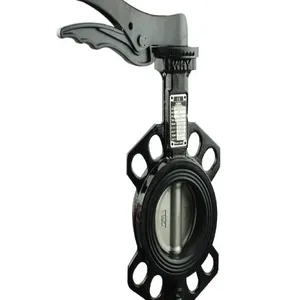
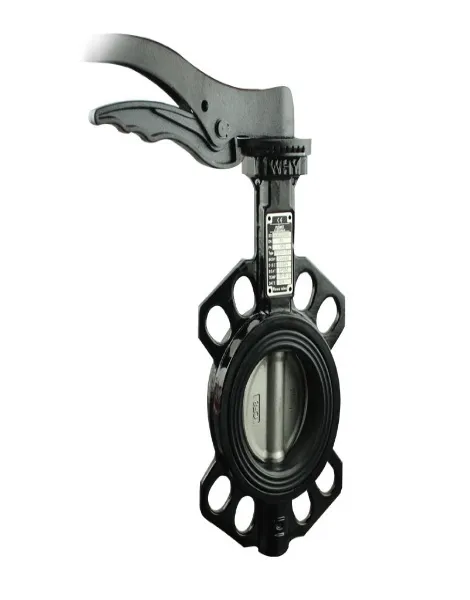
Wafer Butterfly Valve With Stainless Steel Body, EPDM Seal, and Compact Design for High-Pressure Systems



Related Products
-
 Industrial Pneumatic Butterfly Valve Compatible With Food, Chemical, and Petrochemical Pipeline ApplicationsNegotiableMOQ: 1 Set
 -
Pneumatic Actuator-Ready Wafer Butterfly Valve Featuring Compact Design and Multiple Material Options for Gas and WaterNegotiableMOQ: 1 Set
-
Electric Wafer Butterfly Valve With Stainless Steel Disc & EPDM Seal for Industrial Fluid ControlNegotiableMOQ: 1 Set
-
Electric Actuator-Operated Wafer Butterfly Valve With Multi-Voltage OptionsNegotiableMOQ: 1 Set
-
Zero Leakage Full Fluorine-Lined Butterfly Valve Featuring Superior Corrosion Resistance and Long Service LifeNegotiableMOQ: 1 Set
Wafer-type butterfly valves feature a simple structure, small size, and light weight, consisting of only a few parts. They can be quickly opened and closed with a simple 90° rotation, making operation simple. They also offer excellent flow control characteristics. When the butterfly valve is in the fully open position, the thickness of the disc presents only resistance to the flow of the medium through the valve body. Consequently, the pressure drop across the valve is minimal, resulting in excellent flow control characteristics. The butterfly valve is compact and occupies minimal space. It offers excellent sealing performance. The specific selection should be based on the medium, temperature, and pressure. Wafer-type butterfly valves are installed by connecting the valve between two pipe flanges using stud bolts.
Butterfly Valve Technical Parameters
I. The valve body is epoxy-coated, making it resistant to paint peeling.
Valve body materials include: cast iron, cast steel (WCB), stainless steel, aluminum alloy (ADC12), and PVC.
1. Cast Iron: CI gray cast iron (prone to breakage), DI ductile iron (better strength, can replace WCB).
2. WCB: Cast steel, with a long lead time. DI can be used as a substitute for pipes under 16 kg.
3. Stainless Steel: 304, 316, 304L, 316L.
4. Aluminum Alloy: ADC12. Aluminum alloy butterfly valves, also known as anti-condensation valves, are generally used on lighter PVC pipes. Their anti-condensation feature is particularly evident in air conditioning water systems, where large temperature differences between indoor and outdoor lead to condensation. Aluminum alloy can prevent this and prevent water seepage.
5. Plastic: (Generally, the pressure resistance is approximately 6 kg. For pipes over 10 kg, aluminum alloy is recommended as an alternative.)
UPVC: Resistant to weak acids and alkalis, high impact strength, low fluid resistance, lightweight construction, and excellent sealing. PP: Resistant to hydrochloric acid, sulfuric acid, and corrosion.
CPVC: Resistant to heat, acids, alkalis, salts, oxidants, and other corrosion.
II. Valve Disc Materials:
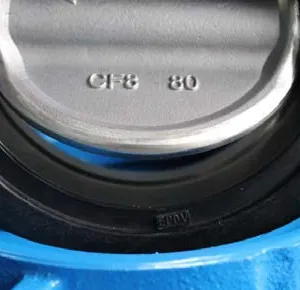
1. Valve Disc: Nylon, cast steel, stainless steel (304, 316, 304L, 316L), ductile iron (electroplated plate), UPVC, CPVC, PP, aluminum bronze (commonly used in seawater desalination), duplex steel 2507, duplex steel 1.4529.
III. Valve Seat Materials: Valve Seat: EPDM, PTFE, Nitrile-butadiene rubber (NBR), Viton.
1. EPDM (Ethylene Propylene Diene Monomer): Black, soft seal, operating temperature: -15°C to 85°C. Performance: Resistant to oxidation, ozone, and corrosion, but susceptible to aging in contact with oil.
2. NBR (Nitrile-butadiene rubber): NBR has excellent oil resistance, second only to polysulfide rubber and fluororubber, and offers excellent wear resistance and airtightness.
3. PTFE (polytetrafluoroethylene, commonly known as the "king of plastics"): white, soft seal, operating temperature range: -20°C to 150°C. Properties: heat resistance, wear resistance, corrosion resistance, non-stick, relatively hard, generally available in powder or granular form.
4. VITON: black, soft seal, operating temperature range: -15°C to 200°C. Excellent chemical stability, excellent high-temperature resistance (fluororubber's high-temperature resistance is similar to silicone rubber), and good aging resistance.
5. Silicone rubber: Resists all substances except strong alkalis and hydrofluoric acid, is non-toxic and odorless, and has stable chemical properties. It is widely used in the sanitary food industry.
Structural Features:
The butterfly valve consists primarily of a valve body, stem, valve core, and seat. The valve body is cylindrical, short in axial length, and features an internal butterfly disc.
1. Butterfly valves feature a simple structure, compact size, light weight, minimal material consumption, small installation dimensions, rapid opening and closing, 90° reciprocating rotation, and low driving torque. They are used to shut off, connect, and regulate media in pipelines, and offer excellent fluid control characteristics and sealing performance. 2. Butterfly valves can transport slurries, minimizing liquid accumulation at the pipe opening. They achieve a good seal at low pressures and offer excellent adjustability.
3. The streamlined design of the butterfly disc minimizes fluid resistance, making it an energy-efficient product.
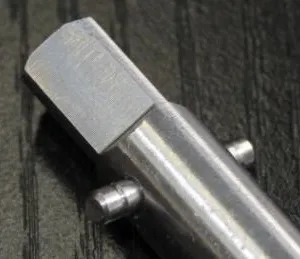
4. The valve stem is a through-stem structure, quenched and tempered, for excellent overall mechanical properties and corrosion and abrasion resistance. During opening and closing, the stem rotates only, not lifting or lowering, making the stem packing less susceptible to damage and ensuring a reliable seal. The valve is secured to the disc by a tapered pin, and the extended end features an anti-blowout design to prevent stem collapse in the event of an accidental breakage at the connection between the stem and disc.
The butterfly valve can be configured with pneumatic, electric, or manual actuation to meet remote and programmable control requirements.
Features of Wafer Butterfly Valves
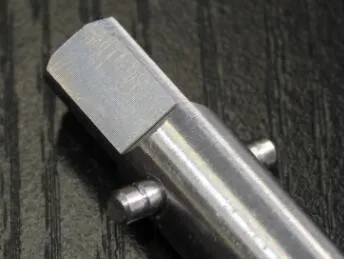
01. Transverse Pin
This effectively reduces the possibility of the valve stem exploding under internal pressure; it also protects the integrity and strength of the stem, preventing deformation and breakage due to torque during operation. 02 Self-lubricating Guide Bearing (Teflon)
Made from stainless steel, the Teflon coating on the inner wall provides self-lubrication, preventing the valve stem from seizing during high-speed rotation.
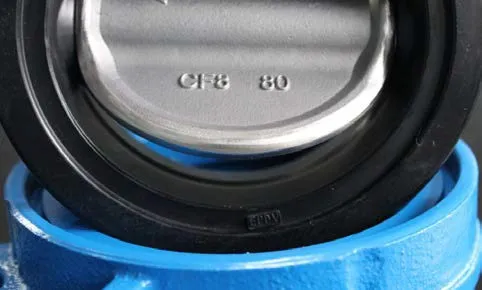
03 Valve Seat Sealing Surface
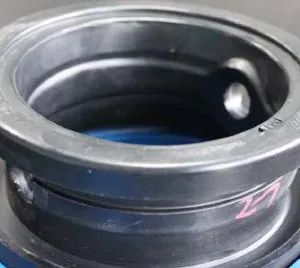
When the valve is fully closed, the convex surface of the valve seat seal deforms backward, enhancing compression strength and sealing performance. When the valve is opened, the disc seal eliminates buildup, allowing for easier opening. The spherical sealing surface reduces torque and extends seal life. The flat surface increases contact area with the valve seat.
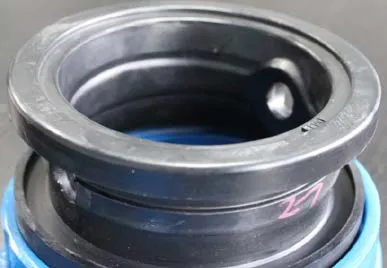
04 Valve Seat
Virgin rubber is fatigue-resistant and flexible. No synthetic or recycled rubber is used. The concave-convex design ensures equal torque before and after installation, preventing deformation of the valve seat during connection that could cause the valve to become stuck or unable to open during operation. The seat reinforcement ribs, designed with a positioning rib on the contact surface with the valve body, prevent the seat from shifting when the disc is closed at 0°, enhancing lifting capacity.

Send Inquiry to This Supplier


You May Also Like
-
Pneumatic or Electric Actuator Compatible Full Fluorine-Lined Butterfly Valve With On/Off and Smart Regulating OptionsNegotiableMOQ: 1 Set
-
Pneumatic or Electric Actuator Compatible Full Fluorine-Lined Butterfly Valve With On/Off and Smart Regulating OptionsNegotiableMOQ: 1 Set
-
Adjustable and Shut-off Pneumatic High Performance Butterfly Valve With Low Torque Design for Gas and Liquid MediaNegotiableMOQ: 1 Set
-
Industrial Grade Pneumatic Butterfly Valve With Pressure Ratings up to 4.0MPa and Temperature Range -60°C to 450°CNegotiableMOQ: 1 Set
-
Reliable Pneumatic Double Eccentric Butterfly Valve for Municipal Engineering and Oil Industry, DN50-DN1200 Size RangeNegotiableMOQ: 1 Set
-
Wafer-Type Butterfly Valve With Replaceable Seat for Maintenance Cost ReductionNegotiableMOQ: 1 Piece
-
Stainless Steel 316 Wafer-Type Butterfly Valve With PTFE Seat for High-Temperature ApplicationsNegotiableMOQ: 1 Piece
-
Food-Grade Wafer Butterfly Valve With Sanitary Design for Beverage Production LinesNegotiableMOQ: 1 Piece
-
EPDM Seated Wafer Butterfly Valve for Water Treatment and Chemical ProcessingNegotiableMOQ: 1 Piece
-
DN50-DN600 Wafer-Type Butterfly Valve With Gear Operator for Industrial Piping SystemsNegotiableMOQ: 1 Piece


