Home > Electrical & Electronics > Electrical Control System > Metso Valmet A413091 GDU Control Board
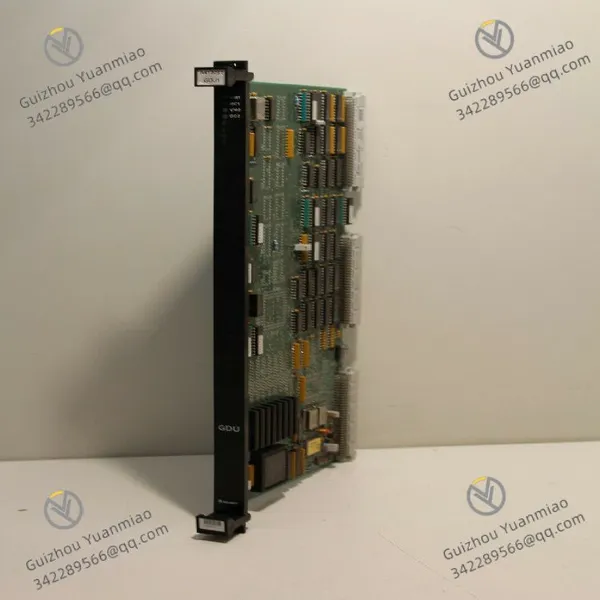
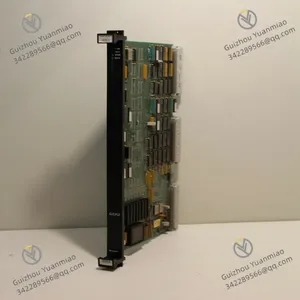
Metso Valmet A413091 GDU Control Board

Metso Valmet A413091 GDU Control Board photo-1
Negotiable MOQ: 1 Piece (Price negotiable depending on order volume and customization)
Key Specifications
Get Latest Price
Material:
Other, Global universal model
Condition:
Other, Global universal model
Task:
Other, Global universal model
Payment & Shipping
Payment Methods:
Port of Shipment:
guizhou
Delivery Detail:
Delivery time depends on order quantity.
Material Other, Global universal model
Condition Other, Global universal model
Task Other, Global universal model
Mathematical Model Other, Global universal model
Signal Other, Global universal model
Customized Non-Customized
Structure Other, Global universal model
Operating Temperature -25°C ~ 70°C
Relative Humidity 5%~95% (non-condensing)
Operating Voltage 24V DC ±15%
Dimensions 142mm × 92mm × 56mm

I. Overview


The Metso A413091 is an industrial-grade high-precision analog signal acquisition module, mainly designed to be compatible with the control systems of Metso crushing and screening equipment (such as cone crushers, jaw crushers, heavy-duty conveyors, etc.). It undertakes the core functions of "on-site analog sensor signal acquisition for temperature, pressure, liquid level, etc. - signal filtering and amplification - standard signal transmission to the main controller". Its design focuses on "signal acquisition accuracy" and "ability to resist harsh environments" for heavy-duty industrial scenarios. It adopts high-precision signal conditioning circuits and a multi-layer electromagnetic shielding structure, which can effectively suppress mechanical vibrations, electromagnetic radiation, and dust interference in crushing workshops, ensuring the stability and accuracy of monitoring data for key physical quantities. It is widely used in industries with strict requirements for equipment operation parameter monitoring, such as mining, building materials, and metallurgy.


Compared with general-purpose analog acquisition modules, this module features "in-depth compatibility with Metso equipment protocols", "adaptability to multiple types of sensors", and "fault self-diagnosis". It can be directly integrated into Metso C100/C200 series control cabinets, enabling seamless connection with temperature sensors (e.g., PT100), pressure transmitters (e.g., 4-20mA type), and liquid level sensors. It provides accurate data support for overload protection and process optimization of crushing equipment, ensuring long-term stable operation of the equipment.


II. Technical Parameters


1. Basic Specifications


Item Parameter Details
Overall Dimensions 142mm (Length) × 92mm (Width) × 56mm (Height) (DIN rail-compatible design)
Weight


Approximately 0.32kg

Operating Temperature Range


-25°C ~ 70°C (operation); -40°C ~ 85°C (storage)

Protection Level


IP20 (installed inside the cabinet, protected against solid foreign objects and dust)

Installation Method 35mm standard DIN rail mounting


2. Electrical Performance

Power Supply Parameters:

  • Supply Voltage: 24V DC ±15% (compatible with DC power supplies commonly used in industrial equipment);

  • Rated Power Consumption: ≤5W (no-load); ≤10W (full-load signal acquisition);

  • Power Isolation: Triple isolation (input - output - ground) with an isolation voltage of 2000V AC (for 1 minute, preventing power crosstalk and signal interference).


Analog Input Characteristics:

  • Input Channels: 6 channels (supporting multiple types of sensors to meet different monitoring needs);

  • Input Signal Types:

    • RTD Input: Supports PT100 (-200°C ~ 850°C) and Cu50 (-50°C ~ 150°C) for temperature monitoring;

    • Current Signal Input: 4-20mA DC (compatible with 2-wire/4-wire pressure and liquid level transmitters);

    • Voltage Signal Input: 0-10V DC (adapted to some voltage-type sensors);

      (Note: Every 2 channels form a group, and the signal type can be independently configured via DIP switches)

  • Input Accuracy:

    • RTD Input: ±0.1°C (for PT100, within the range of 0°C ~ 100°C);

    • Current Signal Input: ±0.1% FS (at 25°C ambient temperature);

    • Voltage Signal Input: ±0.2% FS (at 25°C ambient temperature);

  • Sampling Rate: 5Hz (per channel, meeting the monitoring needs of slowly changing parameters such as temperature and pressure);

  • Filter Function: Built-in 5Hz low-pass filter to suppress high-frequency electromagnetic interference (e.g., noise generated by motor operation).


Communication Interface:

  • Interface Type: RS485 (half-duplex, supporting bus-type topology);

  • Supported Protocols: Modbus RTU (compatible with Metso Monitoring Protocol, an exclusive sub-protocol for Metso equipment);

  • Communication Baud Rate: 9600bps ~ 115200bps (configurable via DIP switches or software);

  • Address Range: 1-247 (slave address set via DIP switches, supporting multi-module bus mounting).


3. Environmental Adaptability Parameters


Item Parameter Requirements
Vibration Resistance Complies with IEC 60068-2-6 standard, 10-500Hz with 2g acceleration (10min/axis, compatible with high-frequency vibration of vibrating screens)
Shock Resistance Complies with IEC 60068-2-27 standard, 10g acceleration (11ms duration, 3 times per axis for 3 axes, resisting shocks from equipment start-stop)
Humidity Tolerance 5%-95% RH (no condensation, at 25°C ambient temperature, suitable for humid mining environments)
Electromagnetic Compatibility (EMC) Radiated Emission: EN 61000-6-4 Class A; Immunity: EN 61000-6-2 (Electrostatic Discharge ±8kV contact / ±15kV air, Radio-Frequency Electromagnetic Field Radiation Immunity 10V/m)

A413091


III. Functional Features


1. Multi-Type Signal Compatibility and High-Precision Acquisition

  • Full-Scenario Sensor Adaptation: The 6 input channels support three types of signals: RTD (PT100/Cu50), current (4-20mA), and voltage (0-10V). They can be connected to the crusher's "temperature monitoring points" (e.g., bearing temperature, hydraulic oil temperature), "pressure monitoring points" (e.g., spindle pressure, feed inlet pressure), and "liquid level monitoring points" (e.g., hydraulic oil tank liquid level) in one stop. No additional modules need to be configured, simplifying in-cabinet wiring and sensor selection;

  • Ultra-High Acquisition Accuracy: The RTD input accuracy reaches ±0.1°C (for the common temperature range of PT100), and the current signal accuracy is ±0.1% FS. It can accurately capture subtle changes in equipment operation parameters (e.g., an abnormal 1°C increase in bearing temperature), providing data support for early equipment fault warning and avoiding equipment overload damage caused by parameter monitoring errors.


2. Anti-Interference Design for Heavy-Duty Industry

  • Triple Electrical Isolation: The power supply, input, and output circuits are isolated from each other (isolation voltage 2000V AC), which can effectively block the interference of surge voltage and electromagnetic radiation generated by the start-stop of the crusher motor on analog signals. This avoids temperature signal drift (e.g., PT100 measurement value fluctuation) or pressure signal distortion (e.g., 4-20mA signal fluctuation);

  • Signal Conditioning and Filtering: Each input channel integrates a signal conditioning circuit, which can amplify and linearly compensate for weak sensor signals (e.g., milliohm-level resistance changes of PT100); the built-in 5Hz low-pass filter can filter out high-frequency electromagnetic noise (e.g., interference generated by frequency converter operation), ensuring stable and reliable acquired data.


3. Convenient Operation & Maintenance and Fault Diagnosis

  • Full-Channel Status Indication: 14 LED indicators are installed on the front - power indicator (green, constant on indicates normal power supply), input signal indicators (6 channels, lit indicates normal signal access in the corresponding channel), communication indicator (red, flashing indicates normal communication), and alarm indicator (yellow, constant on indicates module fault). The signal acquisition and module working status can be quickly judged without an oscilloscope;

  • Fault Self-Diagnosis and Alarm: Equipped with a built-in fault detection circuit, it can identify fault types such as "power overvoltage/undervoltage", "input signal overrange", "sensor open circuit/short circuit", and "communication interruption". It sends fault codes to the main controller via RS485 (e.g., E01 indicates power fault, E07 indicates PT100 open circuit, E13 indicates current signal overrange), and simultaneously triggers the yellow alarm light to stay on. When used with the Metso TP150 operation panel, the fault location and cause can be intuitively displayed, shortening the fault location time.


4. Exclusive Collaboration with Metso Equipment

  • In-Depth Protocol Compatibility: Supports the exclusive monitoring protocol for Metso equipment, and can directly communicate with the Metso C100 main controller and TP150 human-machine interface (HMI) without additional communication driver programming. It realizes real-time data interaction between "sensor data - main controller - operation panel" (e.g., real-time display of crusher bearing temperature, setting of temperature alarm thresholds);

  • Process Adaptation Optimization: Built-in calibration logic for sensors commonly used in Metso crushing equipment (e.g., PT100 temperature linear calibration, pressure transmitter zero compensation). No on-site manual calibration is required, simplifying the module debugging process; for the vibration scenario of crushing equipment, the PT100 input channel is optimized for vibration resistance to avoid measurement errors caused by poor cable contact;

  • In-Cabinet Integration Optimization: Its size is adapted to the layout of Metso standard control cabinets. The DIN rail mounting method is compatible with Metso power modules (such as Metso A413200) and digital modules (such as Metso A413345), enabling modular stacked installation. This reduces space occupation inside the cabinet and lowers the complexity of system integration.


IV. Common Faults and Troubleshooting Methods


Fault Phenomenon Possible Causes Troubleshooting Measures
Power indicator not on, no signal response 1. 24V DC power not connected / abnormal voltage (<20.4V or >27.6V); 2. Loose wiring at power terminals / broken cable; 3. Burnt internal power circuit of the module
  1. Use a multimeter to detect the supply voltage and confirm it is within the range of 24V DC ±15%; 2. Check the wiring of power terminals (+V/-V), re-tighten the screws, and replace the broken cable (it is recommended to use copper core wire of 1.0mm² or larger); 3. If there is still no response when the power supply is normal, replace the module with the same model (burnt internal power circuit is mostly irreversible)


No data from RTD input (corresponding input indicator not on) 1. PT100/Cu50 sensor open circuit/short circuit (e.g., broken cable, damaged sensor); 2. Incorrect wiring of input cable (e.g., reversed 3-wire connection of PT100); 3. Wrong channel configuration (configuring RTD channel as current input); 4. Burnt input channel
  1. Use the resistance function of a multimeter to detect the sensor (the resistance of PT100 is approximately 100Ω at 0°C, and that of Cu50 is approximately 50Ω at 0°C), and replace the sensor with open circuit/short circuit; 2. Re-wire according to the module manual (for the 3-wire PT100, distinguish the positive, negative, and compensation wires to ensure they correspond to the module terminals); 3. Check the DIP switches and configure the corresponding channel as "RTD Input" (e.g., set DIP switches 1-2 to "PT100"); 4. Replace with a spare RTD channel (e.g., switch PT100 from Channel 1 to Channel 3). If all RTD channels have no response, return the module to the factory for repair


No data from current/voltage input (corresponding input indicator not on) 1. Sensor not powered / faulty sensor (e.g., pressure transmitter without 24V DC power supply); 2. Broken input cable / reversed positive and negative poles; 3. Wrong channel configuration (configuring current channel as RTD input); 4. Input signal overrange (e.g., 4-20mA signal >22mA or <3.8mA); 5. Burnt input channel
  1. Detect the sensor power supply (e.g., 24V DC) and test whether the sensor is normal using the substitution method (e.g., replace with a new pressure transmitter); 2. Use the continuity function of a multimeter to detect the input cable and re-wire (ensure correct polarity for current signals; for voltage signals, ensure the signal wire is connected to INPUT+ and the negative pole to INPUT-); 3. Adjust the DIP switches and configure the corresponding channel as "Current Input" or "Voltage Input"; 4. Use a multimeter to measure the sensor output signal and confirm it is within the normal range (4-20mA or 0-10V DC). If it is overrange, inspect the sensor or on-site working conditions (e.g., pressure overload); 5. Replace with a spare input channel (e.g., switch the current signal from Channel 4 to Channel 6). If all channels have no response, return the module to the factory for repair


Communication interruption (communication indicator not flashing) 1. RS485 cable not properly connected / reversed positive and negative poles (A/B wires reversed); 2. Mismatched communication baud rate / slave address with the main controller; 3. Communication cable affected by electromagnetic interference (unshielded cable used); 4. Burnt communication port of the module
  1. Check the RS485 cable (A connected to A, B connected to B), and ensure the bus terminal resistor (120Ω) is correctly installed (only required for modules at the start and end of the bus); 2. Adjust the communication baud rate (e.g., 9600bps) and slave address (e.g., 05) via the module's DIP switches to ensure consistency with the main controller parameters; 3. Replace the RS485 cable with a shielded layer, ground one end of the shielded layer (connect to the control cabinet ground bar, with a ground resistance ≤4Ω), and keep it away from high-power motor cables and frequency converter output cables (distance ≥1.2m); 4. Replace with a spare communication module (if available), or return the module to the factory for communication port repair


Yellow alarm light stays on (accompanied by fault code) 1. Power overvoltage/undervoltage (triggering code E01); 2. RTD open circuit/short circuit (triggering codes E07/E08); 3. Current/voltage signal overrange (triggering codes E13/E14); 4. Communication timeout (triggering code E20)
  1. Detect the supply voltage. If the voltage fluctuates significantly (e.g., unstable mining power grid), install a 24V DC regulated power supply (such as Mean Well RS-35-24); 2. Inspect the corresponding RTD sensor and cable, replace the faulty sensor or repair the broken cable; 3. Check the sensor output signal, adjust the sensor measurement range (e.g., change the pressure transmitter range from 0-10MPa to 0-15MPa) or inspect on-site overload issues; 4. Check the RS485 bus connection and the main controller's communication status, and re-issue the communication command


Large accuracy deviation of collected data (e.g., temperature display error exceeding 1°C) 1. Sensor not calibrated or calibration data lost; 2. Excessive resistance of input cable (too thin/long RTD cable); 3. Excessive on-site electromagnetic interference; 4. Faulty signal conditioning circuit of the module 1. Calibrate the module via the Metso TP150 operation panel or dedicated software (e.g., input standard resistance value to calibrate the PT100 measurement value); 2. Replace the RTD cable (it is recommended to use shielded twisted-pair cable of 0.5mm² or larger, with length ≤50m) to reduce the impact of cable resistance on measurement; 3. Check whether the module's shielding layer is reliably grounded. If interference persists, install magnetic rings on the input cables (to suppress high-frequency interference); 4. If the accuracy deviation remains large after calibration, return the module to the factory for signal conditioning circuit testing and replace the module if necessary
Product Tags: A413091

Send Inquiry to This Supplier

* Message
0/5000

Want the best price? Post an RFQ now!
Verified Business License
Business Type
Trading Company
Year Established
2014
Factory Size
1,000-3,000 square meters
Product Certifications
SA8000