Home > Electrical & Electronics > Electrical Control System > HONEYWELL 51304650-100 Digital Output Module

HONEYWELL 51304650-100 Digital Output Module
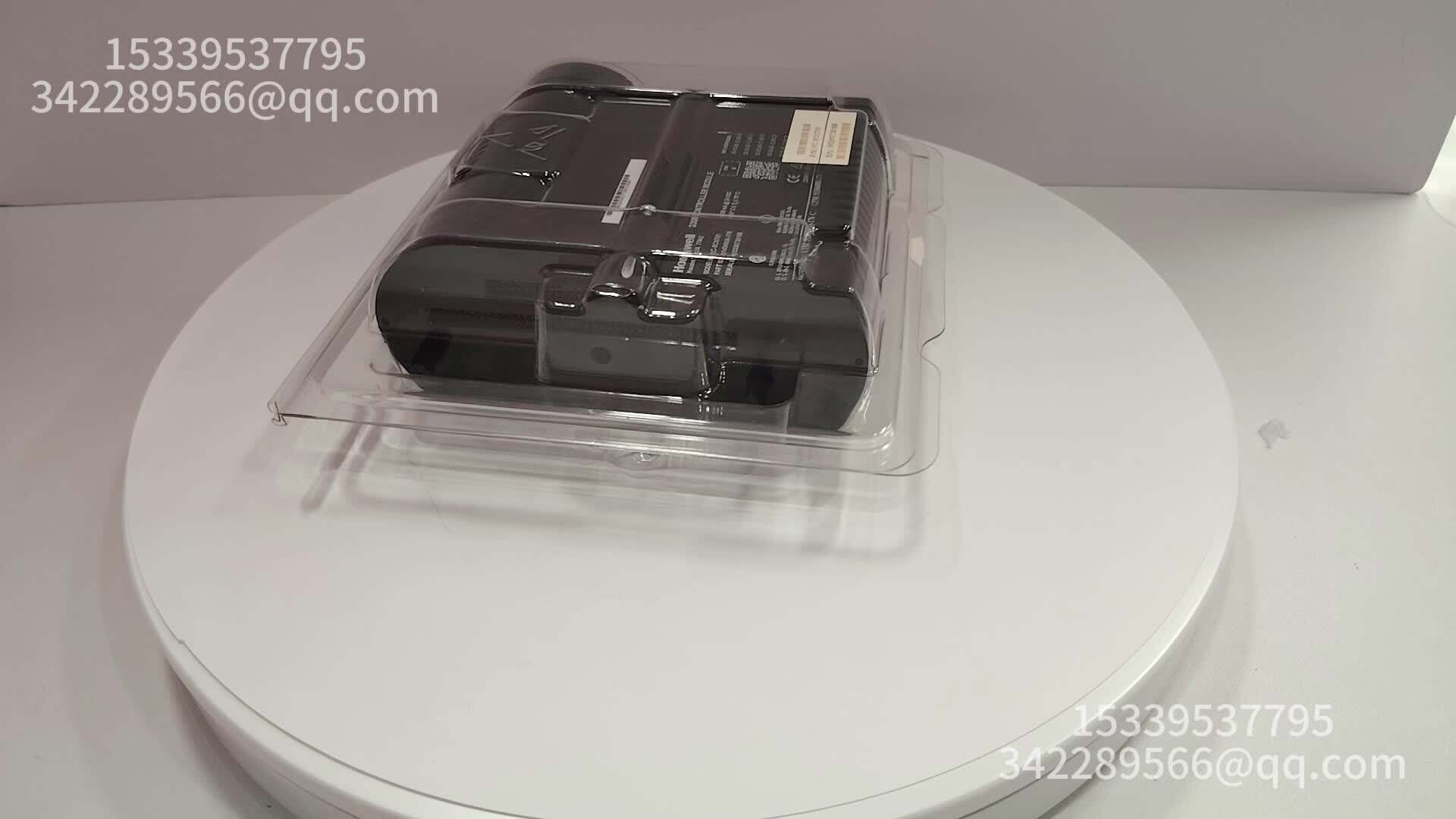
HONEYWELL 51304650-100 Digital Output Module photo-1
Negotiable MOQ: 1 Piece (Price negotiable depending on order volume and customization)
Key Specifications
Get Latest Price
Material:
Other, Global universal model
Condition:
Other, Global universal model
Task:
Other, Global universal model

Payment & Shipping
Payment Methods:
Port of Shipment:
guizhou
Delivery Detail:
Delivery time depends on order quantity.
Material Other, Global universal model
Condition Other, Global universal model
Task Other, Global universal model
Mathematical Model Other, Global universal model
Signal Other, Global universal model
Customized Non-Customized
Structure Other, Global universal model
Operating Temperature -40℃~+70℃
Relative Humidity 5%~95% (non-condensing)
Storage Temperature -55℃~+85℃
Dimensions 160mm × 80mm × 220mm

I. Overview


HONEYWELL 51304650-100 is a network communication adaptation module designed for industrial automation Distributed Control Systems (DCS). Its core positioning is a "communication bridge unit between DCS systems and third-party equipment/subsystems". It mainly serves cross-system data interaction, network protocol conversion, and distributed equipment communication management for large-scale industrial installations in industries such as chemical engineering, petroleum, electric power, and metallurgy. It is a key communication component connecting Honeywell Experion PKS systems with third-party PLCs, intelligent instruments, and IoT platforms.


With its deep compatibility with Honeywell DCS systems and multi-protocol support capability, this product holds core value in both new system integration scenarios (e.g., collaborative control of multiple installations in chemical industrial parks) and old system upgrade scenarios (e.g., connection between TDC 3000 systems and new IoT platforms). Its core function is to solve three major challenges in industrial sites: "heterogeneous network incompatibility", "communication barriers between cross-brand equipment", and "centralized management of distributed data". Through protocol conversion and network adaptation, it enables efficient data interaction between different systems, while ensuring the stability and security of communication links, providing network support for global monitoring, collaborative control, and intelligent management of industrial production processes.


II. Product Attributes and Technical Features


(I) Basic Attributes and Specifications

  • Product Category: Industrial automation network communication adaptation module, focusing on three core functions: "multi-protocol conversion + cross-system communication + distributed data aggregation". Different from ordinary communication modules, it has industrial-grade network redundancy and fault self-healing capabilities, and is compatible with the distributed communication architecture of Honeywell DCS systems.

  • Physical Specifications:
    • Dimensions and Weight: Compliant with Honeywell's standard rack mounting dimensions, it has a length of 160mm (compatible with the rack slot of Experion PKS C300 controller), width of 80mm, height of 220mm (including mounting clips), and weight of approximately 0.7kg. It is dimensionally compatible with IO cards (e.g., 51304487-100) and communication modules (e.g., 51304650-100) of the same series, and can be installed side by side in the same rack to simplify the layout of the control cabinet.

    • Material and Protection: The shell is made of ABS flame-retardant material (UL94 V-0 grade), the internal circuit board is coated with three-proof paint (moisture-proof, salt-fog-proof, and mildew-proof), and the protection level reaches IP20 (suitable for installation inside control cabinets, protecting against dust and slight moisture). The interface terminals are made of nickel-plated material (anti-oxidation, enhancing plug-in wear resistance to ensure long-term stable communication).


  • Electrical Characteristics:
    • Supports Ethernet link redundancy (dual-network port hot backup, fault switching time ≤ 50ms) to avoid communication interruption caused by single-link failure.

    • Equipped with data encryption function (supporting SSL/TLS protocol) and access control (IP address-based whitelist filtering) to prevent industrial network data leakage and unauthorized access.

    • Ethernet Interfaces: 2 Gigabit Ethernet ports (RJ45), supporting TCP/IP, Modbus-TCP, and EtherNet/IP protocols. Compatible with industrial Ethernet communication, it can connect to third-party PLCs (e.g., Siemens S7-1200), IoT gateways, or upper-level monitoring systems.

    • Serial Communication Interfaces: 1 RS485 (half-duplex) and 1 RS232 (full-duplex) port, supporting Modbus-RTU and Profibus-DP protocols. Compatible with on-site intelligent instruments (e.g., Rosemount 3051 pressure transmitter) and small PLCs (e.g., Schneider M221) and other serial communication equipment.

    • Protocol Conversion Capability: Supports bidirectional conversion between Modbus-TCP and Modbus-RTU, and protocol mapping between EtherNet/IP and Profibus-DP. The conversion delay is ≤ 10ms, and the data packet loss rate is ≤ 0.1% (under full-load communication).

    • Communication Interfaces and Protocols:

    • Network Redundancy and Security:

    • Power Supply Requirements: Operating voltage of 24V DC (wide-range adaptation to 18V DC ~ 36V DC), operating current of ≤ 200mA (static state) and ≤ 400mA (under full-load communication), power consumption of ≤ 9.6W. Compatible with industrial standard switching power supplies or DCS rack backplane power supply.


微信图片_20250802094412


(II) Core Functional Features


Integrated Design of "Multi-Protocol Conversion + Cross-System Communication"

  • Heterogeneous Network Compatibility: Resolves communication barriers between equipment of different brands and protocols. For example, in the central control room of a chemical industrial park, the Experion PKS system (supporting EtherNet/IP) needs to collect data from 3 sets of third-party subsystems in the park: Siemens S7-1500 PLC (Modbus-TCP), Schneider M340 PLC (Modbus-RTU), and Rockwell PowerFlex inverter (EtherNet/IP). The 51304518-150 module connects to Siemens and Rockwell equipment via dual Ethernet ports, and to the Schneider PLC via the RS485 interface. It uniformly converts data from all subsystems into the EtherNet/IP protocol recognizable by the Experion PKS system, realizing "one set of DCS monitoring multiple subsystems" without the need to deploy additional communication gateways, reducing system integration costs by 40%.


  • Bidirectional Data Interaction: Supports bidirectional communication of "DCS control command issuance" and "subsystem data upload". For example, in the hydrogenation unit of a petroleum refinery, the Experion PKS system issues a command of "reaction temperature setpoint 80℃" to the third-party hydrogenation reactor PLC (Modbus-RTU protocol) via the module, while receiving data such as "actual temperature 79.8℃ and pressure 2.0MPa" uploaded by the PLC. The command issuance response time is ≤ 10ms, and the data upload cycle is configurable (adjustable from 100ms to 1s), meeting the real-time requirements of closed-loop control.


  • Distributed Data Aggregation: For scattered on-site equipment, it supports centralized data collection from multiple nodes. For example, in the desulfurization system of a thermal power plant, 10 desulfurization towers are each equipped with a small PLC (Modbus-RTU protocol), which are cascaded and connected to the 51304650-100 module via the RS485 bus. The module aggregates data such as "desulfurization efficiency and slurry pH value" from the 10 PLCs, then uploads the data to the Experion PKS system via Ethernet. This reduces on-site wiring (from 10 RS485 cables to 1 Ethernet cable), cutting wiring costs by 60%, and avoids multi-node communication conflicts (the module has a built-in bus arbitration mechanism).


Deep Adaptation and Collaboration with Honeywell DCS Systems

  • Mechanical and Software Compatibility: The module's installation dimensions fully match the Experion PKS C300 rack. It can be directly inserted into the rack slot and communicate with the C300 controller via the backplane bus without additional wiring. It seamlessly interfaces with Honeywell configuration software (Control Builder, HMIWeb), allowing intuitive configuration of communication parameters (e.g., IP address, protocol type, data mapping relationship) in the software. No coding is required for configuration, and ordinary operation and maintenance personnel can complete parameter settings within 15 minutes.


  • System-Level Redundancy Collaboration: Supports collaboration with the Fault Tolerant Ethernet (FTE) network redundancy of the Experion PKS system. When the module is connected to the FTE dual network, it automatically synchronizes the redundancy strategy of the FTE network. If the main network (FTE Network A) fails, the module switches to the backup network (FTE Network B) within 50ms, ensuring uninterrupted communication. At the same time, it uploads the "network switch" event log to the DCS system, ensuring the consistency of global network redundancy and meeting industrial safety level requirements.


  • Data Integration and Historical Storage: Supports accessing collected third-party data into the Honeywell PHD historical database. The data storage cycle is configurable (adjustable from 1s to 1h). It also supports data filtering (e.g., removing abnormal values, smoothing fluctuating data) and format conversion (converting raw data from third-party equipment into standardized engineering values). For example, converting the "current code 0x00FF" of the inverter into "actual current 50A", facilitating trend analysis and fault tracing by the DCS system.


Industrial-Grade Reliability and Fault Self-Healing

  • Anti-Interference and Wide-Temperature Operation: The module has passed EMC testing (complying with EN 61000-6-2 standard), with an Electrostatic Discharge (ESD) protection level of ±15kV (air)/±8kV (contact) and a radio frequency radiation immunity level of 10V/m (80MHz~1GHz). It can operate stably in strong electromagnetic environments with dense frequency converters and high-voltage motors. The operating temperature range is -40℃~+70℃, and low-temperature startup (-40℃) requires no preheating, with a startup time of ≤ 30s, making it suitable for outdoor control cabinets in northern winters and high-temperature workshops in southern summers.


  • Fault Self-Diagnosis and Alarm: Supports diagnosis of module self-faults (e.g., network port fault, serial port fault, power abnormality) and communication faults (e.g., subsystem offline, data timeout). In case of a fault, it alerts operation and maintenance personnel via LED indicators (red flashing) and DCS system alarms (uploading fault codes, such as "E02 = RS485 communication timeout"). At the same time, it automatically records the fault time and fault type (storing the last 50 fault logs), facilitating quick problem localization (e.g., a "E02" fault allows direct inspection of whether the RS485 bus is disconnected).


  • Fault Self-Healing and Degraded Operation: If one communication interface fails (e.g., Ethernet Port 1 is damaged), the module automatically switches to the backup interface (Ethernet Port 2) while keeping other interfaces functioning normally (e.g., RS485 communication remains unaffected). If a subsystem is temporarily offline, the module caches the last 1000 pieces of data before the offline, and automatically retransmits them after the subsystem reconnects, avoiding data loss and ensuring the DCS system can fully trace historical data.


III. Application Scenarios


Collaborative Control of Multiple Installations in Chemical Industrial Parks

  • Scenario Description: A large chemical industrial park includes 3 independent installations (ethylene installation, propylene installation, and styrene installation). The ethylene installation adopts the Honeywell Experion PKS system, the propylene installation uses the Siemens PCS 7 system, and the styrene installation employs the Schneider EcoStruxure system. It is required to realize "one set of HMI monitoring three installations" in the park's central control room. Serving as a communication bridge, the 51304650-100 module connects to the Experion PKS system via the EtherNet/IP interface, and to the Siemens PCS 7 (Modbus-TCP) and Schneider EcoStruxure (EtherNet/IP) via dual Ethernet ports respectively. It converts key parameters such as "installation temperature, pressure, and liquid level" from the two third-party systems into the Experion PKS protocol, and at the same time converts the "load adjustment commands" issued by the central control room into corresponding protocols and sends them to the two third-party systems.


  • Core Value: There is no need to modify the control systems of the existing three installations (saving over 8 million RMB in modification costs). The module enables cross-system collaborative monitoring and control, with a data interaction delay between installations of ≤ 10ms, improving the overall production scheduling efficiency of the park by 30%. At the same time, it avoids information silos caused by independent operation of multiple systems (e.g., when the pressure of the propylene installation is abnormal, the central control room can adjust the load of the ethylene installation in real time through linkage), reducing the risk of production accidents.


IoT Upgrade of Old TDC 3000 Systems

  • Scenario Description: A petroleum refinery still uses the old Honeywell TDC 3000 DCS system and plans to connect its production data to the factory IoT platform (e.g., Honeywell Forge) to realize equipment health management and remote monitoring. Since the TDC 3000 system only supports proprietary communication protocols and cannot be directly connected to the IoT platform, the 51304650-100 module collects data such as "reactor temperature and distillation tower liquid level" from the system via the RS485 interface (compatible with the Serial I/O module of TDC 3000), converts the proprietary protocol into the Modbus-TCP protocol, and uploads the data to the IoT platform via Ethernet. At the same time, it receives the "data collection cycle adjustment" command issued by the platform.


  • Core Value: There is no need to eliminate the TDC 3000 system (extending the system service life by 5 years and saving over 12 million RMB in replacement costs). The module enables seamless connection between the old system and the IoT platform, with a data upload accuracy of ≥ 99.9%. Operation and maintenance personnel can check the operation status of the installation in real time on their mobile phones, reducing the equipment fault early warning response time from 2 hours to 10 minutes, and reducing unplanned shutdowns by 2 times a year (each shutdown causes a loss of over 5 million RMB).


Centralized Monitoring of Auxiliary Network Systems in Power Plants

  • Scenario Description: The auxiliary network of a thermal power plant includes a circulating water system, a desulfurization system, and an ash removal system, equipped with Siemens S7-200 SMART PLC (circulating water), Schneider M241 PLC (desulfurization), and Allen-Bradley Micro850 PLC (ash removal) respectively. It is required to connect the data of the three auxiliary network systems to the main DCS (Experion PKS) of the power plant. The 51304650-100 module connects to the Siemens and Schneider PLCs via the RS485 interface (Modbus-RTU), and to the Allen-Bradley PLC via the Ethernet interface (EtherNet/IP). It aggregates data such as "pump operation status, valve opening, and water quality indicators" from the three systems, then uploads the data to the main DCS via the FTE network. At the same time, the main DCS issues commands such as "pump start/stop and valve adjustment" to the auxiliary network PLCs via the module.


  • Core Value: It reduces the number of independent monitoring devices for the auxiliary network system (from 3 sets of HMI to 1 set), cutting operation and maintenance costs by 50%. After data aggregation, the main DCS realizes linkage control of the auxiliary network system (e.g., automatically starting the backup pump when the circulating water pressure is low), reducing the failure rate of the auxiliary network system from 8% to 2% and improving the overall operation efficiency of the power plant by 15%.

Product Tags: 51304650-100

Send Inquiry to This Supplier

* Message
0/5000

Want the best price? Post an RFQ now!
Verified Business License
Business Type
Trading Company
Year Established
2014
Factory Size
1,000-3,000 square meters
Product Certifications
SA8000