








 Contact Platform Support
 Help Center
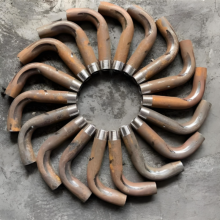
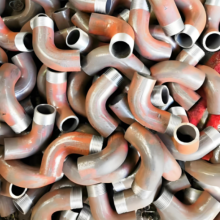
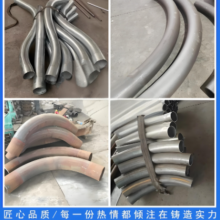
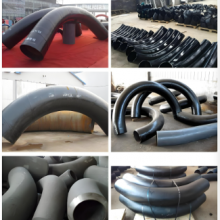
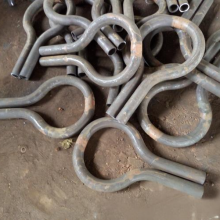
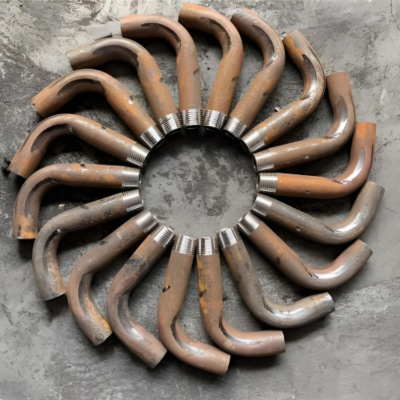
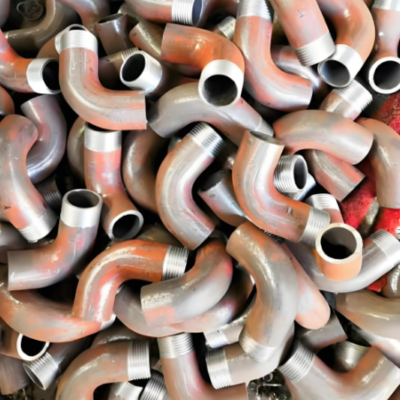
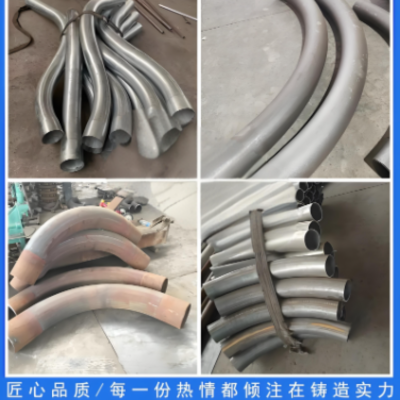
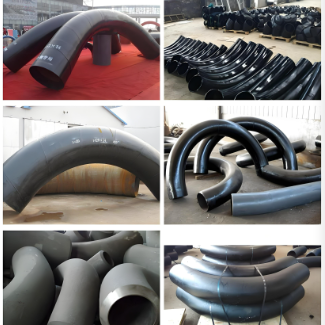
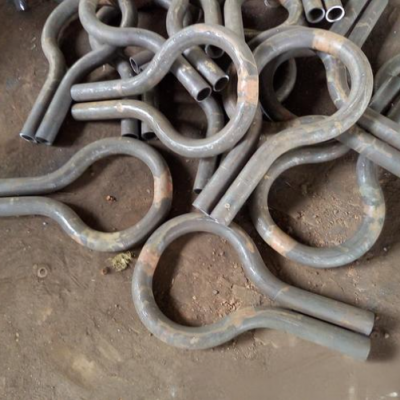
National Standard 304 316L Stainless Steel U-shaped Bend Carbon Steel Stainless Steel Hot Simmered Bend to Customize

Related Products
-
 Seamless Straight Seam Welded ElbowsNegotiableMOQ: 100 Units
 -
Carbon Steel, Stainless Steel, Alloy Steel, Cold Drawn, Hot Pressed, Diameter, Reduced, Welded, TeeNegotiableMOQ: 100 Units
-
Carbon Steel, Stainless Steel, Alloy Steel, Concentric Eccentric Head Reducer JointsNegotiableMOQ: 100 Units
-
Welded Stainless Steel, Carbon Steel, Alloy Steel, Seal PlugNegotiableMOQ: 100 Units
-
Wire Coupling Carbon Steel Stainless Steel Alloy Steel Welded Pipe CapNegotiableMOQ: 100 Units
The bend is bent by using a complete set of bending equipment, which is divided into two processes: cold simmering and hot pushing. No matter what kind of machinery and equipment and pipelines, most of them use bent pipes, mainly used for oil transmission, gas transmission, liquid infusion, engineering bridge construction, etc. Analysis of the main reasons for the decline of bending quality caused by the use method and the precaution method: 1. When pure bending, the outer arm wall of the neutral layer is thinned by the tensile stress &1 under the action of the external force from M, and the inner pressure stress is diluted. The resultant forces N1 and N2 change the cross-section of the tube. Based on this factor, the main reason for the decline in the quality of the bend is RX and SX, so in GBJ235-82, the RX value under various pressure levels and the amount of thinning on the outside are clearly stipulated, in order to control the value of RX and SX, so as to ensure the quality. 2. As mentioned in the previous article, the outside of the material is pulled when bending, and the position of the neutral shaft under pressure on the inside is different from the bending method, in the top bending (compression bending) work, the neutral shaft is about 1/3 away from the outer wall, and in the rotary bending (rebound bending) work, the neutral shaft is 2/3 away from the outer wall. Therefore, thin-walled pipes are bending, and it is beneficial to use the rotary bending method. 3. The accuracy of the bending tire is also one of the factors affecting the quality of the bend. When we manufacture bent tires, in addition to the specifications and dimensions required to be controlled within a certain tolerance range, we also require users to choose the corresponding bent tires according to the diameter of the bent pipe when using. 4. The bending performance and surface corrosion of the pipe itself may also affect the quality of the bend. During on-site construction, the operator also needs to understand the material of the pipe to be processed, the processing performance and make production judgments on the surface corrosion. 5. R is now available. (Bending radius/outer diameter of the pipe) relationship graph for users to refer to when selecting the relationship between pipe diameter and wall thickness. Reflecting the impact of relative bending radius and relative wall thickness on the quality of bends, according to the acceptance specifications of pipe processing: cold-formed steel pipes are 4D for medium and low pressure, and 5D for high pressure. Therefore, our bent tire design is R=4D (special cases are determined separately), so as far as the pipe bender produced by our factory is mainly based on the selection of relative wall thickness SX, the upper part of the figure is the mandrelless area, the middle part of the figure is the ordinary mandrel area, and the lower part of the figure is the special mandrel area. Because the design and manufacture of special mandrels are very difficult and the operation is not very convenient, our factory generally does not supply them. Special circumstances may be agreed separately. 6. The impact of lubrication on product quality during the molding process: In the traditional pipe bending production process, enterprises will take many measures to obtain better surface quality of pipe bends, including: using more advanced and high-end pipe benders, using molds with higher strength, or using lubrication products. The use of high-end pipe benders and high-strength molds, enterprises often need to invest a lot of money to complete, only the use of bending pipe lubrication products is relatively low and fast to meet the requirements of enterprise product quality. However, in the traditional production process: oil-based bend lubrication products can meet the requirements of the quality of the bend in the production of bend pipes, but the difficulty of cleaning and pollution to the environment of oil-based bend lubrication products are very prominent, so that enterprises must use more means to eliminate the impact of oil-based bend lubrication products on the final product quality, and invest more energy and money for this. The arrival of IRMCO bend water-based grease meets the requirements of enterprises for the quality of bend products, and can avoid and reduce the increased investment due to the use of oil-based bend lubrication products, and completely optimize the production process of enterprises. In the application process of traditional oil-based lubrication products, the production efficiency of enterprises is greatly restricted, because the fluidity and extremely difficult cleaning of oil-based lubrication products cause pollution to the production environment and workers' working conditions, and enterprises often need to spend a lot of money and manpower and material resources to remove these pollutions. The use of the above-mentioned cleaning of the manpower and material resources of the enterprise can reduce or even avoid the above-mentioned cleaning of pollution, and its no-wash and direct welding characteristics greatly improve the production efficiency and product quality of the enterprise. The amount of IRMCO water-based pipe bend grease can usually be reduced by 50%-80% compared to traditional lubricating oil, which can save more costs for enterprises. The preparation diagram illustrates a pipe bending device, which is characterized by the fact that it contains a bent pipe disc and a certain shape pipe; the shaped pipe is inserted from the tail end of the steel pipe to be bent, and the end of the shaped pipe is tapered, which can withstand the bend of the steel pipe; The bending disc is provided with a dial for the bending angle of the steel pipe that can be adjusted. Related information Pipe bender can be roughly divided into CNC pipe bender, hydraulic pipe bender and so on. The use of pipe bender: the hydraulic pipe bender is mainly used for electric power construction, high-speed railway construction, boilers, bridges, ships, furniture, decoration and other aspects of pipeline laying and repair, with the advantages of multiple functions, reasonable structure, simple operation, convenient movement, fast installation, etc. In addition to the pipe bending function, this machine can also use the cylinder as a hydraulic jack, which has the characteristics of cheap price and easy use compared to CNC pipe bending equipment, and occupies the leading product position in the domestic pipe bender market. CNC pipe bending machine can perform winding bending of pipes with one bending radius (single mode) or two bending radii (double mode) in the cold state, and is widely used in various pipe fittings and wire bending in automobiles, air conditioning and other industries. Pipe bender is mainly used for plastic forming of tubes. The materials of pipe bends include cast iron, stainless steel, alloy steel, malleable cast iron, carbon steel, non-ferrous metals and plastics. Pipe bend classification 1. Divided by material: carbon steel: ASTM/ASME A234 WPB, WPC alloy: ASTM/ASME A234 WP 1-WP 12-WP 11-WP 22-WP 5-WP 91-WP911, 15Mo3 15CrMoV, 35CrMoV Stainless steel: ASTM/ASME A403 WP 304-304L-304H-304LN-304NASTM/ASME A403 WP 316-316L-316H-316LN-316N-316TiASTM/ASME A403 WP 321-321H ASTM/ASME A403 WP 347-347H Low Temperature Steel: ASTM/ASME A402 WPL3-WPL 6 High Performance Steel: ASTM/ASME A860 WPHY 42-46-52-60-65-70 Cast Steel, Alloy Steel, Stainless Steel, Copper, Aluminum Alloy, Plastic, Argon Asphalt, PVC, PPR, RFPP (reinforced polypropylene), etc. Aluminum alloy 3003, 6061, copper, copper, brass 2. According to the production method, it can be divided into pushing, pressing, forging, casting, etc. 3. According to the manufacturing standard, it can be divided into national standard, electric standard, ship standard, chemical standard, water standard, American standard, German standard, Japanese standard, Russian standard, etc. 4. According to its radius of curvature, it can be divided into long radius elbow and short radius elbow. The long radius elbow refers to the outer diameter of the pipe with a radius of curvature equal to 1.5 times, that is, R=1.5D; Short radius elbow means that its radius of curvature is equal to the outer diameter of the pipe, that is, R=1.0D. (D is the elbow diameter, R is the radius of curvature). 5. If divided according to pressure level: there are about 17 types, which are the same as the American pipe standards, including: Sch5s, Sch10s, Sch10, Sch20, Sch30, Sch40s, STD, Sch40, Sch60, Sch80s, XS; Sch80、SCH100、Sch120、Sch140、Sch160、XXS; The most commonly used are STD and XS. Standard System There are two main systems of international pipe flange standards, namely the European pipe flange system represented by the German DIN (including the former Soviet Union) and the American pipe flange system represented by the American ANSI pipe flange. In addition, there are Japanese JIS pipe flanges, but they are generally only used in public works in petrochemical plants, and have less influence internationally. The pipe flanges of each country are introduced as follows: 1. The pipe flange of the European system represented by Germany and the former Soviet Union 2. The pipe flange standard of the American system is represented by ANSI B16.5 and ANSI B 16.47 3. The United Kingdom and France have two pipe flange standards, and each country has two sets of pipe flange standards. The internationally accepted pipe flange standards can be summarized into two different and non-interchangeable pipe flange systems: a European pipe flange system represented by Germany; The other is the American pipe flange system represented by the United States. IOS7005-1 is a standard promulgated by the International Organization for Standardization in 1992, which is actually a pipe flange standard that combines two sets of pipe flanges in the United States and Germany. Pipe bender pipe bender, roughly divided into CNC pipe bender, hydraulic pipe bender, etc., is used in power construction, highway and railway construction, bridge, ship and other aspects of pipeline laying and repair. Basic introduction/pipe bender editing is mainly used for pipe laying and repair in construction, decoration and other aspects, with the advantages of multiple functions, reasonable structure and simple operation. In addition to the pipe bending function, this machine can also use the cylinder as a hydraulic jack, which has the characteristics of cheap price and easy use compared to CNC pipe bending equipment, and occupies the leading product position in the domestic pipe bender market. Basic classification/pipe bender editing hydraulic electric pipe bender horizontal hydraulic pipe bender multi-functional rolling pipe bender digital display pipe bender main features / pipe bender editing structure of pipe bender atlas 1. The pipe bender adopts touch screen plus CNC module, interactive operation, program setting is simple and easy; 2. The bed structure is stable and not easy to deform; 3. Each gear can set 16 bending angles, and the memory can store 16 sets of files; 4. It has a slow positioning function, stable bending angle, and a repeatability of ±0.1°; 5. Error messages are displayed on the screen to help the operator eliminate them immediately; 6. Provide self-developed coordinate conversion bending processing value, and the software can be purchased and installed on the desktop computer to edit and calculate. In terms of process, the pipe bender bends the pipe in the same way as the bending of the sheet. In the case of pure bending, when the tube with an outer diameter of D and a wall thickness of t is bent under the action of the external moment M, the outer tube wall of the neutral layer is subjected to the tensile stress σ1, and the pipe wall becomes thinner. The inner tube wall of the neutral layer is affected by the tensile stress σ1, and the pipe wall becomes thicker. Moreover, the shape of the cross-section changes from circular to approximately elliptical due to the action of the resultant forces F1 and F2, and when the deformation is too large, cracks will occur in the outer pipe wall and wrinkles in the inner pipe wall. The degree of deformation of the pipe depends on the size of the relative bending radius R/D and the relative thickness t/d values, and the smaller the R/D and t/D values, the greater the degree of deformation. In order to ensure the quality of pipe fittings, the degree of deformation must be controlled within the permitted range, and the bending limit of pipes not only depends on the mechanical properties and bending methods of the material, but also considers the requirements of the use of pipe fittings. The forming limit of pipe fittings should include the following contents: (1) the maximum elongation deformation in the tensile deformation area outside the neutral layer does not exceed the allowable value of material plasticity and causes rupture; (2) In the compression deformation zone inside the neutral layer, the thin-walled structure part affected by tangential compressive stress will not exceed the instability and wrinkle; (3) If the pipe fitting has the requirements of ellipticality, control the distortion of its cross-section; (4) If the pipe fitting has the strength requirement to withstand internal pressure, control the forming limit of its wall thickness reduction. Usage edit (1) Electric oil pump instruction manual. (2) First, screw the working cylinder into the internal thread of the square gear block, so that the wheel mounted on the bracket at the rear end of the cylinder is down. (3) Select the die according to the outer diameter of the bent pipe, put it on the plunger, put the groove corresponding to the two rollers towards the die, and then put it into the hole of the corresponding size of the plate, then cover the upper plate, insert the bent pipe into the groove, and then pull the moving part of the quick coupling at the end of the high-pressure oil pipe back and put it on the joint of the working cylinder, and tighten the oil release screw on the electric oil pump to bend the pipe. After the bending is completed, the oil drain screw is released, and the plunger is automatically reset.

Send Inquiry to This Supplier


You May Also Like
-
Stainless Steel Carbon Steel Seamless Straight Seam Welded Elbow DN500 PN10NegotiableMOQ: 100 Units
-
Inner and Outer Epoxy Plasticized Pipe Fittings 90 Degrees Anti-corrosion Spraying Elbow for Water Supply DN200NegotiableMOQ: 100 Units
-
Flexible Waterproof SleeveNegotiableMOQ: 100 Pieces
-
Rigid Waterproof SleeveNegotiableMOQ: 100 Units
-
Long Heat Transmission Network Steam Overhead Sliding Vermiculite Insulation Pipe SupportNegotiableMOQ: 100 Combos
-
Guide Type Pipe CarrierNegotiableMOQ: 100 Combos
-
Welded Seamless Carbon Steel Bend 1 Times 2 Times 3 Times 4 Times Special-shaped ProcessingNegotiableMOQ: 100 Units
-
Outer Hexagonal StudsNegotiableMOQ: 1000 Units
-
Construction Engineering NutsNegotiableMOQ: 1000 Pieces
-
Screws/nuts/bolts/fastenersNegotiableMOQ: 1000 Units


