Home > Electrical & Electronics > Electrical Control System > METSO PDP601 Distributed Processing Unit

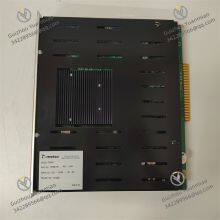
METSO PDP601 Distributed Processing Unit
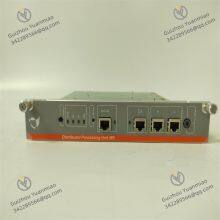
METSO PDP601 Distributed Processing Unit photo-1
METSO PDP601 Distributed Processing Unit photo-2
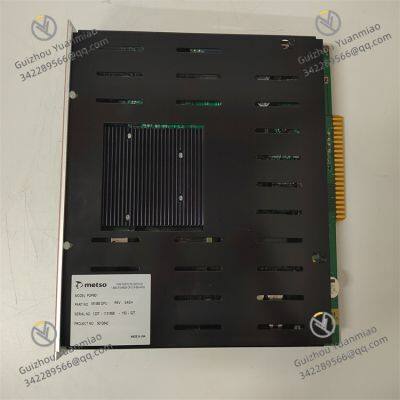
METSO PDP601 Distributed Processing Unit photo-3
Negotiable MOQ: 1 Unit (Price negotiable depending on order volume and customization)
Key Specifications
Get Latest Price
Material:
Other, Global universal model
Condition:
Other, Global universal model
Task:
Other, Global universal model
Payment & Shipping
Payment Methods:
Port of Shipment:
China
Delivery Detail:
Delivery time depends on order quantity.
Material Other, Global universal model
Condition Other, Global universal model
Task Other, Global universal model
Mathematical Model Other, Global universal model
Signal Other, Global universal model
Customized Non-Customized
Structure Other, Global universal model
Supply voltage 24VDC
Operating temperature -20℃ to 60℃

I. Overview


METSO PDP601 is a high-performance process diagnostic processor that integrates data acquisition, analysis, diagnosis, and control functions. It can real-time monitor various key parameters in industrial production processes, conduct in-depth analysis of data through advanced algorithms, timely detect potential faults and issue early warnings. It provides strong technical support for the stable and efficient operation of industrial production, and is a core device for achieving intelligent diagnosis and precise control in modern industrial control systems.


METSO PDP601 (3)


II. Technical Parameters


Power Supply Specifications: The input voltage is 24V DC. This DC power supply method is widely used in industrial environments, compatible with most industrial power supply systems, ensuring stable power supply for the equipment. Its maximum power consumption is 15W, which meets the high-performance operation of the equipment while effectively controlling energy consumption, conforming to the industrial development trend of energy conservation and environmental protection.


Processor Performance: Equipped with a high-performance 32-bit microprocessor with a main frequency of up to 800MHz, it has strong data processing capabilities. It can quickly process a large amount of real-time data and complex diagnostic algorithms, ensuring rapid response to various abnormal situations in industrial production processes, and providing a solid computing foundation for real-time control and diagnosis.


Storage Capacity: Equipped with 512MB RAM for temporary data storage, ensuring smooth data processing; 4GB Flash memory can be used to store important information such as system programs, historical data, and diagnostic logs, facilitating later query and analysis, and providing data support for production optimization and fault traceability.


Communication Capability: It has rich communication interfaces, including 2 Ethernet interfaces (supporting 10/100Mbps adaptive), 4 RS-485 interfaces, and 2 USB interfaces. It supports multiple mainstream industrial communication protocols such as Modbus TCP/IP, Profibus DP, and EtherNet/IP, enabling seamless connection with various industrial equipment such as PLCs, DCSs, sensors, and actuators, ensuring efficient transmission and sharing of data in the entire control system.


Input/Output Channels: Provides 16 analog input channels (supporting 4-20mA or 0-10V signals) and 8 digital input channels, which can collect multiple types of process signals simultaneously; equipped with 8 digital output channels (relay output) for controlling the start and stop of external equipment, meeting the needs of multi-parameter monitoring and control in industrial production.


Environmental Adaptability: The operating temperature range is -20℃ to 60℃, enabling stable operation in cold outdoor working environments or high-temperature industrial workshops; the relative humidity is 5% - 95% (non-condensing), with good moisture resistance, suitable for humid industrial scenarios; the vibration resistance is 10-2000Hz, with an acceleration of 10g, which can withstand mechanical vibrations during industrial production and ensure stable operation of the equipment.


METSO PDP601 (2)


III. Functional Features


Real-time Process Diagnosis: It has a powerful real-time diagnosis function. By continuously monitoring and analyzing the collected process parameters (such as temperature, pressure, flow, etc.), using advanced fault diagnosis algorithms, it can accurately identify early fault signs of equipment, such as sensor drift, valve jamming, abnormal motor vibration, etc., and timely issue sound and light alarm signals, while recording fault information. It provides maintenance personnel with accurate basis for fault location, effectively avoiding production shutdown caused by fault expansion.


Data Trend Analysis: It can store and analyze the collected historical data, generating intuitive data trend charts, such as temperature change curves and pressure fluctuation trends. Through the analysis of these trends, operators can clearly understand the change rules of the production process, predict the development trend of process parameters, provide a scientific basis for production process optimization and equipment maintenance plan formulation, and help enterprises achieve refined production management.


Flexible Control Logic: It supports user-defined control logic, and complex control programs can be written through dedicated programming software to achieve precise control of industrial production processes. For example, automatically adjusting valve opening and controlling motor speed according to different process conditions, meeting personalized control needs in different industrial scenarios, and improving the automation level and control accuracy of the production process.


Remote Monitoring and Management: With the help of Ethernet interfaces and related communication protocols, remote monitoring and management functions can be realized. Operators in the remote monitoring center can real-time view the operating status of PDP601, production process parameters, and fault alarm information, and can remotely modify control parameters, start and stop equipment, etc. This greatly improves the operation and maintenance efficiency of industrial control systems, especially suitable for centralized management of large industrial plants or decentralized production equipment.


High Reliability Design: It adopts industrial-grade components and redundant design, with key circuit parts strengthened. It has good anti-electromagnetic interference ability and anti-vibration impact ability, ensuring stable operation of the equipment in harsh industrial environments for a long time. At the same time, the equipment has a complete self-diagnosis function, which can real-time monitor its own working status, such as power failure and communication abnormalities, improving the reliability and maintainability of the equipment.


METSO PDP601 (1)


IV. Operation and Maintenance Guide


Installation Process
Before installation, ensure that all relevant equipment is powered off, and operators wear anti-static wristbands to prevent static electricity from damaging internal components of the equipment.
Check whether the equipment has damage, deformation, loose interfaces, etc. If there is any abnormality, installation is prohibited and the supplier should be contacted for replacement in time.
According to the equipment installation manual, fix the PDP601 on the standard guide rail in the control cabinet to ensure firm installation and prevent the equipment from shifting due to vibration during operation.
Correctly connect the power supply, input/output signal cables, and communication cables according to the wiring diagram. Pay attention to distinguishing positive and negative poles and interfaces of different signal types to avoid equipment damage caused by wrong wiring.
After wiring is completed, carefully check whether the wiring is firm and correct. After confirmation, turn on the equipment power, observe whether the equipment indicator lights are normally on, and initially judge whether the equipment starts normally.


Parameter Configuration
Connect the PDP601 to the configuration computer through the Ethernet interface or USB interface, install and start the dedicated configuration software.
Search for and connect to the PDP601 device in the configuration software, and enter the parameter configuration interface. According to actual production needs, set communication parameters (such as IP address, baud rate, communication protocol), input/output channel parameters (such as signal type, range), diagnostic parameters (such as alarm threshold, fault judgment time), etc.
Write or import the control logic program, set control strategies according to production process requirements, such as PID control parameters, interlock conditions, etc., and compile and download the program.
After parameter configuration is completed, conduct offline simulation tests to verify whether the control logic and diagnostic functions meet expectations. After passing the test, save the configuration parameters and programs to the equipment, and restart the equipment to make the configuration take effect.
Product Tags: PDP601

Send Inquiry to This Supplier

Message
0/5000
Want the best price? Post an RFQ now!
1Yr
Business Type
Trading Company
Year Established
2014
Factory Size
1,000-3,000 square meters
Product Certifications
SA8000