I. Overview
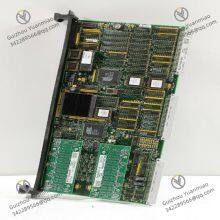
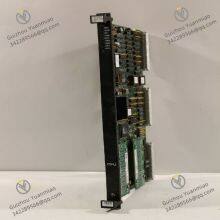
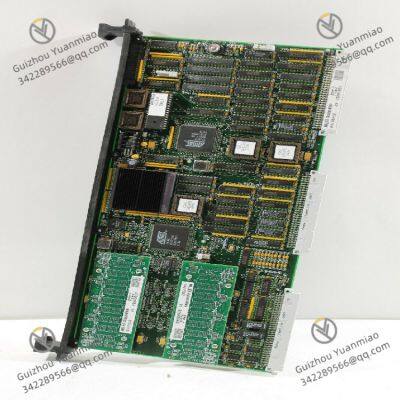
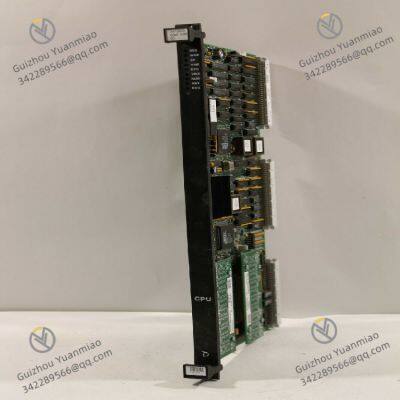
Metso A413005 is a high-precision industrial control module, whose core positioning is to provide a full-link solution of "real-time signal acquisition - dynamic logic operation - safe execution control" for oil-immersed equipment, heavy machinery, and complex process industries. As a key component of Metso's automation systems (such as Metso DNA DCS and Metso Outotec equipment control systems), its essence lies in achieving accurate processing of multiple types of on-site signals, dynamic adjustment of equipment operating parameters, and millisecond-level response to fault states through a high-reliability hardware architecture and programmable control algorithms. It is particularly suitable for harsh industrial environments with high vibration, heavy dust, and strong electromagnetic interference (e.g., mine crushing workshops, areas adjacent to cement rotary kilns, and metallurgical rolling mill systems).
Adopting a fanless and compact design, it is compatible with the input and output of multiple signal types including analog, digital, and pulse signals, and supports seamless connection with Metso's dedicated sensors (such as vibration sensors and temperature transmitters), actuators (such as control valves and frequency converters), and third-party industrial equipment. Its integrated fault self-diagnosis function and redundant communication design can effectively reduce the risk of unplanned equipment downtime; when used with Metso's dedicated configuration software, it can realize custom control logic and multi-parameter cascade adjustment, forming a complete control closed loop covering "perception - control - monitoring - diagnosis". Whether it is the speed-load coordinated control of mine belt conveyors, the temperature-feeding amount cascade adjustment of cement kilns, or the pressure-roll gap interlock protection of metallurgical rolling mills, the A413082 can improve production efficiency and equipment reliability through precise control and stable operation, making it a core component for process industries to achieve automation upgrades.

II. Technical Parameters
(I) Signal Input/Output Parameters
Input Channel Configuration
Analog Input (AI): Supports 6 independent analog input channels, compatible with standard industrial signals of 4-20mA DC and 0-10V DC. The input impedance is ≥10MΩ (for voltage signals) and 250Ω (for current signals). It can be directly connected to on-site instruments such as pressure sensors, temperature transmitters, and level gauges, with a measurement accuracy of ±0.1% FS, ensuring accurate acquisition of weak signals (e.g., 0.1mA-level current changes).
Digital Input (DI): Equipped with 12 isolated digital input channels, supporting 24V DC signals. The input response time is ≤1ms, suitable for status signals from devices like proximity switches, limit switches, and emergency stop buttons. The anti-interference voltage is ≥250V AC (for 1 minute), preventing false triggers caused by electromagnetic interference (e.g., start/stop of frequency converters) in industrial sites.
Pulse Input (PI): Features 2 high-speed pulse input channels, supporting 0-10kHz pulse signals. It can be connected to rotary encoders (such as belt conveyor speed encoders) for the measurement and control of parameters like rotational speed and flow rate, with a pulse counting accuracy of ±1 pulse.
Output Channel Configuration
Analog Output (AO): Provides 4 analog output channels, optional for 4-20mA DC or 0-10V DC signals. The output accuracy is ±0.2% FS, with a load capacity of ≤500Ω (for current output) and ≥1kΩ (for voltage output). It can directly drive executive components such as control valves, frequency converters, and servo motors to achieve continuous adjustment control (e.g., stepless adjustment of valve opening from 0 to 100%).
Digital Output (DO): Has 6 relay output channels, each with a rated load current of 5A@250V AC / 10A@30V DC. It supports configurable normally open/normally closed contacts, meeting the on-off control requirements of devices such as contactors, indicator lights, and solenoid valves. The mechanical life is ≥10 million cycles, and the electrical life is ≥100,000 cycles (under rated load).
(II) Electrical and Performance Parameters
Power Supply and Power Consumption
Supply Voltage: 24V DC (with ±15% fluctuation tolerance), compatible with commonly used industrial DC power modules (e.g., 24V/10A switching power supplies), eliminating the need for dedicated power supply equipment.
Standby Power Consumption: ≤4W; Power consumption under full load: ≤12W. The low-power design reduces the overall energy consumption of the system, making it suitable for emergency control scenarios with battery backup (e.g., underground mine emergency systems).
Processing Performance
Control Cycle: The minimum control cycle is 10ms, supporting multi-task parallel processing. It can run 6 independent control loops (such as PID adjustment, logic interlocking, and pulse counting) simultaneously, meeting the real-time control requirements of complex processes (e.g., three-parameter coordinated control of "temperature - pressure - feeding amount" for cement kilns).
PID Function: Built-in standard PID control algorithm, supporting online adjustment of proportional (P), integral (I), and derivative (D) parameters. It has functions such as automatic/manual bumpless transfer, anti-integral windup, and alarm interlocking, suitable for closed-loop control of continuous process parameters like temperature, pressure, and flow rate, with a control steady-state error of ≤±0.5% FS.
(III) Environmental and Compatibility Parameters
Environmental Adaptability
Operating Temperature: -20℃~+60℃, humidity 5%~95% RH (no condensation). It can operate stably in environments such as underground mines (high temperature and humidity) and metallurgical workshops (high dust and temperature) without additional temperature control devices.
Protection Level: IP20 (module itself); when used with Metso's dedicated sealed enclosure, it can be upgraded to IP54, effectively isolating dust and moisture (e.g., dusty environments of cement production lines) and adapting to dusty and humid industrial scenarios.
Anti-interference and Anti-vibration: Complies with IEC 61000-4-2 (ESD ±15kV air discharge) and IEC 61000-4-3 (radiated immunity 10V/m) standards. It can withstand mechanical vibration of 10-500Hz (acceleration 2g), ensuring stable signals in the vibration environment of heavy-duty equipment (e.g., crushers, rolling mills).
System Compatibility
Controller Adaptability: Natively compatible with Metso DNA DCS and Metso Outotec equipment control systems. It communicates with the upper computer via RS485 (Modbus RTU protocol) and Ethernet (Profinet protocol), supporting remote parameter configuration and status monitoring (e.g., remote modification of PID parameters, checking channel status).
Expansion Capability: Supports multi-module cascading (up to 12 units). The input and output channels can be expanded through bus expansion, adapting to the centralized management and control needs of multiple devices in large-scale production lines (e.g., mine crushing-conveying combined systems) and reducing spare parts inventory costs.
III. Functional Features
(I) High-Reliability Design for Harsh Industrial Environments
At the hardware level, it adopts military-grade components (such as high-precision operational amplifiers and industrial-grade relays) and an isolated circuit design. The digital input/output and analog input channels are all equipped with photoelectric isolation functions to block the impact of ground loops and electromagnetic interference (e.g., high-frequency interference generated by frequency converters) on signals; at the software level, a real-time fault monitoring algorithm is built-in, which can continuously perform self-tests on the module's power supply, communication links, and channel status. The fault identification accuracy is ≥99%, and detailed fault logs (e.g., "E03: AI2 channel signal out of range") are generated. For example, in mine crushing workshops, where high dust and heavy equipment vibration place high demands on the stability of control modules, the A413082 can achieve continuous trouble-free operation with its anti-vibration (2g acceleration) and anti-interference design, with a Mean Time Between Failures (MTBF) of ≥80,000 hours, reducing the frequency of shutdown maintenance.
(II) Multi-Type Signal Processing for Complex Process Control
It supports the synchronous processing of multiple signal types (analog, digital, and pulse signals) and can realize logical interlocking and control across signal types. For instance, in the control of cement rotary kilns, the module collects kiln head temperature (4-20mA) and precalciner pressure (4-20mA) signals through AI channels, and feeding machine speed pulse signals through PI channels. After logical operation, it adjusts the coal injection amount (4-20mA) through AO channels and controls the start/stop of the feeding machine through DO channels, forming multi-parameter coordinated control of "temperature - pressure - speed" and avoiding product quality issues caused by fluctuations in the thermal parameters of the kiln system. In addition, the pulse input channel supports rotational speed calculation (e.g., converting the number of encoder pulses to belt conveyor speed), which can be directly used for speed closed-loop control without additional counting modules.
(III) Flexible Control Logic and Interlocking for Production Safety
It has built-in rich control logic and interlocking functions, supporting the customization of control programs through Metso's configuration software (e.g., Metso DNA Configuration Studio): It can implement dual interlocking logic such as "high temperature (AI1) + high pressure (AI2) → valve closure (DO1) + audible and visual alarm (DO2)", and can also be configured with multi-loop PID cascade control (e.g., precalciner temperature-feeding amount cascade adjustment for cement kilns, where the main loop controls temperature and the secondary loop controls feeding amount). In the control of chemical reactors, the module can collect reaction temperature and pressure signals through AI channels, adjust the opening of the cooling water valve through AO channels after PID calculation, and simultaneously link DO channels to control the start/stop of the feed pump. When the temperature exceeds the limit (AI1>300℃) or the pressure exceeds the limit (AI2>5MPa), it immediately triggers an emergency shutdown interlock to cut off the feed and heating sources, preventing the reaction from getting out of control.
(IV) Convenient Operation, Maintenance, and Status Monitoring for Reduced Management Costs
The module panel is equipped with 6 AI indicator lights (green), 12 DI indicator lights (yellow), 2 PI indicator lights (purple), 4 AO indicator lights (blue), 6 DO indicator lights (red), and 1 power indicator light (orange), allowing for intuitive judgment of the working status of each channel (e.g., a blinking AI indicator light indicates that the signal is out of range); through the Ethernet interface, real-time values of each input and output, PID parameters, fault codes, and other information can be read on the upper computer (e.g., Metso DNA Operator Station), supporting historical data storage (1 year of trend data) and fault tracing. In addition, it supports online firmware upgrading, and the upgrading process does not interrupt the control function (e.g., remote upgrading via Profinet), ensuring production continuity; the module is installed on a 35mm standard DIN rail, and there is no need to disassemble the entire set of circuits when replacing it. The replacement time for a single module is ≤15 minutes, reducing the downtime of the production line.
IV. Application Scenarios
(I) Mining Industry: Belt Conveyor Control System
In the belt conveyor transportation system of metal mines, the A413005 plays a core control role:
Signal Acquisition: 6 AI channels are respectively connected to the belt conveyor bearing temperature transmitter (4-20mA), conveyor belt tension sensor (4-20mA), and motor current transmitter (4-20mA); 12 DI channels are connected to the deviation switch, pull-cord emergency stop button, and motor overload protection signal; 2 PI channels are connected to the belt speed encoder (0-10kHz pulse).
Logic Control: Through the configuration software, control logic such as "belt speed <1m/s (PI1) → motor acceleration (AO1)" and "bearing temperature >80℃ (AI1) → shutdown (DO1)" is configured to prevent belt slipping or bearing burnout.
Interlock Protection: When the DI channel detects a belt deviation (DI1) or pull-cord emergency stop (DI12) signal, the module immediately triggers the DO channel to cut off the motor power supply (DO1), activate the braking device (DO2), and simultaneously upload fault information to the mine dispatch center via Ethernet to ensure equipment and personal safety.
(II) Building Materials Industry: Cement Kiln Thermal Control
In the thermal control system of cement rotary kilns, the application value of the module is significant:
Multi-Parameter Acquisition and Control: AI channels collect kiln head temperature (AI1, 4-20mA corresponding to 0-1300℃), precalciner pressure (AI2, 4-20mA corresponding to -500~500Pa), and cooler outlet temperature (AI3, 4-20mA corresponding to 0-400℃); PI channels collect feeding machine speed pulses (PI1); AO channels adjust the kiln head coal injection amount (AO1), precalciner coal injection amount (AO2), and cooler fan speed (AO3).
PID Cascade Control: Configure the precalciner temperature (AI2)-feeding amount (AO2) cascade control. The main loop adjusts the feeding amount set value according to the temperature deviation, and the secondary loop adjusts the coal injection valve opening according to the feeding amount deviation, with a control accuracy of ±5℃, avoiding incomplete raw material decomposition caused by precalciner temperature fluctuations.
Fault Response: When the kiln head temperature exceeds 1300℃ (AI1 is out of range), the module immediately closes the coal injection valve (DO1) and turns on the cooling fan (DO2) through the DO channel, while uploading alarm information to the DCS to prevent kiln lining burnout.
(III) Metallurgical Industry: Rolling Mill Auxiliary Control System
In the auxiliary system of rolling mills in hot-rolled steel plate production lines, the A413005 realizes the following functions:
Roller Table Speed and Position Control: PI channels are connected to the roller table speed encoder (PI1) to collect roller table speed pulses; AI channels collect steel plate position sensor signals (AI1, 4-20mA corresponding to 0-10m); AO channels adjust the frequency of the roller table motor frequency converter (AO1) to control the roller table speed (stepless adjustment from 0 to 2m/s).
Pressure Interlock Protection: AI channels collect the pressure signal of the rolling mill hydraulic system (AI2, 4-20mA corresponding to 0-30MPa). When the pressure exceeds 25MPa (AI2>25MPa), the DO channel immediately stops the roller table operation (DO1) and triggers the rolling mill emergency stop (DO2) to avoid overload damage to the hydraulic system.
Data Upload: Upload data such as roller table speed, steel plate position, and hydraulic pressure to the workshop MES system via the Profinet protocol, realizing visual management of the production process and fault tracing.
(IV) Chemical Industry: Reactor Safety Control
In the control system of fine chemical reactors, the core role of this module is reflected in:
Continuous Adjustment: AI channels collect reactor temperature (AI1, 4-20mA corresponding to 0-300℃) and agitator motor current (AI2, 4-20mA corresponding to 0-50A); AO channels adjust the opening of the cooling water valve (AO1) and agitator motor speed (AO2); the reaction temperature is stabilized at 150℃±2℃ through PID control to avoid product purity issues caused by temperature fluctuations.
Safety Interlock: DI channels are connected to the reactor high-pressure alarm switch (DI1) and safety valve status switch (DI2); when the pressure is high (triggered by DI1) and the safety valve is not opened (not triggered by DI2), the DO channel immediately cuts off the feed pump (DO1), opens the emergency pressure relief valve (DO2), and triggers the audible and visual alarm (DO3), with a response time of ≤100ms.
Historical Data Storage: The module has a built-in 1-year data storage function, which can record 1-minute level trend data of parameters such as temperature, pressure, and current, facilitating process optimization and fault analysis (e.g., tracing the cause of reaction over-temperature).









 Contact Platform Support
 Help Center