Material
Other, Global universal model
Condition
Other, Global universal model
Task
Other, Global universal model
Mathematical Model
Other, Global universal model
Signal
Other, Global universal model
Customized
Non-Customized
Structure
Other, Global universal model
Operating Temperature
-10℃~+55℃
Relative Humidity
5%~95% (non-condensing)
Supply Voltage
24V DC
I. Overview
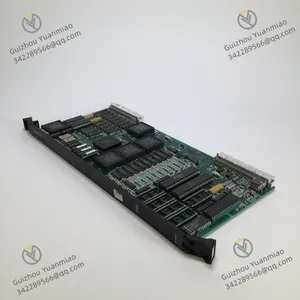
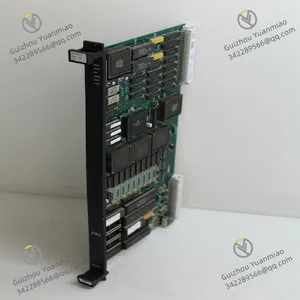
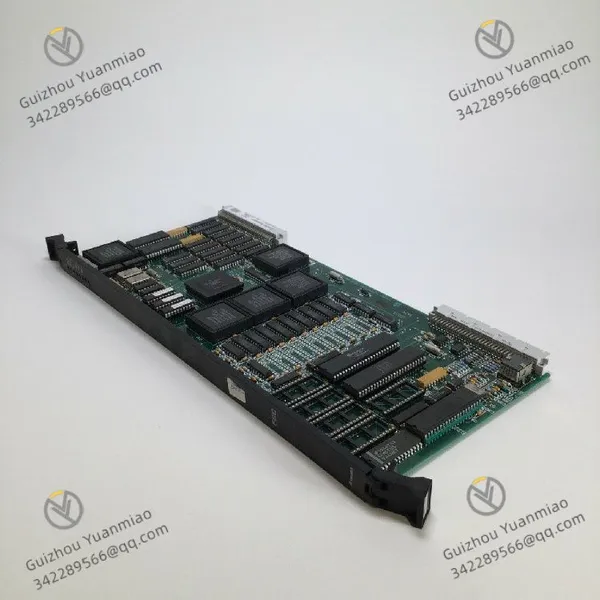
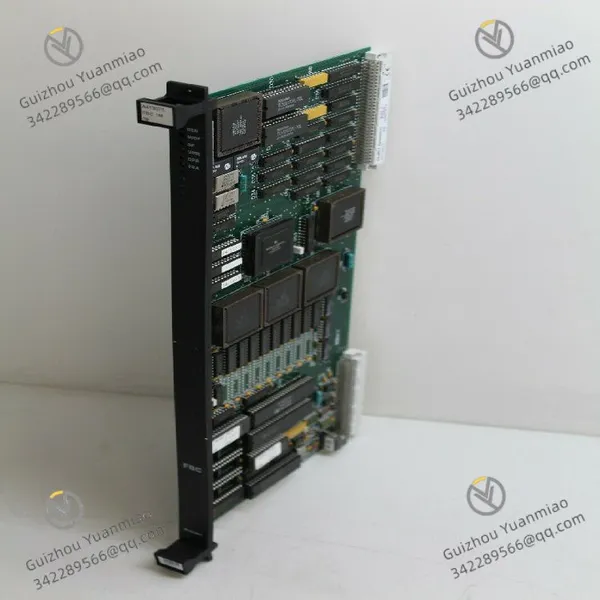
Metso A413075 is a universal industrial control module, whose core positioning is to provide an integrated solution of "signal acquisition - logic operation - execution control - status monitoring" for auxiliary mining equipment, standalone units in building materials production lines, auxiliary metallurgical processes, and other applications. As a basic component of Metso's automation systems (such as the Metso DNA lightweight control platform and Metso Outotec standalone control system), its essence lies in achieving accurate processing of on-site analog and digital signals, dynamic adjustment of equipment operating parameters, and rapid response to fault conditions through a cost-effective hardware architecture and simplified control algorithms. It is particularly suitable for industrial environments with medium-low load, moderate vibration, and conventional dust levels (such as mining feeders, cement packers, and metallurgical cooling water pumps).
It adopts a compact, fanless design, compatible with two core types of signal input/output (analog and digital), and supports seamless connection with Metso's dedicated sensors (such as small temperature transmitters and pressure switches) and third-party general industrial equipment (such as ordinary frequency converters and solenoid valves). Its integrated basic fault self-diagnosis function and standardized communication interface can reduce the risk of unplanned equipment downtime; when used with Metso's simplified configuration software, it can realize customized logic control and parameter monitoring, forming a basic control closed loop covering "perception - control - diagnosis". Whether it is load control of mining feeders, metering adjustment of cement packers, or start-stop interlocking of metallurgical cooling water pumps, the A413075 can meet control needs with high cost-effectiveness, making it an ideal choice for small and medium-sized industrial scenarios to achieve automation upgrades.

II. Technical Parameters
(I) Signal Input/Output Parameters
Input Channel Configuration
Analog Input (AI): 4 independent analog input channels, compatible with standard industrial signals of 4-20mA DC and 0-10V DC. The input impedance is ≥10MΩ (for voltage signals) and 250Ω (for current signals). It can be directly connected to instruments such as small pressure sensors, temperature transmitters (e.g., transmitters matching PT100), and level gauges, with a measurement accuracy of ±0.2% FS, meeting the signal acquisition accuracy requirements of small and medium-sized equipment (e.g., feeder load error ≤1%).
Digital Input (DI): 8 isolated digital input channels, supporting 24V DC signals, with an input response time of ≤2ms. It is suitable for status signals from proximity switches (e.g., inductive proximity switches), limit switches, and emergency stop buttons. The anti-interference voltage is ≥250V AC (for 1 minute), preventing false triggers caused by electromagnetic interference (such as the start-stop of small motors) in conventional industrial environments.
Output Channel Configuration
Analog Output (AO): 2 analog output channels, supporting optional 4-20mA DC or 0-10V DC signals. The output accuracy is ±0.3% FS, with a load capacity of ≤500Ω (for current output) and ≥1kΩ (for voltage output). It can directly drive small control valves, ordinary frequency converters (e.g., frequency converters below 0.75kW), and servo motor drives to achieve continuous adjustment control (e.g., stepless adjustment of valve opening from 0-100%).
Digital Output (DO): 4 relay output channels, each with a rated load current of 5A@250V AC / 10A@30V DC, supporting configurable normally open/normally closed contacts. They meet the on-off control needs of equipment such as contactors (e.g., small motor contactors), indicator lights, and solenoid valves, with a mechanical life of ≥8 million cycles and an electrical life of ≥80,000 cycles (under rated load).
(II) Electrical and Performance Parameters
Power Supply and Power Consumption
Supply Voltage: 24V DC (with ±15% fluctuation tolerance), compatible with commonly used industrial DC power modules (e.g., 24V/5A switching power supplies), eliminating the need for dedicated power supply equipment and adapting to the power supply scenarios of small and medium-sized equipment.
Standby Power Consumption: ≤3W; Power consumption under full load: ≤8W. The low-power design reduces the overall energy consumption of the system and is suitable for auxiliary equipment without independent power supply circuits (e.g., small underground mining feeders).
Processing Performance
Control Cycle: The minimum control cycle is 20ms, supporting multi-task parallel processing. It can run 4 independent control loops simultaneously (such as basic PID adjustment and simple logic interlocking), meeting the real-time control needs of small and medium-sized processes (e.g., dual-parameter control of cooling water pump pressure and flow).
PID Function: Built-in simplified PID control algorithm, supporting online adjustment of proportional (P) and integral (I) parameters (derivative D is optional). It has automatic/manual bumpless switching and anti-integral windup functions, suitable for closed-loop control of continuous process parameters such as temperature and pressure, with a control steady-state error of ≤±1% FS.
(III) Environmental and Compatibility Parameters
Environmental Adaptability
Operating Temperature: -10℃~+55℃, humidity 10%~90% RH (no condensation). It can operate stably in conventional industrial environments such as above-ground auxiliary mining workshops, packaging workshops in building materials factories, and cooling stations in metallurgical plants without additional temperature control devices.
Protection Level: IP20 (module itself); when used with Metso's simple dustproof enclosure, it can be upgraded to IP40, effectively isolating a small amount of dust (e.g., cement packaging dust) and adapting to industrial scenarios with medium-low dust levels.
Anti-interference and Anti-vibration: Complies with IEC 61000-4-2 (ESD ±12kV air discharge) and IEC 61000-4-3 (radiated immunity 8V/m) standards. It can withstand mechanical vibration of 10-500Hz (acceleration 1.5g), ensuring stable signals in the vibration environment of small and medium-sized equipment (e.g., feeders, packers).
System Compatibility
Controller Adaptability: Natively compatible with Metso DNA lightweight DCS and Metso Outotec standalone controllers. It communicates with the upper computer through an RS485 communication interface (Modbus RTU protocol), supporting remote parameter configuration (e.g., PID parameter modification) and status monitoring (e.g., channel data reading).
Expansion Capability: Supports multi-module cascading (up to 8 units), realizing input/output channel expansion through bus expansion. It adapts to the centralized management needs of small and medium-sized production lines (e.g., linkage of 2-3 feeders) and reduces spare parts and integration costs.
III. Functional Features
(I) Cost-Effective Design for Small and Medium-Sized Scenarios
Balances performance and cost to meet the control needs of small and medium-sized equipment:
Hardware Simplification and Optimization: Reduces the number of channels (4AI/8DI/2AO/4DO), focuses on core control needs, and avoids cost waste caused by redundant functions. The module procurement cost is 30%~40% lower than that of Metso's high-end modules, adapting to the budget of small and medium-sized enterprises.
Universal Interfaces: The analog and digital interfaces are designed in accordance with industrial standards, allowing connection to third-party general instruments (e.g., domestic temperature transmitters, ordinary proximity switches) without dedicated adapters, reducing accessory procurement costs.
Lightweight Installation: Adopts 35mm standard DIN rail mounting, with a module size of only 120mm×80mm×60mm (length×width×height). It can be embedded in small control cabinets (e.g., 300mm×200mm×150mm control cabinets), saving installation space.
For example, in the control of small cement packers, the module collects packaging weight and conveyor belt speed signals through 4 AI channels, drives the packaging valve and conveyor belt frequency converter through 2 AO channels, and controls the feeding solenoid valve and alarm light through 4 DO channels, achieving the control requirement of packaging metering accuracy of ±0.5kg at low cost.
(II) Basic Control and Interlocking for Small and Medium-Sized Processes
Built-in basic control logic and interlocking functions to cover core control scenarios of small and medium-sized equipment:
Simplified PID Adjustment: For single-parameter control scenarios such as temperature and pressure, it provides a one-click PID parameter auto-tuning function, eliminating the need for professional debugging (e.g., for cooling water pump pressure control, the module automatically matches P/I parameters after setting the target pressure), with a control steady-state error of ≤±1% FS.
Simple Logic Interlocking: Supports configuration of basic interlocking logic such as "DI1 (limit trigger) → DO1 (shutdown)" and "AI1 (temperature overrun) → AO1 (valve adjustment) + DO2 (alarm)" through configuration software, with a response time of ≤20ms, meeting equipment safety protection needs.
Manual Emergency Control: The module panel is equipped with a manual adjustment knob, which can directly adjust the AO output value (e.g., valve opening). When communication with the upper computer is interrupted, the manual knob can be used to maintain equipment operation, avoiding production interruption.
In the control of metallurgical cooling water pumps, the module collects water supply pressure (4-20mA) through AI. When the pressure is lower than the set value (e.g., 0.3MPa), it automatically increases the frequency of the water pump frequency converter through AO, and at the same time, interlocks DO to start the standby pump, ensuring stable cooling water supply.
(III) Simple Status Monitoring and Fault Diagnosis to Reduce O&M Difficulty
Provides intuitive status monitoring and fault diagnosis functions for the O&M capabilities of small and medium-sized enterprises:
Panel Status Indication: The module panel is equipped with 4 AI indicator lights (green), 8 DI indicator lights (yellow), 2 AO indicator lights (blue), 4 DO indicator lights (red), and 1 power indicator light (orange). The on/off/flashing of the indicator lights can be used to intuitively determine the channel status (e.g., flashing AI indicator light indicates signal overrange).
Basic Fault Diagnosis: Built-in basic fault detection functions such as power supply fault, channel open circuit, and communication interruption. After a fault is identified, it triggers an alarm through DO output (e.g., "E01: AI1 channel open circuit" triggers the DO4 alarm light) and uploads the fault code to the upper computer, facilitating rapid troubleshooting.
Tool-Free O&M: The module adopts a plug-in terminal design. When replacing the module, there is no need to disassemble the cables (the terminals can be pulled out directly), and the replacement time of a single module is ≤10 minutes, reducing the operation difficulty for O&M personnel.
(IV) Wide Environmental Adaptability and Third-Party Compatibility to Enhance Scenario Flexibility
Conventional Environmental Adaptability: With an operating temperature of -10℃~+55℃ and optional IP40 protection, it covers conventional industrial environments such as above-ground mining workshops, indoor equipment in building materials factories, and metallurgical auxiliary stations, without the need for additional protective measures.
Third-Party Equipment Compatibility: Supports connection to domestic sensors (e.g., temperature transmitters from Shanghai Automation Instrumentation Factory) and ordinary frequency converters (e.g., Delta VFD series) without modifying module parameters or adding signal conditioning modules, reducing system integration difficulty.
Low-Power Adaptability: With a full-load power consumption of ≤8W, it can be connected to the 24V DC power supply of the equipment itself (e.g., the power supply of the feeder control box), eliminating the need for separate power supply circuits and simplifying on-site wiring.
IV. Application Scenarios
(I) Mining Industry: Small Feeder Control System
In the control system of small above-ground feeders (e.g., vibrating feeders) in metal mines, the A413075 plays a core control role:
Signal Acquisition: 4 AI channels are respectively connected to the vibrating motor current (4-20mA), silo level (4-20mA), feeding amount (4-20mA), and ambient temperature (4-20mA) of the feeder; 8 DI channels are connected to the silo low-level switch, feeder limit switch, emergency stop button, and motor overload protection signal.
Control Logic: Through configuration software, PID control logic such as "silo level > 80% (AI2) → feeder acceleration (AO1)" and "motor current exceeding 110% of rated value (AI1) → feeder deceleration (AO1)" is configured to ensure stable feeding amount (error ≤1t/h).
Interlocking Protection: When DI detects an emergency stop signal (DI8) or motor overload (DI4), the module immediately triggers DO1 to cut off the feeder power supply, DO2 to start the sound and light alarm, and uploads fault information to the mine auxiliary control system.
(II) Building Materials Industry: Cement Packer Control System
In the control system of small packers (e.g., 50kg/bag quantitative packers) in cement production lines, the application value of the module is significant:
Signal Acquisition and Control: AI1 collects the signal of the packaging weight sensor (4-20mA corresponding to 0-100kg), and AI2 collects the conveyor belt speed signal (4-20mA corresponding to 0-1m/s); AO1 drives the packaging valve opening adjustment (controlling the loading speed), and AO2 drives the conveyor belt frequency converter (controlling the conveying speed); DO1 controls the feeding solenoid valve, DO2 controls the unloading solenoid valve after packaging is completed, and DO3 controls the alarm light.
Metering Control: When the packaging weight reaches 50kg (AI1 corresponding to 20mA), the module closes the feeding solenoid valve through DO1, opens the unloading solenoid valve through DO2, and at the same time, AO1 reduces the packaging valve opening to 0%, realizing quantitative packaging with a metering accuracy of ±0.5kg.
Fault Response: When DI detects conveyor belt jamming (DI3), it immediately closes the feeding valve through DO1, stops the conveyor belt frequency converter through AO2, and triggers an alarm through DO3 to avoid overload damage to the packer.
(III) Metallurgical Industry: Cooling Water Pump Control System
In the control system of small cooling water pumps (e.g., auxiliary cooling water pumps for rolling mills) in metallurgical plants, the A413075 realizes the following functions:
Pressure and Flow Control: AI1 collects the water supply pressure signal (4-20mA corresponding to 0-1MPa), and AI2 collects the return water flow signal (4-20mA corresponding to 0-50m³/h); AO1 drives the main water pump frequency converter (adjusting the water supply pressure), and AO2 is for standby (can drive a control valve); DO1 controls the start-stop of the main water pump, DO2 controls the start-stop of the standby pump, and DO3 controls the pressure alarm light.
PID Adjustment: Set the target water supply pressure to 0.5MPa. The module dynamically adjusts the frequency of the main water pump frequency converter through AO1. When the pressure is lower than 0.4MPa, it automatically increases the frequency; when the pressure is higher than 0.6MPa, it decreases the frequency, controlling the pressure fluctuation within ±0.02MPa.
Standby Interlocking: When the main water pump has been running for more than 8 hours (through the internal timing function), the module automatically starts the standby pump through DO2 and stops the main water pump through DO1, realizing alternate operation of the pump group to extend the equipment service life; when AI1 detects that the pressure is continuously lower than 0.3MPa (for 30 seconds), it triggers an alarm through DO3 and starts the standby pump.
(IV) Chemical Industry: Auxiliary Control of Small Reactors
In the auxiliary control system of small reactors (e.g., 500L laboratory-grade reactors) in fine chemical industry, the core role of this module is reflected in:
Auxiliary Temperature Control: AI1 collects the water temperature signal of the reactor jacket (4-20mA corresponding to 0-100℃), and AO1 drives the water temperature control valve (controlling the inlet water temperature of the jacket); DO1 controls the start-stop of the heating rod, and DO2 controls the start-stop of the cooling fan.
Basic Interlocking: When the water temperature exceeds the set value (e.g., 80℃), the module reduces the opening of the heating water valve through AO1 and starts the cooling fan through DO2; when the water temperature is lower than the set value (e.g., 60℃), AO1 increases the opening of the heating water valve and DO1 starts the heating rod, maintaining the water temperature fluctuation within ±2℃.
Safety Protection: When DI detects that the reactor door is not tightly closed (DI1), it prohibits the start of the DO1 heating rod and triggers an alarm through DO3 (extended) to avoid safety hazards.









 Contact Platform Support
 Help Center