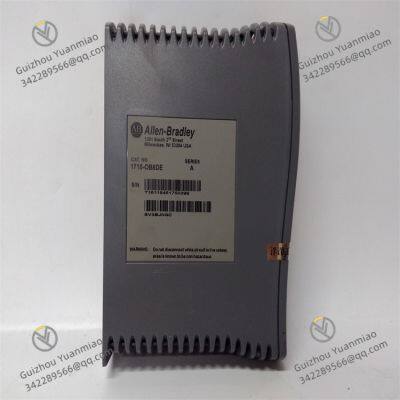
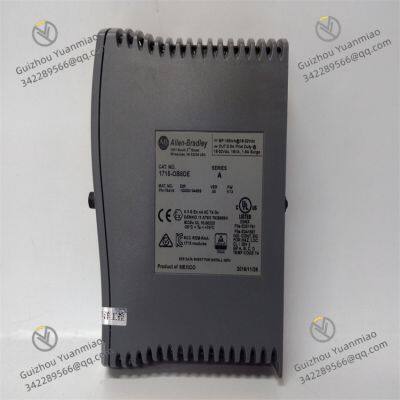
Material
Other, Global universal model
Condition
Other, Global universal model
Task
Other, Global universal model
Mathematical Model
Other, Global universal model
Signal
Other, Global universal model
Customized
Non-Customized
Structure
Other, Global universal model
Operating temperature
0°C - 60°C
Humidity
5% - 95% (non - condensing)
Power Input
24V DC
I. Overview
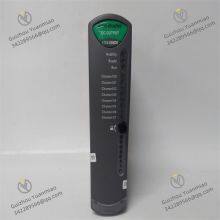
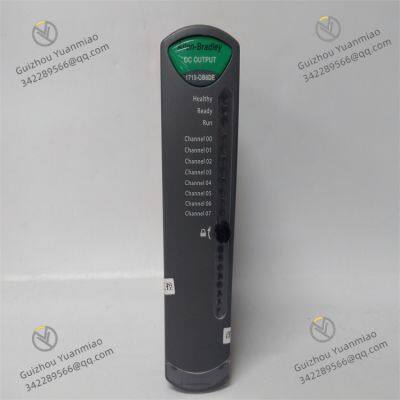
1715-OB8DE is a high-performance digital output module that undertakes the important responsibility of converting control signals into actual execution actions in industrial automation control systems. It is mainly used in conjunction with control devices such as Programmable Logic Controllers (PLCs). It receives command signals from control devices and converts them into switching signals that can drive external executive components (such as relays, solenoid valves, indicator lights, etc.), thereby achieving precise control of various equipment in industrial production processes.
This module has excellent compatibility and can be seamlessly integrated with various control systems such as Rockwell Automation's Logix series, easily integrating into industrial automation networks of different scales. With its compact design, stable performance, and reliable signal output capability, 1715-OB8DE can work stably in complex industrial environments and is widely used in many industrial fields such as automobile manufacturing, food processing, mechanical processing, and warehousing logistics, providing strong support for the automated and intelligent operation of industrial production.

II. Technical Parameters
Power Parameters
Input Voltage: It is usually powered by a 24V DC power supply. This voltage level complies with the general DC power supply standards in the industrial field and can match the power supply systems of most industrial control equipment. The input voltage allows a certain range of fluctuations (refer to the product manual for specific fluctuation ranges) to adapt to possible unstable power supply voltages in industrial sites.
Power Consumption: Under normal working conditions, the power consumption is low (specific values are subject to the product manual), which will not impose too much burden on the power supply of the entire control system, contributing to energy conservation and reducing system heat generation.
Output Parameters
Number of Output Channels: It has 8 independent digital output channels. Each channel can independently control external executive components, meeting the need to control multiple devices simultaneously and improving control flexibility and efficiency.
Output Type: It is a digital output, and the output signal is a switching quantity, that is, there are only two states: on and off. It can be used to control actions such as starting and stopping, connecting and disconnecting of external executive components.
Output Voltage: The output voltage matches the power supply voltage, usually 24V DC, which can provide a suitable working voltage for common industrial executive components.
Output Current: The rated output current of each output channel is relatively large (specific values are subject to the product manual), which is sufficient to drive various industrial executive components such as relay coils and small solenoid valves, ensuring reliable operation of the executive components.
Switching Capacity: It has strong switching capacity, and the switching frequency can meet the needs of most industrial control occasions. It can quickly respond to control commands and achieve rapid switching control of executive components.
Response Time: The response time from receiving a control command to changing the output state is extremely short (generally at the millisecond level, refer to the product manual for specific values). It can quickly and timely execute control commands, ensuring the real-time and accuracy of the industrial control process.
Isolation Characteristics: Electrical isolation design is adopted between each output channel and between channels and the power supply (refer to the product manual for specific isolation methods and isolation voltages). This isolation design can effectively suppress electromagnetic interference, prevent external voltage fluctuations or faults from affecting the module and the entire control system, and improve the working stability and anti-interference ability of the module.
Environmental Adaptability
Operating Temperature: It can work stably within a wide temperature range, usually 0°C - 60°C (refer to the product manual for specific ranges), and can adapt to high or low temperature environments that may occur in industrial production sites.
Relative Humidity: It can operate normally in an environment with a relative humidity of 5% - 95% (non-condensing), suitable for humid industrial workshops and other environments, and will not affect the module's performance due to humidity issues.
Protection Level: It generally has a high protection level (such as IP20 and above, specific values are subject to the product manual), which can prevent dust, water vapor, and other impurities from invading the inside of the module, ensuring reliable operation of the module in industrial sites.

III. Functional Features
Reliable Digital Output: 1715-OB8DE can stably and accurately output digital switching signals, ensuring reliable operation of external executive components. Whether it is controlling the closing and opening of relays or the opening and closing of solenoid valves, it can accurately respond to control commands, ensuring the orderly progress of each link in the industrial production process and reducing equipment failures or production abnormalities caused by unstable output signals.
Multi-Channel Independent Control: It has 8 independent output channels, and each channel can control different external executive components respectively. The working status of each channel does not affect each other. This feature of multi-channel independent control enables the module to control multiple devices simultaneously, improving the integration and control efficiency of the control system, and is suitable for industrial scenarios that require controlling multiple devices at the same time.
Strong Anti-Interference Ability: It adopts advanced anti-interference technology and isolation design, which can effectively resist the impact of adverse factors such as electromagnetic interference and voltage fluctuations in industrial sites. Even in complex electromagnetic environments, the module can maintain a stable working state and accurate signal output, ensuring the normal operation of the control system and improving the reliability and stability of the system.
Compact Structural Design: The module adopts a compact design, occupying a small space, which is convenient for installation and layout in the control cabinet. In industrial automation systems, there are many devices in the control cabinet. The compact structural design helps save installation space, improve the utilization rate of space in the control cabinet, and facilitate system integration and maintenance.
Convenient Installation and Maintenance: It is designed with standardized installation interfaces and connection terminals, making the installation process simple and fast, and can be quickly connected with other control devices and external executive components. At the same time, the status indicators of the module can intuitively display the working status of each channel (such as normal output, fault, etc.), which is convenient for operators to quickly judge the working conditions of the module and related equipment. When a fault occurs, it can quickly locate the problem, shorten the fault troubleshooting and maintenance time, and reduce maintenance costs.
Good System Compatibility: It has good compatibility with various control systems of Rockwell Automation, can be easily integrated into industrial automation networks, and realizes seamless communication and data interaction with control devices such as PLCs. This good compatibility makes the module highly flexible during system upgrades, expansions, or transformations, facilitating users to build or optimize industrial automation control systems according to actual needs.

IV. Common Faults and Solutions
No Response to Output Signal
Phenomenon: After the module receives a control command, the corresponding output channel has no output signal, and the external executive component does not act, resulting in the equipment being unable to work normally.
Causes and Solutions
Wiring Fault: Loose, broken, or poor contact in the wiring between the output channel and the external executive component will prevent the output signal from being transmitted to the executive component. Check the wiring terminals, re-tighten the wiring to ensure reliable connection; if a broken wire is found, replace the wire and reconnect.
Power Supply Problem: Faults in the module's power supply, such as low voltage, no voltage, or excessive power supply fluctuations, will cause the module to fail to work normally and have no output signal. Check the module's power supply to ensure the voltage is within the specified range and stable; if the power supply is faulty, repair or replace the power supply equipment.
Damaged Output Channel: Damage to the electronic components of the internal output channel of the module will cause the channel to be unable to output signals. Test by replacing with a spare channel. If the spare channel is normal, it indicates that the original channel is damaged, and professional maintenance personnel should be contacted for repair or module replacement.
Unstable Output Signal
No Response from the Entire Module
Phenomenon: After the module is powered on, the status indicator does not light up, and all output channels have no output, so the module cannot work normally.
Causes and Solutions
Power Not Connected: Incorrect power wiring of the module, unopened power switch, or fault in the power line causes the module to be not powered on. Check if the power wiring is correct, ensure the power switch is in the on state; troubleshoot the power line, repair line faults, and ensure normal power supply to the module.
Module Damage: Damage to key components such as the internal main control circuit and power circuit of the module will cause the entire module to have no response. In this case, professional maintenance personnel should be contacted to test the module, and if it is confirmed to be damaged, replace it with a new module.
Malfunction of External Executive Components