Home > Electrical & Electronics > Electrical Control System > Allen-Bradley 1336-BDB-SP46D Pcb Circuit Board

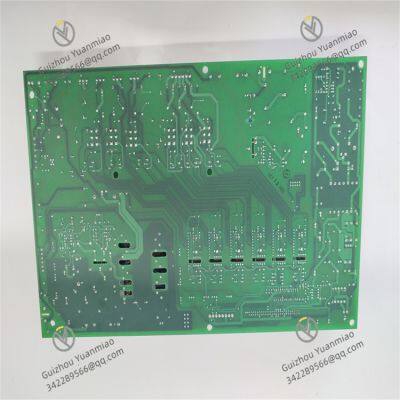
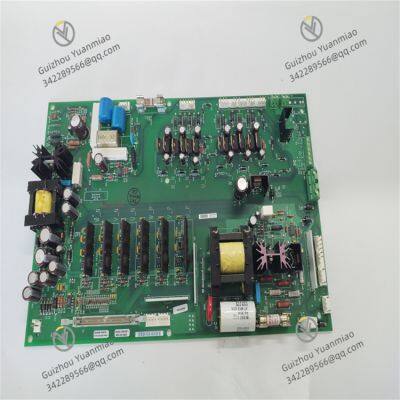
Allen-Bradley 1336-BDB-SP46D Pcb Circuit Board
Allen-Bradley 1336-BDB-SP46D Pcb Circuit Board photo-1
Allen-Bradley 1336-BDB-SP46D Pcb Circuit Board photo-2
Negotiable MOQ: 1 Unit (Price negotiable depending on order volume and customization)
Key Specifications
Get Latest Price
Material:
Other, Global universal model
Condition:
Other, Global universal model
Task:
Other, Global universal model
Payment & Shipping
Payment Methods:
Port of Shipment:
China
Delivery Detail:
Delivery time depends on order quantity.
Material Other, Global universal model
Condition Other, Global universal model
Task Other, Global universal model
Mathematical Model Other, Global universal model
Signal Other, Global universal model
Customized Non-Customized
Structure Other, Global universal model
Operating temperature 0°C - 50°C
Humidity 5% - 95% (non - condensing)
Power Input 24V DC

I. Overview


1336-BDB-SP46D is a DC bus supply module in Rockwell Automation's 1336 series. Its main function is to provide a stable DC bus voltage for frequency converters of the same series, realize energy sharing and balancing among multiple frequency converters, and play an important role in centralized power supply and optimized energy utilization in industrial drive systems.


This module is highly compatible with 1336 series frequency converters (such as models like 1336F-B010-AN-EN) and can be seamlessly integrated into multi-motor drive systems. By rectifying AC power into a stable DC voltage and supplying it to the DC bus, it provides a common DC power source for multiple frequency converters. This not only simplifies the power supply architecture of the system but also enables energy recovery during motor braking, which is then fed back to the bus, achieving efficient energy utilization. With its stable output performance, efficient energy conversion, and good system synergy, 1336-BDB-SP46D is widely used in industrial scenarios requiring multi-motor collaborative work, such as lifting equipment, conveyor systems, and machine tool production lines.


1336-BDB-SP46D (2)


II. Technical Parameters


Input voltage and frequency: Supports AC input. The rated input voltage is usually 380V - 480V AC (three-phase), and the input frequency range is 50Hz - 60Hz (specific parameters are subject to the product manual). It is suitable for industrial universal three-phase AC power systems.
DC output parameters:


  • The rated DC output voltage is usually 540V DC - 650V DC (the specific value depends on the input voltage and rectification method, subject to the product manual), which can provide a stable DC bus voltage for multiple frequency converters.

  • The rated output current can reach 46A (the "46" in the model "SP46D" represents parameters related to the rated current), which can meet the power supply needs of medium-power multi-motor drive systems.
    Power level: The rated power is usually related to the output current and voltage, and can reach several tens of kilowatts according to calculations (specific values are subject to the product manual), which can provide sufficient DC power for multiple small and medium-sized frequency converters.
    Rectification method: Adopts a three-phase bridge rectifier circuit to convert AC input to DC output. It has high rectification efficiency and small ripple in the output DC voltage, ensuring the stable operation of subsequent frequency converters.
    Protection functions:

  • Overcurrent protection: When the output current exceeds a certain range of the rated value, the module will automatically limit the output or cut off the power supply to prevent damage to the module and connected frequency converters due to overload.

  • Overvoltage protection: If the DC bus voltage abnormally rises beyond the set threshold (such as excessive voltage caused by braking energy feedback), the module will trigger a protection mechanism to avoid damage to frequency converters and other equipment caused by high voltage.

  • Undervoltage protection: When the input AC voltage is too low or internal module faults cause the output voltage to be lower than the specified value, protection is activated to prevent damage to the frequency converter due to operation under low voltage.

  • Overheating protection: The module is equipped with a temperature monitoring component. When the temperature exceeds the allowable range, it will automatically reduce the output power or stop working to protect the internal components of the module.
    Environmental adaptability:

  • Operating temperature: Can work normally within the temperature range of 0°C - 50°C (specific parameters are subject to the product manual), adapting to common temperature environments in industrial sites.

  • Relative humidity: Can operate stably in an environment with a relative humidity of 5% - 95% (non-condensing), suitable for humid production workshops and other occasions.

  • Protection level: Usually IP20 (for indoor installation, direct contact with dust and liquids should be avoided). It needs to be used with a control cabinet during installation to improve the protection effect.


III. Functional Characteristics


Stable DC bus output: 1336-BDB-SP46D can provide a stable DC voltage for the DC bus through an efficient rectifier circuit and voltage stabilization design, reducing the impact of voltage fluctuations on frequency converters. It ensures that multiple frequency converters work coordinately under a unified DC power supply, improving the stability of the entire drive system.
Energy recovery and sharing: In multi-motor drive systems, when some motors are in the braking state, the generated regenerative energy can be fed back through the DC bus and utilized by other motors in the electric state, realizing energy recovery and sharing, reducing the overall energy consumption of the system, and improving energy utilization efficiency.
Simplified system power supply architecture: As a public DC power supply module, it can replace the respective rectifier units of multiple frequency converters, reducing the number of rectification equipment, simplifying the wiring and layout of the system, and lowering the complexity of equipment installation and maintenance.
Comprehensive protection mechanism: Multiple protection functions (overcurrent, overvoltage, undervoltage, overheating, etc.) can respond quickly when the system is abnormal, protecting the module itself and connected frequency converters from damage, reducing system failure risks, and improving the service life of the equipment.
Convenient integration and monitoring: The module is designed with standardized installation interfaces, allowing for easy installation in the control cabinet. It can be put into use by connecting to 1336 series frequency converters through the DC bus. At the same time, some models are equipped with status indicators that can display the operating status of the module (such as normal operation, fault, etc.), facilitating operators to intuitively understand the working condition of the module and quickly troubleshoot faults.
Adaptability to multi-motor collaborative scenarios: The output current and power are designed to be suitable for multiple small and medium-sized frequency converters to work simultaneously, meeting the power supply needs of multi-motor collaborative operation, such as the synchronous or asynchronous operation control of multiple conveyor motors in production lines and multiple axis drive motors in machine tools.


1336-BDB-SP46D (1)


IV. Common Faults and Solutions


Abnormal output voltage (too high or too low)
Phenomenon: The DC bus output voltage is outside the normal range (too high or too low), causing the connected frequency converters to fail to work normally. Alarms may occur (such as overvoltage alarm, undervoltage alarm), and the module status indicator shows a fault.
Causes and solutions:


  • Abnormal input power supply: The input AC voltage is too high, too low, or three-phase unbalanced, affecting the rectified DC output. Use a multimeter to measure the input three-phase voltage to ensure it is within the range of 380V - 480V AC and three-phase balanced; if the grid voltage is unstable, a voltage stabilizer can be installed to improve power quality.

  • Faulty rectifier circuit: Damage to the internal rectifier bridge (such as diodes, thyristors) of the module leads to reduced rectification efficiency or abnormal output voltage. Contact professional maintenance personnel to inspect the rectifier circuit and replace damaged components.

  • Faulty voltage detection circuit: A fault in the circuit inside the module used to monitor the output voltage causes abnormal voltage regulation. Professional personnel are required to repair or replace voltage detection-related components (such as sensors, operational amplifiers).


Frequent triggering of overcurrent protection
Phenomenon: The module frequently stops output or limits current due to overcurrent protection, causing interruption or instability in the power supply to the frequency converter and affecting equipment operation.
Causes and solutions:


  • Overload: The total power of the connected frequency converters exceeds the rated output power of 1336-BDB-SP46D, resulting in excessive output current. Calculate the total system load, reduce the number of frequency converters, or replace with a higher-power DC bus supply module to ensure the load is within the rated range.

  • Faulty frequency converter: Short circuit or fault inside one or more frequency converters causes excessive current to be drawn from the DC bus. Disconnect the frequency converters one by one to detect which equipment is faulty, and repair or replace the faulty frequency converter.

  • Unreasonable setting of overcurrent protection parameters: The protection threshold is set too low, leading to false triggering of protection under normal load. Refer to the product manual and reset the overcurrent protection parameters through a dedicated configuration tool to match the actual load (if parameter adjustment is supported).


Module overheating
Phenomenon: The surface temperature of the module is too high, exceeding the normal operating temperature range. The overheating protection is triggered, the module stops working, and there may be abnormal noises or odors.
Causes and solutions:


  • Poor ventilation: Poor ventilation around the module and poor heat dissipation conditions prevent heat from dissipating in time. Check whether the ventilation fan in the control cabinet is working normally, clean the dust on and around the module to ensure smooth air circulation; if necessary, add cooling fans or heat sinks.

  • High ambient temperature: The working ambient temperature exceeds the rated operating temperature of the module (0°C - 50°C). Take cooling measures (such as installing air conditioners, improving control cabinet ventilation) to control the ambient temperature within the specified range.

  • Faulty internal heat dissipation components: The internal cooling fan (if any) of the module is damaged or the heat sink is excessively dusty, affecting heat dissipation. Replace the damaged cooling fan and clean the dust and debris on the heat sink to restore heat dissipation capacity.


Failure to start or no output
Phenomenon: After the module is connected to the input power supply, it cannot start, there is no output voltage on the DC bus, the connected frequency converters cannot work, and the status indicator is not on or shows a fault.
Causes and solutions:


  • Power supply connection failure: Loose wiring, disconnection, or blown fuse of the input power supply causes the module to be unpowered. Check the input line connections to ensure they are secure; replace the blown fuse to ensure normal power supply.

  • Faulty start-up circuit: Damage to the internal start-up circuit of the module (such as relays, contactors) prevents the normal start of the rectification process. Contact professional maintenance personnel to inspect the start-up circuit and replace damaged components.

  • Severe internal module failure: Severe faults such as damage to the main control board or breakdown of power devices cause the module to fail completely. It is necessary to contact the manufacturer or professional maintenance organizations for inspection and replace the module if necessary.

Product Tags: 1336-BDB-SP46D , 1336-BDB-SP9D

Send Inquiry to This Supplier

Message
0/5000

Want the best price? Post an RFQ now!
Gold Verified Supplier
1Yr
Verified Business License
Business Type
Trading Company
Year Established
2014
Factory Size
1,000-3,000 square meters
Product Certifications
SA8000