Material
Other, Global universal model
Condition
Other, Global universal model
Task
Other, Global universal model
Mathematical Model
Other, Global universal model
Signal
Other, Global universal model
Customized
Non-Customized
Structure
Other, Global universal model
Operating temperature
-20℃ to 70℃
Humidity
0% - 95% (non-condensing)
I. Overview
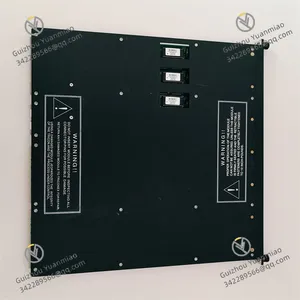
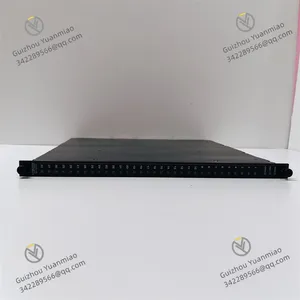
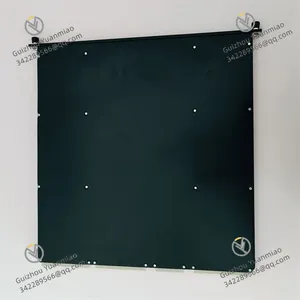
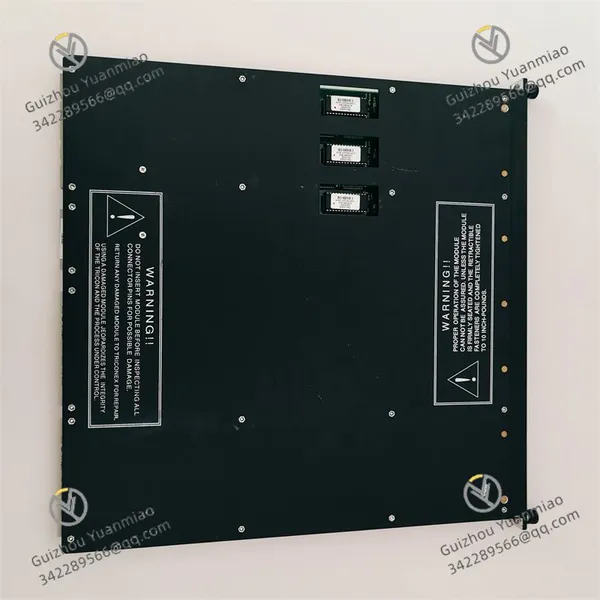
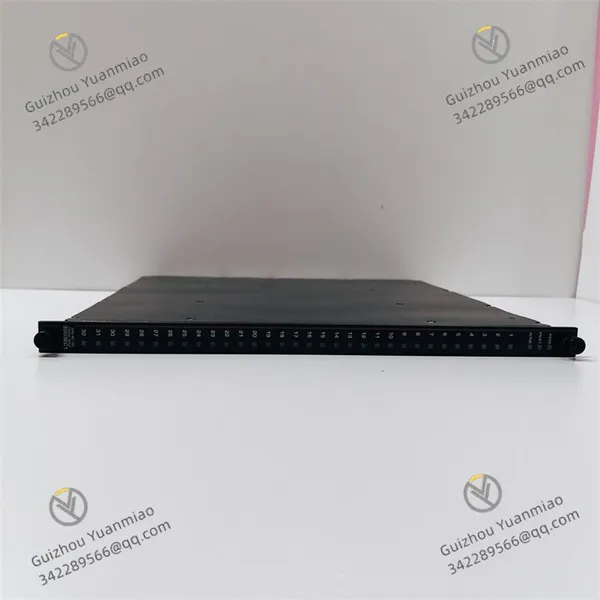
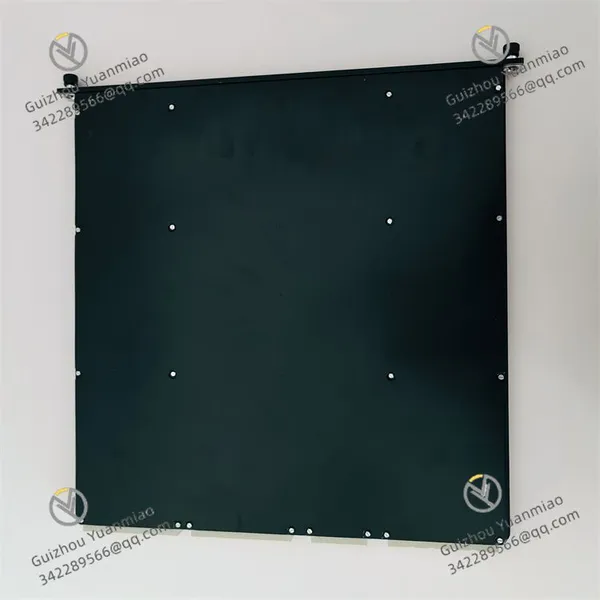
TRICONEX 3503EC1 is a Safety Instrumented System (SIS) controller that plays a crucial role in critical process applications within the industrial sector. It is dedicated to preventing accidents and fully ensuring personnel safety, environmental protection, and the normal operation of equipment. Leveraging Triconex's profound technical accumulation and rich experience in the industrial control field, the 3503EC1 is meticulously crafted to meet the demands of complex and harsh industrial environments. Whether in the oil and gas extraction, chemical production, or power energy industries, this controller can ensure the safe and stable operation of production processes with its excellent performance, effectively reducing potential risks and enhancing the overall operational efficiency and safety of enterprises.

II. Technical Parameters
(1) Electrical Parameters
Input Voltage: The operating voltage range is 12-48VDC, which can adapt to a variety of different power supply environments. Whether in conventional industrial sites with relatively stable voltage or special areas with certain fluctuations in supply voltage, it can ensure stable operation and reduce the risk of equipment failure caused by voltage issues.
Signal Range and Accuracy: The signal range of the analog input channel can reach -20mA to +20mA, with an accuracy of up to ±0.05% of full scale. When collecting various sensor signals, it can convert actual physical quantities into electrical signals with extremely high precision for processing, providing a reliable data foundation for the control system. It is particularly suitable for industrial processes with strict requirements on measurement accuracy, such as the monitoring of parameters like flow rate and pressure in chemical reaction processes.
Resolution and Frequency Response: It adopts a 16-bit resolution analog-to-digital converter, which can realize fine processing of signals and retain more detailed information when converting analog signals to digital signals. The maximum frequency response can reach 1kHz, enabling it to quickly capture signal changes with strong real-time performance. For industrial process control scenarios with frequent dynamic changes, such as the monitoring of equipment operating status on rapidly changing production lines, it can respond and process in a timely manner.
(2) Physical Specification Parameters
Dimension and Structure: The overall structure is designed to be compact, and the external dimensions are carefully planned to facilitate flexible installation in various control cabinets or inside equipment. Its compact design style is particularly suitable for industrial equipment with limited space layout, enabling it to fully exert its powerful functions in a limited space, effectively improving equipment integration, providing convenience for users in system construction and equipment upgrading, and making the equipment layout more reasonable and efficient.
Material and Craftsmanship: The shell is made of high-quality, sturdy and durable materials, with excellent mechanical strength and impact resistance. It can effectively resist physical damages such as collisions and vibrations that may occur in industrial sites, ensuring the structural integrity of the product in harsh environments. At the same time, this material also has excellent insulation performance, which can effectively prevent the risk of electric leakage and ensure the stable operation of equipment and personnel safety from the physical level.
(3) Control Parameters
Control Mode: It adopts an advanced Triple Modular Redundancy (TMR) structure, with three identical and independent processing channels inside. Each channel can independently execute control programs. This unique architecture greatly improves the availability and reliability of the system. Even if one channel fails, the other two normal channels can continue to work, maintaining the stable operation of the system, effectively avoiding system shutdown caused by a single point of failure, and ensuring the continuity of industrial production processes.
Processor Performance: Equipped with a high-performance processor, it has strong data processing capabilities. It can quickly analyze and calculate various input signals, and generate accurate control commands according to preset control logic, realizing precise control of motors and other equipment, and meeting the strict requirements for motion control accuracy and response speed in different industrial application scenarios.
(4) Communication and Interface Parameters
Communication Interfaces: It supports multiple communication interfaces, including but not limited to Ethernet, RS-232, RS-485, etc. The Ethernet interface can realize high-speed data transmission with upper computers and monitoring systems, facilitating remote monitoring and management. The RS-232 and RS-485 interfaces play a role in scenarios with specific requirements for communication distance and cost. RS-232 is suitable for short-distance, low-speed data transmission with simple connection and low cost; RS-485 can realize relatively long-distance communication and has a certain anti-interference ability.
I/O Interfaces: It supports up to 118 I/O cards, with abundant input and output interface resources, which can meet the needs of signal collection and control in complex industrial control systems. Both digital input/output, such as signal access and control of limit switches and relays, and analog input/output, such as sensor signal collection and actuator control, can be realized by flexibly configuring I/O cards, providing strong support for system expandability. At the same time, the controller also supports remote racks, with a maximum distance of 12km, which provides greater flexibility for the layout of industrial sites. Equipment can be flexibly distributed according to actual production needs, reducing wiring costs and improving the overall planning of the system.
III. Functional Features
(1) High Reliability and Stability
High-quality Components and Advanced Manufacturing Processes: In terms of hardware design, Triconex selects high-quality electronic components that have undergone strict screening and testing. These components can work stably under complex working conditions, ensuring the reliability of the product from the source. At the same time, advanced manufacturing processes such as high-precision surface mount technology and multi-layer circuit board design are adopted, which greatly improve the electrical performance and anti-interference ability of the module, effectively reducing equipment failures caused by component quality or process defects, enabling it to operate stably in industrial sites for a long time, and reducing equipment maintenance frequency and costs. It can also maintain a stable working state in industrial production lines that run continuously for a long time.
Comprehensive Protection Mechanisms: It has built-in multiple protection functions to ensure the safe operation of the equipment. Including overcurrent protection, which quickly cuts off the circuit when the motor operating current exceeds the rated value to prevent damage to the motor and driver due to overcurrent; overvoltage protection, which can effectively deal with excessive input voltage to avoid damage to the equipment due to excessive voltage; short-circuit protection, which immediately takes protective measures once an output short-circuit fault is detected to prevent irreversible damage to the equipment caused by short-circuit current; overtemperature protection, which monitors the internal temperature of the driver in real time, and automatically reduces output power or shuts down for cooling when the temperature is too high, ensuring the equipment operates within the normal temperature range and extending the service life of the equipment.
(2) High Efficiency and Energy-saving Characteristics
It adopts advanced power conversion topology and efficient motor control algorithms, which greatly improve power conversion efficiency and reduce energy loss during conversion and transmission. While meeting the power consumption requirements of normal operation of the equipment, it reduces unnecessary energy waste, helps reduce energy costs in industrial production, and conforms to the current industrial development trend of green energy conservation. Compared with traditional controllers, it can significantly reduce energy consumption under the same working conditions. At the same time, it has an intelligent energy-saving function, which can automatically adjust the output power according to the actual load condition of the motor. When the equipment is under light load or no load, the driver automatically reduces the output voltage and current to reduce energy consumption; when the load increases, it can quickly respond to provide sufficient power support, ensuring the stability and efficiency of equipment operation, and achieving a perfect balance between energy conservation and performance. In automated production lines, equipment often has different load states, and this function can effectively save energy.
(3) Good Compatibility and Expandability
Equipment Compatibility: It has excellent compatibility and can seamlessly connect and work with various brands and models of industrial automation equipment. Whether it is common PLC brands such as Siemens and Mitsubishi, or various servo motors, sensors, actuators and other equipment, it can be stably connected to provide suitable control signals and power support for different equipment, facilitating users to upgrade equipment or expand the system on the basis of existing industrial systems, reducing system integration costs and difficulties, and improving the overall compatibility and maintainability of the system. When transforming and upgrading existing industrial production lines, it can be easily integrated into new equipment systems.
Functional Expandability: The modular design architecture endows the controller with strong expansion capabilities. Users can conveniently add additional functional modules according to actual project needs, such as redundant power modules to improve the power supply reliability of the system and prevent equipment shutdown due to power failure; communication expansion modules to increase the types of communication interfaces with other equipment or improve communication speed, meeting the needs of data interaction in different scenarios; motion control expansion modules to enrich the motion control functions of the driver, realize more complex motion trajectory planning and control, easily achieve customized expansion of functions, meet the needs of equipment function upgrading due to changes in industrial production scale and process improvement at different stages, and provide strong support for the continuous development of industrial automation systems.









 Contact Platform Support
 Help Center