Home > Electrical & Electronics > Electrical Control System > ALSTOM NRD108028 8RDB43655 SA43655.E Industrial Control Module

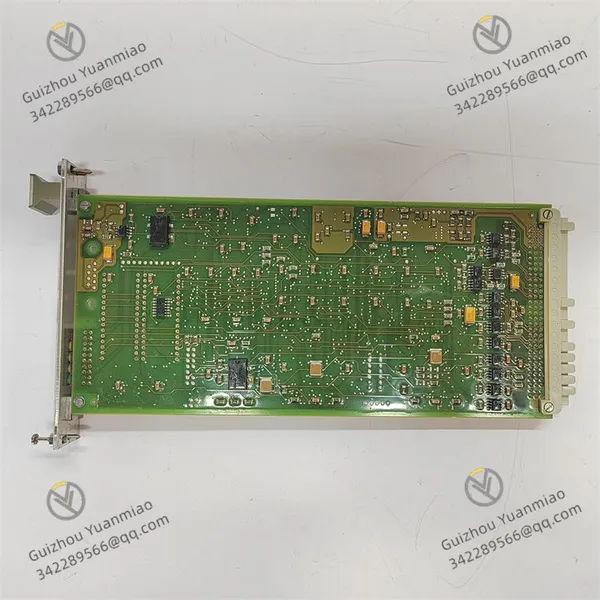
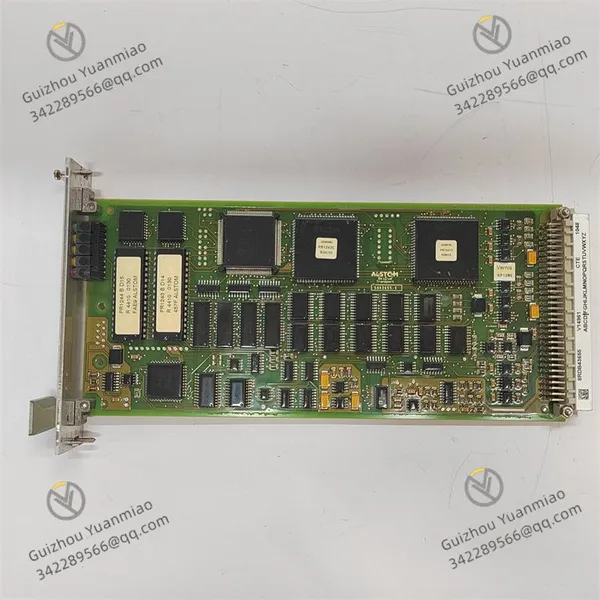
ALSTOM NRD108028 8RDB43655 SA43655.E Industrial Control Module
ALSTOM NRD108028 8RDB43655 SA43655.E Industrial Control Module photo-1
ALSTOM NRD108028 8RDB43655 SA43655.E Industrial Control Module photo-2
Negotiable MOQ: 1 Piece (Price negotiable depending on order volume and customization)
Key Specifications
Get Latest Price
Material:
Other, Global universal model
Condition:
Other, Global universal model
Task:
Other, Global universal model

Payment & Shipping
Payment Methods:
Port of Shipment:
China
Delivery Detail:
Delivery time depends on order quantity.
Material Other, Global universal model
Condition Other, Global universal model
Task Other, Global universal model
Mathematical Model Other, Global universal model
Signal Other, Global universal model
Customized Non-Customized
Structure Other, Global universal model
ALSTOM NRD108028 8RDB43655 SA43655.E
Functional Characteristics
  • Data Monitoring via Analog Inputs:Monitors external quantities through auxiliary current inputs of analog channels and displays scaled values of analog inputs. When voltage sensing is enabled, it calculates and shows active power, reactive power, apparent power, and power factor for all available windings, as well as watt-hours and reactive watt-hours of supply and load currents. It also displays the last date and time when energy data was cleared.
  • Communication Capabilities:As an industrial communication module, it supports Ethernet/IP and ControlNet networks with an Ethernet/IP interface, offering 10/100Mbit/s communication speed. Each adapter can establish up to 32 connections, featuring dual-port network backup, linear and ring (DLR) topology support, and built-in network fault diagnosis to ensure stable and reliable communication.
  • Electrical Parameters:Input voltage: 5.1V DC; power consumption: 800mA at 5.1V DC; operating temperature range: 0℃–60℃. Its compact and durable design adapts to industrial environments.
Application Fields
Mainly used in industrial automation scenarios requiring seamless communication between PLC and other devices via Ethernet/IP networks, widely applied in manufacturing and other industrial environments to ensure data exchange, management, and monitoring among different components of automation systems.
System Adaptation
As a highly modular distributed I/O and control product in the field control series, it is compatible with multiple host architectures and can be applied in distributed control systems such as INFI 90, Advant 0OCS with Master, and Symphony Melody.

NRD108028 8RDB43655 SA43655

Working Principle1. Data Acquisition and Processing
The module collects data from sensors, instruments, and other devices, accepting various input signals (analog, digital, discrete). After signal reception, it converts and processes them into a format recognizable by the module, providing a data foundation for subsequent logical control.
2. Logical Control and Operation
Equipped with logical control and computing capabilities, the module executes control operations based on preset logical conditions and algorithms. It performs logic operations (switching, comparison, calculation, etc.), analyzes and computes collected data, and outputs control signals according to established programs to realize automation functions like device start/stop and parameter adjustment.
3. Communication and Connection
Supporting multiple communication interfaces (Ethernet, serial port, bus interface, etc.), the module connects with upper computers, other controllers, and monitoring systems to enable data exchange and collaborative operation. For example, the Ethernet interface uploads device operation status to the monitoring system and receives control instructions from the upper computer.
4. Fault Detection and Diagnosis
The module features real-time system status monitoring through internal mechanisms (e.g., power voltage, module temperature, internal circuit status). Upon detecting faults, it sends alarms, records fault information, and provides diagnostic reports to help maintenance personnel locate and resolve issues quickly, ensuring system stability.

NRD108028 8RDB43655 SA43655

How to Perform Fault Detection and Diagnosis for ALSTOM NRD108028 Module?I. Preliminary Inspection and Status Confirmation
  1. Appearance and Physical Check
  • Inspect the module for visible damage (cracks, burn marks), deformation, or loose components.

  • Check if terminal blocks are fastened and cables are intact, securely connected (especially power and communication cables).

  • Verify firm installation of the module, rail, or bracket.

  • Power and Indicator Check
    • Use a multimeter to measure normal power input (e.g., DC 24V±10%), ensuring correct polarity.

    • Observe indicator status:

      • POWER light: Off → power failure (check fuse, power module);

      • RUN light: Constant on/non-flashing → module not started (possible program/hardware fault);

      • FAULT light: Constant on/flashing → fault triggered (refer to fault codes for analysis).

    II. Fault Code Reading and Analysis
    1. Reading Fault Codes via Indicators
    • Some modules use indicator flashing sequences (e.g., "3 flashes → communication timeout") to represent fault codes, requiring manual verification.

  • Reading Detailed Information via Communication Interfaces
    • Connect to the module via Ethernet/serial port using dedicated software (e.g., ALSTOM TriStation) to read real-time fault logs and diagnostic data.

    • Common fault code examples:

      • E01: Communication link interruption (check network cable, switch, IP settings);

      • E02: I/O module failure (check I/O terminal wiring or replace module);

      • E03: Memory error (may require reset or firmware update).

    III. Functional Testing and Signal Verification
    1. I/O Signal Testing
    • Input test: Apply signals to digital input terminals (e.g., short circuit) and observe changes in corresponding points in the software; connect standard signals (e.g., 10mA) to analog inputs to verify reading accuracy (error ≤±0.5%).

    • Output test: Force output points via software and use a multimeter/indicator to verify voltage/current output at terminals.

  • Communication Function Testing
    • Test network connectivity using ping commands (e.g., ping IP address).

    • Use tools like Modbus Poll to test communication protocols (e.g., read register values).

  • Activating Self-Diagnosis
    • Some modules support built-in self-diagnosis programs triggered via software/hardware buttons to automatically detect internal circuits and functions.

    Product Tags: NRD108028 , SA43655.E , 8RDB43655

    Send Inquiry to This Supplier

    * Message
    0/5000

    Want the best price? Post an RFQ now!
    Verified Business License
    Business Type
    Trading Company
    Year Established
    2014
    Factory Size
    1,000-3,000 square meters
    Product Certifications
    SA8000