








 Contact Platform Support
 Help Center
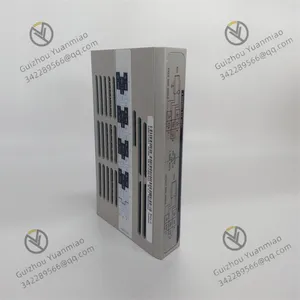
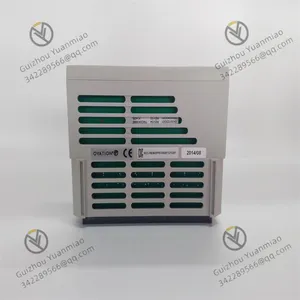
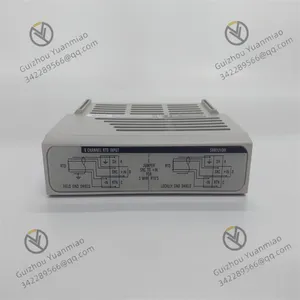
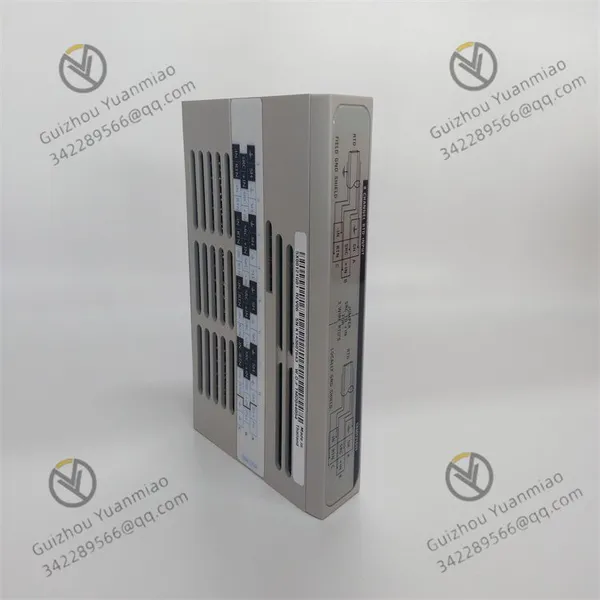
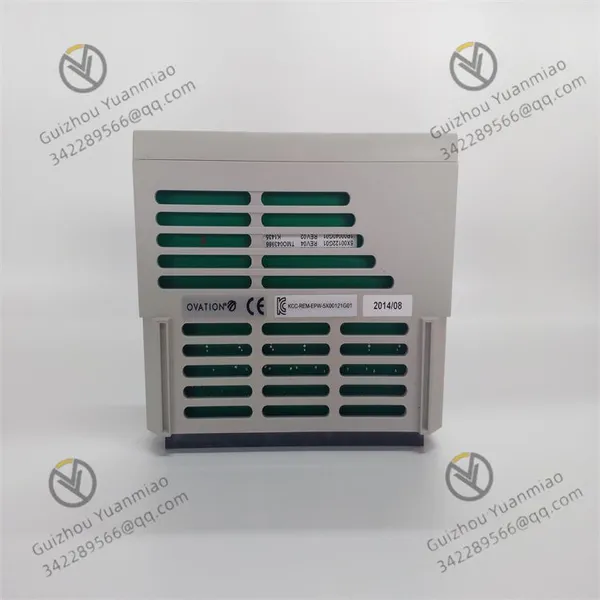
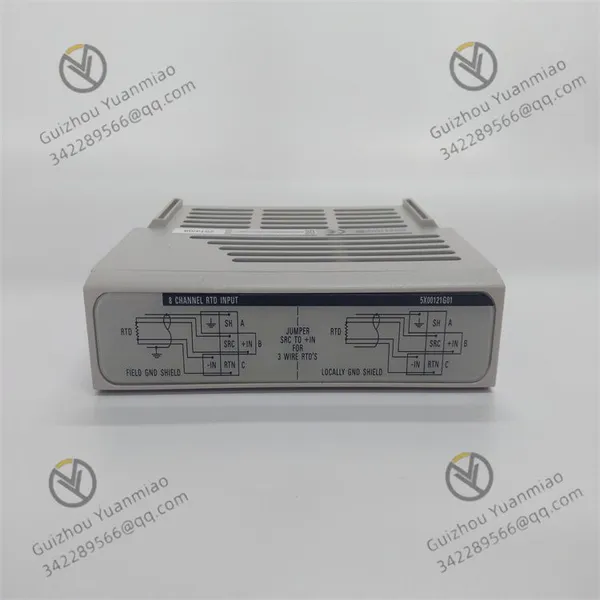
Emerson 5X00121G01 Thermal Resistance Input Card



Related Products
-
 Emerson 5X00167G01 8-channel Analog Output ModuleNegotiableMOQ: 1 Piece
 -
Emerson 5X00208G01 Controller ModuleNegotiableMOQ: 1 Piece
-
Emerson 5X00225G01 Counter ModuleNegotiableMOQ: 1 Piece
-
5X00226G03 Emerson I/O Interface ModuleNegotiableMOQ: 1 Piece
-
Emerson VE3005 DeltaV Series Controller ModuleNegotiableMOQ: 1 Piece
Emerson 5X00121G01 thermal resistance input card
Functional features:
Multi-channel input: Equipped with 8 channels, it can simultaneously receive and process the input signals of 8 RTD sensors, enabling temperature monitoring at multiple key points, achieving comprehensive data coverage and effective process control.
Extensive input type support: Supports common types of thermal resistors, such as PT100 (α=0.00385), with a temperature measurement range of -200 °C to + 850°C, which can meet various industrial temperature measurement requirements.
High-precision measurement: With an accuracy of ±0.1% FS (full scale), it can ensure the high accuracy of temperature measurement, which is helpful for optimizing the production process and preventing overheating or insufficient cooling and other situations.
Strong environmental adaptability: The operating temperature range is -40 °C to + 85°C, and the relative humidity is 5% to 95% (non-condensing). It can maintain reliable operation in harsh industrial environments and adapt to various conditions such as high temperature, low temperature and humidity.
Electrical isolation: Each input channel is equipped with an electrical isolation function, which can prevent electrical interference, ensure the security and integrity of data transmission, and enhance the anti-interference ability and reliability of the module.
Application field:
Process control: Widely applied in industries such as petrochemicals, power, and steel, it is used for temperature monitoring and control to ensure safe production and product quality. With accurate temperature data, the control system can adjust the heating or cooling process in real time to maintain ideal working conditions.
Data acquisition system: It can be used for large-scale data acquisition tasks, summarizing multi-point temperature data and uploading it to the upper computer system for centralized processing and analysis, which helps engineers quickly locate problems and take corresponding measures.
Automation system: It is often combined with PLC and DCS systems to achieve temperature closed-loop control in industrial automation. For instance, in large oil refineries, the obtained temperature data can be fed back to the control system to adjust the combustion conditions of the heating furnace and ensure consistent product quality.
Indicator light status:
P light (green) : It lights up when there is normal power supply, indicating that the module power supply is normal.
C light (green) : It lights up when the controller communicates normally and the communication time monitor shows no communication timeout, indicating that the module communication is normal.
E light (red) : It is an external fault indicator light.
I-light (red) : This is an internal fault indicator light. It lights up when a fault occurs inside the module. Generally, the electronic module needs to be replaced at this time.
Working principle
Core working logic framework
5X00121G01 serves as a thermal resistance (RTD) signal acquisition module. Its working principle is based on the resistance-temperature characteristics of the thermal resistance. Through bridge circuits, signal conditioning, analog-to-digital conversion, and communication transmission, it converts the temperature physical quantity into a digital signal that can be recognized by the control system. The specific process is as follows:
Analysis of Key principle details
The basic principle of temperature measurement by thermal resistance
RTD sensor features: The module supports thermal resistors such as PT100 (e.g., PT100 with α=0.00385), and their resistance values show a linear relationship with temperature changes (for example, the resistance is 100Ω at 0℃, and for every 1℃ increase in temperature, the resistance approximately increases by 0.385Ω).
Measurement method: Through 2-wire / 3-wire / 4-wire connection (the module supports multiple wiring methods), a constant current source or constant voltage source is used to supply power to the RTD, converting resistance changes into voltage signals.
2. Signal acquisition and conditioning process
Bridge circuit conversion
The module integrates a Wheatstone bridge internally and uses the RTD as one of the bridge arms of the bridge. When the temperature changes, the resistance value of the RTD changes, the bridge becomes unbalanced and outputs a small voltage difference (such as the μV level).
Signal amplification and Filtering
The weak voltage signal output is amplified to an appropriate range (such as ±10V) by an operational amplifier (OP Amp), and at the same time, high-frequency interference (such as electromagnetic noise) is eliminated through a low-pass filter to ensure the purity of the signal.
3. Analog-to-digital Conversion (A/D Conversion
The conditioned analog voltage signal is converted into A digital quantity by the high-precision A/D converter (such as 16-bit or higher resolution) built into the module. Take PT100 as an example. The temperature measurement range from -200℃ to + 850℃ corresponds to specific digital code values (such as 0-65535), and the conversion accuracy reaches ±0.1% FS (full scale).
4. Data processing and communication transmission
Linearization correction
Due to the nonlinearity of the resistance-temperature relationship of the thermal resistor (especially in the high-temperature section), the module linearizes the data through hardware circuit compensation or software algorithms (such as polynomial fitting) to ensure the correspondence accuracy between the temperature value and the digital code value.
Communication interface and Protocol:
The converted digital temperature data is transmitted to the PLC or DCS system through the CANBUS or RS485 interface of the module, supporting communication protocols such as HART 7.0, and enabling two-way data interaction (such as configuring parameters and reading status).
5. Electrical isolation and anti-interference design
Each input channel of the module adopts photoelectric isolation or magnetic isolation technology to electrically isolate the input side (RTD sensor) from the output side (control system), preventing common-mode interference and surge voltage from damaging the internal circuit, and at the same time avoiding signal crosstalk between channels.
Collaborative working mechanism of key functional modules
The functions and roles of module components
The constant current source/bridge provides stable excitation for the RTD, converting resistance changes into voltage signals
The signal conditioning circuit amplifies and filters weak signals to improve the signal-to-noise ratio
The A/D converter converts analog voltage into digital quantity, determining the measurement resolution and accuracy
The microprocessor performs linearized computing, fault diagnosis (such as disconnection detection), and communication protocol processing
The isolation circuit prevents interference and ensures the reliability of signal transmission
Fault diagnosis and self-calibration mechanism
Disconnection detection: When the RTD is disconnected from the module and the bridge imbalance exceeds the threshold, the module reports the fault through the "e-lamp" (external fault) or the communication interface.
Self-calibration function: The module supports regular or manual triggering of zero/full-scale calibration. By comparing with the internal standard resistance source, it corrects the drift error during long-term use to maintain measurement accuracy.

Send Inquiry to This Supplier


You May Also Like
-
Emerson VE3006 DeltaV Series Distributed Control ModuleNegotiableMOQ: 1 Piece
-
Emerson VE3007 Controller ModuleNegotiableMOQ: 1 Piece
-
Emerson VE3008 A/D Converter ModuleNegotiableMOQ: 1 Piece
-
Emerson VE4006P2 Redundant Interface ModuleNegotiableMOQ: 1 Piece
-
Emerson 5X00226G04 Controller ModuleNegotiableMOQ: 1 Piece
-
Emerson 5X00228G01 Distributed Control System IO ModuleNegotiableMOQ: 1 Piece
-
Emerson 5X00230G01 DCS CardNegotiableMOQ: 1 Piece
-
Emerson A6500-UM Mechanical Protection System Universal Measurement CardNegotiableMOQ: 1 Piece
-
Emerson MVME61006E-0163 High-performance Embedded ModuleNegotiableMOQ: 1 Piece
-
Emerson KJ3241X1-BK1 Serial Interface CardNegotiableMOQ: 1 Piece


