Contact Platform Support
 Help Center
Preparation and Advantages of Tris Acetate TAE as a Biological Buffer



Related Products
-
 Application of TAPSO 68399-81-5 Biological Buffer in DNA/RNA ExtractionUS$ 76.6 - 86.6MOQ: 500 Kilograms
 -
Basic Information of Biological Buffer N - (2-acetamido) -2-aminoethanesulfonic Acid (ACES)US$ 30.6 - 66.6MOQ: 500 Kilograms
-
The pH Range of N - (2-acetamido) -2-iminodiacetic Acid (ADA) BufferUS$ 30.6 - 36.6MOQ: 500 Kilograms
-
HEPBS Biological Buffer is a Powerful Assistant in Cell Culture and Cosmetics ManufacturingUS$ 53.8 - 58.8MOQ: 500 Kilograms
-
You Can't Help but Know About the Applications of CHAPS BufferUS$ 53.8 - 900MOQ: 500 Kilograms
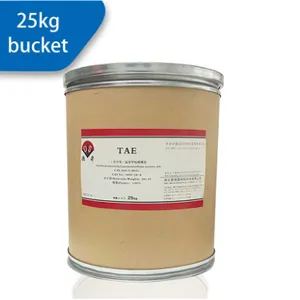
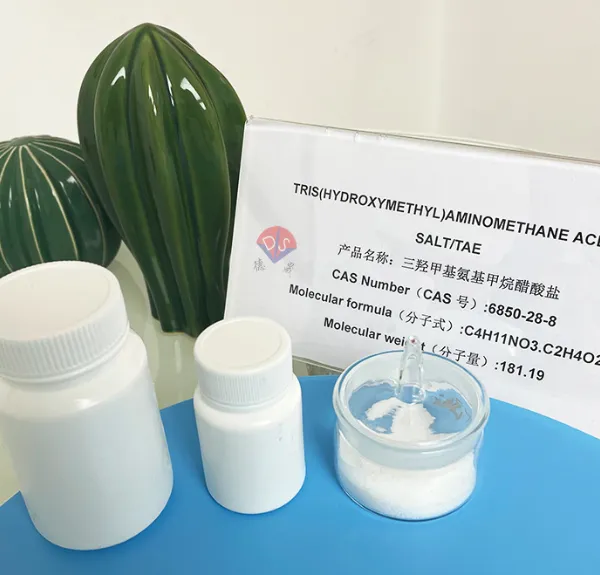
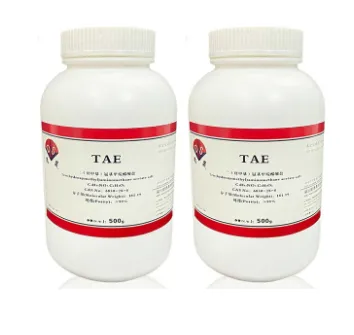
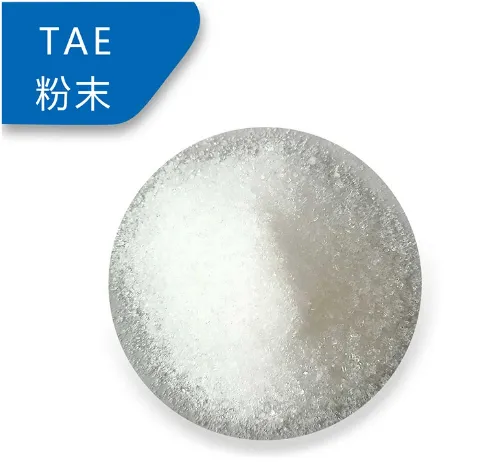
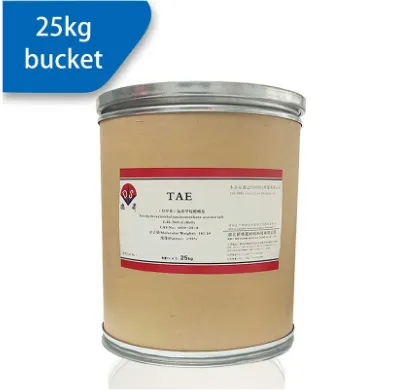
Tris, as a necessity in experimental research and analysis, can ensure the stability of solutions even under external interference based on its own performance. With the development of application fields, acetate can be configured on top of it, often used as a buffer for nucleic acid electrophoresis or other DNA related research experiments, and sometimes combined with EDTA. As a popular reagent, the following will specifically introduce the configuration and advantages of acetate for everyone to understand and use.
Tris acetate buffer preparation method
1. Prepare to weigh Tris and EDTA powders and place them in a prepared 1L beaker.
2. Add an appropriate amount of distilled water to the beaker, stir thoroughly until completely dissolved, or add according to the pre calculated capacity. 3. Then add acetic acid to the cup, stir thoroughly, and continue adding distilled water to bring it to the desired volume. Store at room temperature indoors.
3.Dilute the product during use. If there is any accumulation, it can be dissolved in a high-temperature water bath.
The advantages of Tris acetate buffer in TAE
Because it can be used as both a working solution and a concentrated solution in TAE, each has its own advantages. The advantage of working solution is that it is easy to operate, reduces experimental steps, and reduces the risk of infection when operated in a sterile state. In TAE, the cost of using concentrated solution is not high, and its applicability is wide. If sterile operation is not required, it can also be used in various concentration experiments.
In addition, high concentration makes it more stable to store. Although Tris acetate buffer is widely used in TAE, sometimes TBE buffer is also used. Usually, buyers will also weigh which buffer is more suitable for experimental requirements. As a professional manufacturer of biological buffer solutions, Desheng can provide raw materials such as Tris, Tris hydrochloride, Tris acetate, etc. The production process is simple and stable, with a purity of up to 99%, and basically does not interfere with experiments. In recent years, buffer products have been continuously sold in large quantities, with nearly a thousand cooperative customers and receiving positive feedback. If you have any related needs, please feel free to call us for more information!

Send Inquiry to This Supplier


You May Also Like
-
Introduction and Application of Biological Buffer BIS Tris Propane 64431-96-5US$ 178 - 196MOQ: 500 Kilograms
-
Biological Buffer Piperazine-1,4-diethylsulfonic Acid Monosodium Salt PIPES-NA Basic InformationUS$ 49.8 - 56.8MOQ: 500 Kilograms
-
Exploration of Buffer Performance and Stability of PIPES-K2 108321-27-3US$ 108.8 - 118.8MOQ: 500 Kilograms
-
2- (N-morpholine) Ethanesulfonic Acid Monohydrate MES MonohydrateUS$ 24.8 - 30.8MOQ: 500 Kilograms
-
Characteristics and Use of TES Chemical Reagent as a Biological BufferUS$ 16.8 - 182.8MOQ: 500 Kilograms
-
The Importance of BIS-TRIS HCl in Electrophoresis, Extraction, Separation, and Purification ProcessesUS$ 146.8 - 168.8MOQ: 500 Kilograms
-
3- (N-morpholine) Propanesulfonic Acid Half Sodium Salt MOPS Half Sodium SaltUS$ 80.8 - 89.8MOQ: 500 Kilograms
-
What Are the Advantages of Desheng in Producing 3- (N-morpholino) Propanesulfonate Sodium Salt (MOPS-NA)?US$ 28.6 - 36.6MOQ: 500 Kilograms
-
Introduction to MOPSO Sodium 79803-73-9 Biological BufferUS$ 36.6 - 42.8MOQ: 500 Kilograms
-
The Price of TRIS-HCL 1185-53-1 Produced by Desheng Has Been Lowered. Please Feel Free to Consult and PurchaseUS$ 13.6 - 16.8MOQ: 100 Kilograms