Contact Platform Support
 Help Center
Characteristics and Use of TES Chemical Reagent as a Biological Buffer



Related Products
-
 The Importance of BIS-TRIS HCl in Electrophoresis, Extraction, Separation, and Purification ProcessesUS$ 146.8 - 168.8MOQ: 500 Kilograms
 -
3- (N-morpholine) Propanesulfonic Acid Half Sodium Salt MOPS Half Sodium SaltUS$ 80.8 - 89.8MOQ: 500 Kilograms
-
What Are the Advantages of Desheng in Producing 3- (N-morpholino) Propanesulfonate Sodium Salt (MOPS-NA)?US$ 28.6 - 36.6MOQ: 500 Kilograms
-
Introduction to MOPSO Sodium 79803-73-9 Biological BufferUS$ 36.6 - 42.8MOQ: 500 Kilograms
-
The Price of TRIS-HCL 1185-53-1 Produced by Desheng Has Been Lowered. Please Feel Free to Consult and PurchaseUS$ 13.6 - 16.8MOQ: 100 Kilograms
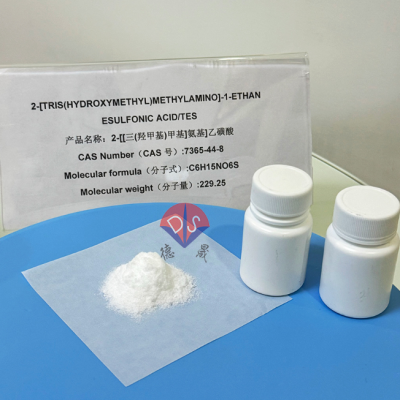
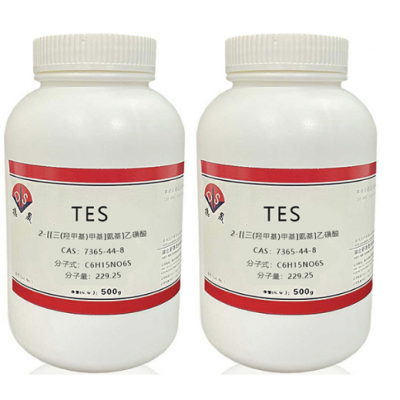
TES, The full name is 2- [[tris (hydroxymethyl) methyl] amino] ethanesulfonic acid, which is a widely used reagent in the fields of chemistry, biochemistry, and materials science. It appears as a white crystalline powder with good solubility and can quickly dissolve in water. Its pKa value in water is about 7.4, making it suitable for experiments that need to be conducted in the near physiological pH range. This unique chemical property is loved by many people. Below, we will delve into its features and usage.
Characteristics of TES reagent
TES is an organic compound with a specific chemical structure and properties. The following are the main characteristics of TES reagents:
1. Stability: TES reagent is stable at room temperature and is not prone to chemical reactions. It has a certain tolerance to acids, bases, and oxidants, which makes it highly reliable in various chemical reactions.
2. Solubility: TES reagents have good solubility and can quickly dissolve and mix with water, which makes TES widely used in the preparation of solutions and solvent extraction processes.
3. Reactivity: Although TES reagents themselves are relatively stable, they can participate in chemical reactions under specific conditions, such as esterification, sulfonation, etc., making TES an important intermediate for synthesizing other organic compounds.
Application of TES reagent
Due to its unique chemical properties, TES reagents have a wide range of applications in many fields:
1. Organic synthesis: TES reagent can be used as a synthetic intermediate to prepare various organic compounds, such as esters, ethers, thioesters, etc. Its stable chemical properties enable it to maintain high purity and stability during the synthesis process.
2. Separation and purification: Due to its good solubility and stability, TES reagents are widely used in separation and purification processes such as extraction, crystallization, chromatographic separation, etc. It can help researchers separate target compounds from complex mixtures.
3. Catalyst: In certain chemical reactions, TES reagents can be used as catalysts to accelerate reaction rates and improve product selectivity. By adjusting the structure of TES reagents, their catalytic performance can be further optimized.
4. Surfactant: In some cases, it can also be used as a surfactant to help substances better disperse in water or other solvents, which makes TES reagents have certain applications in the preparation of coatings, adhesives, and other fields.
5. Drug synthesis: In the field of drug synthesis, TES reagents can serve as synthetic intermediates, and their stable chemical properties help ensure the stability of product quality.
6. Electrophoresis buffer: TES can be used as one of the components of electrophoresis buffer for DNA and protein electrophoresis, and its buffering ability under low pH conditions makes it an ideal choice in experiments.
Potential limitations and usage precautions
Although TES reagents have a wide range of applications, some potential limitations still need to be noted during use:
1. Cost: Compared to some other chemical reagents, the cost of TES reagents may be higher, which may limit their application in certain fields. It is recommended to choose suitable manufacturers for supply and adjust prices flexibly.
2. Biological toxicity: Although TES reagents are relatively stable and non-toxic under conventional conditions, improper handling may produce metabolites with certain biological toxicity under certain conditions. Therefore, caution should be exercised in biological experiments.
3. Storage conditions: TES should be stored in a dry, cool environment to avoid moisture and high temperatures. Regularly check the shelf life of reagents, expired reagents should not be used.
4. Proper weighing and configuration: In experimental operations, it is important to ensure accurate weighing and configuration of TES to avoid experimental result deviations caused by errors. At the same time, it is important to avoid mixing TES with other reagents during operation.
TES, as an important biochemical reagent, has a wide range of applications in laboratories. Its excellent buffering performance makes it a key choice in biological experiments, cell culture, and electrophoresis experiments. When using TES, researchers should pay attention to laboratory safety, store and configure reagents correctly, and be particularly cautious in selecting TES raw material suppliers.
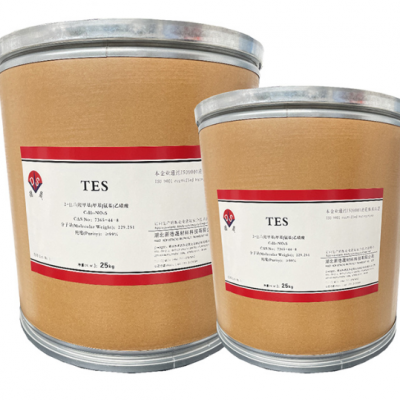
As a direct seller of TES raw materials, Desheng has flexible prices, stable and guaranteed product quality, small batch differences, and is suitable for various experiments, receiving unanimous praise and recognition from customers. If you have any relevant intentions, please click on the website to inquire about details!

Send Inquiry to This Supplier


You May Also Like
-
Why Should we Pay Attention to Solubility When Purchasing Biological Buffer TRIS 77-86-1?US$ 8.6 - 13.8MOQ: 100 Kilograms
-
The Effect of Purity of BICINE Powder 150-25-4 as a Biological Buffer on the Performance of Buffer SolutionsUS$ 18.8 - 26.8MOQ: 100 Kilograms
-
Introduction to the Transportation Packaging of CAPS Powder 1135-40-6, a Biological Buffering AgentUS$ 22.8 - 26.8MOQ: 100 Kilograms
-
Compatibility of Biological Buffer MOPS 1132-61-2 With Other ReagentsUS$ 26.6 - 32.8MOQ: 500 Kilograms
-
Application of Biological Buffer TAPS 29915-38-6 in Enzyme Activity ResearchUS$ 66.8 - 76.8MOQ: 500 Kilograms
-
The Advantage of High Purity of EPPS Powder 16052-06-5 Raw Materials for Biological Buffering AgentsUS$ 56.8 - 68.8MOQ: 500 Kilograms
-
Advantages of MOPSO Buffer 68399-77-9 in Low-temperature Biochemical WorkUS$ 28.8 - 39.8MOQ: 500 Kilograms
-
What Does HEPES Buffer 7365-45-9 do for Cell CultureUS$ 26.6 - 32.8MOQ: 500 Kilograms
-
Application of Biological Buffer PIPES 5625-37-6 in Biochemical ResearchUS$ 26.6 - 32.8MOQ: 500 Kilograms
-
How to Determine and Choose a BES Buffer 10191-18-1 Manufacturer for ProcurementUS$ 42.8 - 50.8MOQ: 500 Kilograms