Contact Platform Support
 Help Center
HEPBS Biological Buffer is a Powerful Assistant in Cell Culture and Cosmetics Manufacturing



Related Products
-
 You Can't Help but Know About the Applications of CHAPS BufferUS$ 53.8 - 900MOQ: 500 Kilograms
 -
Introduction and Application of Biological Buffer BIS Tris Propane 64431-96-5US$ 178 - 196MOQ: 500 Kilograms
-
Biological Buffer Piperazine-1,4-diethylsulfonic Acid Monosodium Salt PIPES-NA Basic InformationUS$ 49.8 - 56.8MOQ: 500 Kilograms
-
Exploration of Buffer Performance and Stability of PIPES-K2 108321-27-3US$ 108.8 - 118.8MOQ: 500 Kilograms
-
2- (N-morpholine) Ethanesulfonic Acid Monohydrate MES MonohydrateUS$ 24.8 - 30.8MOQ: 500 Kilograms
Biological buffering agents play a crucial role in modern biotechnology and cosmetics manufacturing. Among them, HEPBS, as a member of the piperazine series buffer solution family, has been favored by researchers and cosmetic formulators due to its unique properties and wide application prospects. This article will provide a detailed introduction to the properties, functions, and applications of HEPBS in cell culture and cosmetics manufacturing.
1、 Properties and functions of HEPBS
HEPBS is a zwitterionic buffering agent, a facultative ionic compound with both positive and negative charges on its molecular structure. This structure enables HEPBS to maintain stable buffering capacity over a wide pH range, providing a stable acidity environment for cell growth and cosmetic manufacturing.
In cell culture, cells have strict requirements for the pH value of the growth environment. Excessively high or low pH values can affect cell growth, metabolism, and differentiation. HEPBS can coexist with cations in cell culture medium, providing the required acidity environment for cell growth. Its high pKa value enables HEPBS to maintain a stable pH value for a long time in cell culture medium, providing a suitable growth environment for cells.
In addition, HEPBS has good stability and will not cause toxicity or irritation to cells. This makes HEPBS one of the commonly used biological buffering agents in cell culture.
2、 Application of HEPBS in Cell Culture
In the field of cell culture, HEPBS has a wide range of applications. It can be used not only for conventional cell culture, but also for the cultivation of specific types of cells such as stem cells. In stem cell culture, HEPBS can provide a stable pH environment, accelerating the proliferation and differentiation of stem cells.
In addition, HEPBS can also be combined with other bioactive substances such as growth factors to further accelerate cell growth and differentiation. This makes the application of HEPBS in the field of cell culture more extensive and diverse.
3、 Application of HEPBS in Cosmetics Manufacturing Industry
In addition to its application in the field of cell culture, HEPBS also has important applications in the cosmetics manufacturing industry. Various ingredients in cosmetics may produce different acidity and alkalinity, which may affect the stability and efficacy of the product. HEPBS, as a buffering agent, can regulate the acidity and alkalinity of various components in cosmetics, keeping them within a relatively stable range, thereby improving the stability and efficacy of the product.
In addition, due to its non irritating nature to the skin, HEPBS is also used as an ingredient in some skincare products. In skin care products such as facial mask, HEPBS can help regulate the skin's pH and keep the skin in a healthy state. Meanwhile, it can also be combined with other active ingredients such as vitamin C, hyaluronic acid, etc. to further enhance the skincare effect of the product.
4、 Conclusion
In summary, HEPBS, as a biological buffering agent, has broad application prospects in cell culture and cosmetics manufacturing. With the continuous development of science and technology, it is believed that the application fields of HEPBS will further expand in the future. Researchers and cosmetic formulators will continue to explore the potential of HEPBS and make greater contributions to human health and beauty.
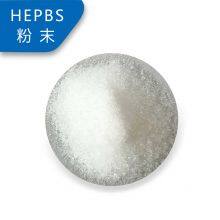
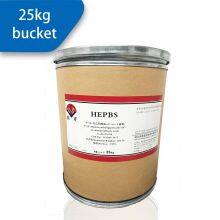
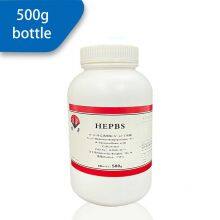
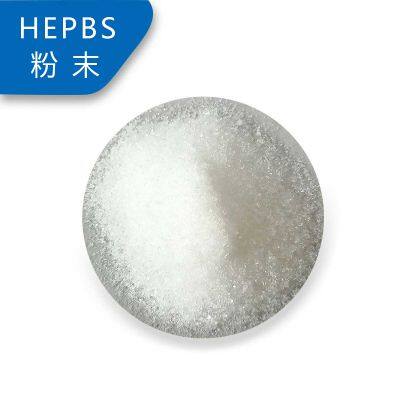
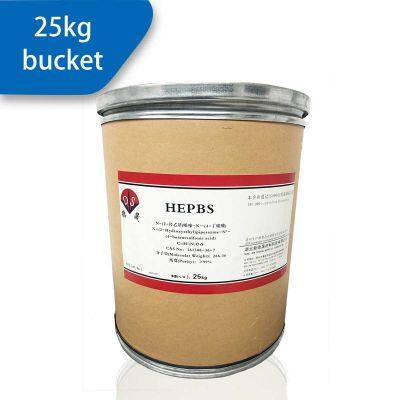
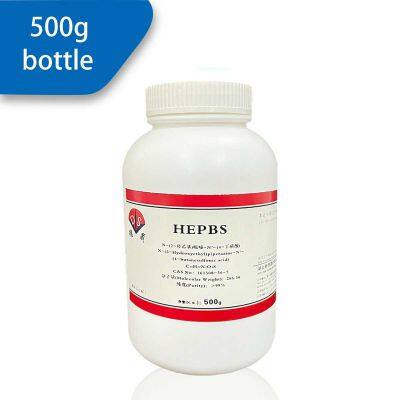
As a raw material supplier in the field of biological buffering agents, Desheng has attracted much attention for its unique advantages. The HEPBS products we provide are crystalline powders in their original state, which not only facilitates customer storage but also ensures convenient transportation. Our HEPBS follows strict specific standards in terms of molecular weight and solubility, which allows customers to easily prepare according to their needs, significantly improving work efficiency. If you have purchasing intentions, we sincerely invite you to contact us at any time, and we will be dedicated to serving you!

Send Inquiry to This Supplier


You May Also Like
-
Characteristics and Use of TES Chemical Reagent as a Biological BufferUS$ 16.8 - 182.8MOQ: 500 Kilograms
-
The Importance of BIS-TRIS HCl in Electrophoresis, Extraction, Separation, and Purification ProcessesUS$ 146.8 - 168.8MOQ: 500 Kilograms
-
3- (N-morpholine) Propanesulfonic Acid Half Sodium Salt MOPS Half Sodium SaltUS$ 80.8 - 89.8MOQ: 500 Kilograms
-
What Are the Advantages of Desheng in Producing 3- (N-morpholino) Propanesulfonate Sodium Salt (MOPS-NA)?US$ 28.6 - 36.6MOQ: 500 Kilograms
-
Introduction to MOPSO Sodium 79803-73-9 Biological BufferUS$ 36.6 - 42.8MOQ: 500 Kilograms
-
The Price of TRIS-HCL 1185-53-1 Produced by Desheng Has Been Lowered. Please Feel Free to Consult and PurchaseUS$ 13.6 - 16.8MOQ: 100 Kilograms
-
Why Should we Pay Attention to Solubility When Purchasing Biological Buffer TRIS 77-86-1?US$ 8.6 - 13.8MOQ: 100 Kilograms
-
The Effect of Purity of BICINE Powder 150-25-4 as a Biological Buffer on the Performance of Buffer SolutionsUS$ 18.8 - 26.8MOQ: 100 Kilograms
-
Introduction to the Transportation Packaging of CAPS Powder 1135-40-6, a Biological Buffering AgentUS$ 22.8 - 26.8MOQ: 100 Kilograms
-
Compatibility of Biological Buffer MOPS 1132-61-2 With Other ReagentsUS$ 26.6 - 32.8MOQ: 500 Kilograms