Contact Platform Support
 Help Center
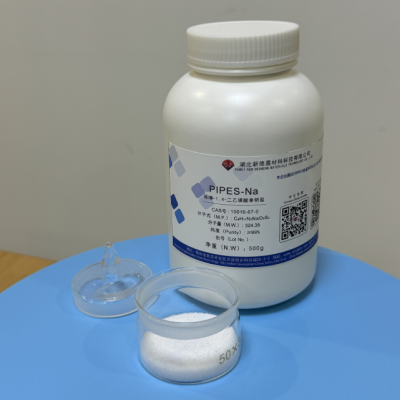
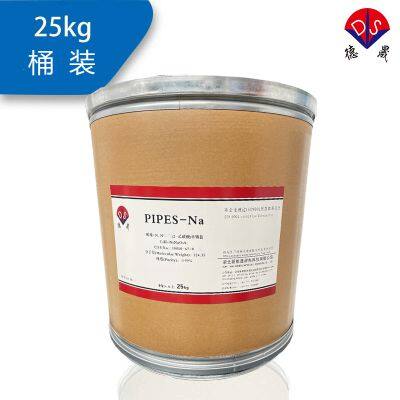
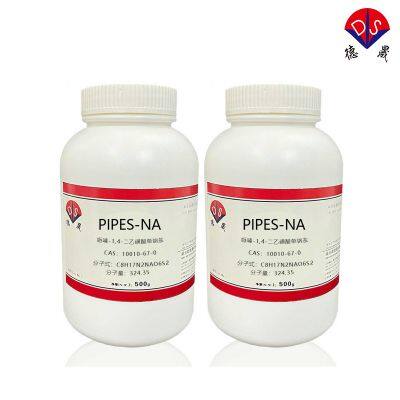
Biological Buffer Piperazine-1,4-diethylsulfonic Acid Monosodium Salt PIPES-NA Basic Information



Related Products
-
 Exploration of Buffer Performance and Stability of PIPES-K2 108321-27-3US$ 108.8 - 118.8MOQ: 500 Kilograms
 -
2- (N-morpholine) Ethanesulfonic Acid Monohydrate MES MonohydrateUS$ 24.8 - 30.8MOQ: 500 Kilograms
-
Characteristics and Use of TES Chemical Reagent as a Biological BufferUS$ 16.8 - 182.8MOQ: 500 Kilograms
-
The Importance of BIS-TRIS HCl in Electrophoresis, Extraction, Separation, and Purification ProcessesUS$ 146.8 - 168.8MOQ: 500 Kilograms
-
3- (N-morpholine) Propanesulfonic Acid Half Sodium Salt MOPS Half Sodium SaltUS$ 80.8 - 89.8MOQ: 500 Kilograms
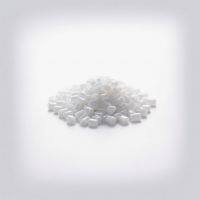
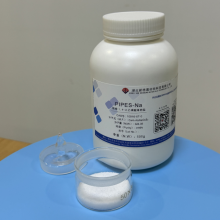
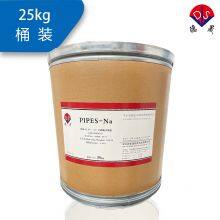
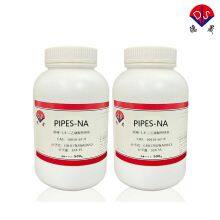
Piperazine 1,4-diethylsulfonic acid monosodium salt, with the chemical formula C8H17N2NaO6S2, is an organic compound that appears as a white powder and is easily soluble in water. PIPES sodium salt is a stable buffering agent with a high pKa value, which can provide a stable pH environment and help maintain the activity of biomolecules. It plays a key role in fields such as molecular biology, cell culture, and electrophoresis technology.
The use of PIPES sodium salt
As a biological buffering agent, PIPES sodium salt plays an important role in multiple fields. Firstly, in molecular biology research, it is used to maintain the structural and functional stability of proteins. Secondly, in cell culture, it can provide a suitable pH environment for cells, which helps with cell growth and division. In addition, PIPES sodium salt is widely used in electrophoresis technology as a support medium for separating biomolecules such as proteins and nucleic acids.
Advantages of PIPES Sodium Salt
1. High stability: PIPES sodium salt has a high pKa value and can provide a stable pH environment over a wide pH range. This makes it perform well in various biological experiments and less susceptible to external environmental influences.
2. Good cell compatibility: PIPES sodium salt acts as a buffer and has no toxic effect on cells, making it safe to use in cell culture. It can maintain a suitable pH value, promote cell growth and division.
3. Good separation effect: PIPES sodium salt has good separation effect in electrophoresis technology. It can provide a good separation medium to effectively separate biomolecules such as proteins and nucleic acids.
Precautions for using PIPES sodium salt
1. Storage and stability: PIPES sodium salt should be stored in a dry, cool place, away from direct sunlight and high temperature environments. Under appropriate conditions, its stability is good, but its quality still needs to be checked regularly.
2. Dosage and preparation: When preparing PIPES sodium salt, the appropriate concentration should be accurately weighed and prepared according to experimental requirements. Excessive or insufficient amounts may lead to inaccurate experimental results.
3. Avoid cross contamination: During the experimental process, the sterility and purity of the reagents should be ensured. Avoid direct contact with buffer powder or liquid reagents by hand to reduce the risk of cross contamination.
4. Cytotoxicity testing: For applications involving cell culture, cytotoxicity testing should be conducted before using PIPES sodium salt. Ensure that the buffer is non-toxic or low toxic to cells to ensure the reliability of experimental results.
5. Personal protection: When using PIPES sodium salt for related experimental operations, attention should be paid to taking protective measures, such as wearing masks, goggles, protective clothing, gloves, etc., to prevent PIPES sodium salt solution or powder from getting on the skin or inhaling into the body, thereby endangering physical health.
6. Waste disposal: The PIPES sodium salt waste liquid after use should be disposed of according to laboratory waste disposal regulations to ensure that it does not cause environmental pollution.
Hubei Xindesheng Material Technology Co., Ltd. is a high-quality manufacturer specializing in the production of in vitro diagnostic reagents. Since its establishment in 2005, the company has developed a wide range of products, from a single blood collection tube additive to a variety of diversified reagents such as biological buffering agents, chemiluminescence reagents, and chromogenic substrates. Desheng has a professional R&D team and quality inspection team to strictly control the quality of every batch of products sold, while reducing costs and allowing every customer to buy cost-effective products. We also welcome elites in the same industry to exchange and learn from us!

Send Inquiry to This Supplier


You May Also Like
-
What Are the Advantages of Desheng in Producing 3- (N-morpholino) Propanesulfonate Sodium Salt (MOPS-NA)?US$ 28.6 - 36.6MOQ: 500 Kilograms
-
Introduction to MOPSO Sodium 79803-73-9 Biological BufferUS$ 36.6 - 42.8MOQ: 500 Kilograms
-
The Price of TRIS-HCL 1185-53-1 Produced by Desheng Has Been Lowered. Please Feel Free to Consult and PurchaseUS$ 13.6 - 16.8MOQ: 100 Kilograms
-
Why Should we Pay Attention to Solubility When Purchasing Biological Buffer TRIS 77-86-1?US$ 8.6 - 13.8MOQ: 100 Kilograms
-
The Effect of Purity of BICINE Powder 150-25-4 as a Biological Buffer on the Performance of Buffer SolutionsUS$ 18.8 - 26.8MOQ: 100 Kilograms
-
Introduction to the Transportation Packaging of CAPS Powder 1135-40-6, a Biological Buffering AgentUS$ 22.8 - 26.8MOQ: 100 Kilograms
-
Compatibility of Biological Buffer MOPS 1132-61-2 With Other ReagentsUS$ 26.6 - 32.8MOQ: 500 Kilograms
-
Application of Biological Buffer TAPS 29915-38-6 in Enzyme Activity ResearchUS$ 66.8 - 76.8MOQ: 500 Kilograms
-
The Advantage of High Purity of EPPS Powder 16052-06-5 Raw Materials for Biological Buffering AgentsUS$ 56.8 - 68.8MOQ: 500 Kilograms
-
Advantages of MOPSO Buffer 68399-77-9 in Low-temperature Biochemical WorkUS$ 28.8 - 39.8MOQ: 500 Kilograms