








 Contact Platform Support
 Help Center
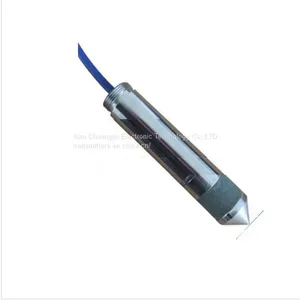
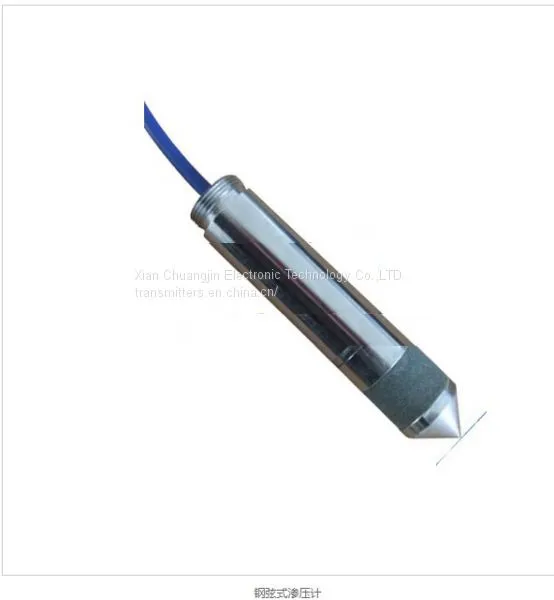
Vibrating/Steel Wire Piezometer


Related Products
Working principle
The VW Piezometer operates on the principle that a tensioned wire, when plucked, vibrates at its resonant frequency. Around the wire is a magnetic coil which when pulsed by a vibrating readout or data logger interface plucks the wire and measures the resultant resonant frequency of vibration. A change in distance between the anchor and the diaphragm is related to pressure differentials and can be converted to a kPa reading.
Temperature information can be used if logging regularly to determine swift temperature changes during which pressure readings may be exaggerated
Features
Reliable long-term performance
Rugged, suitable for demanding environments
High accuracy
Insensitive to long cable lengths
All non-drive-in models can have threaded adaptors to customer specifications
Applications
Pore pressure measurement in soils and rocks
Fluid pressures in hydro-fracture and pump tests
Structure
Permeable ring +sensitive membrane+seal case+signal wire+vibration wire+strong vibration eletromagnetic
Caculate
When pore piezometer loads pressure of water, the voltage "P" and output frequency "F" as below :
P = k(F20-F2i)
K — Pressure Sensitivity
Fi — Measurement
F0— Reference Value

Send Inquiry to This Supplier

You May Also Like
-
 Dynamic Strain AmplifierNegotiableMOQ: 1 Unit
 -
Float Type Liquid Level SwitchNegotiableMOQ: 1 Unit
-
Dynamic Torque SensorUS$ 782 - 1580MOQ: 2 Units
-
Temperature TransmitterUS$ 41 - 94MOQ: 10 Units
-
Insert Tuning Fork Density MeterUS$ 3736 - 3760MOQ: 1 Unit
-
Turbine Flow MeterUS$ 170 - 1000MOQ: 1 Unit
-
High Frequency Pressure TransmitterNegotiableMOQ: 20 Units
-
Pull String Displacement SensorNegotiableMOQ: 30 Units
-
Submersible Level TransducerNegotiableMOQ: 30 Units
-
Pressure TransmitterNegotiableMOQ: 30 Units


