








 Contact Platform Support
 Help Center
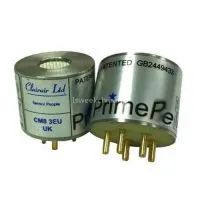
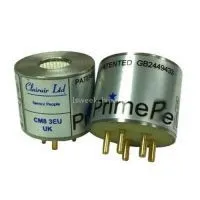
PrimePell Pellistor Replacement Infrared Gas Sensor



Related Products
-
 FAM-001-01 Air Quality Detection ModuleUS$ 30 - 60MOQ: 1 Piece
 -
FSM-BP-01 Pre-Calibrated Combustible Gas Sensor ModuleUS$ 30 - 60MOQ: 1 Piece
-
FSM-T-04A Pre-Calibrated Combustible Gas Sensor ModuleUS$ 30 - 60MOQ: 1 Piece
-
FSM-A-003 Indoor Air Quality ModuleUS$ 30 - 60MOQ: 1 Piece
-
FSM-A-002 Air Quality Monitor ModuleUS$ 30 - 60MOQ: 1 Piece
PrimePell
Pellistor Replacement Infrared gas sensor for Methane, Hydrocarbons
Features
• Operates independent of supply polarity, as a pellistor
• Pellistor mimic Bridge output
• Voltage rises across detector connections in gas, as a pellistor
• Relative responses to key hydrocarbons are similar to a pellistor
• Operating voltage range 3.0V – 5.0V
• Operating current 80mA typical
• Latest technology MEMS detectors
• Sensing ranges: 0-100% LEL Methane, 0-100% LEL Hydrocarbons or 0-100% Volume Methane
• All metal construction with isolated housing
• Small internal volume
• Flexible electronic configuration access
• User calibration also enabled by hardware connections
• Wide operating temperature range
• Fast response
• Immunity from ‘poisoning’
Description and Operation
The PrimePell sensor uses the non-dispersive infrared method to detect the presence of hydrocarbon gases. The sensor contains an infrared radiation source, a dual element custom infrared detector, a unique optical waveguide into which gas diffuses and internal ARM7 core microprocessor based electronics to provide a voltage output which is independent of the power supply polarity. The sensors can be configured to provide a pellistor format output, typically mid supply at zero with the voltage output increasing with respect to the detector pin by 100mV at range, or a linear voltage output, typically 0.4V – 2.0V over range with respect to the negative supply pin. Inaddition, the output can be read and the internal configuration can be accessed by a serial communications link.The communication link contacts are pads in the 3 pin version PrimePell and pins in the 5 pin version PrimePell.The internal electronics perform all the functions of driving the optical parts of the sensor, extracting the detectorsignals, converting the signals to a concentration, applying temperature compensation and scaling the output.When in a pellistor configuration, the PrimePell can replace catalytic sensors in existing circuitry subject to thepower supply requirements. External components will be required to meet the power supply requirement when a PrimePell is used in constant current pellistor circuitry. The PrimePell is not currently Ex approved so should behoused in a suitable Ex enclosure when used in Hazardous areas.
Hydrocarbon Response Characteristics
Unless otherwise specified, the PrimePell is calibrated to provide an output signal linearised for %LEL methaneduring manufacture. The LEL is equivalent to 4.4% volume methane or 5% volume methane depending on thegeographic requirement and must be specified when ordering. The PrimePell can also be calibrated to 0-100%volume methane or 0-100%LEL of a particular hydrocarbon if required. Note that the PrimePell will respond to arange of hydrocarbon gases irrespective of the calibration. Note that, unlike a pellistor, a PrimePell will not detect acetylene or hydrogen. A Prime4 sensor is available that will selectively detect acetylene. Typical relative
responses to some hydrocarbons on a 0-100%LEL methane scale are shown below:
Temperature Compensation
The PrimePell is temperature compensated for both zero and span at the calibration gas concentration level.
sensor Warmup
When power is first applied or when a reset has occurred or during recovery from a fault condition the PrimePelloutputs –1.56% of scale (0.375V in voltage mode or –1.56mV in pellistor mode) for 5 seconds then outputs 0% of scale for a warmup period (default is 15 seconds). After this time the output follows the extracted gas value.
Fault Indication
The PrimePell continuously monitors several internal parameters to ensure that the internal hardware andsoftware are operating correctly. If a fault condition is detected then the output is set to 0V in the case of a voltage output (equivalent to –25% FSD for a 4mA zero) or to approximately –200% scale in pellistor output, emulating a partly open compensator. Some faults are recoverable (e.g. a brown-out in incoming supply voltage) and the PrimePell continuously checks for possible recovery. If a fault can be recovered from then the output follows the sensor warmup sequence before following the extracted gas value.
Failure Modes Effects and Diagnostic Analysis (FMEDA)
An FMEDA on the PrimePell produced the following summary results:
Conditions: Ground Fixed, JAN to MILHDBK217F
Subsystem type = B (Complex using microcontrollers or programmable logic),
Hardware Fault Tolerance = 0,
High Demand (Continuous Use of Operation):
λSD = 921 FIT, λSU = 3 FIT, λDD = 859 FIT, λDU = 96 FIT, SFF = 94.9%,
Probability of Dangerous Failure per Hour = 9.5 x 10⁻⁷

Send Inquiry to This Supplier

You May Also Like
-
FECS40-1000 Carbon Monoxide (CO) SensorNegotiableMOQ: 1 Piece
-
FECS44-100/FECS44-200 Low Concentration Ammonia (NH3) SensorNegotiableMOQ: 1 Piece
-
TGS5342 Carbon Monoxide (CO) SensorUS$ 5 - 15MOQ: 1 Piece
-
TGS3870-B00 Methane and Carbon Monoxide Gas SensorUS$ 5 - 20MOQ: 1 Piece
-
TGS821 Hydrogen (H2) Gas SensorUS$ 3 - 20MOQ: 1 Piece
-
TGS832-A00 Chlorofluorocarbons Gas SensorUS$ 3 - 15MOQ: 1 Piece
-
FECS41-250 Nitric Oxide (NO) SensorUS$ 0.01 - 100MOQ: 1 Piece
-
O2-M2 Oxygen Gas Sensor (O2 Sensor)US$ 15 - 30MOQ: 1 Piece
-
OPC-R1 PM2.5 Particle SensorUS$ 255 - 300MOQ: 1 Piece
-
ULPSM-SO2 968-006 Ultra-Low Power Analog Sulfur Dioxide Sensor ModuleUS$ 40 - 60MOQ: 1 Piece


